Understanding mAh on a Battery and Why It Matters
mAh on a battery means milliampere-hour, showing how much charge it holds. A higher mAh means longer device use between charges and better performance.
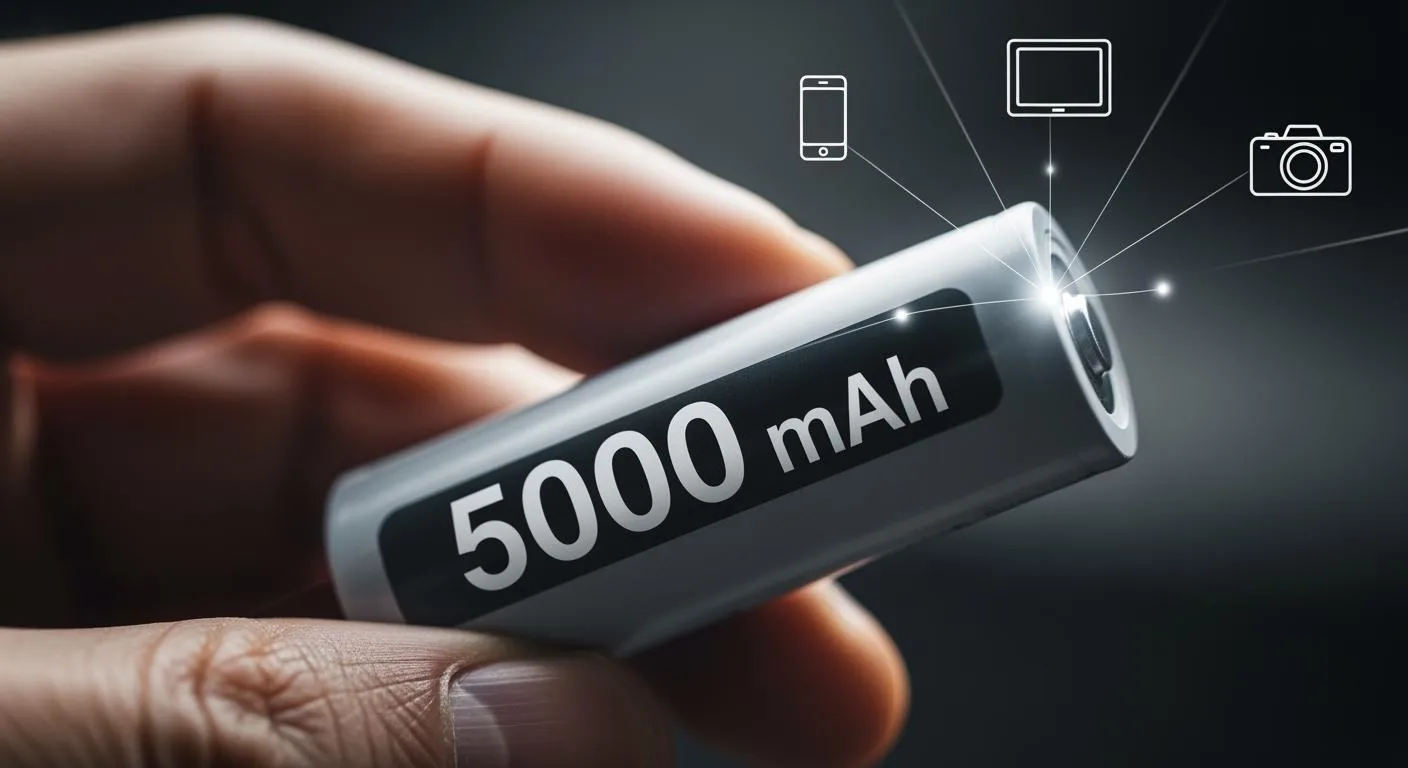
You see mAh on every battery, but what does mAh on a battery mean? mAh, or milliampere-hour, shows the electric charge capacity and highlights the importance of mAh for device performance. Devices with higher mAh last longer and work more reliably. For example, common batteries have these mAh ratings:
| Battery Type | Typical mAh Rating |
|---|---|
| Alkaline | Over 2,500 mAh |
| Lithium AA | 2,700 - 3,400 mAh |
| Lithium AAA | Similar to AA |
| 9V Lithium | Higher than alkaline |
Understanding the importance of mAh helps you choose the right power source.
Key Takeaways
- mAh stands for milliampere-hour and measures how much energy a battery can store. Higher mAh means longer device runtime.
- Choosing a battery with the right mAh rating is crucial. For smartphones, aim for at least 3000 mAh for reliable performance.
- Battery life depends on more than just mAh. Factors like device usage, power consumption, and settings also play a significant role.
What Does mAh on a Battery Mean?

mAh and Battery Capacity
When you look at a battery, you often see a number followed by "mAh." This stands for milliampere-hour, which is a unit that measures how much electric charge a battery can hold. If you want to know what does mAh on a battery mean, think of it as the size of a fuel tank in a car. The bigger the number, the more energy the battery can store and deliver to your device.
- mAh stands for milliampere-hour, a unit for measuring battery capacity.
- It indicates the energy a battery can store and deliver over time.
- A higher mAh rating means more energy storage and longer device runtime.
- For example, a 2000 mAh battery can provide 1 milliampere of current for 2000 hours or 2 milliamperes for 1000 hours.
- mAh is one of several factors that affect how well a battery performs, along with voltage, temperature, and how fast you use the power.
You can see how mAh ratings compare across different devices in the table below:
| Device Type | Typical Battery Capacity (mAh) |
|---|---|
| Smartphones | 2,500 mAh to 5,000 mAh or more |
| Tablets and Laptops | 6,000 mAh to 20,000 mAh |
| Portable Power Banks | 10,000 mAh to 40,000 mAh |
If you use a device with a higher mAh battery, you will notice it lasts longer between charges. This is why many people ask what does mAh on a battery mean when shopping for new electronics.
Milliampere-Hour Explained
You might wonder how manufacturers calculate mAh. The process is simple. To find the milliampere-hour value, you multiply the ampere-hour (Ah) rating by 1,000. For example, if a battery has a capacity of 2 Ah, it equals 2,000 mAh.
| Calculation Method | Description |
|---|---|
| Conversion Formula | To calculate milliampere-hours (mAh), divide ampere-hours (Ah) by 1,000. |
| Example | A battery with a capacity of 2 Ah is equivalent to 2000 mAh (2 Ah x 1000). |
- To convert ampere-hours to milliampere-hours, multiply by 1,000.
- For instance, a battery rated at 2 Ah equals 2,000 mAh.
Understanding what does mAh on a battery mean helps you compare devices and choose the right one for your needs. For example, smartphones usually have batteries ranging from 3,000 mAh to over 5,000 mAh. Laptops often use batteries around 5,000 mAh, while tablets can range from 5,000 mAh to 10,000 mAh. Drones rely on battery capacity for flight time, and small IoT devices can last days or weeks with just 100-500 mAh. Electric vehicles use much larger batteries, measured in tens of thousands of mAh, to achieve longer driving ranges.
If you want to get the most out of your device, always check the mAh rating. Knowing what does mAh on a battery mean gives you the power to make smart choices and enjoy longer battery life.
mAh in Batteries and Why It Matters

Nova Technology Company (HK) Limited stands as a HiSilicon-designated solutions partner, specializing in advanced chip-level solutions and system integration for the integrated circuit industry. The company delivers tailored applications for smart devices, IoT, and multimedia systems, ensuring seamless performance and reliability through expert engineering and innovative design.
Impact on Battery Life
You rely on your devices to last throughout the day, so understanding the impact of mAh in batteries is essential. The mAh rating, which stands for milliampere-hour, measures how much energy a battery can store. When you see a higher mAh value, you can expect a longer usage time before needing to recharge. For example, a phone with a 5000 mAh battery will typically provide a longer run time than one with a 3000 mAh battery. This direct relationship between mAh and battery life means that maximizing mAh in batteries helps you stay connected and productive.
However, battery life does not depend solely on mAh. Other factors also play a role, such as device power consumption, efficiency, and your usage habits. If you use features like Bluetooth, GPS, or high screen brightness, your device will drain its battery faster, regardless of the capacity. System optimization and environmental conditions, like temperature, also affect how long your battery lasts. Even with a high mAh rating, real-world performance can differ from what you expect.
Tip: To get the most out of your battery, adjust your device settings and monitor your usage patterns. This approach, combined with choosing the right mAh, will help you achieve the best battery life possible.
Device Performance
The mAh in batteries not only affects how long your device runs but also influences its overall performance. Devices with higher mAh ratings can handle demanding tasks, such as gaming or streaming, for longer periods. When you select a battery with a higher capacity, you reduce the frequency of charging and extend the device’s lifespan, especially for devices with non-removable batteries.
Manufacturers often balance battery capacity with device size and weight. They use innovative engineering to fit larger batteries into compact designs, ensuring that you get both portability and longer usage time. For example, the best power bank capacity for travelers combines high mAh with a lightweight form factor, so you can recharge your devices multiple times without carrying extra bulk.
Here are some key points about how mAh in batteries impacts device performance:
- A lower mAh rating leads to shorter run time and more frequent recharges.
- A higher mAh rating supports longer usage time and better efficiency.
- Compatibility matters—using a battery with the wrong mAh or voltage can cause malfunctions.
- Battery life also depends on factors like screen brightness, app usage, and system optimization.
| Device Type | Typical mAh Range | Best Power Bank Capacity Recommendation |
|---|---|---|
| Smartphone | 2,500–5,000 | 10,000–20,000 |
| Tablet | 5,000–10,000 | 20,000–30,000 |
| Laptop | 6,000–20,000 | 20,000–40,000 |
When maximizing mAh, always consider the device’s requirements and your usage habits. For instance, if you use your phone for social media, texting, or streaming, look for a battery with at least 3000 mAh to ensure a good balance between performance and convenience.
Is Higher mAh Always Better?
You might think that a higher mAh in batteries always means better performance, but this is not always true. While a higher mAh rating usually provides longer battery life, it can also make the battery larger and heavier. This trade-off is important for portable devices, where size and weight matter. For example, a power bank with extremely high capacity may be too bulky to carry comfortably.
Here are some pros and cons of higher mAh ratings:
- Longer usage time and less frequent charging.
- Increased size and weight, which can reduce portability.
- Longer charging times, unless the device supports fast charging.
- Limited space in smaller devices restricts the maximum mAh achievable.
When choosing the right mAh, you should also consider other factors:
- Ensure the battery type matches your device’s requirements.
- Check that the voltage aligns with your device to avoid damage.
- Evaluate the weight and size to maintain portability.
- Consider your performance needs and usage patterns.
Note: A good mAh for a battery depends on your device and how you use it. For most smartphones, a 3000–5000 mAh battery offers a solid balance between run time and portability.
Common Misconceptions About mAh
Many people believe that maximizing mAh guarantees the best battery life and performance. However, this is a misconception. The following table clarifies some common misunderstandings:
| Misconception | Explanation |
|---|---|
| Higher mAh always means better performance. | Not always true. Voltage and device optimization also matter. |
| You can swap any battery with the same mAh. | False. Voltage, size, and connectors must match. |
| mAh is the only factor for battery quality. | Incorrect. Cycle life and safety features are also important. |
When you calculate mAh or compare batteries, remember that milliampere-hours only tell part of the story. Device optimization, user habits, and environmental factors all influence battery life and performance.
Practical Advice for Choosing the Right mAh
Choosing the right mAh for your device involves more than just picking the highest number. Here are some practical tips:
- For smartphones, aim for at least 3000 mAh if you use your device frequently.
- For tablets and laptops, look for higher capacity batteries to support longer usage time.
- When selecting a power bank, consider both the power bank capacity and the number of devices you plan to charge.
- Evaluate your daily usage patterns to determine the best power bank capacity for your needs.
- Always check compatibility and ensure the battery matches your device’s specifications.
By understanding the impact of mAh in batteries and following these guidelines, you can make informed decisions and enjoy reliable performance from your devices.
You now understand that mAh shows how long your device can run before a recharge. Always check your device’s needs, charging habits, and portability. Compare different mAh ratings, but remember that battery life depends on more than just numbers. Use these tips to make smart battery choices and enjoy reliable performance.
FAQ
What happens if you use a battery with a higher mAh than recommended?
You can use a higher mAh battery if the voltage matches. Your device will last longer between charges. The battery size may not fit all devices.
Does mAh affect charging speed?
Charging speed depends on the charger and device, not just mAh. A higher mAh battery may take longer to charge if the charger has a low output.
Can you replace a battery with one that has a lower mAh?
- You can use a lower mAh battery, but your device will run out of power faster.
- Frequent recharging may reduce battery lifespan.