Why Different Types Of Wire Connectors Always Matter
Choosing the right different types of wire connectors prevents hazards, boosts reliability, and ensures safe, efficient electrical connections for every application.
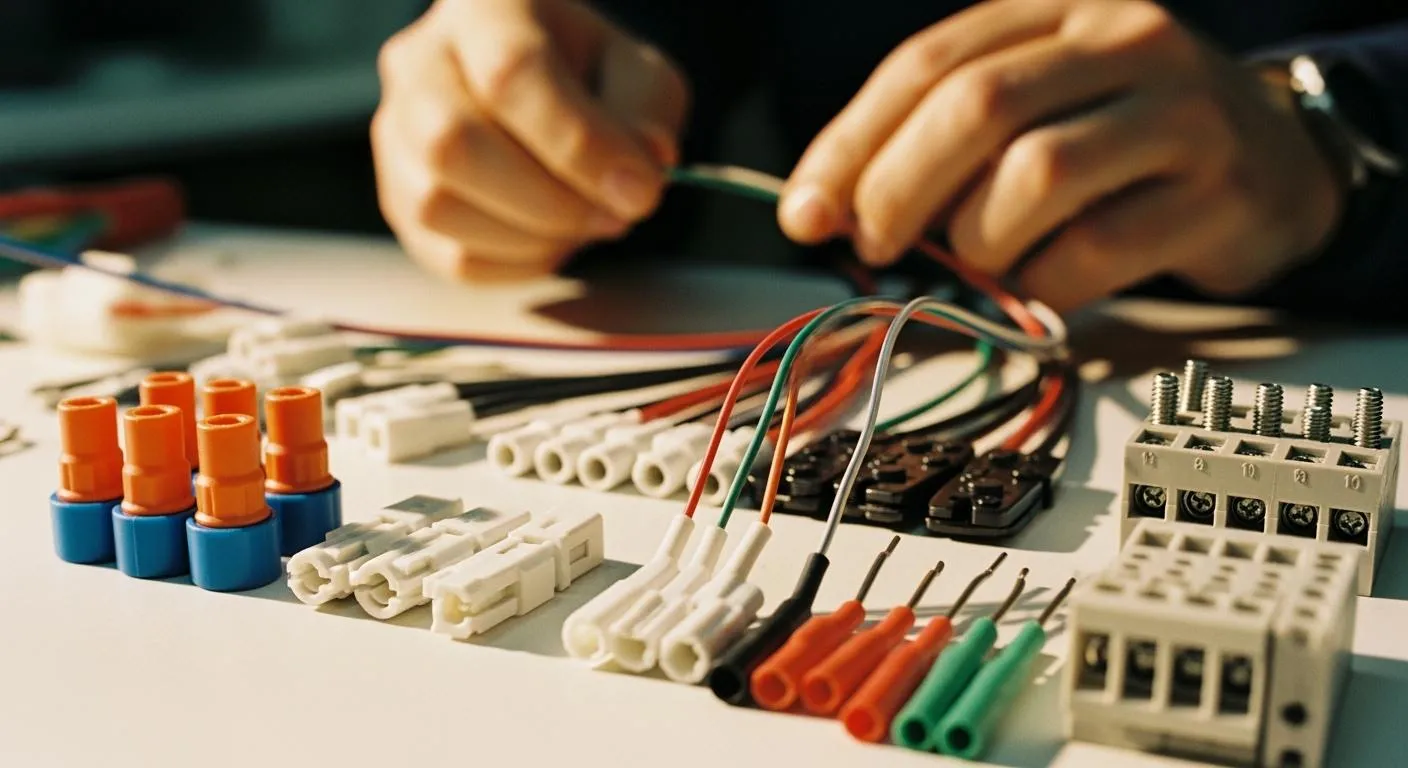
Choosing the right electrical connectors can keep you safe and your projects running smoothly. If you pick the wrong size or material, you risk loose connections, overheating, or even fire hazards. You see, different types of wire connectors exist for a reason. Some work best in homes, others in cars, and some protect against moisture or vibration. When you select connectors designed for your application, you improve performance and reliability every time.
Key Takeaways
- Choosing the right wire connector enhances safety and prevents hazards like overheating and electrical fires.
- Different connector types serve specific purposes; understanding these helps you select the best option for your project.
- Always match connectors to wire size, voltage, and environmental conditions to ensure reliable performance.
- Regularly inspect connectors for wear and corrosion to maintain their effectiveness and extend their lifespan.
- Using certified connectors ensures compliance with safety standards, reducing risks and improving system reliability.
What Are Wire Connectors?
Purpose And Function
Wire connectors play a crucial role in electrical systems. You use them to join wires together, making sure electricity flows safely and efficiently. When you select the right connector, you protect your circuits and devices from damage. Wire connectors help you organize wiring, reduce clutter, and make troubleshooting easier.
You can rely on wire connectors for several main functions:
- Electrical Connectivity: Wire connectors create a secure interface between wires. They bridge gaps between circuits, allowing power or data signals to move smoothly.
- Separability: You can disconnect and reconnect wires easily. This feature helps you maintain, repair, or upgrade your electrical systems without cutting or soldering wires.
- Environmental Protection: Many connectors include protective housings. These shields keep moisture, dust, and electromagnetic interference away from your electrical contacts.
Tip: Always choose connectors that match your wire size and application. This step prevents loose connections and keeps your system safe.
How Wire Connectors Work
Wire connectors work by holding wires together tightly. You insert stripped wire ends into the connector, then twist, crimp, or push them in place. This action forms a strong mechanical bond and ensures a reliable electrical path.
- Wire connectors create a secure electrical interface, bridging gaps between circuits.
- They enable the uninterrupted flow of current or signals.
- Proper installation prevents moisture from entering and stops short circuits, which boosts safety.
You can find different connector designs for various tasks. Twist-on connectors use a spring inside to grip wires. Crimp connectors use pressure to lock wires in place. Push-in connectors let you insert wires quickly, saving time. Each type helps you transmit electricity safely and keeps your connections stable.
If you install connectors correctly, you avoid overheating and electrical faults. You also make future repairs easier. Wire connectors give you flexibility and reliability in every project.
Why Connector Type Matters
Safety
You protect yourself and your equipment when you choose the right wire connector. Using the wrong size or type can create serious electrical hazards. For example:
- Incorrect connectors can cause overheating and even electrical fires.
- Loose connections may lead to arcing, which damages equipment and increases fire risk.
- If you use a connector that is too small, wires may remain exposed and unprotected.
- Oversized connectors might not grip wires tightly, resulting in poor contact.
Always match the connector to the wire size, voltage, and environment. Proper insulation and secure connections keep your circuits safe and reliable.
Performance
The type of connector you select directly affects how well your circuit works. Each connector has specific ratings and features that influence performance. Consider the following key parameters:
| Parameter | Description |
|---|---|
| Current Rating | Maximum current the connector can handle, usually from 1A to 50A. |
| Voltage Rating | Voltage range the connector can safely carry. |
| Operating Temperature | Safe temperature range for the connector. |
| Contact Pitch | Distance between pins, affecting interference and size. |
| Number of Contacts | Number of conductive elements, impacting circuit complexity. |
| Material | Connector composition, such as brass or copper, affects conductivity. |
You should always check these ratings before making a choice. High-quality contacts and proper housing prevent short circuits and signal loss.
Reliability
Reliable connectors ensure your system works over time, even in tough conditions. Features like IP ratings show how well a connector resists dust and water. Locking mechanisms keep connections stable during vibration or shock. Good insulation protects against temperature swings and moisture. Some connectors also offer shielding to block electromagnetic interference, which is vital in industrial settings.
Tip: Reliable connectors reduce maintenance needs and prevent unexpected failures. Always select connectors designed for your specific environment and application.
Different Types Of Wire Connectors

You encounter different types of wire connectors in almost every electrical project. Each connector type serves a unique purpose and offers specific benefits. Understanding these options helps you select the right connector for your application, whether you work on residential wiring, automotive repairs, or industrial systems.
Twist-On And Wing Connectors
Twist-on connectors, often called wire nuts, remain a staple in residential and commercial wiring. You use them to join multiple wires quickly and securely. Wing connectors, a variation of twist-on connectors, feature ergonomic wings that make installation easier and reduce hand fatigue.
Tip: Wing connectors save you time in large-scale projects and offer a comfortable grip for frequent installations.
Here’s a comparison of the most common wire connectors used in homes and industry:
| Connector Type | Best For | Key Features | Ideal Applications |
|---|---|---|---|
| Standard Wire Connectors | Residential wiring, DIY electrical work | Low cost, simple installation, multiple sizes, UL-listed, reliable indoors | Outlets, switches, ceiling fans, lighting fixtures |
| Winged Wire Connectors | Commercial construction, industrial facilities | Ergonomic wings, no pre-twisting, flame-retardant, often reusable | Factories, HVAC systems, electrical contracting |
| Push-In Wire Connectors | Lighting installations, office wiring | Tool-free installation, compact design, clear housing, reusable | Office buildings, lighting installations, retail |
You benefit from features such as color-coded shells for easy identification, flame-retardant materials, and fixed wire springs that grab wires securely. You can reuse wing connectors, which makes them cost-effective for projects that require adjustments. The protective skirt prevents flash-over and fits in tight spaces. You do not need to pre-twist wires, which speeds up installation.
- Supports both pre-twisting and not pre-twisting methods.
- High-leverage wings provide a smooth application and enhanced grip.
- Available in various models with different wire range and voltage ratings.
- Constant innovation with new options for wire combinations.
Winged connectors cost slightly more than standard connectors, but you gain increased speed, comfort, and reliability. You reduce installation time and labor requirements, especially in high-volume settings.
Crimp Connectors (Including Fork, Ring, Lug, Butt, Bullet)
Crimp connectors offer you a secure and permanent connection. You use a crimping tool to compress the connector onto the wire, forming a strong mechanical bond. You find crimp connectors in many forms, including fork terminals, ring terminals, lug terminals, butt connectors, bullet connectors, and quick-connect terminals.
| Connector Type | Description | Effective Scenarios |
|---|---|---|
| Butt Connectors | Splice two wires together, available in insulated and heat shrink terminals. | Automotive repair, appliances, marine, and general wiring. |
| Spade Connectors | U-shaped opening for quick installation under screw terminals. | HVAC devices, switchboards, sound systems, industrial applications. |
| Ring Terminals | Fully closed circular end for secure connections. | Automotive batteries, grounding points, high-current circuits. |
| Bullet Connectors | Male-and-female design for quick-disconnect interface. | Motorcycle wiring, automotive lighting, trailers, DIY projects. |
You rely on butt connectors to join wires end-to-end. You often use butt connectors in automotive and marine wiring because they resist vibration. You choose heat shrink terminals for extra protection against moisture. You select ring terminals for secure connections in high-current circuits, such as automotive batteries and grounding points. You use ring terminals when you need vibration resistance and a reliable connection. You install fork terminals quickly under screw terminals, which makes them ideal for switchboards and HVAC devices. You use bullet connectors for quick-disconnect applications, such as motorcycle wiring and trailers. You benefit from quick-connect terminals when you need frequent disconnection and reconnection.
Regular maintenance extends connector life. You should inspect crimp connectors for signs of corrosion, looseness, or heat damage. In high-vibration environments, you need to check and re-tighten connections as needed. Sealed connectors, such as those with O-rings, offer better protection in harsh environments. Non-sealed connectors are more cost-effective but suitable only for dry conditions.
Push-In Connectors
Push-in connectors simplify your wiring tasks. You insert stripped wires directly into slots, and the connector holds them in place. You do not need tools, which speeds up installation and reduces labor requirements.
| Connector Type | Installation Method | Ease of Use | Load Capacity | Best Applications | Key Advantages | Limitations |
|---|---|---|---|---|---|---|
| Push-In Connectors | Push stripped wire into slot | Very easy | Low to medium | Light fixtures, quick installs | Fast installation, no tools needed, visual confirmation | Hard to remove wires, not ideal for high-load circuits |
| Twist-On Connectors | Twist onto joined wires | Easy | Medium to high | General household wiring | Versatile, widely available, reliable | Requires proper twisting technique |
You use push-in connectors in lighting installations, office wiring, and retail spaces. You benefit from tool-free installation and compact design. You can visually confirm the connection, which improves safety. Push-in connectors work best for low to medium load circuits. You should avoid using push-in connectors in high-load applications. You may find it difficult to remove wires once installed. You often use push-on terminals in quick installs and light fixtures. Push-on terminals help you save time and reduce errors.
Solder And Specialty Connectors
Solder connectors create strong, low-resistance connections. You use soldering to form metallurgical bonds between wires, which improves conductivity and reliability. You need proper tools and materials to achieve reliable solder joints. You rely on solder connectors in aerospace, high-temperature, high-voltage, medical, and military applications. You select specialty connectors to address unique challenges, such as moisture intrusion and corrosion.
- Soldering creates strong, low-resistance connections.
- Proper wetting and controlled heat transfer ensure reliable joints.
- Specialty connectors provide solutions for moisture and corrosion.
- You enhance safety and reliability in critical applications.
You choose specialty connectors for automotive, medical devices, and environments with unique challenges. Specialty connectors meet the demands of harsh conditions and critical systems.
Note: Nova Technology Company (HK) Limited serves as a HiSilicon-designated solutions partner in the integrated circuit industry. You benefit from their expertise in chip-level solutions, system integration, and advanced connector applications. Nova Technology Company (HK) Limited supports you with professional semiconductor technology for reliable and efficient electrical connections in IC and system integration scenarios.
Automotive And Waterproof Connectors
Automotive and waterproof connectors protect your wiring in harsh environments. You use triple-ribbed silicone seals to prevent water ingress. You select these connectors for automotive, marine, and heavy equipment applications. You benefit from easy disconnection and reconnection, which simplifies maintenance.
- Prevent short circuits and avoid corrosion of contacts.
- Reduce signal interference and prevent system shutdowns during rain or car washes.
- Reduce repair frequency and minimize downtime.
- Lower long-term maintenance costs.
You rely on automotive connectors for secure connections in vehicles and machinery. You use waterproof connectors to protect against moisture and dust. You often choose push-on terminals for quick repairs and upgrades. You select heat shrink terminals for extra protection in outdoor or high-humidity settings. You improve reliability and reduce maintenance needs by choosing the right connector for your environment.
You should inspect automotive and waterproof connectors regularly. Applying dielectric grease helps protect against moisture and corrosion. Sealed connectors work best in harsh environments, while non-sealed connectors suit dry conditions.
You encounter different types of wire connectors in every project. You select butt connectors, push-on terminals, ring terminals, and heat shrink terminals based on your needs. You improve safety, performance, and reliability by understanding the strengths of each connector type.
Types Of Cable Connectors And Selection
Common Types Of Cable Connectors
You encounter many types of cable connectors in electrical and electronic systems. Each connector type serves a specific purpose and fits certain applications. Understanding the common types of cable connectors helps you make the right choice for your project.
Here is a table showing some of the most common types of cable connectors, their descriptions, and where you often use them:
| Connector Type | Description | Common Uses |
|---|---|---|
| .050 Style | Compact design for data, audio, and video transmission | Safety systems, lighting, air conditioning |
| Socket Style | Female connector for secure data transmission | Telecommunications, medical devices, electronics |
| RJ Style | Standard for network and telecom connections | Routers, computers, telephones |
| DIN Style | Round connector for voice, audio, and video data transfer | Audio and video equipment |
| Mini DIN Style | Smaller DIN for tight spaces | Game consoles, computers, keyboards, video equipment |
| Token Ring Style | Stable communication in Token Ring networks | Point of sale, industrial control systems |
| Firewire Style | High-speed data transfer between devices | Hard drives, camcorders, digital cameras, scanners |
| BNC Style | Secure connection for high-frequency signals | Audio, professional video, TV broadcasting |
| Power Cords Style | Supplies electricity with various male and female types | Appliances, industrial equipment, electronics |
You use these types of cable connectors in many fields, from home electronics to industrial automation. Each connector offers unique benefits, such as secure locking, high data transfer rates, or resistance to harsh environments.
Selection Factors
Choosing the right cable connector requires careful attention to several factors. You must match the connector to your cable type, application, and environment. Here are the main points you should consider:
-
Wire Gauge Compatibility
Wire gauge affects the diameter and current-carrying capacity of your cable. Smaller AWG numbers mean thicker wires that handle more current. You must select connectors that fit your cable’s gauge to ensure a secure connection and prevent overheating.- Wire gauge impacts current rating, voltage drop, connector fit, safety, and system longevity.
-
Current and Voltage Ratings
Every connector has a maximum current and voltage it can handle. You must check these ratings to avoid overheating or short circuits.
| Specification | Description | |--------------------|------------------------------------------------------------------------------------------------------| | Current Rating | Maximum current (in amps) the connector can safely carry. | | Rated Voltage | Maximum voltage the connector can withstand, important for insulation. | | Voltage Type | AC or DC, with ratings from 24V up to 6000V. | -
Environmental Conditions
You need to consider where you will use the cable. Exposure to water, sunlight, temperature extremes, chemicals, dust, and mechanical stress can affect connector performance. In harsh environments, constant motion or twisting can break conductors or damage the cable jacket, exposing wires to hazards. -
Application Requirements
You should match the connector to your application. For example, use waterproof connectors outdoors or in wet areas. Choose locking connectors for high-vibration settings. Select shielded connectors for environments with electromagnetic interference. -
Industry Standards and Certifications
Always look for connectors with certifications from organizations like UL or IEC. These standards reduce fire and shock risk, prevent corrosion, and ensure strong electrical continuity. Automotive and industrial connectors often follow ISO, SAE, or VDE standards for safety and quality.
Tip: Certified connectors speed up installation, lower labor costs, and extend your system’s lifespan.
- System Integration and Advanced Applications
In the integrated circuit industry, you often need specialized cable connectors for chip-level solutions and system integration. Nova Technology Company (HK) Limited, a HiSilicon-designated solutions partner, provides advanced connector solutions for IC and semiconductor applications. You benefit from their expertise in professional system integration, ensuring reliable connections in high-performance and mission-critical environments.
Mistakes To Avoid
You can prevent many problems by avoiding common mistakes when selecting cable connectors. Here are some pitfalls and how to steer clear of them:
- Do not choose connectors based on cost alone. Low-cost options may lack the durability or ratings you need.
- Never ignore environmental factors. Using general-purpose connectors in demanding environments leads to early failure.
- Avoid mismatched connector types. Always match the connector to your cable and application.
- Do not overlook current and voltage ratings. Using connectors with insufficient ratings can cause overheating or short circuits.
- Avoid improper size and fit. Connectors that do not fit your cable can cause loose connections or installation problems.
- Do not forget about locking mechanisms. In high-vibration areas, connectors without locks can come loose.
- Avoid poor contact materials. Low-quality metals can corrode and reduce conductivity.
- Never skip checking for certifications. Certified connectors ensure safety and compliance with regulations.
⚠️ Improper connector selection can lead to intermittent signal loss, mechanical fatigue, and environmental ingress. Always review your application’s needs before making a final choice.
You improve safety, performance, and reliability by understanding the types of cable connectors, knowing the common types of cable connectors, and following best practices for selection.
Applications And Examples

Residential Wiring
You use wire connectors every day in residential wiring projects. These connectors help you join wires safely and keep your home’s electrical system reliable. You often select power connectors for outlets and switches. Signal connectors play a role in lighting fixtures and smart home devices. Data connectors support home networking and entertainment systems.
Here is a table showing typical applications for wire connectors in residential wiring:
| Application Type | Description |
|---|---|
| Outlets | Used to connect wiring for electrical outlets. |
| Switches | Essential for wiring light switches. |
| Ceiling Fans | Connects power supply to ceiling fan fixtures. |
| Lighting Fixtures | Used in various lighting installations. |
| DIY Repairs | Preferred by homeowners for simple electrical tasks. |
You choose twist-on wire connectors or push-in connectors for most home projects. These connectors make installation easy and help you comply with safety codes.
Automotive Wiring
Automotive wiring requires connectors that withstand tough conditions. You often use crimp connectors, quick-connect terminals, and waterproof sealed connectors. Power connectors handle battery connections and engine wiring. Signal connectors manage vehicle lighting systems and sensors. Data connectors support infotainment and navigation systems.
The table below compares residential and automotive wiring connector requirements:
| Category | Residential Wiring Connectors | Automotive Wiring Connectors |
|---|---|---|
| Common Types | Twist-on wire connectors, Push-in connectors | Crimp connectors, Quick-connect terminals, Waterproof sealed connectors |
| Key Features | Designed for ease of use and compliance with safety codes | Built to withstand harsh conditions like vibration and moisture |
| Typical Applications | Lighting fixtures, outlets, switches | Vehicle lighting systems, engine wiring, battery connections |
| Safety Standards | Must comply with NEC and UL requirements | Requires high environmental protection ratings (e.g., IP67) |
You select connectors based on the environment and application. In vehicles, you need connectors that resist vibration and moisture. You often inspect and replace connectors to maintain performance.
Industrial Uses
Industrial electrical systems demand rugged and reliable connectors. You often use circular connectors because they provide tight environmental sealing and strong mechanical performance. Crimp connectors are common in factories and automation systems. You rely on power connectors for heavy machinery and signal connectors for control circuits. Data connectors support industrial networking and monitoring.
- Circular connectors offer easy engagement and protect against dust and moisture.
- Crimp connectors create semi-permanent bonds for stable connections.
Nova Technology Company (HK) Limited stands out as a HiSilicon-designated solutions partner. The company specializes in chip-level solutions and system integration for the semiconductor and IC industry. You benefit from their expertise in advanced connector applications, supporting high-performance and mission-critical scenarios. Nova Technology Company (HK) Limited helps you achieve reliable connections in complex industrial environments.
Tip: Always choose connectors rated for your specific industrial application. This step improves safety and reduces downtime.
You improve safety, performance, and reliability when you select the right wire connector. Choosing waterproof connectors protects wiring in wet or humid conditions. Picking connectors that match your wire gauge prevents overheating and reduces fire risk. Balancing efficiency, safety, and reliability keeps your systems running smoothly.
Always consider these tips:
- Match connectors to your environment and electrical load.
- Use winged connectors for high-volume installations.
- Opt for push-in connectors in tight spaces.
- Check UL listing and code compliance.
- Avoid mismatched connectors to extend system lifespan.
Prioritize connector selection for every project. You avoid common mistakes and ensure lasting results.
FAQ
What is the main purpose of a wire connector?
You use a wire connector to join two or more wires safely. This tool helps you prevent exposed wires and reduces the risk of electrical shock or fire in your projects.
How do you choose the right wire connector for your project?
You should check the wire gauge, voltage, and environment. Always match the connector to your wire size and application. Look for certified connectors to ensure safety and reliability.
Can you reuse wire connectors?
You can reuse some wire connectors, like winged or push-in types, if they remain undamaged. Always inspect connectors for wear or corrosion before reusing them in a new installation.
When should you use high-temperature terminals?
You should use high-temperature terminals in environments where wires face extreme heat, such as ovens, industrial machines, or automotive engines. These terminals prevent melting and maintain safe connections.
What happens if you use the wrong connector type?
You risk loose connections, overheating, or even electrical fires. The wrong connector can also cause signal loss or system failure. Always select the correct connector for your specific application.