ABS07-32.768KHZ-T Lifecycle and Obsolescence Risk Checklist: Key Verification Steps
ABS07-32.768KHZ-T lifecycle and obsolescence risk checklist. What to verify before redesign or last-time-buy — without assuming drop-in replacements.
ABS07-32.768KHZ-T Lifecycle and Obsolescence Risk Checklist: Key Verification Steps
Why the ABS07-32.768KHZ-T Crystal Demands a Lifecycle Check Now
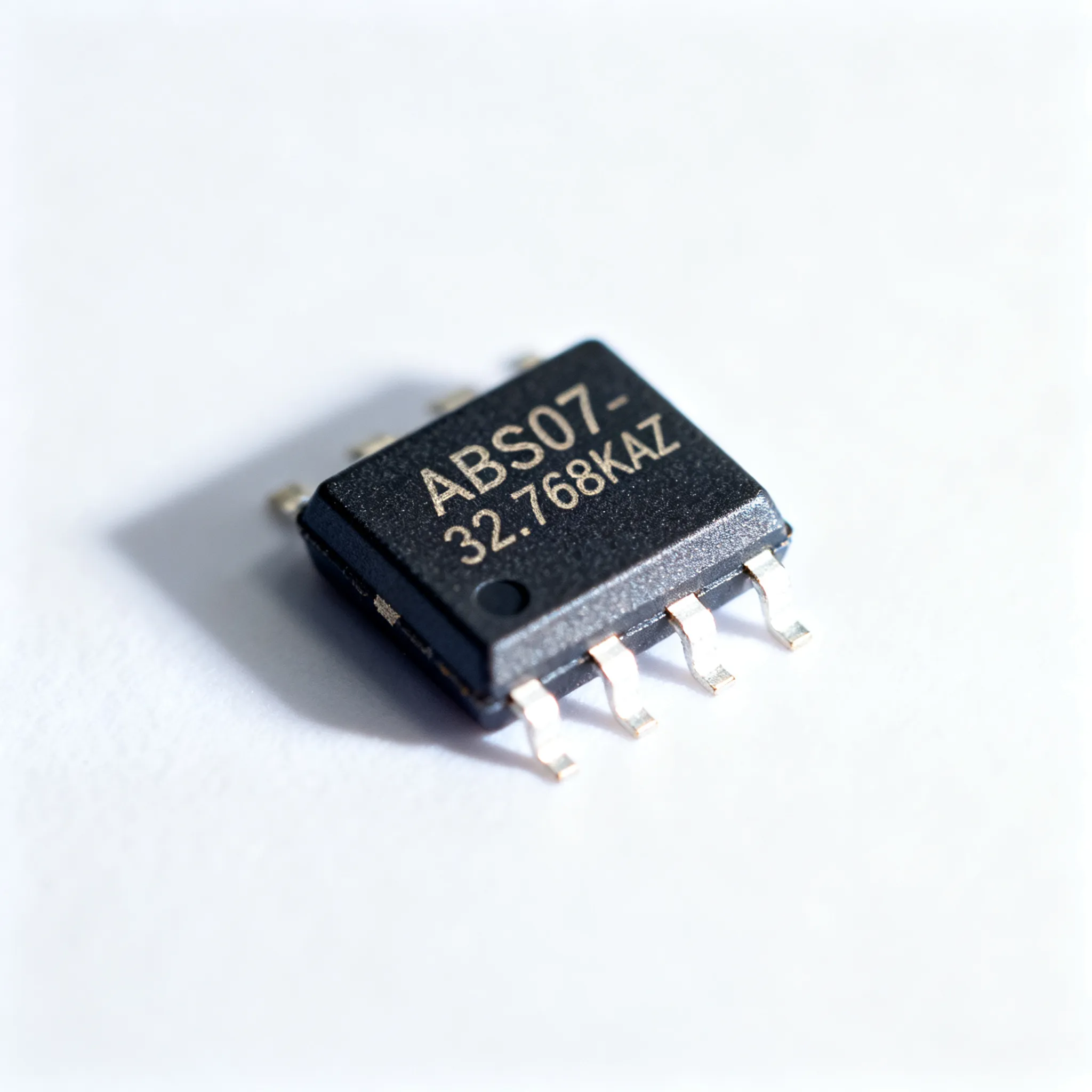
The ABS07-32.768KHZ-T tuning-fork crystal is embedded in millions of real‑time clocks (RTCs), wearable health monitors, smart meters, and IoT edge nodes. Its 3.2 × 1.5 mm package and stable 32.768 kHz output have made it a go‑to choice for engineers who need a reliable timebase in space‑constrained designs. Yet recent supply‑chain volatility, allocation swings in passive components, and the growing list of end‑product safety recalls have turned lifecycle verification from a best practice into a critical procurement gate.
Even when a component is flagged as ‘low risk’ on platforms like TrustedParts, complacency can be expensive. Authorized distribution inventories can change overnight, and a single production problem at an OEM’s quartz‑blank supplier can shift lead times without warning. More importantly, crystals that are technically ‘Active’ can still appear in finished goods that later face safety recalls. The U.S. Consumer Product Safety Commission (CPSC) database regularly lists consumer electronics, medical devices, and industrial controls where a crystal was part of the failure chain. A proactive check of that database—paired with your own BOM scrub—helps you spot indirect exposure before your assembly line halts.
You are not merely checking a box. You are protecting a production schedule that relies on a single‑footprint part, often without an instantly drop‑in second source. The checklist that follows gives you a structured way to confirm lifecycle status, evaluate alternative pin‑compatible crystals, and build a procurement buffer that matches the risk posture of your end product.
How the ABS07-32.768KHZ-T Operates and What the Specs Mean for Long-Term Sourcing
All 32.768 kHz tuning‑fork crystals exploit the piezoelectric effect of a precisely machined quartz tuning fork. In a typical Pierce oscillator circuit, the ABS07-32.768KHZ-T sits between two load capacitors connected to the oscillator pins of an MCU or dedicated RTC chip. The crystal’s load capacitance (CL) determines the required external capacitance to hit the exact oscillation frequency. Even a few pF of mismatch can pull the clock by tens of ppm, causing time‑drift in applications that rely on accurate timestamps.
The Abracon datasheet—available from LCSC, AllAboutCircuits, and Abracon’s parametric page—details the electrical parameters that anchor both performance and long‑term sourcing decisions. The table below maps each critical spec to a lifecycle risk signal, so you can see why a 12.5 pF part is not interchangeable with its 7 pF cousin without requiring design re‑qualification.
| Parameter | ABS07-32.768KHZ-T Value | Lifecycle Risk Signal & Sourcing Note |
|---|---|---|
| Frequency | 32.768 kHz | Fixed. Industry‑standard frequency means many manufacturers can produce; risk is low unless you need an exotic deviation. |
| Frequency Tolerance @ 25 °C | ±20 ppm | Widely stocked tolerance class. Tighter tolerance parts often have smaller production volumes and longer lead times, so verify if you are using ±10 ppm for special requirements. |
| Load Capacitance (CL) | 12.5 pF | This value is the most common in MCU RTC reference designs, driving broader distributor stock. The 12.5 pF variant typically has the highest market availability; compare with 7 pF and 6 pF variants that may face allocation sooner. Cross‑reference on TrustedParts for current pricing trends. |
| Equivalent Series Resistance (ESR) | 70 kΩ max | Matching the oscillator gain margin depends on ESR. If you qualify an alternative with higher ESR, startup margin may degrade, especially at low temperatures. Confirm oscillator margin with your MCU supplier’s application note. |
| Drive Level | 0.5 µW max | Exceeding this value can damage the crystal or cause long‑term frequency drift. This parameter is rarely a supply‑risk factor but must be re‑validated if you change crystal vendors or circuit gain. |
| Package (mm) | 3.2 × 1.5 × 0.9 mm max, 2‑pad SMD | The 3215 footprint is widely available from multiple manufacturers, reducing single‑source structural risk. However, subtle differences in package height (0.9 mm vs. 1.0 mm) can affect pick‑and‑place setup if you mix brands. |
| Operating Temperature Range | −40 °C to +85 °C | Industrial‑grade range is common. If your application extends beyond 85 °C (e.g., automotive interior), confirm availability of an extended‑temperature variant and its lifecycle status. |
| Lifecycle Status | ‘Active’ per Makat and Abracon internal data | No public EOL or NRND notice. TrustedParts assigns a ‘Low’ lifecycle risk. Nevertheless, always subscribe to PCN alerts from your distributor and re‑confirm status quarterly for long‑lifecycle products. |
Notice how load capacitance emerges as the single most important spec affecting sourcing flexibility. If your approved vendor list only includes the 12.5 pF ABS07-32.768KHZ-T, you have the deepest pool of inventory to tap into. But if your design can tolerate a 7 pF or 6 pF crystal after adjusting load capacitors, you might unlock emergency supply options—provided you have re‑qualified the timing margin. This table helps you explain to your procurement team why a CL‑mismatch isn’t a simple “just buy the cheaper one” decision.
ABS07-32.768KHZ-T Variants and Competing Crystals: A Side-by-Side Verification of Alternatives
Because the ABS07-32.768KHZ-T is part of the ABS07 family, several load‑capacitance variants share the same 3.2 × 1.5 mm footprint. The ABS07-32.768KHZ-7-T (7 pF) and ABS07-32.768KHZ-6-T (6 pF) are the two closest relatives. In a supply pinch, you may also consider cross‑brand alternatives like the Epson FC‑135 (12.5 pF option) or the Citizen CMR200T. But before you pull the trigger, compare the key parameters that determine how easily you can substitute one for the other. The matrix below draws from TrustedParts -7‑T data, Avnet -6‑T, the Ariat‑tech alternatives overview, and Octopart -7‑T.
| Comparison Metric | ABS07-32.768KHZ-T (12.5 pF) | ABS07‑32.768KHZ‑7‑T (7 pF) | ABS07‑32.768KHZ‑6‑T (6 pF) | Epson FC‑135 (12.5 pF option) | Selection Notes & Risk Boundary |
|---|---|---|---|---|---|
| Load Capacitance | 12.5 pF | 7 pF | 6 pF | 12.5 pF (multiple options) | Only the Epson FC‑135 with 12.5 pF CL offers a potential pin‑compatible second source without re‑calculating load capacitors. The 7 pF and 6 pF variants require a board‑level redesign of the external capacitor network. |
| Frequency Tolerance @ 25 °C | ±20 ppm | ±20 ppm | ±20 ppm | ±20 ppm (typical) | All candidates hit the same initial tolerance; verify full temperature stability from each manufacturer’s datasheet. |
| ESR (max) | 70 kΩ | 70 kΩ | 80 kΩ | 70 kΩ | The 6 pF variant’s slightly higher ESR may impact oscillator gain margin at cold temperatures. Perform a margin test if evaluating the -6‑T. |
| Package (L × W × H mm) | 3.2 × 1.5 × 0.9 | 3.2 × 1.5 × 0.9 | 3.2 × 1.5 × 0.9 | 3.2 × 1.5 × 0.9 | Mechanical drop‑in is possible; confirm PCB pad layout and solder mask dimensions match both manufacturers’ recommended footprints. |
| Lifecycle Status | Active (Low risk) | Active (Low risk per TP) | Active (verify via Avnet) | Active (mature product; confirm via Epson distributor) | All are active, but older platforms may see sporadic allocation. Request PCN subscriptions for each candidate. |
| Supply Risk Trend | Broad distributor coverage, high‑volume pricing | Niche loading may tighten faster; verify via Octopart | Lower stock depth; confirm allocation‑backed lead time | Established second‑source path; verify regional stock through franchised partners | Treat any variant with a non‑standard CL as a “buyer’s option only when primary 12.5 pF part is on extended backorder.” |
The table’s bottom line: ABS07-32.768KHZ-T (12.5 pF) is the anchor part with the richest supply ecosystem. If you must look at an alternative, the Epson FC‑135 with a 12.5 pF load is the most plausible pin‑compatible second source, but you still need to verify oscillator startup time and frequency pull with your actual MCU/RTC circuit. The 7 pF and 6 pF variants from Abracon are valuable for new designs that intentionally use a lower CL, but they are not a quick fix when the 12.5 pF product goes on allocation—they call for a re‑qualification cycle that takes weeks.
Step-by-Step Checklist to Confirm Lifecycle, Authorized Supply, and Design Fit for the ABS07-32.768KHZ-T
The verification steps below combine engineering due diligence with procurement rigor. They transform the typical “it’s low risk, don’t worry” into an auditable record that you can show to quality auditors and production managers. Each step includes the reason it matters and the tool or document you should use.
| Step | Action | Why It Matters | Verification Tool / Source |
|---|---|---|---|
| 1 | Validate Active lifecycle status directly from the manufacturer. | Avoid relying on stale cached pages; a recent manufacturing lot change or fab relocation can trigger a quiet NRND. | Abracon parametric page + Makat lifecycle entry. Bookmark and check quarterly. |
| 2 | Check authorized distributor inventory and price trends. | Grey‑market parts or non‑franchised sellers increase counterfeit risk. Price‑per‑unit data helps you spot allocation patterns. | TrustedParts (select authorized results only). Request an RFQ with quantity breakpoints for a 12‑month forecast. |
| 3 | Review the latest datasheet revision for any EOL notes. | Datasheet updates sometimes add “not recommended for new designs” in a footnote before an official PCN. | LCSC datasheet PDF; compare revision code with what you originally designed against. |
| 4 | Scan for end‑product recalls that may affect your supply chain indirectly. | Even if the crystal itself isn’t recalled, a major customer returning finished units can tie up inventory upstream. | CPSC.gov; use the search field for “32.768” or your end‑product category. |
| 5 | Evaluate lead‑time signals and set reorder thresholds. | Without an allocation‑backed lead time, you cannot set min‑max levels. Ask for a written lead‑time commitment from your distributor. | RFQ responses from franchised partners; ask for “allocation‑backed lead time” instead of standard quote. |
| 6 | Pre‑qualify a pin‑compatible alternative with identical CL (12.5 pF). | If the primary part goes on allocation, you can pivot immediately without redesigning load capacitors. | Prototype with the Epson FC‑135‑12.5pF or a similar 12.5 pF option from Citizen; run full timing margin, startup, and frequency‑pull tests across temperature. |
Execute these steps as a mini‑project, not a one‑time audit. We recommend you refresh step 1 and step 2 every 90 days for high‑runner production, and tie step 4 into your monthly component engineering review. For step 6, run the alternative crystal through a small pilot build (at least 100 units) before you list it on the approved vendor list. That pilot should include a cold‑start test at –40 °C and a 48‑hour drift measurement to ensure the new crystal does not violate your RTC accuracy budget.
Answers to the ABS07-32.768KHZ-T Lifecycle Questions Engineers Actually Ask
Q: Is the ABS07-32.768KHZ-T being discontinued? How can I be certain?
Abracon currently lists the part as ‘Active’ and no public EOL or NRND notice has been issued. The Makat lifecycle entry confirms the same status, and TrustedParts consistently flags its lifecycle risk as ‘Low’. However, “Active” is not a guarantee—it’s a snapshot. The safest way to stay ahead is to subscribe to Abracon’s PCN (Product Change Notification) service through your authorized distributor. Ask for a quarterly lifecycle confirmation letter and integrate that deliverable into your component obsolescence management process. If you are designing a product with a 10‑year lifecycle, consider a last‑time‑buy agreement even for an Active part, because quartz crystal supply chains can consolidate without warning.
Q: What’s the real difference between ABS07-32.768KHZ-T, -7-T, and -6-T, and does it affect sourcing risk?
The suffixes denote load capacitance: 12.5 pF for the ABS07-32.768KHZ-T, 7 pF for the -7‑T, and 6 pF for the -6‑T. This is not a minor tweak. In a typical Pierce oscillator, the external load capacitors CL1 and CL2 must be chosen so that their series combination plus stray capacitance equals the crystal’s specified CL. If you drop a 7 pF part into a board laid out for 12.5 pF, the oscillation frequency will pull high, easily exceeding the ±20 ppm tolerance and causing RTC inaccuracy. From a sourcing standpoint, the 12.5 pF variant is the highest‑volume and most broadly stocked. The 7 pF and 6 pF parts serve low‑power, low‑swing oscillator designs where the MCU’s internal oscillator may have limited drive. While they can be vital for ultra‑low‑power applications, they are more niche and may experience longer lead times during a passives crunch. Always confirm allocation‑backed lead time for the specific CL variant you require.
Q: If the ABS07-32.768KHZ-T is on backorder, can I substitute the ABS07-32.768KHZ-7-T without board changes?
Rarely. Inserting a 7 pF crystal into a circuit designed for 12.5 pF will shift the frequency by tens of ppm—enough to violate your RTC accuracy specification. While you could in theory re‑calculate and swap the external load capacitors to bring the oscillation back into spec, that constitutes a hardware redesign requiring new BOM approvals, layout verification, and full timing re‑qualification. A more practical path is to pre‑qualify a pin‑compatible crystal with an identical 12.5 pF CL from a different manufacturer. The Epson FC‑135‑12.5pF, for example, can be evaluated as a second source candidate before the crisis hits, so that when allocation tightens, you can switch with confidence after confirming oscillator startup margin. Always verify the candidate in your specific circuit; the crystal vendor’s generic recommendation is not enough.
Q: How can I identify a counterfeit ABS07 crystal?
Counterfeit 32.768 kHz crystals are less common than semiconductor fakes, but they do circulate during severe shortages. Tell‑tale signs include: frequency deviation far outside the ±20 ppm band at room temperature, ESR values that exceed the 70 kΩ maximum, or visible differences in laser marking quality compared to known‑good samples. Always purchase through franchised distributors listed on TrustedParts or Avnet. When you receive a new lot, use a crystal impedance meter (or a network analyzer with a test fixture) to measure ESR and load resonance frequency against the LCSC datasheet limits. Verify the lot code with Abracon’s traceability database, and perform X‑ray inspection if the lot originates from an unfamiliar channel. A simple in‑circuit startup test at –40 °C and +85 °C can further weed out parts that pass room‑temperature tests but fail at the edges.
Q: What inventory buffer is recommended for the ABS07-32.768KHZ-T in a high-mix production environment?
Even though the part carries a low lifecycle risk, passives allocation can shift quickly. We advise a safety stock that covers 12 to 16 weeks of production demand for a product with regular consumption. If you build medical or industrial equipment where requalification is costly and field replacement is impossible, consider extending that buffer to six months. Negotiate a bonded inventory agreement with your distributor—you pay only when you pull parts, but the inventory is physically reserved. Combine this with a rolling 12‑month forecast that you update quarterly, and tie the forecast to a contractual obligation from the distributor to hold the agreed buffer. In a high‑mix environment where the ABS07-32.768KHZ-T appears across multiple SKUs, aggregate your demand across all BOMs to get the most favorable pricing and allocation priority.
References & Further Reading
- Abracon – ABS07-32.768KHZ-T parametric page
- LCSC – ABS07-32.768KHZ-T datasheet download
- AllAboutCircuits – ABS07-32.768KHZ-7-1-T datasheet and specs
- TrustedParts – ABS07-32.768KHZ-T authorized distributor inventory and lifecycle risk
- TrustedParts – ABS07-32.768KHZ-7-T lifecycle and supply
- Avnet – ABS07-32.768KHZ-6-T product page
- Ariat‑tech – ABS07-32.768KHZ-T specifications and alternatives
- Octopart – ABS07-32.768KHZ-7-T distributors and price comparison
- Makat – ABS07-32.768KHZ-T lifecycle entry
- CPSC – Recalls & Product Safety Warnings
Whether you are securing the ABS07-32.768KHZ-T for a new design or buffering against a suspected allocation shift, a structured lifecycle verification process is your strongest defense against line‑down surprises. The steps and comparison data in this article give you a repeatable framework to validate status, evaluate alternatives, and keep your bill of materials healthy. For a custom quote—across all the passive and timing components on your BOM—upload your file and request an RFQ through IC-Online. With mixed‑BOM flexibility and MOQs tailored to your production profile, you can consolidate sourcing without compromising on authenticity or lead‑time visibility.