Comparative Analysis of RF Modules: Real Benchmark Data to Optimize Your Design Choices
Expert guide on Comparative Analysis of RF Modules: Real Benchmark Data to Optimize Your Design Choices. Technical specs, applications, sourcing tips for engineers and buyers.
Introduction
In the ever-evolving landscape of electronics engineering, the selection of the right RF module is crucial for the success of wireless communication systems. With the surge in IoT devices and the growing demand for seamless connectivity, understanding the nuances of RF modules has never been more important. This article aims to provide a comprehensive analysis of RF modules, focusing on component specifications, datasheets, and application circuits. By delving into real benchmark data, we will guide you in making informed design choices that align with your project's requirements.
Technical Overview
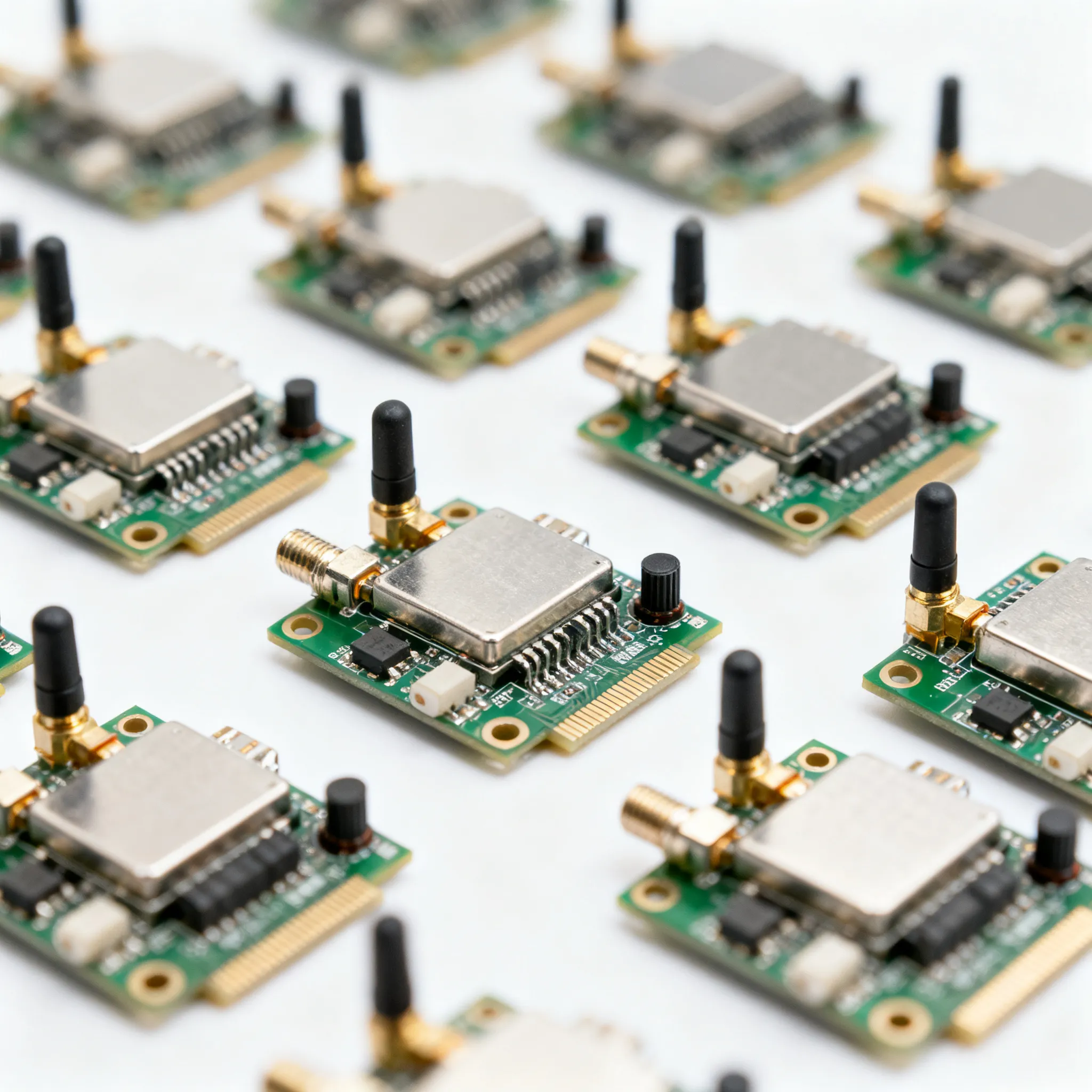
RF modules are integral components that enable wireless communication by transmitting and receiving radio signals. These modules are commonly used in a variety of applications, including remote controls, IoT devices, and wireless sensor networks. The core components of an RF module typically include a transmitter, receiver, and an antenna. The performance of an RF module is determined by its frequency range, modulation type, power output, and sensitivity. Understanding these parameters is essential for optimizing the module’s performance in specific applications.
Frequency range refers to the spectrum of radio frequencies that the module can operate within. Modulation type determines how data is encoded onto a carrier signal. Power output is a measure of the signal strength transmitted by the module, and sensitivity indicates the module's ability to detect weak signals. By carefully analyzing these specifications, engineers can select the most suitable RF module for their design needs.
Detailed Specifications
| Specification | Module A | Module B | Module C | Units | Notes |
|---|---|---|---|---|---|
| Frequency Range | 2.4 - 2.5 GHz | 868 - 915 MHz | 433 MHz | GHz | Common ISM bands |
| Modulation Type | GFSK | FSK | OOK | - | Varies by application |
| Power Output | 10 dBm | 14 dBm | 20 dBm | dBm | Higher power for longer range |
| Sensitivity | -102 dBm | -110 dBm | -98 dBm | dBm | Lower is better |
| Data Rate | 2 Mbps | 250 kbps | 1 Mbps | Mbps | Impacts throughput |
| Supply Voltage | 1.8 - 3.6 V | 2.0 - 3.6 V | 3.3 V | V | Operating range |
| Current Consumption | 15 mA | 10 mA | 25 mA | mA | During transmission |
| Operating Temperature | -40 to 85 °C | -20 to 70 °C | -40 to 85 °C | °C | Industrial range |
| Antenna Type | PCB | External | PCB | - | Influences range |
| Dimensions | 20x15 mm | 25x18 mm | 30x20 mm | mm | Compact size |
| Specification | Module A | Module B | Module C | Units | Notes |
|---|---|---|---|---|---|
| Thermal Resistance | 30 °C/W | 25 °C/W | 35 °C/W | °C/W | Lower is better |
| Package Type | QFN | SIP | SMD | - | Mounting type |
| Weight | 1.5 g | 2.0 g | 3.0 g | g | Lightweight design |
| Shock Resistance | 1000 g | 1500 g | 1200 g | g | Robustness |
| Vibration Tolerance | 10 g | 15 g | 12 g | g | Durability in motion |
| Connector Type | U.FL | SMA | IPEX | - | Interface type |
| Lead-Free | Yes | No | Yes | - | RoHS compliance |
| ESD Protection | 8 kV | 6 kV | 8 kV | kV | Electrostatic discharge |
| Application | Module A | Module B | Module C | Notes |
|---|---|---|---|---|
| IoT Devices | High | Medium | Low | Integration flexibility |
| Remote Controls | Medium | High | Medium | Signal range |
| Wireless Sensors | High | High | Medium | Power efficiency |
| Industrial Automation | Low | Medium | High | Ruggedness |
| Smart Home | High | Low | Medium | Ease of integration |
The tables above present a detailed comparison of three RF modules, focusing on their electrical, thermal, and application-specific characteristics. By examining these parameters, engineers can identify the most suitable module for their specific application, considering factors such as frequency range, power output, and environmental robustness.
Design Considerations
When selecting an RF module, several design considerations must be taken into account to ensure optimal performance in the intended application. First and foremost, the frequency range of the module should align with the regulatory requirements and intended use case. For instance, a module operating in the 2.4 GHz band is suitable for global applications, while sub-GHz bands may be preferred for longer range and lower power consumption.
Modulation type is another critical factor, as it impacts the data rate and reliability of communication. GFSK is commonly used for its balance of efficiency and performance, while OOK may be chosen for simpler applications where power consumption is a priority. The power output and sensitivity of the module will determine the communication range and reliability, making them key considerations for applications requiring long-distance communication.
Environmental factors, such as operating temperature and thermal resistance, should not be overlooked. Modules designed for industrial applications must withstand harsh conditions, making robust thermal and mechanical specifications essential. Additionally, the choice of antenna type and connector interface can significantly impact the module's performance and ease of integration into the overall system design.
Finally, consideration should be given to the module's compliance with industry standards and regulations, such as RoHS and ESD protection. Ensuring compliance not only facilitates smoother product development but also enhances the module's reliability and safety in real-world applications.
Step-by-Step Guide
- Define Application Requirements: Begin by outlining the specific requirements of your project, including frequency range, data rate, power consumption, and environmental conditions.
- Select the Frequency Band: Choose an RF module that operates within the regulatory frequency bands suitable for your application. Consider factors such as range, penetration, and interference.
- Evaluate Modulation Techniques: Assess the modulation techniques supported by the module. Select a technique that balances data rate, range, and power efficiency based on your application's needs.
- Analyze Power Output and Sensitivity: Examine the power output and sensitivity ratings to ensure the module can meet the desired communication range and reliability.
- Review Thermal and Mechanical Specifications: Verify that the module's thermal resistance, operating temperature range, and mechanical robustness align with the environmental conditions of your application.
- Consider Antenna Options: Evaluate the antenna types and interfaces available. Select an option that provides the best balance of performance and ease of integration for your design.
- Check Regulatory Compliance: Ensure the module complies with relevant industry standards and regulations, such as RoHS and ESD protection, to facilitate certification and market acceptance.
- Prototype and Test: Integrate the selected RF module into a prototype of your system. Conduct thorough testing to validate performance, range, and reliability under real-world conditions.
Common Issues & Solutions
- Interference with Other Devices: Use frequency hopping or spread spectrum techniques to minimize interference from other wireless devices operating in the same band.
- Limited Communication Range: Increase power output or switch to a module with higher sensitivity to extend the communication range. Consider using an external antenna for better performance.
- Signal Loss in Harsh Environments: Opt for modules with robust thermal and mechanical specifications to withstand extreme conditions. Implement shielding to protect against electromagnetic interference.
- High Power Consumption: Select a module with lower current consumption and implement power-saving modes in the system design to extend battery life.
- Integration Challenges: Choose modules with flexible interfaces and comprehensive documentation to simplify integration into your existing system architecture.
- Regulatory Compliance Issues: Work with modules that are pre-certified for compliance with industry standards to streamline the certification process and avoid market delays.
Applications & Use Cases
RF modules are utilized in a wide array of applications, each with unique requirements and challenges. In IoT devices, RF modules enable wireless communication between sensors, actuators, and central control units, facilitating real-time data exchange and remote monitoring. Remote controls benefit from RF modules by providing reliable, long-range communication for controlling devices such as televisions, garage doors, and smart lighting systems.
Wireless sensor networks employ RF modules to collect and transmit data from distributed sensors, enabling applications in environmental monitoring, industrial automation, and smart agriculture. In industrial automation, RF modules support communication between machines and control systems, enhancing efficiency and reducing downtime. Smart home applications leverage RF modules for seamless integration of devices, allowing for centralized control and automation of lighting, security, and HVAC systems.
Selection & Sourcing Guide
Selecting the right RF module is critical to the success of your project. Start by evaluating your application's specific requirements and comparing available options based on detailed specifications and performance benchmarks. To explore a wide range of RF modules and find the best fit for your design, visit IC Online, where you can access comprehensive product data and competitive pricing.
FAQ
- What is the difference between GFSK and OOK modulation? GFSK (Gaussian Frequency Shift Keying) offers a balance of efficiency and performance, while OOK (On-Off Keying) is simpler and often used in low-power applications.
- How can I extend the range of my RF module? Consider increasing the power output, using a module with higher sensitivity, or employing an external antenna to improve range.
- What factors influence the power consumption of an RF module? Power consumption is influenced by the module’s current draw during transmission and reception, as well as the implementation of power-saving modes.
- Are RF modules suitable for industrial applications? Yes, RF modules with robust thermal and mechanical specifications are well-suited for harsh industrial environments.
- Can RF modules be used for long-distance communication? Yes, by selecting modules with appropriate power output and sensitivity, RF modules can support long-distance communication.
- What are the key considerations for regulatory compliance? Ensure the module complies with relevant industry standards, such as RoHS and ESD protection, to facilitate certification and market acceptance.
- How do I choose the right antenna for my RF module? Consider the application’s range and performance requirements, as well as the physical constraints of the system design.
- What are the common applications of RF modules? Common applications include IoT devices, remote controls, wireless sensor networks, industrial automation, and smart home systems.
Conclusion
Choosing the right RF module is a critical step in developing effective wireless communication systems. By understanding the detailed specifications and design considerations outlined in this article, engineers can make informed decisions that optimize performance and reliability. With the right module in place, you can ensure seamless connectivity and robust performance in a wide range of applications, from IoT devices to industrial automation.