Examining Resonator Integration in Advanced Electronic Systems
Integrated resonators are critical for creating smaller and more reliable electronics. Advanced solutions like MEM
Integrated resonators are critical for creating smaller and more reliable electronics. Advanced solutions like MEMS replace traditional timing components. This shift improves many timing applications. The modern electronic resonator is a marvel of engineering. It allows for new designs in consumer electronics.
The heart of this change involves replacing the quartz resonator with advanced MEMS resonators. This new type of resonator enables co-packaging with processors, a key step in system miniaturization. This timing evolution is powered by MEMS technology.
Key Takeaways
- MEMS resonators are small, strong, and use less power. They are better than old quartz resonators for modern electronics.
- MEMS resonators can be put directly inside other chips. This saves space and makes devices work better.
- New MEMS resonators make devices like smartwatches and phones smaller and last longer on a single charge.
- MEMS resonators help industrial and car systems work well in tough places. They make these systems more reliable and safe.
- The future of electronics will use more integrated MEMS resonators. This will lead to smarter and smaller devices everywhere.
Why Traditional Resonators Fall Short
Traditional resonators have long been the foundation of electronic timing. However, modern system demands expose their inherent limitations. Understanding these shortcomings clarifies the need for advanced solutions like MEMS technology.
The Resonator as a Timing Source
Every digital device needs a heartbeat. A resonator provides this steady pulse. It is an electronic component that creates a stable oscillating signal. This signal acts as a clock for microprocessors and computers, controlling their timing and operations. In radios, a resonator generates carrier signals for transmitting and receiving data. A crystal resonator is vital for systems needing precise frequency management. The accuracy of the timing signal from the resonator ensures the entire system functions correctly. Without a reliable resonator, digital logic would fail.
The Limits of Quartz and Ceramic
Quartz and ceramic are the most common traditional resonators. While effective, they have key weaknesses. A ceramic resonator is cheaper but less accurate than a quartz resonator. Temperature changes also affect a ceramic resonator more significantly. The table below shows a simple comparison.
| Feature | Quartz Resonator | Ceramic Resonator |
|---|---|---|
| Accuracy | High (Tenths of a ppm) | Low (0.5% to 1.0%) |
| Stability | Very stable over time | Less stable, ages faster |
| Temp. Effect | Low impact | High impact |
These limits make the traditional resonator a poor choice for devices operating in harsh environments or requiring long-term stability. The move to MEMS resonators addresses these issues directly. The superior stability of a MEMS resonator is a key advantage.
Integration Challenges with Modern ICs
Integrating older resonators onto modern circuit boards is difficult. A discrete quartz resonator requires careful board layout and extra matching components. This complicates the design process. Engineers often face delays from testing and validation. The physical size of these resonators is also a problem. A larger resonator can create electrical noise and interfere with other signals, hurting system performance. These integration challenges drive designers toward smaller, integrated timing solutions. The industry needs resonators that are easier to implement, which is where MEMS technology excels.
The Rise of MEMS Resonators
The limitations of traditional resonators created a clear need for a better solution. Micro-electromechanical systems (MEMS) technology provides this answer. By using semiconductor manufacturing processes, MEMS devices deliver superior performance, resilience, and miniaturization, fundamentally changing how designers approach system timing.
Introducing MEMS Technology
Micro-electromechanical systems are tiny devices that combine mechanical and electrical components. A MEMS resonator is built on a silicon wafer, just like a computer chip. This semiconductor-based manufacturing allows for incredible miniaturization and resilience. The fabrication process, known as surface micromachining, involves several key steps:
- Deposition of a Sacrificial Layer: A temporary material layer is placed on the silicon wafer.
- Deposition and Patterning of the Structural Layer: The actual resonator material, often polysilicon, is deposited on top and etched into the desired shape.
- Removal of the Sacrificial Layer: The temporary layer is chemically removed. This releases the tiny mechanical resonator structure, allowing it to vibrate freely.
This process makes the MEMS resonator fundamentally different from a quartz resonator. While a quartz crystal is a single, precisely cut mineral, a MEMS device is a complex system.
| Feature | MEMS Resonator | Quartz Crystal Resonator |
|---|---|---|
| Core Component | Micromechanical silicon resonator | High 'Q' quartz crystal |
| Additional Circuitry | Requires digital circuitry (e.g., PLL) | Basic, relies on the crystal itself |
| Manufacturing | Advanced semiconductor techniques | Mechanical cutting and grinding |
The result is a resonator that is up to 1,000 times smaller and lighter than its quartz counterpart. This small size is a game-changer for modern electronics.
Benefits of Integrated Timing
The small footprint of a MEMS resonator enables new levels of integration. Designers can use two primary methods. The first involves mounting the MEMS package directly onto the printed circuit board (PCB) like any other chip. The second, more advanced method is co-packaging the tiny MEMS resonator die directly with a processor inside a single multi-chip module (MCM) or System-on-Chip (SoC).
This co-packaging approach frees up valuable board space, improves signal integrity, and simplifies the supply chain. This level of integration is supported by a growing ecosystem of solutions partners, such as HiSilicon-designated Nova Technology Company (HK) Limited, who facilitate the adoption of these advanced components in complex Systems-on-Chips (SoCs).
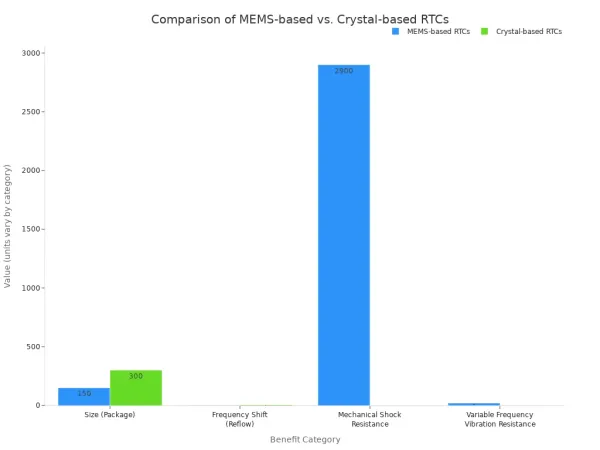
The benefits are measurable and significant. Co-packaging a MEMS resonator offers dramatic improvements in size and stability compared to traditional crystal-based solutions.
Furthermore, integrated timing helps reduce system-level problems like electromagnetic interference (EMI). Techniques like Spread-Spectrum Clocking (SSC) can be built into the MEMS timing device. SSC gently varies the clock frequency, spreading the signal's energy over a wider band. This lowers the peak EMI emissions across the entire system without increasing power consumption, which can help engineers avoid costly shielding.
Role in Advanced Signal Processing
In high-performance systems, the stability of the timing signal is everything. Advanced signal processing tasks, such as those in 5G base stations and high-speed data centers, demand precision timing solutions. This is another area where MEMS technology excels.
Unlike quartz, MEMS resonators have highly predictable aging behavior. This allows systems to easily compensate for tiny frequency drifts over many years of operation. This stability is critical for a feature called "holdover mode." Holdover is when a system, like a 5G cell tower, loses its primary timing reference (e.g., from a GPS signal) and must rely on its internal resonator to stay synchronized.
Modern MEMS resonators maintain exceptional stability even with temperature changes and airflow, outperforming many quartz-based oscillators. This ensures that high-speed communication links remain stable and error-free. The superior performance of MEMS makes them the ideal choice for the demanding environments of today's most advanced electronic systems. These powerful resonators are essential for next-generation networking and computing.
Impact on Consumer Electronics
The integration of advanced resonators is transforming the design of consumer electronics. MEMS technology directly addresses the demand for smaller, more efficient, and tougher devices. This shift allows manufacturers to create innovative products that were previously impossible.
Wearables: Miniaturization and Power Efficiency
Wearable devices like smart rings and hearables require extreme miniaturization. A traditional quartz resonator is too large for these tiny form factors. A MEMS resonator is the perfect solution. Its small size frees up critical space for other components, like sensors or a larger battery.
Power efficiency is equally important for extending battery life. A MEMS resonator consumes significantly less energy.
A MEMS-based timing device can reduce power consumption by 30–50% compared to a quartz crystal resonator. This is achieved through features like dynamic frequency control, which optimizes energy use in battery-powered devices.
This lower power draw is essential for all-day wearables. The combination of a smaller resonator and better power management enables the next generation of compact consumer electronics.
Mobile and IoT: Durability and Performance
Mobile phones and Internet of Things (IoT) devices often operate in challenging conditions. They can be dropped, shaken, or exposed to vibrations. The durability of the internal timing component is crucial for system reliability. A MEMS resonator offers superior resilience. Its tiny silicon structure is inherently more resistant to shock than a fragile quartz resonator. This makes MEMS an ideal choice for durable mobile and IoT devices.
Improved system efficiency is another key benefit. Replacing multiple discrete resonators with a single integrated MEMS solution saves a large amount of board space. Some MEMS clock generators can reduce the board area needed for timing components by up to 80%. This saved space allows designers to add new features or increase battery capacity. The enhanced durability and smaller footprint of a MEMS resonator directly improve the performance and longevity of modern electronics.
Driving Industrial and Automotive Systems
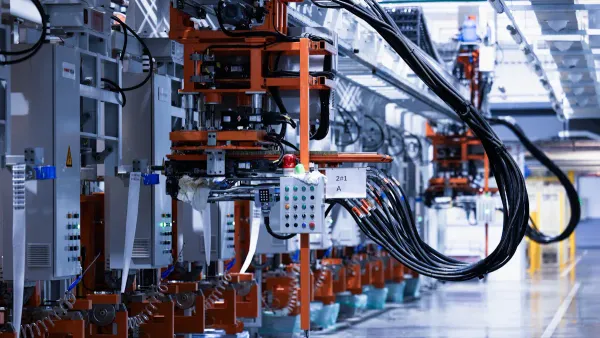
The benefits of integrated resonators extend beyond consumer devices. Industrial and automotive sectors demand extreme reliability and performance. MEMS technology provides the robust timing solutions needed for these critical applications.
Industrial IoT: Reliability in Harsh Environments
Industrial IoT (IIoT) devices operate in factories and outdoor settings. These environments expose electronics to extreme temperatures, vibration, and shock. A standard resonator can fail under these conditions. The MEMS resonator offers superior durability for industrial equipment. Its silicon structure provides excellent resilience. This ensures consistent operation for industrial IoT sensors and controllers.
Different MEMS resonator designs offer stability across wide temperature ranges. This makes them suitable for various industrial needs. The long-term reliability of a MEMS resonator is crucial for systems that must operate for years without maintenance.
| Resonator Type | Frequency Stability | Temperature Range |
|---|---|---|
| Integrated dual MEMS resonator | ±0.1 ppm | −45 °C to +105 °C |
| N-doping compensated resonator | 0.5 ppm | −35 °C to 85 °C |
| Programmable MEMS oscillator | ±5 ppm | −40 °C to 85 °C |
This stability ensures that industrial automation and monitoring systems function correctly, improving safety and efficiency.
Automotive Electronics: Meeting Stringent Standards
Automotive systems require the highest level of reliability. Components must meet strict quality standards like AEC-Q100 for integrated circuits and AEC-Q200 for passive components. These standards ensure every part can withstand the harsh automotive environment. A MEMS resonator is designed and tested to meet these demanding requirements.
Key automotive qualification tests include:
- Temperature Resistance: Components must survive rapid temperature changes.
- Mechanical Strength: A resonator must resist constant shock and vibration.
- Moisture Resistance: Parts must function correctly in high humidity.
The exceptional reliability of a MEMS resonator helps systems like Advanced Driver-Assistance Systems (ADAS) achieve higher safety ratings. This type of resonator is over 50 times more reliable than a quartz resonator. It is also free from issues like cold-start failures. This robust timing performance is essential for vehicle communication and infotainment systems, making the MEMS resonator a cornerstone of modern automotive design.
Future Trends and the Electronic Resonator Market
The electronic resonator market is evolving rapidly. Key trends are shaping the future of system design. The move toward co-packaged solutions and innovations in edge computing are driving the electronic resonator market forward. This progress defines the modern electronic resonator market. The electronic resonator market is responding to demands for smaller and smarter technology. The growth of the electronic resonator market is undeniable.
The Shift Toward Co-Packaged Solutions
The future of the electronic resonator market involves deeper integration. The industry is moving away from placing a discrete resonator on a circuit board. Instead, companies are co-packaging the resonator die directly with a processor. This trend is a major force in the timing market. The electronic resonator market is seeing new products that enable this.
A leading example is SiTime's Titan Platform™. This technology allows a tiny MEMS resonator to be placed inside the same package as a System-on-Chip (SoC). This eliminates the need for an external timing component, saving space and simplifying design.
This shift is driven by several factors shaping the electronic resonator market:
- The rollout of 5G technology.
- The growing adoption of smart devices.
- The continuous evolution of consumer electronics.
These drivers push the electronic resonator market toward smaller, more integrated solutions. The timing market is adapting to these new requirements. The entire electronic resonator market benefits from this innovation.
Innovations in Intelligent Edge Devices
Integrated timing solutions are unlocking new possibilities for intelligent edge devices. A smaller resonator allows for more complex processing at the edge. This is crucial for edge AI applications where performance and efficiency are critical. The MEMS resonator is at the heart of this change.
Innovations in MEMS technology enable "in-sensor computing." This approach integrates sensing and computation directly at the hardware level. It reduces the need to send large amounts of data to the cloud. This makes AI computations faster and more efficient. Scott Hanson, founder of Ambiq, calls this type of resonator a "game-changer" for creating intelligent, connected products. New resonators are enabling smarter devices. The use of MEMS is expanding the electronic resonator market. These advanced resonators are essential for the next generation of technology.
The move from discrete resonators to an integrated MEMS resonator marks a fundamental shift in system architecture, not just a component swap. Integrating the timing resonator is essential for meeting the performance and reliability demands of next-generation electronics. This trend, powered by the MEMS resonator, will accelerate innovation in autonomous systems, complex industrial automation, and the broader IoT landscape. The industrial resonator is evolving, and this industrial progress will benefit the IoT. The MEMS resonator is a superior industrial resonator. This resonator is a key resonator.
FAQ
What is a MEMS resonator?
A MEMS resonator is a tiny timing device built on a silicon chip. It uses a microscopic mechanical structure that vibrates to create a stable clock signal. This semiconductor-based manufacturing allows for extreme miniaturization and durability compared to older timing components.
Why are MEMS resonators better than quartz?
MEMS resonators offer several key advantages. They are much smaller, use less power, and resist shock and vibration better than quartz crystals. Their manufacturing process also allows for easier integration with other electronic components, simplifying system design.
What does co-packaging a resonator mean?
Co-packaging involves placing the tiny MEMS resonator die directly inside the same package as a processor or System-on-Chip (SoC).
This advanced integration method saves significant board space. It also improves signal quality by shortening the electrical path between the timing source and the processor.
Where are integrated resonators used?
Integrated resonators are essential in many modern electronics. ⚙️ Key applications include:
- Wearables: Smart rings and hearables
- Mobile: Smartphones and tablets
- IoT: Smart home and industrial sensors
- Automotive: Advanced driver-assistance systems (ADAS)
Their small size and high reliability make them ideal for these demanding products.