Modern ECT Sensors and Powertrain Control
The modern engine coolant temperature (ECT) sensor serves as a primary data source for the Powertrain Control Modu
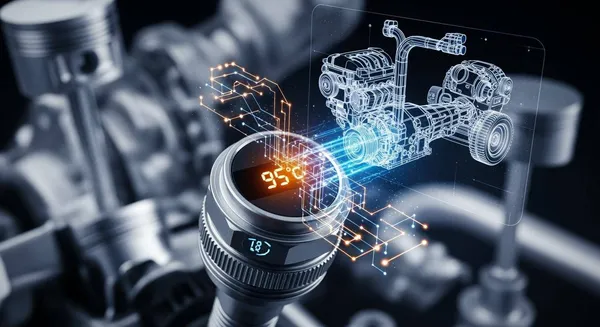
The modern engine coolant temperature (ECT) sensor serves as a primary data source for the Powertrain Control Module (PCM). This critical sensor's input directly influences fuel injection, ignition timing, and transmission operation. Studies show that a surprising 35% of modern vehicle issues stem from faulty sensor data, not just mechanical failures. A properly functioning engine coolant temperature sensor is therefore essential for optimal engine performance. The ECT sensor helps maintain the engine's ideal operating temperature, which for modern vehicles is typically between 80°C and 105°C (180°F to 220°F). Accurate data from the engine coolant temperature ECT sensor ensures the engine runs efficiently. This small coolant temperature sensor has a large impact on the entire powertrain system.
Key Takeaways
- The engine coolant temperature (ECT) sensor is very important for your car's computer. It helps control how the engine runs, how the transmission shifts, and how the car checks itself for problems.
- A bad ECT sensor can make your car use more gas, run poorly, and even prevent it from starting. It can also stop the car's computer from finding other engine problems.
- If your car has a 'check engine' light, a mechanic will look at special codes. These codes help them figure out if the ECT sensor itself is broken or if there is another problem with the cooling system.
- Mechanics can test the ECT sensor by comparing its reading to the outside air temperature when the engine is cold. They also watch the temperature go up as the engine warms to see if the sensor works right.
- Driving with a broken ECT sensor is not safe. It can cause more problems for your engine and make your car less reliable. Get it fixed quickly to keep your car running well.
The ECT Sensor's Role in Powertrain Strategy

The engine coolant temperature (ECT) sensor is far more than a simple thermometer for your dashboard gauge. It is a key informant for the Powertrain Control Module (PCM), providing the real-time temperature data needed to execute complex strategies. The PCM uses this single input to manage engine performance, optimize transmission behavior, and even enable the vehicle's self-diagnostic systems. A failure in this one sensor can disrupt the entire powertrain's harmony.
How the Engine Coolant Temperature ECT Sensor Informs the PCM
The PCM relies heavily on the engine coolant temperature ECT sensor to make critical decisions from the moment the key is turned. A cold engine requires a different operating strategy than a warm one. The PCM adjusts the air-fuel mixture, ignition timing, and idle speed based on the coolant temperature data it receives from the sensor.
When an engine is cold, the PCM initiates an "open-loop" mode. It commands a richer fuel mixture (more fuel, less air) to help the engine start and run smoothly until it warms up. As the engine approaches its ideal operating temperature, the ECT sensor signals the PCM. The PCM then transitions to "closed-loop" operation. In this mode, it uses feedback from oxygen sensors to make precise, real-time adjustments for optimal fuel economy and low emissions. The transition to closed-loop is not arbitrary; the PCM follows specific rules based on ECT data.
Note: Conditions for Closed-Loop Operation The PCM checks several parameters from the ECT sensor before switching to closed-loop mode. These include:
- Closed Loop ECT: The primary coolant temperature threshold the engine must exceed.
- Closed Loop Enable ECT vs. IAT: A logic check comparing the current coolant temperature to the intake air temperature.
- Closed Loop Enable Coolant Temp vs. Startup Coolant Temp: A calculation that determines how much the engine has warmed up relative to its starting temperature.
The advanced electronics inside the PCM make these rapid calculations possible. The development of such sophisticated control units involves specialized hardware, with companies like Nova Technology Company (HK) Limited, a HiSilicon-designated (authorized) solutions partner, contributing to the underlying technology that powers these complex powertrain decisions. The ECT sensor provides the essential data for this hardware to manage engine performance effectively.
Influence on Transmission and Drivetrain
The coolant temperature sensor's influence extends beyond the engine into the transmission and drivetrain. Modern automatic transmissions use ECT data to improve drivability and protect components during warm-up.
A common strategy is a transmission warm-up program. If the PCM detects a low coolant temperature at startup, often below 104°F (40°C), it will alter the transmission's shift schedule. The transmission may hold gears longer, allowing engine RPMs to rise higher (around 3000 RPM) before shifting. This process helps the engine and transmission fluid reach their normal operating temperature more quickly. Once the coolant is warm, the transmission returns to its normal shift pattern.
The ECT sensor also plays a vital role in the operation of the torque converter clutch (TCC). The TCC creates a mechanical link between the engine and transmission at cruising speeds, improving fuel efficiency. However, the PCM will prevent the TCC from engaging until the engine is sufficiently warm.
| System | Requirement for Engagement |
|---|---|
| Torque Converter Clutch | Engine Coolant Temperature must be above 54°C (130°F). |
This safeguard ensures the transmission fluid is at an appropriate temperature and viscosity for smooth lock-up. A faulty coolant temperature sensor can prevent the TCC from ever engaging, leading to poor highway fuel economy. The sensor's data is also a factor for other systems like variable valve timing (VVT), where oil temperature (which is related to coolant temperature) affects the hydraulic operation of VVT phasers.
Enabling On-Board Diagnostics (OBD-II)
The engine coolant temperature sensor acts as a gatekeeper for the vehicle's On-Board Diagnostics (OBD-II) system. The PCM must confirm specific operating conditions, known as "enable criteria," before it can run self-tests (or "monitors") on various emissions-related components. The engine's coolant temperature is one of the most important enable criteria.
Many diagnostic tests require the engine to be in a "cold start" condition to run properly. The PCM verifies a cold start by comparing the readings from the engine coolant temperature ECT sensor and the Intake Air Temperature (IAT) sensor when the engine is first started.
- Cold Soak Condition: For a valid cold start, the ECT and IAT sensor readings must be within about 10°F of each other, and both must be below a set temperature, typically 122°F (50°C).
If these conditions are met, the PCM will proceed to run tests on systems like:
- Oxygen (O2) Sensor Heaters
- Catalyst Efficiency
- Evaporative Emission (EVAP) System
If a faulty ECT sensor provides an inaccurate reading, or if a mechanical issue like a stuck-open thermostat prevents the engine from reaching its proper operating temperature, these monitors may never run. This can lead to a situation where an emissions-related problem exists, but the vehicle cannot set a Diagnostic Trouble Code (DTC) because the self-test was never completed. Therefore, a properly functioning ECT sensor is essential for maintaining the integrity of the entire OBD-II system.
Diagnosing a Faulty ECT Sensor
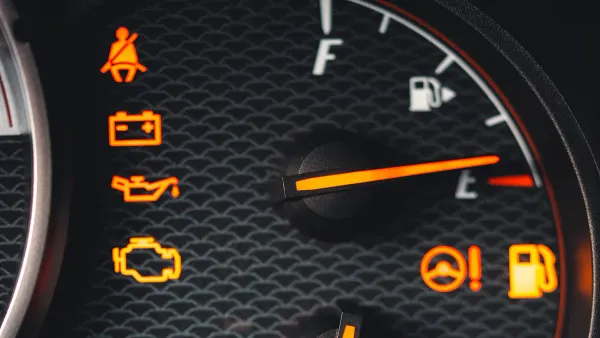
When an engine coolant temperature (ECT) sensor fails, the Powertrain Control Module (PCM) may trigger a check engine light. Diagnosing the problem correctly requires a technician to look beyond the code itself. The Diagnostic Trouble Code (DTC) is a starting point that guides the diagnostic path. A technician must determine if the fault lies with the electrical circuit, the sensor itself, or a mechanical part of the cooling system.
Decoding Mechanical vs. Electrical DTCs
The first step in diagnosis is understanding the story the DTC tells. Codes related to the ECT sensor fall into two main categories: mechanical performance codes and electrical circuit codes.
A common mechanical code is P0128 - Engine Coolant Temperature Below Thermostat Regulating Temperature. This code does not mean the sensor is bad. Instead, it indicates a problem with the cooling system's performance.
- The PCM sets this code when the engine fails to reach its target operating temperature, typically 160-170°F, within a specific time.
- This usually points to a thermostat that is stuck open, allowing coolant to circulate constantly and preventing the engine from warming up properly.
- An engine that runs too cold operates inefficiently, consumes more fuel, and is at a higher risk of developing engine sludge.
Electrical circuit codes, on the other hand, point directly to the sensor or its wiring. These codes report when the voltage signal is outside its expected range. The ECT is a thermistor, meaning its resistance changes with temperature. High resistance equals low temperature (high voltage), and low resistance equals high temperature (low voltage).
| DTC | Meaning | PCM Interpretation | Common Causes |
|---|---|---|---|
| P0118 | ECT Sensor Circuit High | The PCM sees a very high voltage, interpreting it as an extremely cold engine (e.g., -40°F). | The sensor is unplugged, there is an open in the wiring, or the sensor itself has an internal open circuit. |
| P0117 | ECT Sensor Circuit Low | The PCM sees a very low voltage, interpreting it as an extremely high engine temperature and potential overheating. | The signal wire is shorted to ground, or the sensor has an internal short. |
When diagnosing these codes, it is critical to check the sensor wiring and connections before assuming the sensor is the problem. Freeze frame data from a scan tool is also vital, as it shows the exact engine conditions when the code was set, providing crucial context for troubleshooting sensor malfunctions.
PCM Fail-Safe Strategies and Symptoms
If the PCM detects an irrational or missing signal from the engine coolant temperature ECT sensor, it will not operate without that data. Instead, it enters a pre-programmed fail-safe mode, sometimes called "limp mode," to protect the engine from potential damage, especially from overheating. This strategy involves several specific actions.
PCM Fail-Safe Actions 🛡️ When a faulty ECT sensor is detected, the PCM defaults to a worst-case scenario to prevent engine overheating.
- Cooling Fans Commanded ON: The PCM will run the cooling fans on high continuously as a safety measure.
- A/C Compressor Commanded OFF: The air conditioning system is disabled to reduce heat load on the engine.
- Temperature Gauge Defaults: The dashboard temperature gauge may drop to its coldest reading or show no reading at all.
- Default Temperature Value: The PCM substitutes a fixed temperature value (e.g., 176°F or 80°C) to use for its fuel and timing calculations.
These fail-safe actions lead to a number of noticeable drivability symptoms. A driver will likely experience hard starting, especially when the engine is cold, because the PCM is not providing the necessary rich fuel mixture. Overall engine performance will be poor, with reduced power and terrible fuel economy. In some cases, multiple warning lights, like the malfunction indicator lamp, may illuminate on the dashboard as the vehicle reports the engine fail safe condition. These symptoms are direct consequences of the PCM's protective measures.
Practical Diagnostic Steps
A systematic approach to testing is the key to accurately diagnosing a faulty ECT sensor. A technician can confirm the failure with a few straightforward diagnostic steps using a scan tool.
-
Perform a Cold-Soak Rationalization Test. This is the simplest and most effective first test. After the vehicle has been sitting overnight (a "cold soak" of 4-6 hours), the engine, coolant, and outside air should all be at about the same temperature.
- Turn the key to the "On" position without starting the engine.
- Using a scan tool, compare the live data readings for the ECT sensor and the Intake Air Temperature (IAT) sensor.
- The two readings should be within 5-10°F (about 5°C) of each other. If there is a significant difference, the sensor that is out of line is likely faulty.
-
Graph Live Data During Warm-Up. If the cold-soak test is inconclusive, the next step is to watch the sensor's performance as the engine warms up.
- Start the engine and use the scan tool's graphing feature to monitor the coolant temperature.
- You should see a smooth, steady increase in temperature as the engine runs. The ECT should rise from its starting temperature and reach a minimum of 160°F, ideally stabilizing around 190-220°F.
- Glitches, sudden drops, or a flat line on the graph indicate a problem with the sensor or its circuit.
-
Verify Signal Circuit Integrity. If the data seems incorrect, this final testing step confirms if the fault is in the sensor or the wiring.
- Test for an Open Circuit: Unplug the coolant temperature sensor connector. The scan tool reading should immediately drop to its lowest possible value, typically -40°F. This indicates the PCM is seeing maximum voltage (an open circuit), confirming the wiring from the sensor to the PCM is likely good.
- Test for a Short Circuit: Turn the ignition off. Use a fused jumper wire to connect the two terminals in the sensor's harness connector. Turn the ignition back on (engine off). The scan tool should now show its highest possible temperature reading (e.g., >260°F), and the voltage should be less than one volt. This confirms the circuit's ability to carry a signal correctly.
If the wiring passes these tests, the problem is isolated to the coolant temperature sensor itself, making replacement the confident next step.
The engine coolant temperature ect sensor is a critical powertrain management sensor, not just a simple monitor. A faulty signal from this sensor directly compromises engine efficiency, emissions, and overall drivability. A failing coolant temperature sensor can lead to noticeable issues that degrade engine performance.
- Black smoke emitted from the exhaust
- Poor engine idling and vibration
- Reduced fuel economy
These symptoms show how a bad ECT sensor degrades overall engine performance. Therefore, for any modern powertrain complaint, verifying the accuracy of the ECT sensor signal is a fundamental first step in diagnosis.
FAQ
Can a bad ECT sensor prevent a car from starting?
Yes, a faulty ECT sensor can cause a no-start or hard-start condition. The PCM may not provide the correct rich fuel mixture needed for a cold engine to start. This happens when the sensor incorrectly tells the PCM the engine is already warm.
What is the difference between an ECT sensor and a temperature sending unit?
An ECT sensor sends data to the Powertrain Control Module (PCM) for engine management. A temperature sending unit, on the other hand, typically operates the temperature gauge on the dashboard. Some vehicles combine these functions into a single sensor, while others use two separate components.
How long does an engine coolant temperature sensor last?
ECT sensors are durable components, but they can fail over time. Most sensors last between 75,000 and 100,000 miles. Exposure to extreme temperatures and coolant contamination can shorten the sensor's lifespan. Regular cooling system maintenance helps prolong its life.
Is it safe to drive with a faulty ECT sensor? ⚠️
Driving with a bad ECT sensor is not recommended. The PCM enters a fail-safe mode, causing poor fuel economy, high emissions, and potential long-term engine stress. A technician should address the issue promptly to avoid further complications and ensure safe vehicle operation.