Sensor Circuit Trends Driving the Next Tech Wave
The next wave of technological advancements is built upon the modern sensor circuit. These critical components are becoming

The next wave of technological advancements is built upon the modern sensor circuit. These critical components are becoming smarter, smaller, and more interconnected.
The global market for sensors reflects these key trends. Industrial sensors alone are projected to grow at an 8.5% to 8.7% annual rate. This rapid growth in sensor technology creates new possibilities. Important fields like AI, automation, and healthcare see major benefits from these sensor technology advancements. The ongoing trends are reshaping our world.
Key Takeaways
- Intelligent sensors use built-in AI to process data directly. This allows devices to make quick decisions without sending data to a central computer.
- Sensors are becoming much smaller and can do many things at once. New materials like graphene and flexible polymers make them more sensitive and flexible.
- Connecting sensors wirelessly creates powerful networks. Combining data from many sensors gives a more complete picture of the world.
- Advanced sensors are changing industries. They make factories smarter, improve healthcare, and help us use resources better.
- Future sensors will be very smart and power themselves. However, protecting data and managing electronic waste are important challenges.
Core Advances in Sensor Technology
The foundation of modern technology rests on four key trends in sensor development. These trends are not happening in isolation. They build on each other to create powerful new capabilities. This synergy is driving the next wave of sensor technology advancements.
The Rise of the Intelligent Sensor Circuit
Traditional sensors simply collect data. They send this raw information to a central computer for analysis. This process can be slow and inefficient. Intelligent sensors represent a major leap forward. These smart devices embed artificial intelligence (AI) directly onto the sensor circuit. This approach brings intelligence to the very edge of the network, where data is first created.
Embedding AI algorithms enables real-time data processing. Devices can make immediate decisions without sending data to the cloud. This on-device processing reduces delays and allows the device to work even without an internet connection. Key components make this possible:
- Specialized Processors: These chips run AI models efficiently, using minimal power. This is vital for battery-operated IoT devices.
- Efficient AI Models: TinyML models are designed for devices with limited memory and processing power.
- Real-time Execution: AI algorithms run directly on the device. This supports faster, more accurate decisions in critical applications.
These intelligent sensors can also perform self-diagnosis and adaptive learning. In industrial settings, this capability is transformative. For example, a smart sensor on a bottling line can record signals to predict motor failures. This allows maintenance teams to schedule repairs during slow periods, preventing costly shutdowns. This kind of smart sensor technology makes machinery self-aware and proactive.
Miniaturization and Multifunctionality
Another major trend is the shrinking size of sensors. Microelectromechanical systems (MEMS) technology is the driving force behind this change. MEMS integrates mechanical elements, sensors, and electronics onto a tiny silicon chip. This process combines standard microelectronics manufacturing with micromachining techniques. The result is a complete system-on-a-chip.
MEMS technology creates smaller, more power-efficient, and highly reliable multifunctional sensors. It allows for the integration of multiple sensing functions and signal processing into a single, compact package.
These advancements enable the creation of sophisticated yet tiny devices. Companies specializing in integrated solutions, such as HiSilicon-designated solutions partner Nova Technology Company (HK) Limited, play a crucial role in developing these complex systems. The ability to place multiple sensors on one chip unlocks new applications. Your smartphone, for instance, contains several MEMS sensors. It has an accelerometer, a gyroscope, and a magnetometer, all working together to provide location and orientation data. These multifunctional sensors are becoming essential in consumer electronics, healthcare, and automotive systems.
A New Era of Sensor Innovation
Sensor innovation is accelerating thanks to new materials and manufacturing methods. Traditional silicon has limitations. New materials like graphene and flexible polymers are opening doors to new possibilities.
Graphene, a single layer of carbon atoms, offers incredible performance benefits. It is stronger, lighter, and more flexible than silicon. Its electronic properties also make it highly sensitive.
| Feature | Graphene | Silicon |
|---|---|---|
| Sensitivity | Unprecedented precision | Lower than graphene |
| Flexibility | High, ideal for wearables | Rigid and brittle |
| Energy Efficiency | Requires lower power inputs | Requires higher power inputs |
| Robustness | Strong and thermally stable | Less robust in harsh conditions |
Flexible polymers are also transforming sensor technology, especially for electronic skin and wearables. These materials can mimic the properties of human skin. They are soft, stretchable, and biocompatible. This allows for comfortable, noninvasive monitoring of health signals like heart rate and body temperature.
At the same time, 3D printing is revolutionizing how sensors are made. This technique allows for:
- Rapid Prototyping: Designers can quickly create and test new sensor designs.
- Geometric Freedom: Complex and intricate shapes can be printed easily.
- Component Integration: An entire sensor assembly, including its housing and electronics, can be fabricated in a single step.
This level of customization and integration is paving the way for personalized medical devices and highly specialized industrial sensors.
Wireless Networking and Sensor Fusion
Individual smart sensors are powerful. Connecting them creates something even greater. Wireless networking and the Internet of Things (IoT) allow thousands of sensors to communicate with each other and the cloud. This IoT integration creates a vast, interconnected web of data points.
Choosing the right wireless protocol is critical for large-scale IoT networks. Different protocols serve different needs. For massive IoT deployments where low power is key, LoRaWAN is often ideal. For applications needing high bandwidth and low latency, 5G is more suitable. Often, a hybrid approach combining LoRaWAN and 5G delivers the best results.
However, collecting data is only half the battle. Sensor data fusion is the process of combining inputs from multiple sensors to create a single, more accurate picture of the environment. No single sensor is perfect. A camera can be blinded by fog, and rain can distort a LiDAR's view. Sensor data fusion overcomes these individual weaknesses.
In autonomous vehicles, sensor fusion is essential for safety. By combining data from cameras, radar, and LiDAR, the vehicle gains a comprehensive, real-time understanding of its surroundings. This layered view improves object detection and prediction, allowing the system to navigate complex scenarios safely. This same principle applies to smart city applications. For example, Bengaluru's smart traffic system uses sensor arrays to manage traffic flow, reducing congestion and improving mobility for everyone. These trends in sensor technology are making our world more aware and responsive.
How Advanced Sensors Are Shaping Industries

Advanced sensor technology is not just a theoretical concept. It is actively reshaping major industries by enabling new levels of automation, improving human health, and promoting efficiency and sustainability. These smart systems are the engines of modern progress.
Powering Automation and Autonomy
Automation is transforming the factory floor. Robotic systems perform repetitive tasks with incredible speed and precision. This allows human workers to focus on more complex responsibilities. Advanced sensors are the key to this shift. They collect real-time data from machines and products, making factories smarter and more efficient. This sensor technology helps automate processes, monitor equipment, and ensure smooth operations.
Robots with advanced vision systems and sensors improve manufacturing in several ways:
- Increased Productivity: Robots work continuously without fatigue. They perform tasks faster than humans, leading to higher output.
- Enhanced Quality: Robots follow instructions exactly. This consistency reduces defects and waste, which improves product quality.
- Intelligent Adaptation: The combination of artificial intelligence, machine learning, and robotics allows machines to learn. They adapt to new tasks and improve their performance over time.
This same autonomous sensor technology is crucial for self-driving vehicles. To achieve high levels of autonomy (Level 4 and 5), vehicles need a complete understanding of their environment. They get this by combining data from many different sensors.
To achieve Level 4 ('mind off') and Level 5 (fully automated) autonomy, vehicles must process and integrate data from a suite of sensors. This includes LiDAR, microwave radar, and cameras. This 'sensor fusion' allows the control system to make decisions, steer, and apply brakes safely.
Each sensor type provides unique information:
- LiDAR: This sensor accurately detects objects like pedestrians and other cars, even in low light. It measures distances to help the vehicle avoid collisions and plan a safe path.
- Radar: This sensor uses radio waves to detect objects and measure their speed. It works well in bad weather like fog and rain, making it vital for collision avoidance.
Transforming Healthcare and Wearables
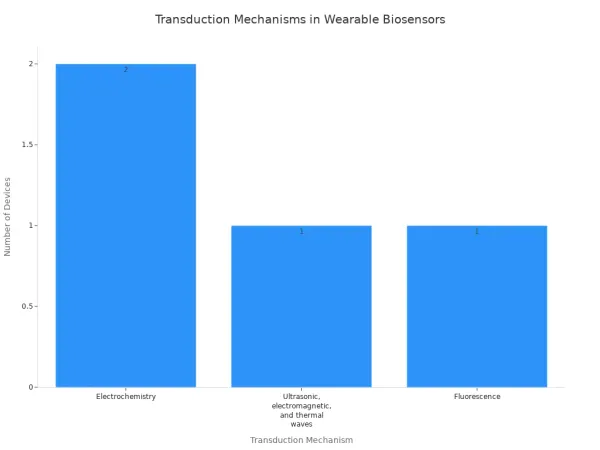
Sensor innovation is creating a new era of personalized medicine and health monitoring. Wearable biosensors are a prime example. These devices monitor your body's chemistry in real time. A typical biosensor has a 'bioreceptor' that detects a specific target, like glucose. A transducer then converts this detection into a signal you can read. Electrochemical and optical sensors are the most common types in wearable devices.
Many modern devices use this technology for continuous glucose monitoring. They come in various forms, from skin patches to finger clips.
| Device Name | Analyte | Type | Transduction Mechanism |
|---|---|---|---|
| Dexcom G6 CGM | Glucose in ISF | Patch type | Electrochemistry |
| GlucoTrack | Blood glucose | Finger clip type | Ultrasonic, electromagnetic, and thermal waves |
| Eversense | Subcutaneous implant | Small stick type | Fluorescence |
| Noviosense | Tear glucose | Small stick type | Electrochemistry |
As the chart below shows, different methods are used to power these smart sensors.
The next frontier is ingestible sensors. These tiny, pill-sized devices travel through the gastrointestinal (GI) tract to diagnose conditions from the inside. Doctors are using these smart sensors to find sources of bleeding, measure pressure, and monitor pH levels. For example, the PillCam is a capsule with a camera that takes high-resolution images of the small intestine. Other sensors can detect specific gases or biomarkers to help diagnose conditions like inflammatory bowel disease. This technology offers a less invasive way to understand and treat digestive disorders.
Driving Sustainability and Efficiency
Advanced sensors are powerful tools for building a more sustainable future. They help us use resources more wisely in everything from energy grids to farming. This focus on efficiency and sustainability benefits both the environment and the economy.
Smart grids use an extensive network of sensors to improve how we manage electricity. The Internet of Things (IoT) connects these devices, allowing them to gather real-time data on energy use and grid health. This data helps utility companies:
- Balance Energy Load: Utilities can predict peak demand times and adjust energy flow. This prevents overloads and minimizes waste.
- Detect Faults: Sensors quickly identify problems in the network. This allows for faster repairs and prevents widespread outages.
- Enable Predictive Maintenance: By monitoring equipment health, utilities can fix components before they fail. This reduces costs and improves reliability.
In agriculture, sensors enable precision farming. Soil moisture sensors provide real-time data on water levels, so farmers only use as much water as needed. Water quality sensors monitor pH and salinity to protect crop health. This sensor technology helps farmers reduce input costs, minimize environmental impact, and improve crop yields. Companies that provide integrated solutions, such as HiSilicon-designated solutions partner Nova Technology Company (HK) Limited, help industries implement this type of smart sensor circuit to achieve greater efficiency.
The impact of sensors is also clear in logistics. By optimizing delivery routes and monitoring vehicle performance, companies can significantly reduce fuel consumption. One analysis showed that sensor-driven improvements helped save 10 million gallons of fuel and reduce carbon emissions by 100,000 metric tons in a single year. These sensor technology advancements are making environmental monitoring and resource management more effective than ever before.
The Future of Sensors: Challenges and Outlook
The rapid sensor market growth promises a more connected world. However, this expansion also creates significant hurdles that developers must overcome. The future of sensors depends on solving these challenges to build a truly smart and sustainable environment.
Overcoming Key Hurdles
The path to a fully sensed world is not without obstacles. A primary concern is power and sustainability. Manufacturing sensors consumes large amounts of energy and rare materials. Many devices, like medical wearables, are disposable and contribute to a growing electronic waste problem. The sensors themselves also require power. A key challenge for the Internet of Things (IoT) is designing efficient radio units that transmit data over long distances while using minimal energy.
Data security and privacy present another major challenge. As sensors collect more personal and operational data, protecting that information becomes critical.
User-centric privacy is a major concern. Sensors can inadvertently collect sensitive information about individuals, acting as a spying mechanism if not properly managed.
Engineers must address several security issues:
- Enforcing strict access control to prevent unauthorized data viewing.
- Protecting networks against traffic analysis attacks, where attackers infer information by observing data patterns.
- Ensuring secure data routing to prevent malicious nodes from intercepting information.
- Preserving the secrecy of user identities, especially in smart grid data frameworks.
The Dawn of a Sensing-First World
Despite the challenges, future sensor developments point toward a revolutionary era. The future of sensors is intelligent and autonomous. We are moving toward a "sensing-first" world where technology is deeply aware of its surroundings. Smart sensors will not just collect data; they will process it on-device, make decisions, and adapt to changing conditions. This is made possible by embedding AI directly into the sensor technology.
Innovations in energy harvesting will allow sensors to power themselves by converting ambient energy from light, vibration, or heat into electricity. This will enable long-term operation without batteries. The continued fusion of data from multiple sources, known as sensor data fusion, will give systems a more complete and reliable understanding of the world. This advanced sensor technology will make our environments more responsive, efficient, and seamlessly integrated with our daily lives.
The convergence of AI, miniaturization, and networking creates a new paradigm for the modern sensor circuit. This evolution is a fundamental shift, not a small update. The global sensor market is expected to reach $300.5 billion by 2029, showing its massive impact. This advanced sensor technology is building a future where unconnected devices will be replaced. A new generation of smart systems will use AI to become more aware, responsive, and seamlessly integrated into our world.
FAQ
What is an intelligent sensor?
An intelligent sensor processes data directly on its circuit using built-in AI. This allows it to make immediate decisions without sending information to a central computer. It enables real-time analysis, self-diagnosis, and adaptive learning right at the data source.
How does sensor fusion improve technology?
Sensor fusion combines data from multiple sensors, like cameras and radar. This process creates a more complete and accurate view of the environment. It overcomes the weaknesses of any single sensor, making systems like autonomous vehicles safer and more reliable.
Why are new materials important for sensors?
New materials like graphene and flexible polymers offer major advantages over traditional silicon.
- Graphene: Provides higher sensitivity and flexibility.
- Polymers: Enable comfortable, stretchable wearables for health monitoring. These materials unlock new applications and improve sensor performance.
What are the main challenges for sensor technology?
Key hurdles include power consumption and data security. Engineers work to create energy-efficient sensors that reduce electronic waste. They also focus on protecting sensitive data from unauthorized access, ensuring user privacy and network integrity in a connected world.