The 2025 Capacitor Types Chart
The global market for capacitors is projected to reach USD 26.7 billion by 2025. This growth highlights the capacitor's vita
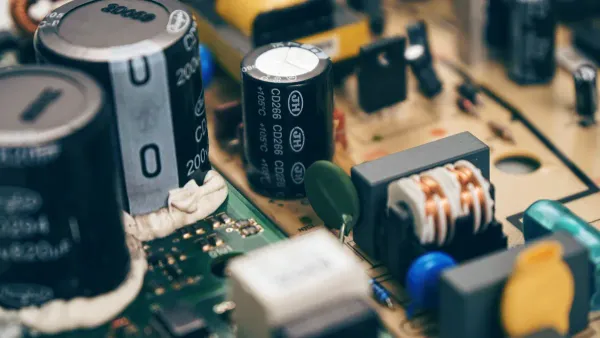
The global market for capacitors is projected to reach USD 26.7 billion by 2025. This growth highlights the capacitor's vital role in modern electronics. Engineers select from many types of capacitor for their designs. Each capacitor possesses unique capacitor characteristics. This capacitor types chart provides a quick reference to the main types of capacitor. It helps in making the right choice based on capacitance, rated voltage, and application. The following capacitor types chart compares the most common types of capacitor.
| Capacitor Type | Capacitance Range | Voltage Rating | Polarization | Key Characteristics | Primary Application Example |
|---|---|---|---|---|---|
| Ceramic | pF to several µF | Low to Medium | No | Good frequency response; stable (C0G) or high density (X7R) | High-frequency decoupling at an IC |
| Aluminum Electrolytic | ~0.1µF to Farads | Low to High | Yes | High capacitance for its size; cost-effective | Power supply bulk filtering |
| Tantalum | ~0.1µF to ~1000µF | Low to Medium | Yes | High stability; low leakage; very small size | Compact electronics (e.g., smartphones) |
| Film | ~100pF to ~100µF | Medium to Very High | No | High precision; excellent stability; reliable | High-quality audio circuits; motor drives |
| Supercapacitor | Farads (F) | Very Low | Yes | Extremely high capacitance; rapid charge/discharge | EV regenerative braking; memory backup |
Key Takeaways
- Capacitors store electrical energy. They are important parts of electronic devices.
- Different capacitors have different uses. Ceramic capacitors work well for high frequencies, and electrolytic capacitors store a lot of energy.
- Always pick the right capacitor for your project. Consider its size, voltage, and how it will be used.
- Some capacitors have a positive and negative side. Connecting them wrong can cause damage or make them explode.
- Newer capacitors, like polymer types, offer better performance. They are more efficient and last longer.
A Guide to the Main Types of Capacitor
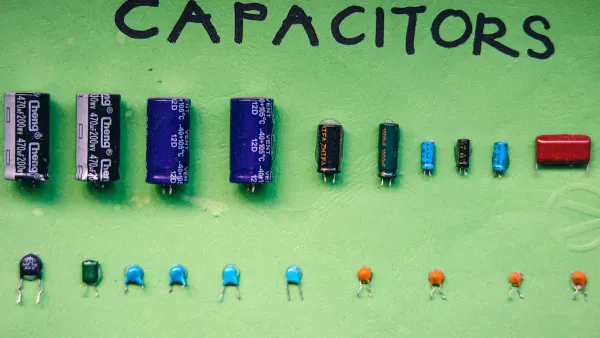
The chart above provides a great starting point. Now, let's explore the details of these common types of capacitor. Understanding their construction and unique properties helps engineers make optimal design choices. Each capacitor has a specific job, and choosing the right one is key to a successful project.
Ceramic Capacitor
The ceramic capacitor is the most widely used type of capacitor in modern electronics. Its popularity comes from its small size, low cost, and excellent performance at high frequencies.
The construction of a ceramic capacitor directly influences its electrical properties.
- Ceramic Material: Manufacturers use paraelectric ceramics like titanium dioxide for stable, low-loss capacitors. They use ferroelectric materials like barium titanate for capacitors that need much higher capacitance values.
- Electrode Material: Noble Metal Electrodes (NME) like silver offer superior electrical properties. Base Metal Electrodes (BME) like nickel are more cost-effective for less critical applications.
Ceramic types of capacitor fall into two main classes, each with distinct behaviors.
Class 1 vs. Class 2 Ceramic Capacitors
| Feature | Class 1 (e.g., C0G/NP0) | Class 2 (e.g., X7R, Y5V) |
|---|---|---|
| Material | Paraelectric (Non-ferroelectric) | Ferroelectric (e.g., Barium Titanate) |
| Stability | Exceptional stability and precision | Less stable; capacitance changes with temperature and voltage |
| Temp. Coefficient | Very low (0 ±30 ppm/°C) | Wider variation (e.g., ±15% for X7R) |
| Capacitance Range | Lower values | Higher values |
| Voltage Dependency | Negligible | Significant drift |
| Typical Use | RF circuits, oscillators, timers | Decoupling, filtering, general purpose |
Class 1 capacitors are the top choice for applications demanding high precision. Engineers use this capacitor in:
- Resonant circuits, such as filters
- Oscillators and precision timing circuits
- Sensitive analog-to-digital converters
- Radio and television tuners
Class 2 capacitors offer more capacitance in a smaller package. This makes them ideal for bulk decoupling and filtering, where the exact capacitance value is less critical than size and cost. These are very common types of capacitor for general-purpose roles.
Film Capacitor
A film capacitor uses a thin plastic film as its dielectric. This type of capacitor is known for its stability, reliability, and excellent performance in AC circuits. The choice of plastic film is the most important factor determining the capacitor characteristics.
The two most common film materials are Polyester (PET) and Polypropylene (PP).
Polyester (PET) vs. Polypropylene (PP) Film
| Feature | Polyester (PET) | Polypropylene (PP) |
|---|---|---|
| Capacitance per Volume | High (more compact) | Lower |
| AC Losses / ESR | Higher | Extremely low |
| Stability | Good | Excellent long-term stability |
| Primary Use Case | General-purpose DC (coupling, bypassing) | High-frequency AC, power applications |
Polyester (PET) film capacitors are excellent general-purpose components. They are often used for:
- Power Supply Circuits: Filtering and maintaining voltage stability.
- Signal Coupling: Blocking DC signals in audio and radio frequency circuits.
- Timing Circuits: Providing precise timing in oscillators and timers.
Polypropylene (PP) film capacitors excel in AC applications due to their very low electrical losses. Common uses include:
- Power Electronics: Handling high currents in inverters and motor controllers.
- Audio Equipment: Filtering noise to ensure clear sound quality.
- Lighting Circuits: Improving power factor in LED drivers and ballasts.
A Note on Sourcing Components: For advanced applications like switch-mode power supplies or motor controllers, selecting the right types of capacitor is critical. Working with a solutions partner can simplify this process. For example, Nova Technology Company (HK) Limited is a HiSilicon-designated solutions partner that can assist with component selection for complex system designs.
Mica Capacitor
The mica capacitor is a highly stable and reliable type of capacitor. It uses natural mica as its dielectric material. Its construction makes it one of the best types of capacitor for high-frequency applications.
The assembly involves stacking sheets of mica with silver electrodes. The entire package is then sealed in epoxy. This airtight design protects the capacitor from humidity and air, preventing corrosion and ensuring exceptional long-term stability. This construction gives the mica capacitor very low self-inductance and high dielectric strength.
Because of their precision and stability, these types of capacitor are essential in circuits where performance cannot be compromised. Key applications include:
- RF Oscillators: Generating precise and stable frequencies for communications equipment.
- High-Q Filters: Selectively filtering frequencies in radar systems and RF receivers.
- Medical Imaging: Providing reliable, high-frequency performance in devices like ultrasound machines.
While more expensive than a ceramic capacitor, a mica capacitor offers unmatched performance where accuracy and stability are the primary concerns.
Exploring Types of Electrolytic Capacitors
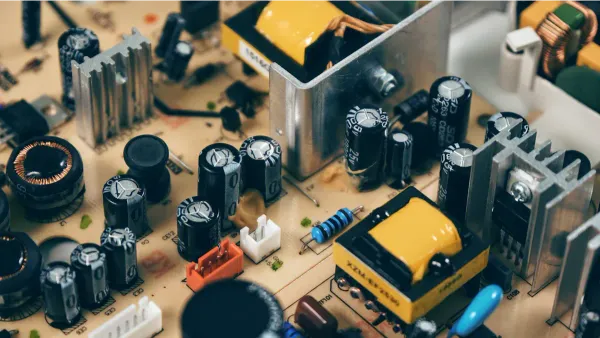
Electrolytic capacitors are a unique family of components. They are essential for applications needing high capacitance in a small package. The core principle behind these types of electrolytic capacitors is their special construction. An extremely thin oxide layer serves as the dielectric. This layer is formed electrochemically on a metal anode. Manufacturers also etch the anode foil to roughen its surface, which massively increases the surface area. This combination of a huge surface area and a super-thin dielectric gives these components their high capacitance-voltage (CV) density.
A key part of the electrolytic capacitor characteristics is their polarization. They have a positive (anode) and a negative (cathode) terminal. Connecting a polarized capacitor backward is a critical mistake in circuit design.
⚠️ Warning: Mind the Polarity! Incorrectly installing a polarized capacitor can lead to serious problems:
- Circuit Failure: The device may stop working entirely.
- Component Damage: The capacitor can overheat, leak chemicals, or even explode, damaging nearby parts.
- Reduced Lifespan: A reversed capacitor loses its effectiveness and fails much sooner.
Always check the markings ('+' for positive, a stripe for negative) to ensure correct installation and safe operation.
Let's explore the main types of electrolytic capacitors.
Aluminum Electrolytic Capacitor
The aluminum electrolytic capacitor is a very common and cost-effective choice for high-capacitance needs. The electrolytic capacitor structure involves two sheets of aluminum foil separated by paper soaked in an electrolyte. One foil, the anode, has an insulating aluminum oxide layer. This layer is the dielectric. The entire assembly is rolled up and placed in a sealed can.
This capacitor offers several benefits but also has some drawbacks. The characteristics of electrolytic capacitors like this one are a trade-off between cost and performance.
| Pros 👍 | Cons 👎 |
|---|---|
| High capacitance for its size | Shorter lifespan due to liquid electrolyte |
| Very cost-effective | Performance can degrade at high temperatures |
| Available in high voltage ratings | Higher Equivalent Series Resistance (ESR) |
| Wide range of available values | Can leak or dry out over time |
Common failure modes for this capacitor include:
- Short Circuit: Often caused by excessive voltage or physical defects in the foil.
- Open Circuit: Can result from internal corrosion or extreme vibration breaking a connection.
- Electrolyte Leakage: The seal can fail due to age, heat, or internal pressure, causing the electrolyte to leak out. This is a common end-of-life failure.
Tantalum Electrolytic Capacitor
A tantalum electrolytic capacitor uses tantalum metal for its anode. A layer of tantalum pentoxide forms the dielectric. These types of capacitor are known for their small size and excellent stability, making them a popular choice for compact electronics.
The main characteristics of electrolytic capacitors made with tantalum are their high reliability and volumetric efficiency. They pack a lot of capacitance into a tiny space.
Key Features of Tantalum Capacitors:
- Size: They offer a very high capacitance-to-volume ratio, perfect for miniaturized devices like smartphones and laptops.
- Stability: This capacitor maintains its capacitance value well across a wide range of temperatures and has a long, stable operational life.
- Reliability: The solid electrolyte and self-healing nature of the dielectric film make them very reliable.
However, this capacitor type has a significant downside. Tantalum capacitors are very sensitive to overvoltage and reverse polarity. If subjected to electrical stress beyond their limits, they can fail in a dramatic way. A failure can result in a short circuit that generates intense heat, sometimes causing the capacitor to ignite or explode. For this reason, engineers often use a tantalum capacitor with a voltage rating that is double the actual circuit voltage to ensure a safe operating margin.
Polymer Electrolytic Capacitor
The polymer electrolytic capacitor is a more modern innovation in the world of types of electrolytic capacitors. The key difference in its construction is the electrolyte material. Instead of a wet liquid electrolyte, it uses a solid conductive polymer. This change provides significant performance advantages.
The solid polymer gives this capacitor extremely low Equivalent Series Resistance (ESR), often 10 to 100 times lower than traditional aluminum types. This low ESR is a major benefit. It reduces energy loss as heat, making the capacitor much more efficient, especially at high frequencies.
Polymer vs. Traditional Electrolytic
| Feature | Polymer Capacitor | Traditional Aluminum Capacitor |
|---|---|---|
| Electrolyte | Solid Conductive Polymer | Wet Liquid Electrolyte |
| ESR | Very Low | Moderate to High |
| Lifespan | Excellent (no dry-out) | Limited (can dry out) |
| Ripple Current | High Capability | Lower Capability |
| Safety | Safer (no liquid to leak) | Can leak corrosive fluid |
Because of these superior electrolytic capacitor characteristics, polymer capacitors are increasingly replacing older types in demanding applications. They are an excellent choice for:
- DC-to-DC Converters: Their low ESR improves power efficiency.
- Computer Motherboards: They provide stable voltage to CPUs and other components.
- AI and Server Hardware: They meet the strict power stability needs of advanced processors.
The long lifespan and high reliability of the polymer capacitor make it a top-tier choice for modern, high-performance electronics.
High-Energy and Variable Capacitor Technology
Beyond the standard components, some specialized types of capacitor serve unique roles. These devices either store massive amounts of energy or allow their capacitance to be adjusted.
Supercapacitor (Ultracapacitor)
A supercapacitor, or ultracapacitor, is a high-capacity capacitor that bridges the gap between a conventional capacitor and a battery. It stores significantly more energy than a standard capacitor. This is possible because of its unique design. A supercapacitor uses two conductive plates coated with a porous material like activated carbon. These plates are immersed in an electrolyte. The porous material creates a massive surface area, allowing the capacitor to store much more charge.
This capacitor excels at delivering large bursts of power quickly. However, it does not store as much total energy as a battery.
| Feature | Supercapacitors | Lithium-ion Batteries |
|---|---|---|
| Power Density | Very High (fast energy delivery) | Lower |
| Energy Density | Lower | Very High (long-lasting power) |
| Charge/Discharge | Very Fast (seconds) | Slower (minutes to hours) |
⚡️ Power vs. Energy: A supercapacitor can provide a huge power surge for a short time. A battery provides less power but for a much longer duration.
Common applications for this powerful capacitor include:
- Hybrid electric vehicles (for regenerative braking)
- Solar energy systems
- Industrial power management
- Memory backup in consumer electronics
Variable Capacitor
A variable capacitor is a capacitor whose capacitance can be changed intentionally. Engineers use these types of capacitor in circuits that require tuning. The most common design uses a set of rotating metal plates (rotor) that move between a set of fixed plates (stator). Changing the overlap between the plates adjusts the capacitance value.
These adjustable types of capacitor are essential for frequency control. Key applications include:
- Radio Tuning: In older AM/FM radios, a variable capacitor allowed users to select different broadcast frequencies.
- Antenna Matching: This capacitor helps match an antenna's impedance to a transmitter or receiver. This is vital in mobile phones and RFID tags for efficient signal transfer.
Smaller versions, called trimmer capacitors, allow for fine-tuning during factory calibration. A variable capacitor provides the flexibility needed for circuits that must adapt to different frequencies or conditions. Each capacitor has a specific purpose in electronic design.
Choosing the right capacitor involves trade-offs. The best capacitor depends entirely on the project's needs. This capacitor types chart helps engineers select the correct capacitor.
Remember these key points:
- A power supply needs a high-capacity electrolytic capacitor.
- An IC requires a high-frequency ceramic capacitor.
- An audio circuit often uses a high-precision film capacitor.
This guide and the capacitor types chart give designers confidence. They can use the capacitor types chart to choose the perfect capacitor for any application.
FAQ
What happens if you use a capacitor with the wrong voltage?
Using a capacitor with a voltage rating lower than the circuit's voltage is dangerous. The component can overheat, leak, or even explode. Always choose a capacitor with a voltage rating higher than what the circuit will experience.
Can you replace any capacitor with another of the same value?
No. Different types have unique characteristics. For example, replacing a low-ESR polymer capacitor with a high-ESR aluminum type in a power supply could cause overheating and failure. The application dictates the correct capacitor type.
Why do some capacitors have polarity?
Polarized capacitors, like electrolytics, use a very thin dielectric layer formed chemically. This design allows for very high capacitance. Applying voltage backward destroys this delicate layer, causing the component to fail.
How do you read the value on a small ceramic capacitor?
Small ceramic capacitors use a three-digit code. The first two digits are the significant figures. The third digit is the multiplier (the number of zeros to add). The value is in picofarads (pF).
Example: A code of
104means 10 followed by 4 zeros.100,000 pF=100 nF=0.1 µF