Understanding TQFP Package and Its Role in Electronics
TQFP package enables compact, high-density electronic designs with reliable performance, making it ideal for modern devices requiring space efficiency.
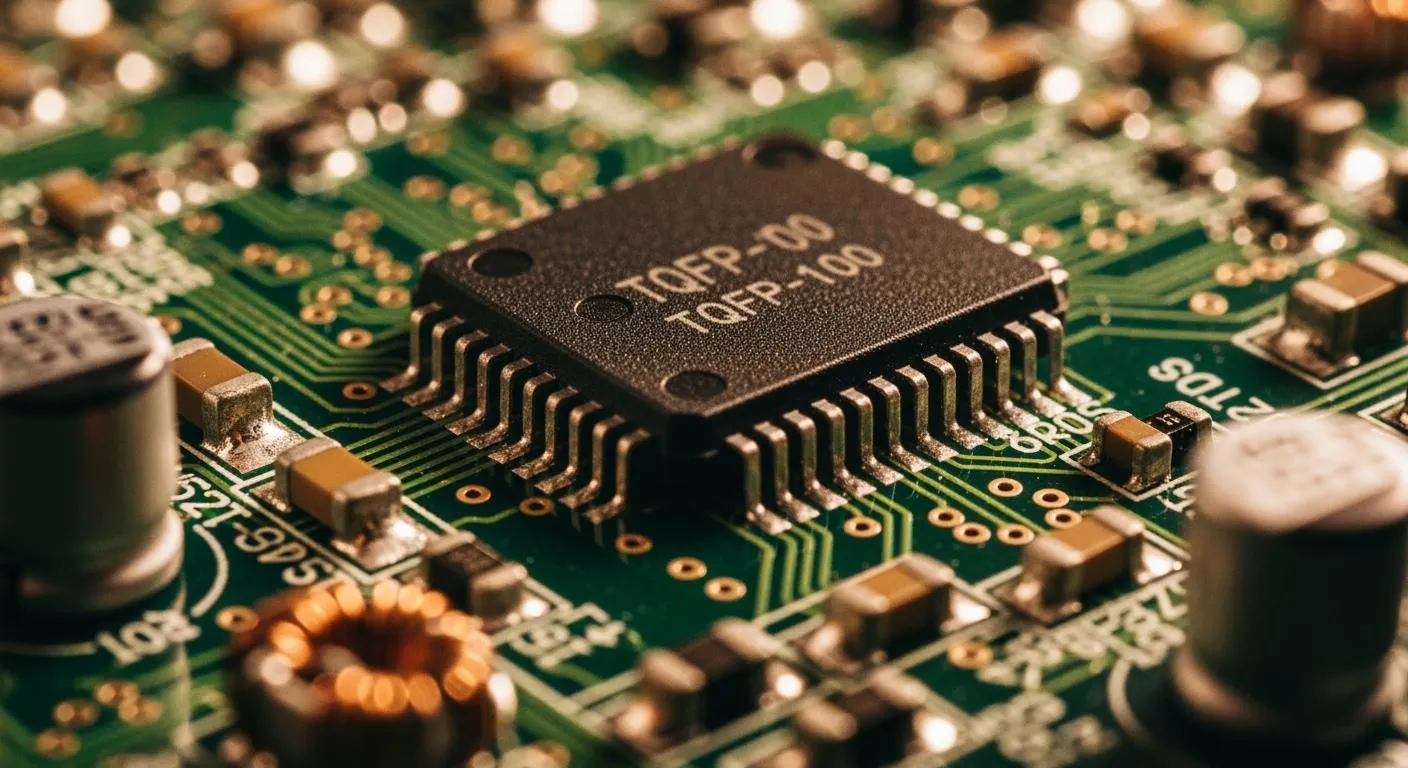
You see the tqfp package in many modern electronic devices. This surface-mount chip type has a thin body and leads on all four sides. Tqfp helps you design smaller and lighter products. It supports high-density circuits, which means you can fit more features into less space. If you want to create compact gadgets or advanced systems, you need to understand tqfp and its role in electronics.
Key Takeaways
- TQFP stands for Thin Quad Flat Package, a compact chip type ideal for modern electronics.
- Choose TQFP for its high pin density, allowing more features in smaller devices like smartphones and tablets.
- TQFP packages are cost-effective and support efficient assembly, making them suitable for both prototyping and mass production.
- Consider TQFP for projects needing a balance of size, performance, and reliability in electronic designs.
- Be aware of TQFP's limitations, such as heat dissipation challenges in high-power applications and the risk of solder bridging.
TQFP Package Overview
What Is TQFP?
You often see the tqfp package in modern electronics. TQFP stands for thin quad flat package. This is a type of surface mount integrated circuit package. You can recognize it by its flat, square body and leads that extend from all four sides. The term "quad" means four sides, and "flat" refers to the low profile of the package. TQFP is a version of the qfp, but it is thinner and lighter. You use tqfp when you need to save space on your printed circuit board. This package supports high pin density, which means you can connect many signals in a small area.
TQFP Package Structure
The structure of the tqfp package makes it ideal for compact designs. The body thickness is usually about 1.0 mm, and the lead pitch ranges from 0.4 mm to 1.0 mm. You can find tqfp packages with 32 to 176 pins, and the body size can vary from 5x5 mm to 20x20 mm. The lead frame uses a copper alloy for good electrical performance. The body often uses materials like fiberglass-reinforced epoxy resin, which provides strong insulation and mechanical strength. Some packages use ceramic for better heat resistance, or metal-core substrates like aluminum or copper for improved heat dissipation. Flexible substrates such as polyimide are also used in special cases.
| Characteristic | Description |
|---|---|
| Body thickness | 1.0 mm (typical) |
| Lead pitch | 0.4 mm to 1.0 mm |
| Pin count | 32 to 176 pins |
| Body size | 5x5 mm to 20x20 mm |
| Lead frame material | Copper alloy |
Key Features
You choose tqfp for its thin profile and efficient use of space. The thin body, usually between 1.0 and 1.2 mm, helps you design slimmer devices. This is important for portable products like smartphones and tablets. The leads on all four sides make soldering easier and allow for high pin counts. Compared to traditional qfp, tqfp is lighter and takes up less vertical space. You also see lqfp, or low-profile quad flat package, which is similar but has a slightly thicker body. When you compare tqfp package details with lqfp package details, you notice that tqfp is better for ultra-thin designs. TQFP supports high-density circuits and helps you create advanced systems with many features.
Note: TQFP is a popular choice when you need a balance of size, pin count, and cost in your electronic projects.
TQFP Package Details in Electronics
Electronic Functionality
You use the tqfp package to enable advanced features in modern electronics. This surface mount integrated circuit package supports high pin density, which lets you connect many signals in a small area. The thin body and quad flat package design help you build smaller printed circuit boards. You can see the main electronic functions of tqfp in the table below:
| Feature | Description |
|---|---|
| High Pin Count | Lets you integrate complex circuits into a single chip. |
| Improved Thermal Management | The thin design helps with heat dissipation, which is important for reliability in demanding applications. |
| Cost-Effectiveness | Surface mount design streamlines assembly and reduces manufacturing costs. |
| Robust Performance | Delivers reliable operation in both commercial and industrial environments. |
You often choose tqfp when you need to balance size, performance, and cost optimization. The quad flat package structure gives you flexibility for both simple and complex designs. You can use tqfp for microcontroller and microprocessor chips that require many connections but must fit into tight spaces.
Common Applications
You find tqfp in many types of electronic devices. The slim and compact design makes it perfect for space-limited products. Here are some common scenarios where you see tqfp used:
- Microcontrollers like STM32, PIC32, and ATMega series
- Industrial control boards that need mechanical reliability
- Consumer electronics such as home appliances and audio equipment
- Legacy-to-mid-range designs for interfaces, logic gates, or motor drivers
You often see the quad flat package in tablets, wearables, and other portable devices. The thin body allows you to fit more components onto a single board. This helps you create smaller and lighter products without sacrificing features.
Tip: TQFP packages are designed to be thin and compact. You can use them to save space and fit more functions into your device.
Nova Technology Company (HK) Limited stands out as a HiSilicon-designated solutions partner in the integrated circuit industry. You can rely on their expertise in chip-level solutions and system integration for advanced electronics. They support a wide range of application scenarios, from consumer devices to industrial systems, by providing professional semiconductor services and technical support.
Why Choose TQFP?
You choose tqfp for several reasons. The quad flat package design gives you a thin profile and high pin count, which is ideal for compact and feature-rich devices. Here are some key benefits:
- Tqfp packages are thin and compact, making them ideal for space-limited devices.
- The slim design allows for tighter PCB layouts, so you can fit more components into smaller devices like tablets and wearables.
- Tqfp is generally less expensive than other packages, such as BGA, because it uses simpler manufacturing processes and materials.
- When your design needs fewer than 200 I/O pins, tqfp offers the best balance of cost and performance.
- You can use tqfp for both microcontroller and microprocessor applications, especially when you need high pin density and reliable performance.
You often select the quad flat package when you want to optimize for cost, size, and assembly efficiency. The qfp family, including tqfp, gives you flexibility for a wide range of electronic projects.
TQFP vs Other Packages

TQFP vs LQFP
You often compare the tqfp package with lqfp when you design electronic devices. Both belong to the qfp family and use surface-mount technology. You see differences in their structure and performance. The tqfp package usually has a taller profile and thicker lead frame. Lqfp has a shorter height and thinner leads. You find lqfp benefits in simpler assembly and easier rework. The table below shows the main differences:
| Category | TQFP Characteristics | LQFP Characteristics |
|---|---|---|
| Overall Package Height | Typically taller than LQFP | Generally shorter than TQFP |
| Lead Frame Thickness | Thicker lead frame | Thinner lead frame |
| Package Body Size | Larger body size | Smaller body size |
| Lead Pitch Options | Various options available | Limited options available |
| Mounting Footprint | Different footprint requirements | Specific footprint requirements |
| Heat Dissipation Capability | Higher capability | Lower capability |
| Thermal Resistance | Varies based on design | Generally lower than TQFP |
| Junction Temperature Range | Wider range | Narrower range |
| Cooling Requirements | More complex cooling solutions needed | Simpler cooling solutions |
| Assembly Complexity | More complex assembly | Simpler assembly |
| Soldering Requirements | Different soldering techniques | Standard soldering techniques |
| Inspection Methods | Varies based on design | Standard inspection methods |
| Rework Procedures | More complex rework | Simpler rework procedures |
| Quality Control Measures | Stricter quality control | Standard quality control |
Tip: You choose lqfp for projects that need easier assembly and lower profile. You select tqfp when you need higher heat dissipation and more complex circuit integration.
TQFP vs QFN
You also compare tqfp with qfn when you select a quad flat package for your design. Qfn stands for quad flat no-lead package. Qfn uses a flat body with no visible leads. You see qfn in devices that need excellent heat dissipation and compact size. The table below shows thermal performance differences:
| Package Type | Thermal Resistance (°C/W) | Key Features |
|---|---|---|
| QFN | 10-15 | Exposed thermal pad for better heat dissipation |
| QFP | >30 | Relies on leads and package body for heat dissipation |
You notice that qfn has lower thermal resistance. This means qfn handles heat better than qfp. You also see differences in mechanical robustness:
| Feature | TQFP Packages | QFN Packages |
|---|---|---|
| Mechanical Connection | Gull-wing leads provide visible and flexible connections | Hidden solder joints are less visible and harder to inspect |
| Thermal Expansion Absorption | Better absorption of thermal expansion and stress | Less effective in absorbing stress due to hidden joints |
| Reworkability | Easier to rework with a soldering iron | More destructive rework requiring specialized tools |
| Preferred Use Cases | Prototyping, easy inspection, and rework | Compact designs with thermal dissipation advantages |
Note: You select qfn for high-density, heat-sensitive designs. You choose tqfp for easier inspection and rework.
Choosing the Right Package
You need to consider several factors when you select a package for your project. You look at profile height, lead density, heat dissipation, and assembly complexity. If you want a thin package with visible leads and easy rework, you pick tqfp. If you need a lower profile and simpler assembly, you choose lqfp. When your design requires excellent thermal performance and compact size, you select qfn.
- Choose tqfp for prototyping, high pin count, and reliable mechanical connections.
- Select lqfp for projects that need lqfp benefits like easier assembly and lower height.
- Pick qfn for devices that demand superior heat dissipation and minimal footprint.
You always match the package to your application needs. You balance cost, performance, and manufacturability. You make the best choice by understanding the strengths of each quad flat package.
Advantages and Disadvantages of TQFP
Benefits
You gain several benefits when you select the tqfp package for your project. The thin body and compact size help you design smaller devices. You can fit more features into less space. The quad flat package supports high-density integration, which is important for advanced electronics. The table below shows the main benefits:
| Benefit | Description |
|---|---|
| Compact Size | TQFP packages have a reduced thickness and small footprint, ideal for miniaturized designs. |
| High-Density Integration | Fine-pitch leads and optimized geometry allow seamless integration into high-density PCB layouts. |
| Thermal Management | Effective heat dissipation reduces the risk of overheating and improves reliability. |
| Optimized Signal Integrity | Finely spaced leads minimize electrical interference, crucial for high-frequency applications. |
| Mechanical Durability | Robust lead structure resists mechanical stress and environmental factors, ensuring reliability. |
You also notice that the low profile quad flat package makes your device more portable. You can optimize space in your design. Every millimeter counts when you build slim products. The reduced height lets you create thinner devices without losing functionality or pin count.
- TQFP packages are thinner than standard packages.
- Their low profile is essential for space optimization.
- You can design slimmer products while keeping all features.
Limitations
You face some limitations when you use tqfp in high-power applications. The package may struggle to manage heat loads compared to ceramic types. The leads can bend easily during handling. You must watch for solder bridging because the leads are close together.
- Limited heat dissipation in high-power designs.
- Leads bend easily, which can cause assembly issues.
- Close spacing increases the risk of solder bridging.
You need to consider these drawbacks when you plan your project. The advantages and disadvantages of qfp packages depend on your application and assembly process.
Design and Manufacturing Considerations
You must pay attention to assembly challenges with tqfp. The short leads and thin body make hand soldering difficult. You need precise soldering techniques. Misalignment can cause problems. The table below compares assembly challenges:
| Package Type | Assembly Challenges | Advantages |
|---|---|---|
| TQFP | Short leads and thin body make hand soldering difficult; higher risk of solder bridging. Requires precise soldering techniques and is sensitive to misalignment. | Optimized for high-volume production with controlled assembly. |
| LQFP | Longer leads facilitate easier soldering and inspection, making it suitable for manual assembly and prototyping. | Better tolerance for process variations, versatile for both automated and manual assembly. |
You find that hand soldering is challenging with tqfp. Rework requires precision tools. You must use careful inspection to avoid defects. Automated assembly works best for this package.
Tip: You improve reliability by using controlled assembly processes and careful inspection.
You make the best choice by understanding both the benefits and limitations of tqfp. You match the package to your project needs and manufacturing capabilities.
You choose tqfp packages for many reasons in electronics. They support moderate pin counts, offer easy inspection, and keep manufacturing costs low. You find them reliable for medium-density projects and suitable for both prototyping and mass production.
Key advantages include:
- Simple maintenance and proven long-term performance
- Good balance of durability and compactness
- Compatibility with automated assembly lines
If you want to learn more, check resources from semiconductor manufacturers and packaging guides for detailed design tips.
FAQ
What does TQFP stand for?
TQFP means Thin Quad Flat Package. You see this term when you work with surface-mount chips that have leads on all four sides and a slim body.
How do you solder a TQFP package?
You use a soldering iron or reflow oven. You must align the leads carefully. Fine-pitch leads require precision. Automated machines help you avoid mistakes.
Where do you commonly find TQFP packages?
You find TQFP in microcontrollers, consumer electronics, industrial control boards, and portable devices. The thin profile fits space-limited designs.
What are the main advantages of TQFP?
You benefit from a compact size, high pin count, and easy inspection. TQFP supports automated assembly and helps you design slimmer products.
Are TQFP packages easy to inspect and repair?
You can inspect TQFP leads visually. Rework is easier than with hidden-lead packages. You need steady hands and proper tools for repairs.