A Guide to 74HC02 Functions and Practical Applications
The 74hc02 ic plays a vital role in digital electronics. This quad 2-input nor gate provides a simple way to create nor logi
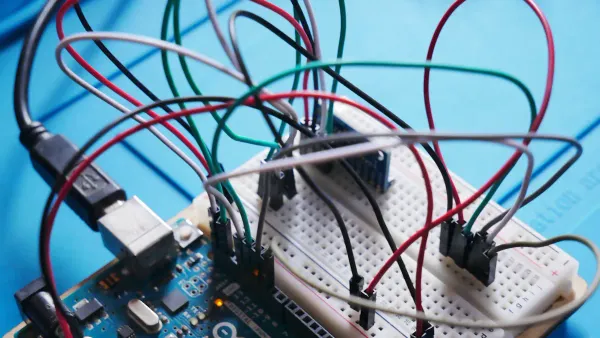
The 74hc02 ic plays a vital role in digital electronics. This quad 2-input nor gate provides a simple way to create nor logic operations in a circuit. Many engineers select the 74hc02 for digital gate functions when building a circuit with reliable performance. The ic supports digital nor logic, which helps in many design tasks. People who study digital circuit design find the features of the 74hc02 useful. Understanding the features and uses of this ic helps electronics enthusiasts improve their skills with gate logic.
Key Takeaways
- The 74HC02 IC contains four 2-input NOR gates that output high only when both inputs are low, making it a universal building block for digital logic circuits.
- This IC uses high-speed CMOS technology, which offers low power consumption, wide voltage range (2V to 6V), and strong noise immunity for reliable performance.
- Engineers use the 74HC02 in many applications like basic logic functions, signal generation, and control logic, including memory latches and timing circuits.
- To ensure stable operation, designers should connect unused inputs to power or ground, use decoupling capacitors near the power pins, and avoid connecting outputs directly together.
- The 74HC02 is easy to integrate, supports mixed voltage systems, and comes in various package types, making it a versatile choice for both learning and professional digital designs.
74HC02 Overview
NOR Logic Basics
The 74hc02 quad 2-input nor gate ic stands out in digital electronics for its simple yet powerful logic function. Each ic contains four independent nor gates. These gates perform the basic nor gate operation, which means each gate outputs a high signal only when both inputs are low. This behavior makes the 74hc02 useful for building digital circuits that need reliable logic decisions. Engineers often use the 74hc02 to combine nor gates and create other logic functions, such as and, or, and not gates. The ic integrates these gates in a 14-pin package, making it easy to connect in digital systems. The nor logic is important because it can serve as a universal gate, allowing designers to build any digital logic circuit using only nor gates. In digital electronics, the ability to create complex logic from simple nor gates helps students and professionals understand how digital systems work.
Tip: The nor gate is called a universal gate because it can form any other logic gate by combining multiple nor gates.
- The 74hc02 contains four separate nor gates.
- Each gate outputs high only when all inputs are low.
- The ic allows designers to emulate other logic gates.
- The 74hc02 is a key building block in digital logic design.
CMOS Technology
The 74hc02 uses high-speed CMOS technology, which sets it apart from older TTL-based ic families. CMOS stands for Complementary Metal-Oxide-Semiconductor. This technology gives the 74hc02 ic lower power consumption and better noise immunity. The 74hc02 operates at speeds similar to TTL devices, with propagation delays around 15 to 18 nanoseconds. The ic works well in battery-powered digital systems because it uses less energy when not switching. The 74hc02 also supports a wide voltage range from 2V to 6V, making it flexible for different digital applications. Within the 74hc family, the main difference between devices is the logic function. For example, the 74hc02 provides nor gates, while the 74hc00 offers nand gates. Performance features like high-speed operation and low power remain consistent across the family.
| Feature | 74HC02 (CMOS) | 74LS Series (TTL) |
|---|---|---|
| Technology | High-Speed CMOS | Low-Power Schottky TTL |
| Power Consumption | Lower; good for battery power | Higher |
| Speed | High-speed operation; ~15-18 ns delay | Fast switching; ~15 ns delay |
| Noise Immunity | Better noise margins | More susceptible to noise |
| Voltage Levels | Wide compatibility (2V–6V) | TTL voltage levels |
The 74hc02 ic combines high-speed operation with low power use, making it a popular choice for digital logic circuits.
Key Features
Electrical Specs
The 74hc02 offers several important features that make it a popular choice in digital circuit design. This IC supports a wide operating voltage range from 2.0V to 6.0V. Many similar NOR gate ICs, such as the 74LS02, require a fixed 5V supply. The 74hc02 provides more flexibility for designers who work with mixed voltage systems. Its CMOS technology allows for low power consumption, which helps extend battery life in portable devices. The IC also delivers high-speed operation, with typical propagation delays between 15 and 18 nanoseconds. These specifications ensure reliable performance in fast digital circuits.
The 74hc02 features high noise immunity, which protects circuits from unwanted electrical interference. It also operates over a wide temperature range, making it suitable for use in different environments. The IC includes input clamp diodes on each input pin. These diodes work with current-limiting resistors to protect the device from overvoltage conditions. If the input voltage rises above the supply voltage, the clamp diodes limit the voltage and prevent damage to the internal circuitry. This feature adds another layer of safety and reliability.
Note: The 74hc02's low power consumption and wide operating voltage range make it ideal for both battery-powered and industrial applications.
Main features of the 74hc02:
- Wide operating voltage range: 2.0V to 6.0V
- Low power consumption
- High noise immunity
- High-speed operation (15–18 ns propagation delay)
- Wide temperature range for reliable performance
- Input clamp diodes for overvoltage protection
| Specification | 74HC02 Value | 74LS02 Value |
|---|---|---|
| Voltage Range | 2.0V – 6.0V | 5V (fixed) |
| Typical Propagation Delay | 15–18 ns | ~15 ns |
| Power Consumption | Low | Higher |
| Noise Immunity | High | Moderate |
| Temperature Range | Wide | Standard |
Pinout and Packages
The 74hc02 comes in several package types to fit different circuit board layouts. Each package contains 14 pins, which makes it easy to use in both through-hole and surface-mount designs. The most common packages include SOIC-14, SSOP-14, and VFQFN-14. These options allow engineers to select the best fit for their project, whether they need a compact surface-mount IC or a standard size for prototyping.
| Package Type | Pin Count | Mount Type |
|---|---|---|
| 14-VFQFN Exposed Pad | 14 | Surface Mount |
| 14-SOIC | 14 | Surface Mount |
| 14-SSOP | 14 | Surface Mount |
| SOIC | 14 | Surface Mount |
The pin configuration of the 74hc02 matches the standard layout for quad 2-input NOR gate ICs. This compatibility allows the 74hc02 to replace other logic ICs in existing designs. The IC also works well with LSTTL logic levels, which helps when mixing different logic families in one circuit. The input and output pins connect directly to the four internal NOR gates, making the features of the IC easy to access.
Logic Diagram
The logic diagram of the 74hc02 shows four independent 2-input NOR gates inside the IC. Each gate has two input pins and one output pin. Designers can use each gate separately or combine them to create more complex logic circuits. For example, connecting two NOR gates in a feedback loop forms an SR latch, which stores a single bit of information. This simple memory circuit demonstrates how the internal gates interact and how the IC's features support practical applications.
| Pin Number | Pin Name | Function | Description |
|---|---|---|---|
| 1 | 1Y | Output | Output of first 2-input NOR gate |
| 2 | 1A | Input | First input of first NOR gate |
| 3 | 1B | Input | Second input of first NOR gate |
| 4 | 2Y | Output | Output of second NOR gate |
| 5 | 2A | Input | First input of second NOR gate |
| 6 | 2B | Input | Second input of second NOR gate |
| 7 | GND | Power | Ground connection |
| 8 | 3A | Input | First input of third NOR gate |
| 9 | 3B | Input | Second input of third NOR gate |
| 10 | 3Y | Output | Output of third NOR gate |
| 11 | 4A | Input | First input of fourth NOR gate |
| 12 | 4B | Input | Second input of fourth NOR gate |
| 13 | 4Y | Output | Output of fourth NOR gate |
| 14 | Vcc | Power | Positive power supply (typically +5V) |
The internal structure of the 74hc02 makes it easy to build custom logic functions. The IC's features, such as input clamp diodes and overvoltage tolerance, help protect the device and ensure stable performance. Some versions of the 74hc02 also offer open-drain outputs, which allow for wired-AND logic and easy interfacing with other devices.
Tip: The clear pinout and logic diagram of the 74hc02 help users quickly understand how to connect and use the IC in digital circuits.
Digital Applications
Basic Logic Circuits
The 74hc02 finds many applications in basic logic circuits. Engineers use this IC to build combinational logic functions. The quad 2-input NOR gates inside the 74hc02 serve as building blocks for more complex logic designs. By combining these gates, designers can create AND, OR, and XNOR gates. This flexibility allows the 74hc02 to support Boolean algebra solutions and Karnaugh map-based logic simplification. Students often experiment with the 74hc02 in digital electronics labs to learn about gate operations and circuit behavior.
The 74hc02 appears in devices such as cell phones, computing devices, set-top boxes, LCD TVs, and industrial controllers. These products rely on the IC’s versatility to perform essential logic tasks.
The 74hc02 also enables the construction of active-low SR latches. By configuring the four NOR gates, engineers create a memory element that holds a digital state. For example, a circuit can control an LED that stays lit after a button is pressed and released. This latch demonstrates the IC’s ability to store information reliably. The active-low SR latch design offers simplified circuit layout, low power consumption, and strong noise immunity. The wide voltage range of the 74hc02 ensures compatibility with many digital systems.
Common applications in basic logic circuits:
- Combinational logic functions
- Signal inversion
- Gating operations
- Active-low SR latches for memory storage
Signal Generation
The 74hc02 supports signal generation applications in digital circuits. Engineers use the IC to build oscillators and pulse generators. In a crystal-controlled ramp generator, two NOR gates from the 74hc02 form a set-reset latch. This latch detects the rising edge of a blanking pulse and resets a counter. The blanking pulse controls when the counter starts, synchronizing the ramp output. The 74hc02’s gates produce timing and control signals that shape ramp waveforms and blanking intervals.
Designers also use the 74hc02 to create pulse shaping elements. A NOR gate can generate positive-going blanking pulses for modulating oscilloscope inputs or controlling timing signals. By combining gates, engineers build set-reset latches that detect edges and manage counters in ramp generator circuits. The IC’s versatility makes it valuable for oscillator feedback loops and timing control.
Typical signal generation applications:
- Oscillators for timing signals
- Pulse generators for waveform shaping
- Ramp generators for analog-to-digital conversion
- Blanking pulse circuits for display synchronization
| Application Type | 74hc02 Function | Example Use Case |
|---|---|---|
| Oscillator | Pulse shaping, feedback | Ramp generator timing |
| Pulse Generator | Edge detection, latching | Blanking pulse for displays |
| Timing Control | Counter reset, gating | Synchronization in controllers |
Control Logic
The 74hc02 excels in control logic applications. Engineers use the IC to manage logic level conversion in microcontroller interface circuits. Each NOR gate includes input clamp diodes and current-limiting resistors. These features protect the IC when input voltages exceed the supply voltage. The 74hc02 operates over a wide voltage range and supports CMOS logic levels. This capability allows the IC to handle signals from different logic families and voltage domains.
Designers rely on the 74hc02 for safe and reliable logic level conversion. The IC adapts input signals from various sources, ensuring compatibility between microcontrollers and other digital devices. The versatility of the 74hc02 makes it a popular choice for interfacing tasks in modern electronics.
Tip: The 74hc02’s input protection and wide voltage range help prevent damage and improve circuit reliability in control logic applications.
Common control logic applications:
- Logic level conversion between microcontrollers and peripherals
- Signal adaptation for mixed-voltage systems
- Interface circuits for digital sensors and actuators
Example: Logic Level Conversion Circuit

Microcontroller Output (3.3V) ----> [74hc02 Input] ----> [74hc02 Output (5V)]
The 74hc02’s versatility, robust logic functions, and reliable performance make it essential for digital applications in many fields. Engineers select this IC for its ability to simplify circuit design, support complex logic operations, and ensure safe signal handling.
Advantages and Limitations
Benefits
The 74HC02 offers several important benefits for digital circuit designers. This IC uses CMOS technology, which helps reduce power consumption. The quiescent current stays very low, around 2μA, so the device uses minimal power when idle. The wide operating voltage range from 2.0 V to 6.0 V allows engineers to use the 74HC02 in many types of circuits. High noise immunity protects the IC from electrical interference, which leads to improved circuit performance in busy environments. The device also shows strong latch-up performance, handling currents above 100 mA. ESD protection keeps the IC safe from static electricity.
The table below highlights some key features:
| Feature/Parameter | Description/Value |
|---|---|
| Operating Voltage Range | 2.0 V to 6.0 V |
| Technology | CMOS, low power consumption |
| Quiescent Current | ~2μA (minimal idle power) |
| Noise Immunity | High, robust against electrical noise |
| Latch-Up Performance | >100 mA |
| Max Power Dissipation | 500 mW |
| ESD Protection | HBM > 2000 V, MM > 200 V |
Engineers find the 74HC02 easy to integrate into new and existing designs. The IC supports high-speed operation, which means circuits can process signals quickly. These advantages make the 74HC02 a popular choice for projects that need reliable logic gates and strong performance.
Common Pitfalls
Some users face challenges when working with the 74HC02. Voltage mismatches can cause problems if the supply voltage does not match the logic levels of other devices in the circuit. Improper interfacing may lead to unreliable operation or even damage the IC. Designers should check the voltage range and ensure all connected devices use compatible logic levels. Failing to use input protection or ignoring the recommended operating conditions can reduce performance and shorten the lifespan of the IC.
Another common mistake involves connecting outputs directly together. This practice can cause excessive current flow and damage the device. Engineers should avoid mixing different logic families without proper level shifting. Careful planning and attention to datasheet guidelines help prevent these issues and ensure improved circuit performance.
Tip: Always review the datasheet and double-check voltage levels before adding the 74HC02 to a circuit.
Implementation Tips
Best Practices
Engineers improve circuit design by following several best practices when working with the 74HC02. They maintain the supply voltage within the recommended range to protect the device from damage. Unused inputs should never float. Connecting these inputs to Vcc or GND ensures stable logic levels. Pull-up or pull-down resistors help define input states and prevent unpredictable behavior.
Placing a 0.1 µF decoupling capacitor close to the Vcc pin reduces power supply noise. This step helps maintain signal integrity in digital applications. The GND pin connects directly to the power supply ground, which supports proper grounding. Series resistors on outputs limit current and prevent overheating. Good grounding and supply connections keep the circuit stable.
Engineers use the 74HC02’s CMOS features to lower power consumption and boost noise immunity. They select package types that match their circuit design needs. The device’s RoHS compliance and JEDEC standards ensure safe and reliable operation in various environments. ESD protection and strong latch-up performance add another layer of safety.
Tip: Always connect unused inputs and place decoupling capacitors near the power pins for best results in circuit design.
PCB Layout Checklist for 74HC02:
- Maintain supply voltage within limits
- Connect unused inputs to Vcc or GND
- Use pull-up or pull-down resistors
- Place 0.1 µF decoupling capacitor near Vcc
- Limit output current with series resistors
- Ensure proper grounding
Reference Resources
Engineers often look for reference circuits and further reading to deepen their understanding of 74HC02 applications. Many datasheets include sample circuit design diagrams, such as active-low SR latches and pulse generators. Application notes from manufacturers provide step-by-step guides for integrating the 74HC02 into digital logic systems.
| Resource Type | Description |
|---|---|
| Datasheets | Pinout, electrical specs, sample circuits |
| Application Notes | Design tips, troubleshooting, best practices |
| Online Tutorials | Circuit design examples, logic gate basics |
| Industry Standards | RoHS, JEDEC compliance, ESD guidelines |
Note: Reviewing datasheets and application notes helps engineers avoid common mistakes and improve circuit design for reliable applications.
The 74hc02 stands out as a reliable choice for many digital projects. This IC offers low power use, high noise immunity, and fast switching. Engineers use the 74hc02 in logic circuits, signal generation, and control logic. The 74hc02 works well in both battery-powered and industrial systems. When a project needs flexible voltage support and strong digital performance, the 74hc02 fits well. Users can explore new ideas and test different digital designs with the 74hc02.
The 74hc02 helps students and engineers learn more about digital logic and circuit design.
FAQ
What is the main function of the 74HC02?
The 74HC02 provides four independent 2-input NOR gates in one chip. Each gate outputs a high signal only when both inputs are low. This IC helps build many types of digital logic circuits.
Can the 74HC02 replace a 74LS02 in a circuit?
Yes, the 74HC02 can often replace a 74LS02. Both chips have the same pinout and logic function. The 74HC02 uses CMOS technology, which means it uses less power and works with a wider voltage range.
How should unused inputs on the 74HC02 be handled?
Engineers should connect unused inputs to either Vcc or GND. This step prevents floating inputs, which can cause unpredictable behavior or extra power use. Pull-up or pull-down resistors help keep the circuit stable.
What are common mistakes when using the 74HC02?
Some users connect outputs together or mix logic families without level shifting. These mistakes can damage the chip. Always check voltage levels and follow datasheet guidelines for safe operation.
Where can someone find example circuits for the 74HC02?
Many datasheets and manufacturer application notes include sample circuits. Online electronics forums and tutorials also provide step-by-step guides. These resources help users learn how to use the 74HC02 in real projects.