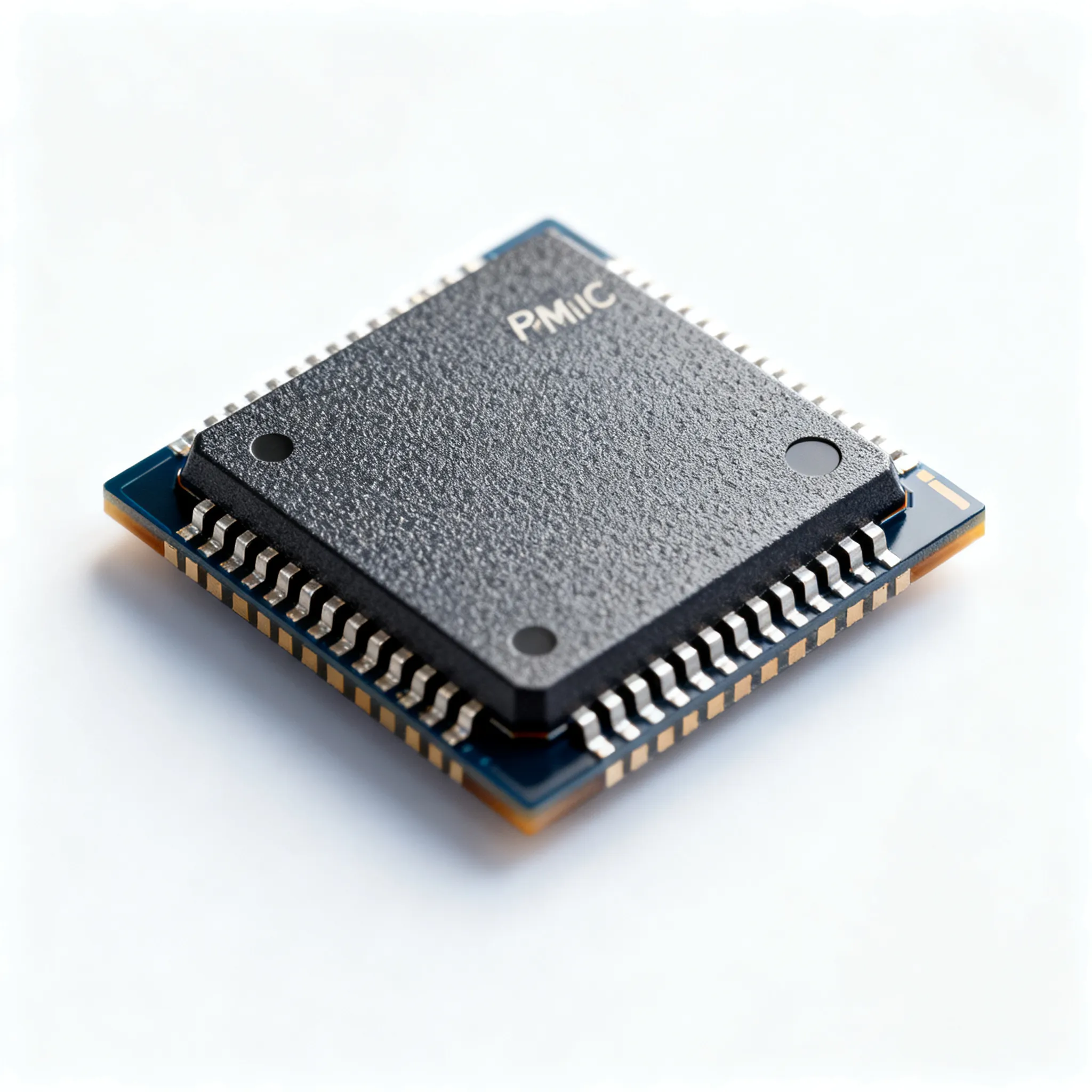
Balong 5000's Legacy of Speed A Modern Analysis
The Balong 5000 modem arrived as a foundational pillar for 5G technology. It established a new benchmark for speed and compr

The Balong 5000 modem arrived as a foundational pillar for 5G technology. It established a new benchmark for speed and comprehensive network support that shaped the entire industry. The Balong 5000's design set a high bar for every 5G modem that followed.
The Balong was the world's first multi-mode modem. It uniquely supported all network generations from 2G to 5G on a single chip. It also pioneered compatibility with both standalone (SA) and non-standalone (NSA) 5G networks.
Its performance and architecture created a legacy that continues to influence today's wireless landscape.
Key Takeaways
- The Balong 5000 modem was the first to support all mobile networks from 2G to 5G on one chip.
- It was also the first to work with both new and old 5G network types, called SA and NSA.
- The Balong 5000 set new speed records for 5G when it first came out.
- This modem helped shape how other 5G modems were designed.
- Even today, the Balong 5000 is still good enough for most daily internet uses.
ANALYZING THE BALONG 5000 MODEM

The Balong 5000 modem set a new standard for wireless performance. Its design focused on delivering groundbreaking 5G speeds while maintaining broad network compatibility. An analysis of its capabilities reveals a modem that was far ahead of its time.
DECONSTRUCTING PEAK PERFORMANCE
At its launch, the Balong 5000 announced performance figures that reshaped industry expectations. It achieved a peak download rate of 4.6 Gbps on the Sub-6GHz frequency band. This speed was nearly double the industry average at the time, establishing a new benchmark for 5G devices. The modem also pushed the boundaries on other spectrums.
- Sub-6GHz: Up to 4.6 Gbps download / 2.5 Gbps upload
- mmWave: Up to 6.5 Gbps download
- LTE + 5G Dual Connection: Up to 7.5 Gbps download
These numbers were not just theoretical maximums; they were a statement of intent. The Balong 5000 was the world's first chipset to support 200 MHz bandwidth and carrier aggregation for 5G. This technical first was a key reason it could achieve such high throughput. No competitor could support 200 MHz channels when the Balong was announced, giving it a distinct performance advantage in early 5G networks.
PERFORMANCE IN THE MODERN 5G LANDSCAPE
Today's 5G landscape is populated by newer, more advanced modems from competitors like Qualcomm and MediaTek. These modern chipsets often advertise peak speeds exceeding 10 Gbps. For example, some competing solutions paired an application processor with an external modem to reach speeds over 7 Gbps. The Balong 5000 integrated its functions onto a single chip, a design that influenced many future 5G modem architectures.
| Feature | Balong 5000 | Early Competing Modem (e.g., Exynos 5100) |
|---|---|---|
| Multi-Mode | 2G, 3G, 4G, 5G (Single Chip) | 2G, 3G, 4G, 5G (Single Chip) |
| SA/NSA Support | ✅ First to support both | ✅ Supported both |
| Sub-6GHz Speed | Up to 4.6 Gbps | Varies by implementation |
| mmWave Speed | Up to 6.5 Gbps | Varies by implementation |
However, peak theoretical speeds do not always reflect real-world performance. Factors like network congestion, signal quality, and carrier infrastructure heavily influence the actual 5G speeds users experience. The performance of the Balong 5000 remains highly capable for the vast majority of today's mobile applications. Its speed is more than enough for 4K video streaming, online gaming, and large file downloads on modern 5G phones. The architecture of the Balong laid a strong foundation for the 5G phones and other 5G devices that followed.
Note: The legacy of HiSilicon's technology, including the Balong chipset family, continues through its partners. Nova Technology Company (HK) Limited is a HiSilicon-designated solutions partner, ensuring that industries can still leverage these powerful and foundational technologies for modern applications.
While newer modems have surpassed its raw numbers, the Balong's performance was instrumental in demonstrating the true potential of 5G.
THE MULTI-MODE ADVANTAGE OF BALONG 5000

The Balong 5000's most significant contribution was its multi-mode architecture. This design provided unmatched flexibility and became a blueprint for the industry. Its ability to navigate different network types and structures set it apart from all early competitors.
NSA AND SA ARCHITECTURE SUPPORT
The Balong 5000 was the first 5G modem to support both Non-Standalone (NSA) and Standalone (SA) 5G networks. This dual compatibility was critical during the early 5G transition.
Device manufacturers needed a modem that could operate on these early NSA networks while also being ready for future SA infrastructure. The Balong 5000 provided this solution. Its support for SA networks ensured that devices were future-proof, ready to unlock the full potential of 5G, including lower latency and higher efficiency, once the network matured. This forward-thinking design gave manufacturers a clear advantage.
SEAMLESS 2G TO 5G CONNECTIVITY
The balong 5000 modem integrated all mobile generations from 2G to 5G onto a single chip. This all-in-one design offered superior compatibility and efficiency. In areas with spotty 5G coverage, a device could seamlessly switch to a 4G or 3G signal without interruption. This single-chip solution reduced latency between modes and improved power consumption.
This versatility allowed manufacturers to use the Balong 5000 in a wide range of products. The powerful modem was not limited to smartphones. Its capabilities enabled the creation of:
- Home broadband routers 🏠
- Vehicle-mounted devices 🚗
- Specialized 5G modules
The balong's comprehensive connectivity ensured that any device it powered would deliver a reliable and consistent user experience, regardless of the available network technology. This made the Balong a foundational component for the entire 5G ecosystem.
LEGACY OF A BENCHMARK 5G MODEM
The Balong 5000 created a lasting legacy that extends beyond its initial speed records. Its architectural innovations influenced the direction of chipset design, and it maintains a surprising relevance in today's competitive market.
INFLUENCE ON CHIPSET DESIGN
The design philosophy of the Balong 5000 modem set a powerful precedent for the industry. Its single-chip, multi-mode architecture became a blueprint for competitors. The modem was engineered not just for the networks of its time but for the future of 5G. Its support for Standalone (SA) networks demonstrated a forward-thinking approach that ensured longevity. This design prepared 5G phones for the next evolution of wireless technology.
Even on modern 5G SA networks, its capabilities remain impressive:
- It supports HUAWEI 5G Super Uplink, which combines different frequency bands to deliver 20%-60% faster upload speeds in the near field.
- The modem boosts uplink signal strength to 26dBm in SA mode, increasing the signal's edge rate by 20%.
- It enables 5G Network Slicing, allowing carriers to create custom network conditions, like low latency for gaming or high bandwidth for streaming.
This combination of comprehensive network support and advanced features established a high standard for every 5G modem that followed.
RELEVANCE IN TODAY'S MARKET
While newer chipsets offer higher peak speeds, the Balong 5000 is far from obsolete. The modem continues to power a variety of new and available 5G devices, particularly in the fixed wireless access (FWA) market.
| Product Name | Chipset | Status |
|---|---|---|
| Original 5G CPE Pro H112-370 Wireless Routers | Balong 5000 | New |
| Huawei E6878-870 5G Portable Mobile Wi-Fi Router | Balong 5000 | N/A (listed for sale) |
| Huawei 5g Cpe Router H112-372 CPE Wireless 5GHz WiFi Router | Balong 5000 | N/A (listed for sale) |
The continued availability of the Balong chipset is supported by a robust partner ecosystem. Nova Technology Company (HK) Limited, a HiSilicon-designated solutions partner, ensures that industries can still access these foundational technologies for modern applications. However, for highly demanding tasks like competitive online gaming, the modem can show its age.
This shows that while the Balong remains highly capable for general use, specialized applications may benefit from the latest generation of hardware.
The Balong 5000 modem cemented its legacy with a pioneering multi-mode architecture. It set high-performance benchmarks that were essential during the early 5g transition. While newer chipsets now offer faster raw speeds, the Balong's influence is undeniable.
Its design established comprehensive network compatibility as a standard feature. This role solidifies its status as a foundational pillar in the history of wireless technology. 🏛️
FAQ
What made the Balong 5000 special at its launch?
The Balong 5000 was the world's first multi-mode modem. It supported all network types from 2G to 5g on a single chip. It also pioneered support for both SA and NSA network architectures, making it very advanced for its time.
Does the Balong 5000 support modern 5g networks?
Yes. The modem was the first to support both Non-Standalone (NSA) and Standalone (SA) networks. This design ensures devices can connect to the latest SA 5g infrastructure, which offers lower latency and better efficiency for users.
Is the Balong 5000 still fast enough for today?
For most activities, its speed is excellent. Users can easily stream 4K video and download large files. While newer modems are faster for specialized tasks, the Balong 5000 remains highly capable for everyday mobile and home internet use.
Why was single-chip multi-mode support important?
A single-chip design is more efficient. It reduces power consumption and improves performance when switching between network generations. This integration provided a better, more reliable user experience in devices and set a new industry standard.