How to Discharge an AC Capacitor Without Risk
Safely discharge an AC capacitor using a resistor and insulated tools. Follow these steps to avoid electric shock and protect your HVAC and electronic devices.
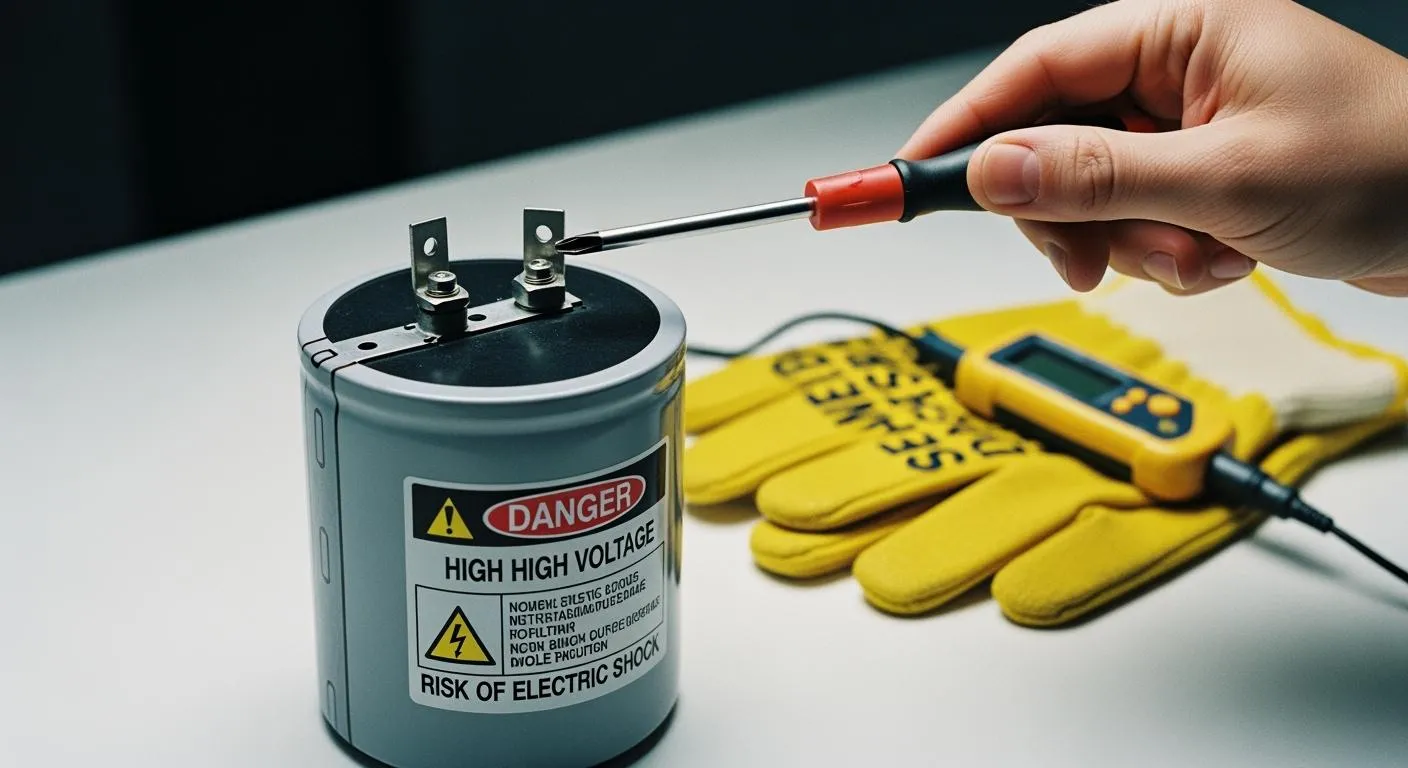
You want to know how to safely handle capacitor discharge. Always treat a capacitor with caution because it can store enough energy to cause a serious shock. Before you touch anything, check if the capacitor discharge process is needed. Use insulated tools and keep your workspace dry. Ask yourself, how do you discharge an ac capacitor without risking injury? You must follow safe steps for capacitor discharge. This routine protects you, your tools, and the equipment. Remember, capacitor discharge is not just for experts; you can do it safely if you use the right approach.
Key Takeaways
- Always wear personal protective gear, including insulated gloves and safety glasses, to prevent electric shock during capacitor discharge.
- Disconnect all power sources and use a voltage tester to confirm that the capacitor is not energized before starting the discharge process.
- Use a resistor to safely discharge the capacitor, allowing for controlled energy release and reducing the risk of shock or damage.
- Check the capacitor with a multimeter after discharge to ensure it is safe to handle; look for a reading close to zero volts.
- Avoid common mistakes like short-circuiting the terminals directly; always prioritize safety and proper techniques when handling capacitors.
Safety Precautions for Capacitor Discharge

Before you start any capacitor discharge, you need to focus on safety considerations. Taking the right safety precautions helps you avoid electric shock and keeps your workspace secure. Let’s break down what you need to do before you even touch a capacitor.
Personal Protective Gear
You should always gear up before handling capacitor discharge. Here’s what you need:
- Insulated gloves protect your hands from accidental shocks during capacitor discharge.
- Safety glasses or goggles shield your eyes from sparks or flying debris if a capacitor fails.
- Insulating mats under your feet add another layer of protection, especially if you work on concrete or tile.
- ESD-safe footwear helps prevent static buildup, which can trigger a capacitor discharge.
- Insulated tools keep you safe from accidental contact with live parts.
Tip: Never skip personal protective equipment. Even a small capacitor can pack enough energy to cause harm.
Disconnecting Power
You must disconnect all power sources before you begin any capacitor discharge. Unplug the device or switch off the circuit breaker. Double-check that the power is off. Use a voltage tester to confirm there’s no electricity flowing to the capacitor. This step is one of the most important safety considerations. If you skip it, you risk a dangerous capacitor discharge.
Preparing the Workspace
A clean, dry, and well-lit workspace makes capacitor discharge much safer. Follow these steps:
- Disconnect power and remove batteries if needed.
- Identify the capacitor you plan to discharge.
- Put on your personal protective gear.
- Clear away any metal tools or clutter that could cause a short circuit.
- Make sure your hands and the area around you are dry.
These safety considerations help you avoid accidents and make the capacitor discharge process smooth. Always treat every capacitor with respect. Safety precautions are not just for professionals—they’re for anyone who wants to stay safe during capacitor discharge.
How Do You Discharge an AC Capacitor?
You might wonder, how do you discharge an ac capacitor without putting yourself or your equipment at risk? The answer starts with using the right tools and following a safe process. Let’s walk through the steps together so you can handle capacitor discharge with confidence.
Tools and Materials Needed
Before you begin, gather everything you need for a safe capacitor discharge. Having the right tools makes the process smoother and much safer. Here’s a handy table to help you get organized:
| Material/Tool | Description |
|---|---|
| Wire | Two lengths of wire, minimum 12AWG, 600 volt rating for large capacitors. |
| Resistor | Rated to dissipate thermal energy; minimum 2kΩ 5W for small capacitors, 20kΩ 5W for large ones. |
| Shrink tubing | Used for insulation and safety. |
| Insulated tools | Pliers or screwdrivers with insulated handles to prevent accidental shocks. |
| Multimeter | For checking voltage before and after discharge. |
Tip: Always double-check your tools for damage before starting any capacitor discharge. Even a small crack in insulation can put you at risk.
Using a Discharge Resistor
The safest and most recommended discharge method for an AC capacitor is the resistor method. This approach lets you control the flow of energy, which protects both you and the capacitor. Here’s how do you discharge an ac capacitor using a resistor:
-
Confirm Power is Off
Unplug the device or switch off the breaker. Use your multimeter to make sure there’s no voltage at the capacitor terminals. -
Select the Right Resistor
For most AC capacitors, start with a resistor between 100kΩ and 1MΩ. If you’re not sure, begin with 1MΩ and adjust down to 100kΩ if needed. Make sure the resistor is rated for at least 5 watts. -
Prepare Your Discharge Tool
Attach the resistor to two insulated wires. Cover any exposed metal with shrink tubing for extra safety. -
Connect the Resistor Across the Terminals
Hold the insulated wires with pliers and touch one wire to each terminal of the capacitor. Hold them in place for several seconds. You may see a small spark or hear a pop—this is normal. -
Check for Voltage
After a few seconds, use your multimeter to check the voltage. If it’s not zero, repeat the process. -
Remove the Resistor and Wires
Once the voltage reads zero, you can safely handle the capacitor.
Using a discharge resistor gives you a controlled and safe release of energy. This method protects you from sudden shocks and prevents damage to the capacitor or the circuit. If you use a resistor with too low a power rating, it can overheat or even fail, so always check the specs. In high-power situations, specialized discharge resistors work best because they handle more energy without risk.
Alternative Methods
You might ask, are there other discharge methods for AC capacitors? Yes, but you need to know when and how to use them safely.
-
Using a Discharge Tool
Commercial discharge pens or tools are available. These are designed for quick and safe capacitor discharge, especially in professional settings. -
Controlled Self-Discharge
Some capacitors have built-in bleed resistors. These allow the capacitor to discharge itself slowly after power is removed. Always check with a multimeter before touching the terminals, as some charge may remain. -
Short Circuit Method (Not Recommended)
You may have heard about using a screwdriver to short the terminals. This method can create sparks, heat, and even damage the capacitor. Only use this in emergencies, and always wear protective gear.
Capacitors can discharge current even when not energized because they hold a charge for some time after the power is turned off. Always test with a voltmeter and, if necessary, perform a capacitor discharge before working on or near them. Protect yourself with suitable insulators during the discharge process.
Here’s a quick checklist for any discharge method:
- Disconnect all power sources.
- Wait for any self-discharge if the capacitor has a bleed resistor.
- Wear insulated gloves and safety glasses.
- Use insulated tools.
- Never touch the terminals directly—always check with a multimeter first.
How do you discharge an ac capacitor safely? Stick with the resistor method whenever possible. It’s inexpensive, easy to set up, and works for almost any size capacitor. Other discharge methods exist, but they come with more risks. Always put safety first during any capacitor discharge.
Check Capacitor Discharge
Testing with a Multimeter
After you finish the capacitor discharge process, you need to confirm the capacitor is truly safe to handle. The best way to do this is by testing with a multimeter. Here’s how you can check the capacitor discharge step-by-step:
- Set your multimeter to the DC voltage (VDC) mode. Choose a voltage range higher than the capacitor’s rated voltage, usually 200V or more.
- Carefully place the multimeter probes on the capacitor terminals. Make sure you hold the probes by their insulated handles.
- Look at the reading on the multimeter display. If the voltage is very close to zero volts—ideally less than 1 volt—you can be confident the capacitor discharge is complete.
- If the voltage still shows a significant number, repeat the capacitor discharge process and test again.
Tip: Never assume the capacitor is discharged without testing. Even after waiting, some capacitors hold a charge that can give you a shock.
Signs of Complete Discharge
Besides testing with a multimeter, you can also look for physical signs that indicate the capacitor is safe to handle. These signs help you spot damaged or fully discharged capacitors:
- The capacitor casing looks normal, without swelling or bulging on the top or sides.
- There are no cracks or splits in the capacitor housing.
- You don’t see any oil residue or leakage around the terminals.
- The terminal area is clean, without blackened or discolored spots.
- There are no burn marks on the capacitor body.
If you notice any of these warning signs, the capacitor might be damaged or unsafe. Avoid handling it and consider replacing it or consulting a professional.
Checking the capacitor discharge carefully protects you from electric shock and prevents damage to your tools or equipment. Always combine visual inspection with a multimeter test before you proceed with any work involving capacitors.
Remember, capacitor discharge is a critical safety step. Taking the time to verify discharge helps you work confidently and safely every time.
HVAC Capacitor Safety and Everyday Use
Role in Air Conditioners
You probably use air conditioning at home or work, but you might not realize how important the hvac capacitor is for your comfort. The hvac capacitor acts as an energy storage device inside your AC unit. When you turn on your air conditioner, the capacitor charges up and then releases a burst of energy. This jolt helps the motor start quickly and run smoothly. Without the right capacitor discharge, your system would struggle to start or keep running.
There are two main types of hvac capacitor in your system. Start capacitors give your AC the power it needs to kick on. Run capacitors keep the system operating efficiently by adjusting the current and supporting the motor during use. Both types play a key role in capacitor discharge applications, making sure your air conditioner works reliably every day.
The hvac capacitor also helps regulate the flow of power. It stores energy and releases it as needed, so your AC motor gets a steady supply. This process keeps your system efficient and prevents sudden shutdowns. If you skip safe capacitor discharge before working on your AC, you risk a dangerous shock. Even when the power is off, the capacitor can hold a charge. Always use proper capacitor discharge steps to stay safe.
Note: Safe capacitor discharge is not just a rule—it's a lifesaver. Never touch a capacitor until you know it's fully discharged.
Common Issues and Maintenance
You might face problems with your hvac capacitor over time. Bad capacitors are a common issue in air conditioning systems. The capacitor cycles on and off thousands of times while your AC runs. As the capacitor ages, it can wear out, which affects the compressor’s life. When you notice your AC struggling to start or making strange noises, the capacitor could be the cause.
Regular maintenance helps you avoid these problems. Here are some tips for keeping your hvac capacitor in top shape:
- Schedule professional inspections to spot wear and tear early.
- Choose high-quality capacitors during installation for longer life.
- Keep your AC area clean to prevent dust and moisture from damaging the capacitor.
- Make sure your system has good airflow to stop overheating.
- Install surge protectors to guard against power spikes.
- Replace the capacitor as part of routine maintenance.
If you ever need to replace or check your hvac capacitor, always perform a safe capacitor discharge first. This step protects you from electric shock and keeps your equipment safe. Remember, capacitor discharge applications go beyond just air conditioners. You’ll find similar safety steps in many everyday electronics.
Tip: If you’re unsure about capacitor discharge or maintenance, call a professional. It’s better to be safe than sorry.
Nova Technology Company (HK) Limited stands out as a HiSilicon-designated solutions partner. The company specializes in chip-level solutions and system integration for advanced electronic products. Their expertise covers capacitor discharge applications in HVAC systems, smart appliances, and industrial controls. With a strong background in semiconductor technology, Nova Technology Company (HK) Limited delivers reliable solutions that support safe and efficient operation in everyday electronics.
Tips and Mistakes to Avoid
When you handle capacitor discharge, you want to stay safe and avoid common errors. Let’s break down the best tips and the mistakes you should watch out for.
Double-Check Power Off
You need to verify power is off before you start any capacitor discharge. Here’s a simple checklist to help you:
- Turn off the power supply at the circuit breaker panel.
- Use a non-contact voltage tester to check for any live wires.
- Wear insulated gloves and safety glasses.
- Only use insulated tools designed for electrical work.
- Make sure your workspace is dry and free from moisture.
- Check the capacitor’s voltage rating and microfarad value.
- Confirm again that the system is powered down with your voltage tester.
Always double-check. Missing this step can lead to electric shock or equipment damage.
Avoiding Short Circuits
Short circuits during capacitor discharge can cause sparks, heat, and even explosions. You want to avoid rapid discharge through direct shorting. Instead, use a resistor to drain the stored energy gradually. Here are some mistakes to avoid:
- Rapid discharge through short circuit can damage components.
- Ignoring residual charge may result in unexpected shocks.
- Neglecting temperature effects can leave the capacitor partially charged.
- Overlooking voltage derating increases risk of breakdown.
- Improper handling of polarized capacitors can cause explosions.
Tip: Never use a metal tool to bridge the terminals directly. Always use a resistor or a proper discharge tool.
Handling Damaged Capacitors
Damaged capacitors need special care. If you see swelling, leaks, or burn marks, follow these steps:
- Disconnect power and remove batteries if needed.
- Identify the capacitor and note its ratings.
- Put on insulated gloves and safety glasses.
- Prepare your discharge tool with a resistor between 1 kΩ and 100 kΩ.
- Work in a dry, well-lit area.
- Use a resistor to discharge the capacitor slowly.
- Avoid shorting the terminals directly.
- Dispose of damaged capacitors according to local regulations.
Handling damaged capacitors safely prevents injury and keeps your workspace secure.
If you follow these tips, you make capacitor discharge safer and more reliable. You protect yourself, your tools, and your equipment every time.
You now know how to handle an effective capacitor discharge safely. Always disconnect power, wear protective gear, and use insulated tools. Discharge the capacitor with a resistor or a proper tool, then check the voltage with a multimeter.
- Never skip safety steps.
- Always work in a dry environment.
- Confirm the capacitor is fully discharged before touching it.
If you feel unsure, reach out to a professional. Safe practices protect you from shocks, burns, and equipment damage, especially in HVAC and everyday electronics.
FAQ
What happens if you touch a charged AC capacitor?
You can get a strong electric shock. The shock can hurt you or even cause burns. Always discharge the capacitor first and check with a multimeter before you touch it.
Can you discharge a capacitor without a resistor?
You can, but it is not safe. Using a resistor controls the energy release and keeps you safe. Never use a metal tool to short the terminals unless it is an emergency.
How long does it take to discharge an AC capacitor?
Most capacitors discharge in a few seconds when you use the right resistor. Always check with a multimeter to make sure the voltage is near zero before you handle it.
Do all capacitors need to be discharged before handling?
Yes, you should always discharge capacitors before working on them. Even small ones can hold enough charge to shock you. Safety comes first.
What should you do if a capacitor leaks or looks damaged?
Stop and do not touch it with bare hands. Wear gloves and safety glasses. Discharge it with a resistor, then dispose of it following local rules for electronic waste.