Troubleshooting the TI TPS5430: Common Pitfalls and Solutions for Engineers
Expert guide on Troubleshooting the TI TPS5430: Common Pitfalls and Solutions for Engineers. Technical specs, applications, sourcing tips for engineers and buyers.
Introduction
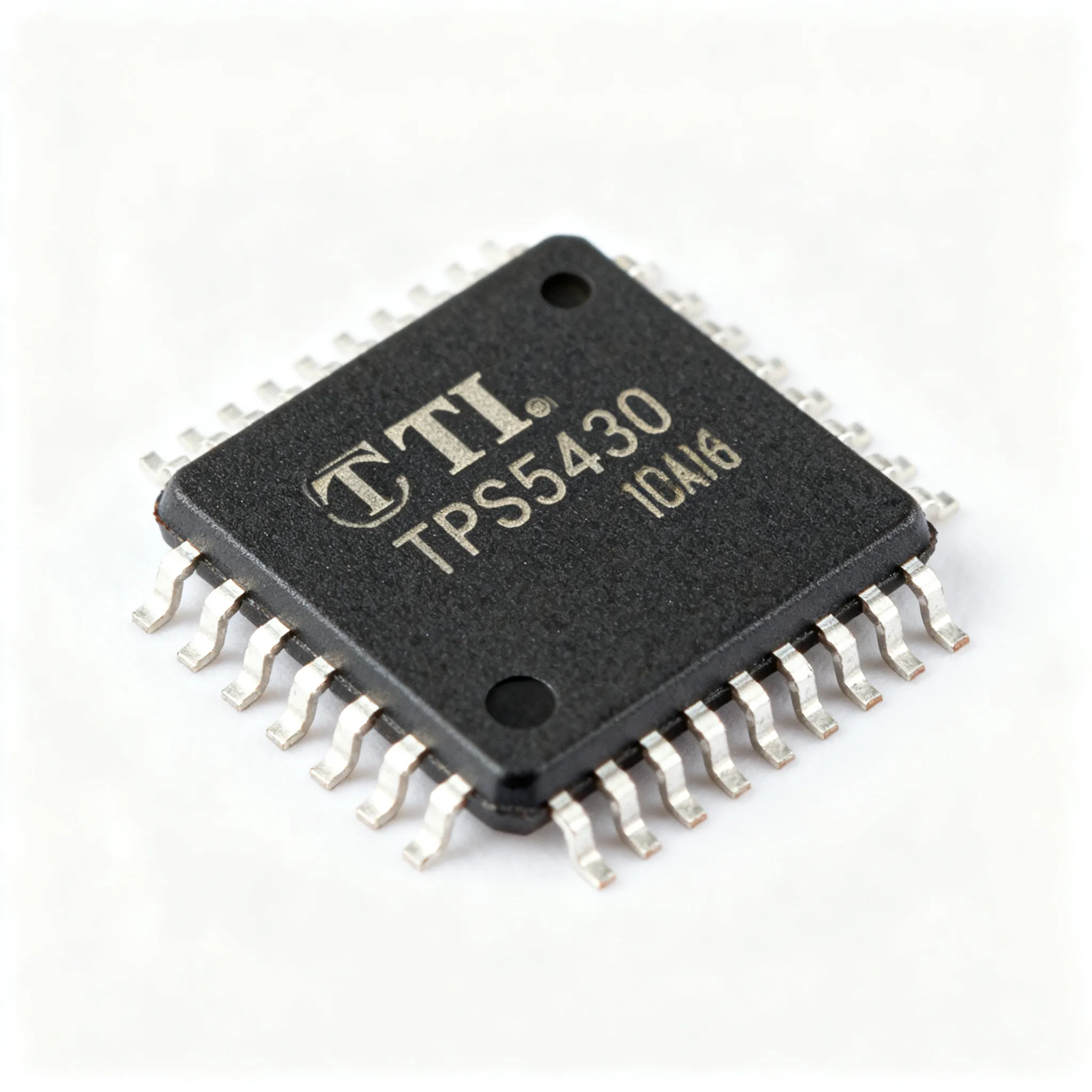
In the fast-evolving world of electronics, power management is a critical aspect of any circuit design. The Texas Instruments TPS5430 is a popular choice among engineers for its efficiency and reliability in step-down (buck) converter applications. Understanding its technical parameters and potential pitfalls is crucial for optimizing your designs and avoiding common errors. This article aims to provide a comprehensive guide to troubleshooting the TPS5430, exploring its specifications, design guidelines, and best practices.
Technical Overview
The TPS5430 is a high-efficiency step-down converter capable of delivering up to 3A of output current. It operates with a wide input voltage range from 5.5V to 36V, making it suitable for a variety of applications, from industrial to consumer electronics. The device features a fixed 570 kHz switching frequency, which allows for smaller inductor and capacitor sizes, reducing the overall board space. It also includes an adjustable output voltage feature, enabling fine-tuning to the specific needs of your application.
One of the core strengths of the TPS5430 is its integrated MOSFET, which contributes to its high efficiency by minimizing the switching losses. The device also incorporates several protection features such as overcurrent protection, thermal shutdown, and undervoltage lockout, which enhance its reliability in diverse operating conditions. Engineers appreciate the TPS5430 for its ease of use and robust performance, but as with any component, understanding its characteristics and potential pitfalls is essential for successful implementation.
Detailed Specifications
| Parameter | Value | Units | Notes |
|---|---|---|---|
| Input Voltage Range | 5.5 - 36 | V | Wide range supports various applications |
| Output Current | Up to 3 | A | Maximum load current capability |
| Switching Frequency | 570 | kHz | Fixed frequency for compact design |
| Output Voltage Range | 1.22 - 30 | V | Adjustable for different needs |
| Efficiency | Up to 95 | % | High efficiency reduces power loss |
| Thermal Shutdown | Yes | N/A | Protects against overheating |
| Overcurrent Protection | Yes | N/A | Prevents damage from excessive current |
| Undervoltage Lockout | Yes | N/A | Prevents operation at low voltages |
| Quiescent Current | 92 | µA | Low power consumption in standby |
| Package Type | HSOP | N/A | Compact and efficient form factor |
The parameters listed above highlight the versatility and robustness of the TPS5430. Its wide input voltage range and high efficiency make it suitable for a variety of applications, while the integrated protection features ensure reliable performance. The adjustable output voltage allows for flexibility in design, catering to specific voltage requirements.
Design Considerations
Designing with the TPS5430 requires attention to several key considerations to ensure optimal performance. Below are some critical design guidelines that can help you achieve this.
| Design Element | Guideline | Notes |
|---|---|---|
| Input Capacitor | Use low ESR ceramic capacitors | Improves input voltage stability |
| Output Capacitor | Choose appropriate capacitance for load | Ensure stable output voltage |
| Inductor Selection | Select based on current rating and DCR | Minimize core and copper losses |
| Feedback Resistors | Use precision resistors for accuracy | Ensures accurate output voltage setting |
| PCB Layout | Minimize loop area for EMI reduction | Improves overall performance |
| Thermal Management | Provide adequate heat dissipation | Prevents overheating and failure |
| Switching Node | Keep traces short and wide | Reduces parasitic inductance |
| Grounding | Use a single point ground connection | Reduces ground loop interference |
Following these design guidelines helps in achieving a stable and efficient power supply design using the TPS5430. Proper selection of capacitors and inductors, along with careful PCB layout, are crucial for minimizing losses and ensuring reliable operation.
Step-by-Step Guide
Implementing the TPS5430 in your design involves several critical steps. Here's a step-by-step guide to help you navigate through the process:
- Identify Requirements: Determine the input voltage range, output voltage, and current requirements for your application. This will guide your component selection and design decisions.
- Select Components: Based on your requirements, select appropriate input and output capacitors, inductor, and feedback resistors. Use low ESR capacitors and inductors with adequate current rating.
- Design the PCB Layout: Pay attention to the layout by minimizing the loop area of the input and output paths. Keep the switching node traces short and wide to minimize EMI.
- Simulate the Circuit: Use simulation tools to model the behavior of your circuit. This helps in identifying potential issues and optimizing the design before physical implementation.
- Assemble the Circuit: Once the design is finalized, assemble the components on the PCB. Ensure all connections are secure and components are correctly oriented.
- Test and Validate: Power up the circuit and verify the output voltage and current. Check for any abnormal heating or noise issues. Validate the performance under different load conditions.
- Troubleshoot Issues: If issues arise, revisit the design and check for potential errors in component selection or layout. Use diagnostic tools like oscilloscopes to analyze the waveforms.
- Optimize for Efficiency: Fine-tune the feedback network and component values to achieve the desired efficiency and performance. Consider thermal management solutions if necessary.
Following this guide ensures a systematic approach to designing with the TPS5430, minimizing errors and enhancing overall circuit performance.
Common Issues & Solutions
Despite its robust features, the TPS5430 can present some challenges during implementation. Here are common issues and their solutions:
-
Issue: Output voltage instability.
Solution: Check the output capacitor value and ESR. Ensure that the feedback network is correctly configured. -
Issue: Excessive heat generation.
Solution: Improve thermal management by adding heat sinks or increasing airflow. Verify that the inductor and MOSFET are not overloaded. -
Issue: High EMI emissions.
Solution: Re-evaluate the PCB layout to minimize loop areas and use shielding if necessary. Consider using a lower ESR input capacitor. -
Issue: Overcurrent protection triggering.
Solution: Check the load current and ensure it is within the rated limits. Verify that the current sense resistor is properly rated. -
Issue: Quiescent current too high.
Solution: Inspect for leakage paths on the PCB and ensure that the device is in the correct operating mode.
By understanding these common issues and their solutions, engineers can effectively troubleshoot and optimize their designs using the TPS5430.
Applications & Use Cases
The versatility of the TPS5430 makes it applicable in various fields. Here are a few real-world examples:
- Consumer Electronics: The TPS5430 is commonly used in consumer devices like set-top boxes and gaming consoles due to its compact size and efficiency.
- Industrial Automation: Its wide input voltage range and robustness make it suitable for powering control systems and sensors in industrial environments.
- Telecommunications: The TPS5430 can be used in networking equipment, providing stable power to routers and switches.
Selection & Sourcing Guide
When selecting the TPS5430, it's important to source from authorized distributors to ensure authenticity and reliability. You can find it at IC Online, where you can compare pricing and availability from trusted suppliers.
FAQ
-
What is the maximum input voltage for the TPS5430?
The maximum input voltage is 36V, which allows for flexibility in various applications. -
Can the TPS5430 handle high current loads?
Yes, it can deliver up to 3A of output current, suitable for medium power applications. -
Is it necessary to use a heat sink with the TPS5430?
Depending on the load and thermal environment, additional heat dissipation methods like heat sinks may be required. -
What type of capacitors should be used with the TPS5430?
Low ESR ceramic capacitors are recommended for both input and output to ensure stability. -
How does the TPS5430 prevent damage from overcurrent?
It features an in-built overcurrent protection mechanism that limits the current to prevent damage. -
What packaging options are available for the TPS5430?
It is available in a compact HSOP package, ideal for space-constrained designs. -
Can the TPS5430 be used in battery-powered applications?
Yes, its low quiescent current makes it suitable for battery-powered devices. -
What are the common pitfalls when designing with the TPS5430?
Common pitfalls include improper component selection, inadequate thermal management, and poor PCB layout.
Conclusion
The TPS5430 is a versatile and efficient choice for a variety of power management applications. By understanding its specifications, design guidelines, and potential pitfalls, engineers can effectively leverage its capabilities to create robust and reliable designs. Whether you're working on consumer electronics, industrial automation, or telecommunications, the TPS5430 offers a solution that meets the demands of modern electronic systems.