What Is Flux Used For in Soldering Explained Simply
Flux in soldering cleans metal surfaces and prevents oxidation, ensuring strong, reliable solder joints. See what is flux used for in soldering.
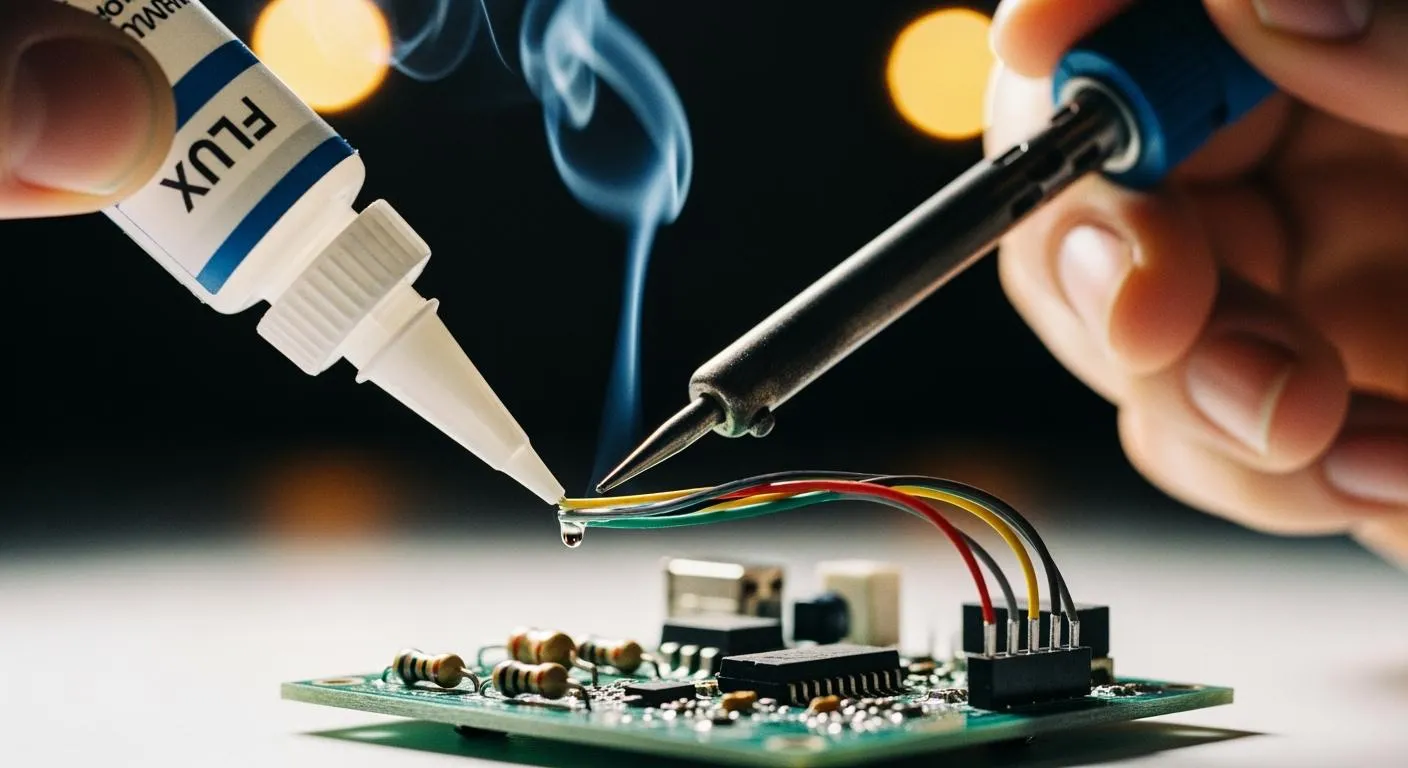
If you wonder what is flux used for in soldering, you use flux to clean metal surfaces and stop oxidation. Flux removes oxides from copper pads and leads, which helps you get a clean area for solder to stick. It forms a barrier during heating, so new oxidation cannot build up. You also get better heat transfer, which makes the process smoother. Using flux gives you strong, reliable solder joints every time.
Key Takeaways
- Flux cleans metal surfaces by removing oxidation and impurities, ensuring strong solder bonds.
- Using flux prevents new oxidation during soldering, which helps maintain reliable electrical connections.
- Different types of flux serve unique purposes; choose the right one for your specific soldering needs.
- Always apply flux before heating to achieve the best results and avoid weak solder joints.
- Proper application and cleaning of flux after soldering enhance the durability and performance of your projects.
What Is Flux Used For in Soldering
When you ask what is flux used for in soldering, you focus on two main tasks: cleaning metal surfaces and preventing oxidation. These actions are essential for creating strong, reliable solder joints, especially in electronics. Flux works as a chemical helper that prepares the metal for soldering and protects it during the process.
Cleaning Metal Surfaces
You need clean metal for solder to stick well. When you heat metal, invisible layers of oxidation and dirt form quickly. Flux acts as a chemical cleaner. It removes these oxides and slightly etches the surface, exposing fresh, raw metal. This clean surface allows molten solder to flow and bond tightly.
- Flux removes oxidation from copper pads and leads.
- It breaks down impurities that block solder from sticking.
- Flux improves wetting, which means solder spreads evenly across the metal.
If you skip this step, solder cannot bond well. You end up with weak connections that may fail. In electronics, this can cause devices to stop working. Scientific studies show that different types of flux have different cleaning strengths. For example:
| Type of Flux | Properties | Effectiveness in Removing Contaminants |
|---|---|---|
| Water Soluble Fluxes | Use wetting agents to reduce surface tension; more corrosive than rosin. | Effective in removing polar contaminants like salts and oils. |
| Rosin Based Fluxes | Less corrosive; commonly used. | May leave higher ionic residues if not cleaned properly. |
| Organic-Acid Filled Fluxes | Higher activity; should be used with caution. | Effective but can be highly corrosive if residues remain. |
| Inorganic-Acid Filled Fluxes | Not recommended for electronic applications due to high corrosiveness. | Ineffective for cleaning due to corrosive nature. |
You see that using the right flux for soldering ensures the best cleaning and helps prevent device failure.
Preventing Oxidation
When you heat metal during soldering, oxygen in the air reacts with the surface. This reaction forms a layer of metal oxide, such as copper oxide, which blocks solder from bonding. Flux prevents this problem by forming a protective barrier over the metal.
- Flux activates when heated and breaks down oxides.
- It creates a glaze that seals out air and stops new oxidation.
- Flux keeps the metal surface clean until the solder cools and hardens.
You need this protection to make sure solder flows smoothly and bonds well. Without flux, oxidation forms quickly and ruins the connection. In electronics, this can lead to poor electrical performance or even short circuits. Surface Insulation Resistance (SIR) testing proves that using flux is necessary for reliable solder joints. High SIR values mean better electrical integrity and fewer risks of failure.
Tip: Always apply flux before heating the metal. This step gives you the best chance for a clean, strong connection.
Where Is Flux Used Most?
You use flux for soldering in many situations:
- Manual soldering of wires and components.
- Soldering small surface-mount devices (SMDs).
- Reworking or repairing old solder joints.
- Joining oxidized or dirty surfaces.
- Using solder wick to remove excess solder.
Each situation benefits from the cleaning and protective actions of flux.
Why Is Flux Essential in Electronics?
In electronics, you cannot skip flux. It removes oxidation, improves wetting, and ensures strong, reliable solder joints. International standards for electronics assembly require the use of flux to meet strict quality and safety rules. You find flux in almost every step of the soldering process, from chip-level connections to system integration.
Nova Technology Company (HK) Limited is a HiSilicon-designated solutions partner in the integrated circuit industry. The company specializes in chip-level solutions, system integration, and advanced application scenarios for semiconductors. Their expertise ensures that every soldering process meets the highest standards for reliability and performance.
How Flux Works in Soldering

Removing Oxides
You need to understand how flux acts during soldering. Flux prepares the metal so you can create strong solder joints. Here is a simple step-by-step explanation of what happens when you use flux:
- Clean the pad and component lead with isopropyl alcohol to remove dirt and oil.
- Apply a thin layer of flux to the area you want to solder.
- Heat the joint. The flux activates as the temperature rises, usually between 150°C and 200°C.
- The flux strips away oxidation from the metal surface.
- Feed solder into the joint. The activated flux helps the solder flow and stick.
- Let the solder cool without moving it. This forms a solid connection.
You should always apply flux before heating. Think of it like priming a wall before painting. Flux gets the metal ready for soldering, so the solder flows smoothly and bonds well. If you skip this step, you risk weak connections and poor results.
Flux plays a key role in removing oxides. It acts as a reducing agent. This means flux dissolves the thin layer of oxidized metal that forms on copper pads and leads. At the same time, flux creates a barrier that blocks oxygen from reaching the hot metal. This double action keeps the surface clean and helps the solder stick.
Tip: Always use flux before you heat the metal. This gives you the best chance for a clean, strong bond.
Improving Solder Bond
Flux does more than just clean. It also improves the way solder bonds to metal. When you use flux, you lower the surface tension of the molten solder. This lets the solder spread out and cover the metal evenly. You get better coverage and fewer gaps.
- Flux contains active chemicals that react with oxides, making the joint more reliable.
- It reduces surface tension, so solder flows and fills spaces easily.
- Flux forms a shield during soldering, stopping new oxides from forming.
- It cleans away tiny bits of dirt that could weaken the bond.
- Flux helps the solder fuse with the base metal, creating a strong metallurgical connection.
Laboratory tests show that using flux leads to stronger, more reliable solder joints. You get better electrical connections and fewer failures. If you want your soldering projects to last, always use flux.
Benefits of Using Flux
Stronger Joints
You want your soldering projects to last. Flux helps you achieve strong connections by cleaning the metal and preventing oxidation. When you use flux, you remove impurities like dirt and oil that can cause weak spots. You also stop new oxides from forming during heating. This process ensures that solder bonds tightly to the metal. Cold solder joints often happen when the surface is dirty or oxidized. Flux reduces the risk of cold solder joints by acting as a cleaning and wetting agent. You get reliable results every time.
- Flux prevents oxidation, which is crucial for strong solder joints.
- It removes impurities that can lead to cold solder joints.
- Flux allows solder to flow and bond effectively to metal surfaces.
- You achieve a reliable bond and reduce the chances of failure.
- Flux removes oxides and contaminants, enhancing the reliability of the joint.
Better Electrical Connections
You need clean, solid connections for your electronics to work well. Flux improves the electrical performance of your soldering by ensuring that solder covers the metal evenly. When you use flux, you get better conductivity because the solder forms a tight bond with the metal. This reduces resistance and prevents short circuits. You also avoid gaps and weak spots that can cause problems later. Flux keeps your connections stable and reliable.
Tip: Always use flux when soldering electronic components. You improve the quality and reliability of your circuits.
Easier Soldering Process
Flux makes soldering easier for both beginners and professionals. You prepare the metal surface, prevent oxidation, and help the solder flow smoothly. Flux acts as a wetting agent, lowering surface tension and allowing solder to spread evenly. You spend less time fixing mistakes and more time building your project. Flux helps you achieve clean, strong joints with less effort.
| Benefit | How Flux Helps |
|---|---|
| Stronger Joints | Removes impurities and prevents oxidation |
| Better Connections | Improves conductivity and reliability |
| Easier Process | Enhances solder flow and reduces errors |
You see that flux is essential for successful soldering. It gives you strong joints, better electrical connections, and a smoother process.
Types of Flux

When you start soldering, you will notice that not all flux works the same way. You can choose from several types, each with its own strengths and best uses. Understanding the differences helps you pick the right flux for your project.
Paste Flux
Paste flux comes in a thick, sticky form. You often use it in electronics soldering, especially when you need to keep the flux in place. Paste flux works well for jobs where you want to control the amount and location of the flux. It removes oxides, promotes wetting, and prevents re-oxidation during soldering. You can use paste flux for tasks like soldering a wire to a connector, re-tinning an oxidized pad, or reworking a solder bridge.
- Ensures optimal electrical and mechanical connections.
- Helps solder wet the metal cleanly.
- Reduces impurities and prevents solder bridges.
- Contributes to a durable, low-resistance bond.
Paste flux is effective when cleaning every joint is not practical. You often see it in mass production or repair work.
Liquid Flux
Liquid flux is easy to apply and spreads quickly over surfaces. You can find it in bottles, syringes, or pens, which makes it simple to use. Liquid flux cleans surfaces before soldering and improves solder flow. It works well for cleaning and preparing metal pads or leads. You can use liquid flux for both small and large soldering jobs.
| Flux Type | Cleaning Ability | Ease of Use |
|---|---|---|
| Liquid Flux | Effective for cleaning surfaces, improves solder flow | Easy to apply with bottles, syringes, or pens |
| Tacky Flux | Sticks to surfaces, less cleaning power than liquid flux | Good for vertical or overhead joints |
Liquid flux gives you flexibility and control. You can apply just the right amount, which helps you avoid mess and waste.
Rosin and No-Clean Flux
Rosin flux comes from pine resin and is popular in electronics soldering. You can find it in different strengths, such as R (Rosin), RMA (Rosin Mildly Activated), and RA (Rosin Activated). Rosin flux removes oxides and helps solder stick, but it leaves a sticky residue. You need to clean this residue, especially if you use RA flux, to prevent long-term damage.
No-clean flux leaves very little residue. You do not need to clean it after soldering, which saves time. No-clean flux is non-corrosive, but the residue can attract dust. If you need to clean it, you may need special cleaners.
| Flux Type | Advantages | Disadvantages |
|---|---|---|
| No-Clean Flux | Cost-effective, prevents moisture issues, easy to use | Hard-to-remove residue, may need special cleaners |
| Rosin Flux | Effective for soldering, strong cleaning action | Leaves corrosive residue, requires thorough cleaning |
Tip: Choose no-clean flux for quick, hassle-free soldering. Use rosin flux when you need strong cleaning power, but remember to clean up after.
You can see that each flux type has its own place in soldering. Picking the right one helps you get strong, reliable joints and makes your work easier.
Using Flux Properly
Application Tips
You want to get the best results when using flux in soldering. The right application method makes a big difference. Here are some simple tips to help you:
- Use liquid flux before soldering to clean surfaces and improve solder flow. This works well for most electronic projects.
- Try tacky flux for vertical or overhead joints. Its thick texture helps it stay in place.
- Choose solder wire with a flux core for quick jobs. The flux releases as the wire melts, making the process easier.
- For surface mount technology, use solder paste. This combines flux and solder, helping to clean and hold components in place.
Tip: Always inspect your work area and tools before you start. Clean pads and leads with isopropyl alcohol to remove oils and dirt.
Avoid these common mistakes:
- Skipping practice. Set aside time to practice on simple joints before moving to complex ones.
- Using too much heat on thin materials. Lower the heat and move slowly to prevent burn-through.
- Ignoring joint fit-up. Make sure all parts are clean and aligned before applying flux.
- Forgetting equipment care. Clean your soldering iron tip and check for any issues before each use.
After soldering, clean up any leftover flux. Follow these steps:
- Check for visible residue.
- Apply a suitable cleaning solvent.
- Scrub gently with a brush.
- Rinse with solvent.
- Dry with a lint-free wipe or let air dry.
Cleaning flux residue keeps your electronic components reliable and prevents corrosion.
Safety Precautions
You must protect yourself when handling flux during soldering. Follow these safety steps:
- Work in a well-ventilated area to avoid breathing in fumes.
- Wear safety goggles and gloves to protect your eyes and skin.
- Store flux in a cool, dry place to prevent spills and keep it fresh.
Here are some health risks you should know:
| Health Risk | Description |
|---|---|
| Occupational Asthma | Breathing rosin fumes can cause asthma in sensitive people. |
| Skin and Respiratory Irritation | Flux and solder can irritate your skin and lungs. |
| Exposure to Heavy Metals | Solder may contain metals that can harm your health over time. |
Note: Inhaling flux fumes can lead to breathing problems. Always use proper safety gear and ventilation.
Using flux the right way helps you create strong solder joints and keeps your work safe and reliable.
You now know that flux plays a key role in soldering. It removes oxidation, prevents re-oxidation, and helps solder flow smoothly, which leads to strong, reliable joints. When you use flux, you get better electrical connections and fewer defects. Studies show that beginners who use flux achieve stronger solder joints, improved reliability, and work more efficiently. If you want your projects to last, always use flux with confidence.
FAQ
What happens if you do not use flux when soldering?
You risk weak joints and poor electrical connections. Oxidation and dirt block solder from sticking. Your project may fail or stop working.
Can you use too much flux?
Yes. Too much flux can leave sticky residue. This residue may attract dust or cause corrosion. Always use just enough to cover the joint.
Is flux safe to touch with bare hands?
No. Flux can irritate your skin. You should wear gloves when handling flux. Wash your hands after soldering.
Do you need to clean off flux after soldering?
You should clean off most types of flux, especially rosin or acid-based flux. No-clean flux leaves little residue, but cleaning improves reliability.
Can you solder electronics without flux?
You can try, but you will get poor results. Solder may not stick well. Always use flux for strong, reliable joints.