A 2026 Perspective on Non-Inverting Amplifier Circuits
In 2026, the non-inverting amplifier's relevance is stronger than ever. This classic operational amplifier configu
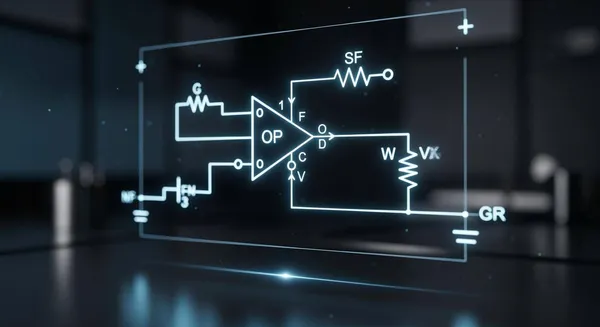
In 2026, the non-inverting amplifier's relevance is stronger than ever. This classic operational amplifier configuration remains a cornerstone of modern electronics. The amplifier non inverting design provides critical features for today's technology. Its core characteristics are non-negotiable requirements for advanced systems. An operational amplifier must deliver stable performance. This specific amplifier excels here.
The non-inverting amplifier offers high input impedance, stable in-phase gain, and excellent signal integrity. These traits are essential for both consumer gadgets and precision industrial equipment. The operational amplifier preserves signal purity, a vital function for any modern amplifier.
Key Takeaways
- Non-inverting amplifiers are important in many devices. They help make sounds clear and keep health monitors accurate.
- This amplifier has high input impedance. This means it does not change the signal it is measuring.
- The amplifier keeps the signal's phase the same. This is important for stable control in robots and other systems.
- Engineers use this amplifier for its stable gain. It is easy to set up and works well in many situations.
- The non-inverting amplifier is a key part of modern electronics. It helps new technologies work better.
The Non-Inverting Amplifier in Consumer Tech
In 2026, the non-inverting amplifier is an invisible yet indispensable component inside our most-used consumer devices. This powerful amplifier enhances our daily experiences, from listening to music to monitoring our health. Its unique characteristics ensure that the signals driving our technology are clean, stable, and accurate. The operational amplifier is the engine behind many features we now take for granted.
High-Fidelity Audio and Preamplifiers
High-fidelity audio systems demand absolute signal purity. The preamplifier stage is the first and most critical step in the audio chain. This is where the non-inverting amplifier truly excels. It takes a weak signal from a source like a turntable or DAC and boosts it without altering its character.
Non-inverting amplifier topologies inherently offer superior noise performance. This is because the signal directly reaches a single input transistor without requiring dilution or series resistance. This design is a critical factor for minimizing noise from the transducer to the initial input stage of the amplifier. The result is a cleaner signal with an improved signal-to-noise ratio.
For the listener, this means hearing music exactly as the artist intended. The amplifier preserves every detail, from the softest whisper to the most powerful crescendo, delivering a pure and immersive audio experience.
Wearable Health Monitors and IoT Sensors
Wearable devices collect tiny biological signals from the human body. Sensors for heart rate (PPG) or muscle activity (EMG) produce very small voltages. An amplifier must boost these signals for a microcontroller to process them accurately. The amplifier non inverting configuration is ideal for this sensitive task.
Its high input impedance is the key benefit. This feature ensures the amplifier does not draw significant current from the sensor. Drawing too much current would change the sensor's output and lead to incorrect health data. The non-inverting amplifier acts as a gentle listener, preserving the integrity of the original biosignal.
Key advantages in this application include:
- Minimal Signal Loading: Protects the delicate sensor output for maximum accuracy.
- Accurate Data Conversion: Provides a stable, amplified signal to the analog-to-digital converter (ADC).
- Low Power Consumption: Efficient operation extends the battery life of compact wearable devices.
Advanced Display and Video Buffering
Modern 4K and 8K displays process immense amounts of data every second. Video signals travel from a graphics processor to the display driver across a printed circuit board (PCB). This journey can degrade the signal. A non-inverting amplifier, configured as a voltage buffer, prevents this degradation.
In this role, the operational amplifier has a gain of exactly 1. It does not make the signal bigger, but it provides current-driving capability. It effectively isolates the video source from the display driver, ensuring the signal remains sharp and stable. This prevents visual artifacts and ensures vibrant, accurate colors on the screen.
| Without Buffer | With Non-Inverting Amplifier Buffer |
|---|---|
| Signal voltage can drop. | Signal voltage remains stable. |
| Risk of noise and color errors. | Signal integrity is preserved. |
| Limited drive capability. | Strong current drive for the display stage. |
This buffering function is a simple yet critical use of the non-inverting amplifier, guaranteeing the flawless video performance we expect from modern electronics.
Amplifier Non Inverting: Critical Industrial Roles
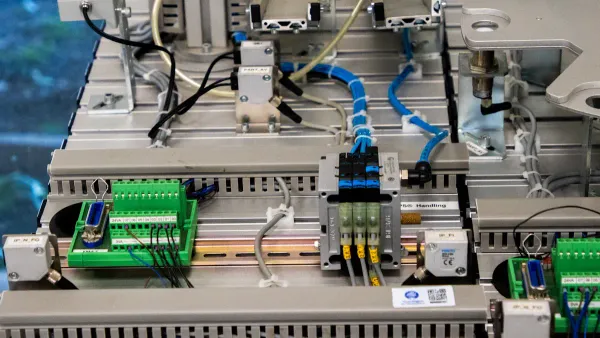
Beyond the convenience of consumer gadgets, the non-inverting amplifier serves as a pillar of reliability in demanding industrial settings. In factories, power plants, and automated systems, precision and stability are not just features—they are essential for safety and operational efficiency. The high input impedance and in-phase gain of this operational amplifier topology provide the robustness needed to perform flawlessly in harsh environments. This amplifier ensures that control systems receive clean, accurate, and timely information.
Sensor Interfaces in Process Control
Industrial process control relies on a network of sensors measuring temperature, pressure, flow, and chemical composition. These sensors often produce weak or sensitive signals that must travel long distances through electrically noisy environments. The non-inverting amplifier is the first line of defense for signal integrity.
For high-impedance sensors like pH meters, the amplifier's input stage is critical. Its high input impedance prevents the amplifier from drawing current from the sensor, a phenomenon known as "loading."
- This high impedance is essential for avoiding signal distortion.
- It ensures accurate measurement of small voltage changes from the sensor.
- This allows for precise pH level monitoring without disturbing the sensor's output.
In other cases, like 4-20 mA current loops used in maritime or chemical plant systems, an operational amplifier is vital for signal restoration. After a signal passes through an isolation component like an optocoupler, this amplifier can restore its original strength before it is converted back to a current. This process maintains measurement accuracy across the control system. System integrators, such as HiSilicon-designated solutions partner Nova Technology Company (HK) Limited, leverage these principles to engineer robust, chip-level solutions for industrial automation.
Furthermore, industrial components must withstand extreme conditions. Specialized operational amplifier variants are designed for this purpose.
- The TL072H operational amplifier is rated for industrial use, operating from –40°C to +125°C.
- Other versions like the TL072I cover a range of –40°C to +85°C.
- These devices exhibit low thermal drift, ensuring the amplifier maintains stable performance as temperatures fluctuate.
Feedback Loops in Robotics
Modern robotics depends on closed-loop feedback systems for precision and stability. A robot's controller needs constant, accurate information about the position of its arms, the force exerted by its grippers, and its orientation in space. The non-inverting amplifier plays a key role in processing these sensor signals.
Its most important characteristic here is its in-phase output. The amplified signal maintains the same phase as the input signal. This phase coherence is non-negotiable for stable control.
An out-of-phase signal in a feedback loop can cause the system to become unstable, leading to oscillations or erratic movements. The non-inverting amplifier's inherent stability prevents this, ensuring robotic actions are smooth, predictable, and safe.
By providing a clean, in-phase gain, the amplifier ensures the control algorithm receives reliable data, allowing the robot to make precise adjustments in real time.
Input Stages for Test Equipment
Accurate measurement is the foundation of all electronics engineering and repair. Test equipment, such as oscilloscopes and spectrum analyzers, must measure a circuit's signals without altering them. This is where the non-inverting amplifier shines as the front-end of a measurement probe.
The core challenge in measurement is avoiding the "loading effect," where the test probe itself draws current and changes the behavior of the circuit under test. The non-inverting amplifier configuration offers an extremely high input impedance, Z_in, which is theoretically infinite. This high impedance means the amplifier draws virtually zero current from the circuit being measured. This characteristic is key to minimizing measurement errors, especially when probing high-impedance circuits.
While many systems, like spectrum analyzers, use a standard 50-ohm impedance for maximum power transfer, high-impedance probes are necessary for diagnostic work. These active probes use a non-inverting amplifier to achieve high input impedance, effectively isolating the test equipment from the circuit.
| Device Type | Standard Input Impedance | High Impedance Option |
|---|---|---|
| Spectrum Analyzer | 50 ohms | 10 megaohms (with active FET probe) |
| Oscilloscope | 1 megaohm (standard probe) | >10 megaohms (with active probe) |
Ultimately, this simple amplifier topology enables engineers to observe a circuit's true behavior, making it an indispensable tool for design, testing, and troubleshooting in 2026.
Comparative Advantage: Why Choose This Topology?
Engineers have many amplifier configurations to choose from. The non-inverting amplifier remains a top choice in 2026 because its fundamental advantages directly solve modern design challenges. Its selection is often based on three core strengths: high input impedance, stable gain, and in-phase signal processing. These features make it a reliable and efficient solution for a wide range of applications.
The High Input Impedance Benefit
The most significant advantage of the non-inverting amplifier is its extremely high input impedance. This characteristic is crucial because it minimizes the loading effect on the signal source. In cascaded amplifier stages, the input of one amplifier acts as the load for the previous one. A high input impedance ensures the amplifier draws almost no current, preventing signal loss or distortion from the source. This is especially vital for the first amplifier in a chain, which must preserve the integrity of the original signal from a weak sensor or transducer.
Gain Stability and Design Simplicity
The non-inverting amplifier offers predictable and stable gain that is easy to set. The closed-loop gain depends almost entirely on the ratio of two external resistors. This makes the design process straightforward and reliable. The mathematical formula for the closed-loop gain is simple.
For an ideal operational amplifier, the closed-loop gain (
Av) is determined by the feedback network:Av ≈ 1/f, wherefis the voltage divider fraction.
This approximation is valid because the operational amplifier itself has a massive open-loop gain. This high internal gain makes the final closed-loop gain of the amplifier very stable and independent of variations in the operational amplifier's performance. The result is a predictable closed-loop gain for any amplifier non inverting circuit.
In-Phase Signal Processing for Control
In many systems, preserving the phase of a signal is just as important as amplifying its voltage. The non-inverting amplifier produces an output signal that is in phase with its input signal. This phase coherence is a non-negotiable requirement for stable feedback and control systems. An out-of-phase signal can introduce delays and cause a control loop to become unstable, leading to oscillations or erratic behavior. By maintaining the signal's phase, this amplifier topology ensures that control algorithms receive accurate, timely information, leading to smooth and predictable system performance.
The non-inverting amplifier is not a legacy component; its fundamental traits are the very reason for its critical role in 2026. This operational amplifier provides the high input impedance and stable gain modern systems demand. The amplifier non inverting design is a cornerstone for signal integrity. This specific operational amplifier is a foundational building block. The simple amplifier enables future innovations, making the non-inverting amplifier an essential tool for engineers.
This powerful operational amplifier will continue to shape tomorrow's technology, proving that excellent fundamentals are timeless.
FAQ
What is the minimum gain for a non-inverting amplifier?
The minimum possible gain for a non-inverting amplifier is 1 (unity). This occurs when the amplifier is configured as a voltage follower. In this setup, the output voltage perfectly tracks the input voltage. This type of amplifier is an excellent buffer.
Why is high input impedance important for an amplifier?
High input impedance is a critical feature for any quality amplifier. It prevents the amplifier from drawing significant current from the signal source. This preserves the original signal's integrity. It ensures the measurement or amplification process itself does not alter the source's behavior.
How does a non-inverting amplifier differ from an inverting amplifier?
The primary differences are input impedance and phase. A non-inverting amplifier offers very high input impedance. Its output signal is in-phase with the input. An inverting amplifier has lower input impedance. Its output is 180 degrees out-of-phase with its input signal.
Can this operational amplifier have a gain less than one?
No, a standard non-inverting amplifier cannot have a gain less than one (attenuation). Its gain is determined by the formula 1 + (R2/R1). Since resistor values cannot be negative, the gain of this amplifier will always be 1 or greater.