Electronic Component Distribution and How Modern Supply Chains Work
Today, electronic component distribution uses new technology and fast shipping. This helps keep up with quick changes in electronics. Companies work hard to send good parts fast and on time.
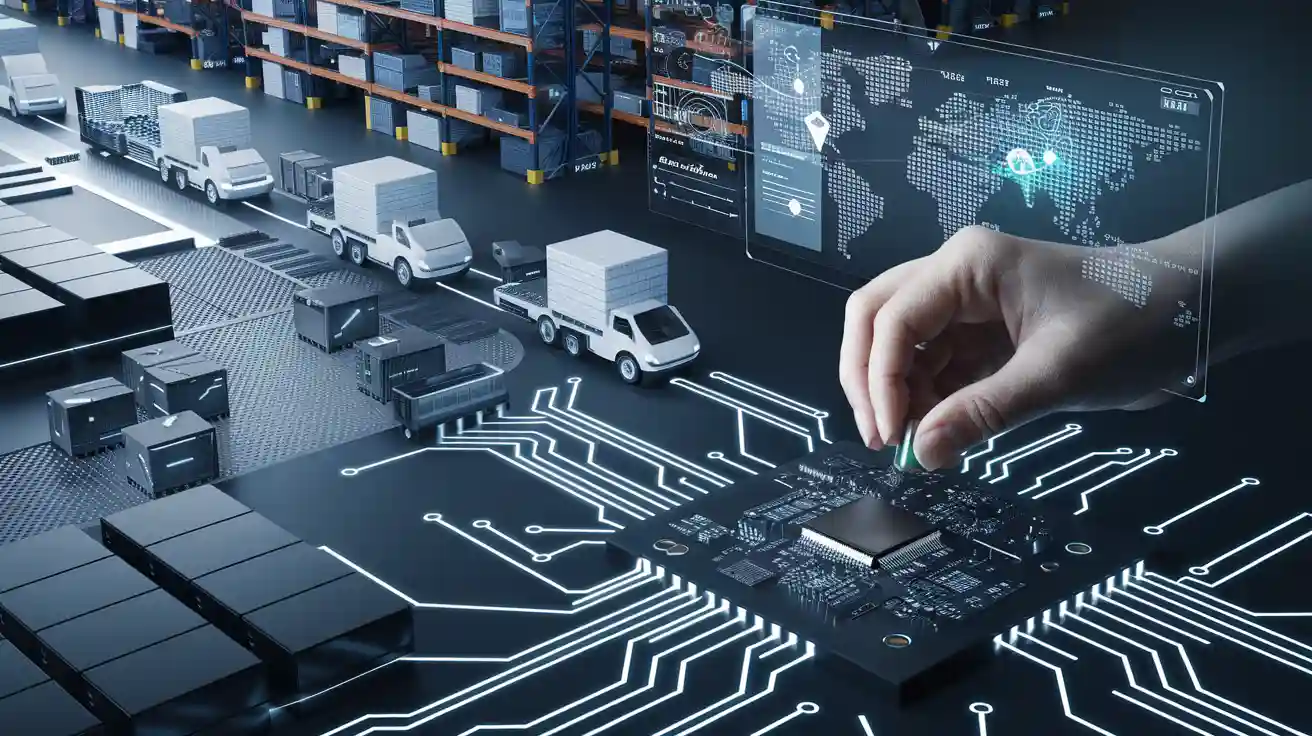
Today, electronic component distribution uses new technology and fast shipping. This helps keep up with quick changes in electronics. Companies work hard to send good parts fast and on time. Many companies watch their systems in real time to do better. This has caused a 63% drop in bad shipments. The supply chain has some big problems:
-
Online sales may make up 31.4% of electronics money by 2025.
-
Products now last only 6 to 12 months, so companies need to move stock faster.
|
Metric Component |
Key Metric |
Industry Benchmark |
|---|---|---|
|
Lead Times |
Time from order to delivery |
2-5 days |
|
Supplier Reliability |
On-time, defect-free delivery |
95%+ accuracy |
|
Defect Rate |
Percentage of defective parts |
Less than 1.5% |
Modern electronic component distribution meets needs by using technology, good shipping, and many sources.
Key Takeaways
-
Modern electronic component distribution uses technology and fast shipping. This helps deliver good parts quickly and lowers mistakes.
-
The supply chain has many people like manufacturers, distributors, suppliers, logistics providers, retailers, and customers. They all work together to meet demand.
-
Companies use digital tools, AI, and IoT to track orders. They also manage inventory and guess problems for better supply chain work.
-
Different distribution models—direct, indirect, and hybrid—help companies reach customers fast. These models also help handle risks.
-
Strong quality testing, responsible sourcing, and green practices make products safer. They build trust and help the environment.
Supply Chain Overview
Key Players
The supply chain for electronic components has many important groups. Each group has a special job to help move products. The main players are:
-
Manufacturers make electronic components in factories. They care about quality and speed.
-
Distributors buy lots of parts from Manufacturers. They keep these parts and sell them to other businesses.
-
Suppliers give raw materials or small parts to Manufacturers. Good supplier management keeps production running well.
-
Logistics Providers move products to different places. They use trucks, ships, and planes to deliver parts everywhere.
-
Retailers and OEMs sell finished products to customers. OEMs use electronic components to build things like phones or computers.
-
Customers are businesses and people who buy finished products.
When these groups work together, the supply chain works better. Sharing information helps companies avoid mistakes and delays.
Supplier management and teamwork are very important for a strong supply chain. Companies use technology to track orders and check quality. This helps them work well with partners and makes the supply chain better.
Main Stages
The supply chain has several main stages. Each stage adds value and helps products reach customers on time.
-
Sourcing and Procurement
Companies look for the best Suppliers for materials and parts. Supplier management makes sure materials are good and arrive on time. -
Manufacturing
Factories turn raw materials into electronic components. Teams watch for quality and use technology to make things faster. -
Inventory Management
Distributors and Manufacturers keep parts in warehouses. They use inventory systems to have the right amount of stock. This stops shortages and extra costs. -
Order Fulfillment and Distribution
Companies pack and ship orders to customers. Logistics Providers track shipments and make sure deliveries are safe. -
After-Sales Support
Some companies help after the sale. They handle returns, repairs, and answer customer questions.
The supply chain uses key performance indicators, or KPIs, to see how each stage is working. These KPIs help companies find problems and make the supply chain better. Here is a table with some important KPIs:
|
KPI Name |
Description / Formula |
Why It Matters |
|---|---|---|
|
Inventory Turnover |
Cost of Goods Sold / Average Inventory |
Shows how fast stock sells. |
|
Order Fulfillment Rate |
Percentage of orders delivered on time and complete |
Measures if customers are happy. |
|
Lead Time |
Time from order to delivery |
Shorter times mean faster service. |
|
Perfect Order Rate |
Orders delivered on time, complete, and defect-free |
Tracks quality and reliability. |
|
Working Capital (% of revenue) |
Money tied up in inventory and operations |
Lower numbers show better management. |
|
Cost Reduction |
Savings from better processes |
Shows supply chain efficiency. |
|
Vendor Performance |
Supplier delivery and quality |
Helps pick the best partners. |
|
Collaboration |
How well teams and partners work together |
Makes things faster and reduces errors. |
Companies that use these KPIs often get much better results. Some companies have improved their order fulfillment rate by 25% by using these numbers. Top companies keep working capital between 6-10% of revenue, but others may spend more.
Tip: Using real-time data and working together helps companies fix problems quickly.
Supply chain management teams use these tools to keep things running well. They focus on saving money, fast delivery, and high quality at every stage.
Electronic Component Distribution Models

There are different ways to get electronic parts from manufacturers to customers. Each way changes how companies handle access, risk, and customer service. Picking the best way helps companies solve problems and meet what the market wants.
Direct Distribution
Direct distribution means manufacturers sell parts right to customers. This works well for big orders or special parts. Manufacturers control everything from making to sending the parts. They use their own sales teams and websites to talk to buyers.
-
Manufacturers talk closely with customers.
-
They take care of orders, shipping, and help by themselves.
-
Online tools make buying faster and simpler.
Customers get new products quickly with direct distribution. Manufacturers can also handle special requests better. But this way can be hard if manufacturers do not have contacts everywhere.
Note: Big companies spend money on technology to make direct sales better. Cloud systems help track orders and shipments, so things run smoother.
Indirect Distribution
Indirect distribution uses other companies, called distributors, to move parts. Distributors buy lots of parts and keep them in warehouses. They sell to many customers, like small businesses and OEMs.
-
Distributors have many products from different brands.
-
They use websites to show what is in stock and prices.
-
Distributors also give extra help, like tech support and shipping.
This way makes it easier to find parts and lowers risk for manufacturers. Distributors help when there are problems or not enough workers by using strong networks and certifications. Companies like ECS use this way to make sure parts are always ready.
Franchise deals and certifications help the supply chain stay strong. Distributors with these can send parts even when things are tough.
Hybrid Approaches
Hybrid ways mix direct and indirect models. Manufacturers, distributors, and websites work together to help customers. This uses the good parts of both ways.
-
Manufacturers sell some things directly and some through distributors.
-
Websites let buyers find both manufacturers and distributors.
-
Companies use online tools to make buying faster and better.
Hybrid ways help companies reach more people and change with the market. Digital distributors like Sourceability use smart tools, like the Sourcengine™ Browser Extension, to make finding parts quick and easy. Both old and new ways are important for helping customers.
ECS and SIC Electronics Limited show how hybrid and digital ways can make things faster and better. They also help the planet by offering eco-friendly parts.
Comparing Distribution Models
|
Model |
Access to Products |
Risk Level |
Customer Experience |
Example Companies |
|---|---|---|---|---|
|
Direct |
Limited |
Lower for big buyers |
Fast, personal |
Large manufacturers |
|
Indirect |
Wide |
Shared with others |
Many choices, support |
ECS, franchise distributors |
|
Hybrid |
Widest |
Balanced |
Flexible, efficient |
Sourceability, SIC Electronics |
Picking the best way to distribute parts changes how fast customers get them. It also changes how companies handle problems and meet what the market wants. Companies that use online tools and strong partners can react better to changes and help customers more.
Technology in Supply Chain
Digital Platforms
Digital platforms have changed how companies run supply chains. These tools let people see each step of the process. Teams can track orders, shipments, and inventory right away. Companies connect data from many places to spot problems fast. This makes it easier to fix issues quickly. Digital platforms help with automation and digitalization. This means less manual work and fewer mistakes. Many companies use analytics to study trends and make better choices. Predictive analytics can show when stock might get low or demand might go up. These tools help companies plan well and save money. Studies show digital transformation leads to higher efficiency. Researchers use data and analytics to measure these improvements. They find that companies with strong integration and visibility do better.
AI and Automation
AI and automation are important in today’s supply chains. AI uses analytics to find patterns in lots of data. This helps companies make smarter decisions. Automation does jobs like sorting, packing, and shipping. This cuts down on mistakes and speeds up delivery. Predictive analytics powered by AI can warn teams about delays. Companies use automation and digitalization to keep up with fast changes. Data integration lets AI systems gather information from many sources. This gives teams a full view of their supply chain. Automation also helps with checking inventory and processing orders. Advanced technologies like AI bring new ideas to the industry. They make supply chains more flexible and reliable.
IoT Integration
IoT integration links devices and sensors across the supply chain. These devices send real-time data about location, temperature, and stock. This helps teams see what is happening and react fast. IoT devices work with analytics tools to give useful insights. Predictive analytics can use this data to spot risks early. Data integration makes sure information from IoT devices moves smoothly into company systems. Automation and digitalization help teams use this data for quick decisions. Advanced technologies like IoT make supply chains work better. Companies that use IoT integration often see more efficiency and fewer delays.
Tip: Companies that focus on visibility, integration, and analytics can react faster to market changes and what customers need.
Electronic Components Logistics
Global Delivery
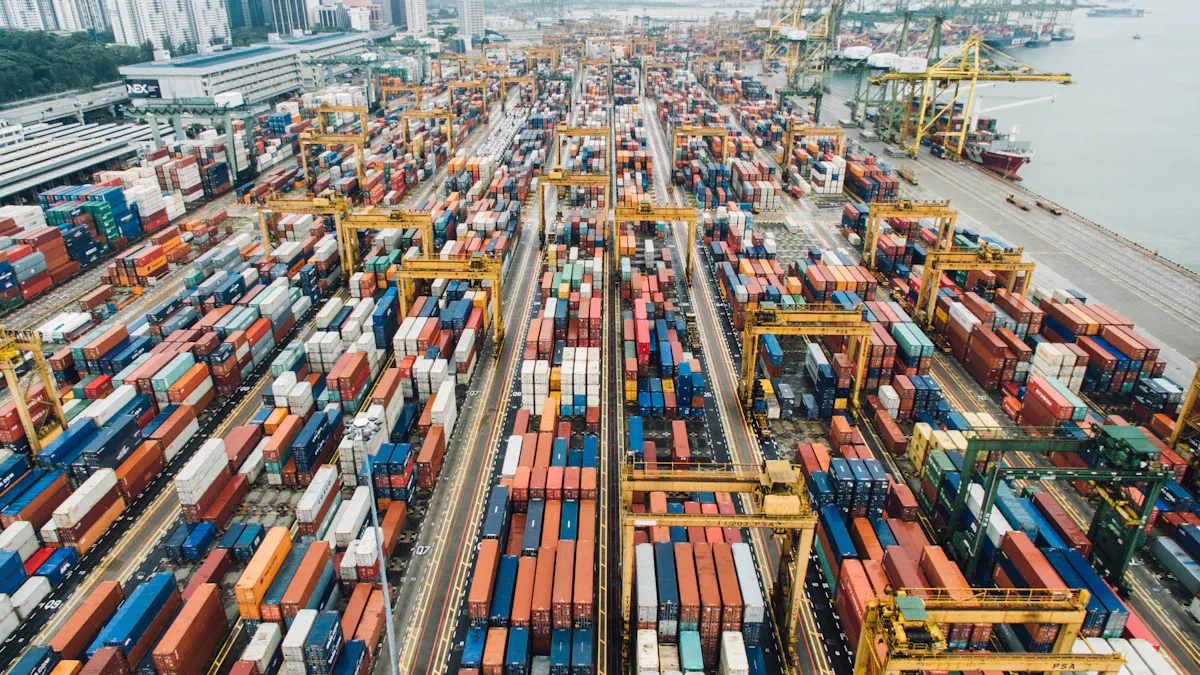
Electronic components logistics help parts get to customers worldwide. Companies use forecasting and predictive analytics to plan shipments. This helps them avoid running out of stock. Real-time tracking lets teams see where shipments are at all times. This lowers mistakes and tells customers when orders will arrive.
Many companies use AI and machine learning to pick the best routes. These tools also help spot problems early. Bonded warehousing lets companies store goods without paying taxes right away. This helps control costs and stops too much stock from piling up. Air freight consolidation puts shipments together to save money and deliver faster. Digital platforms and blockchain make the supply chain clear and safe.
Working with skilled logistics partners helps companies handle changes in workers and equipment. Automation and digitalization make things faster and cut down on mistakes. Predictive analytics and scenario planning help companies get ready for problems. This makes electronic components logistics more dependable.
Key benefits of global delivery in electronic components logistics:
-
Better tracking and visibility
-
Faster and more dependable shipping
-
Lower costs with smart planning
-
Improved risk management during problems
Inventory Management
Inventory management is a key part of electronic components logistics. Companies use AI, IoT, RFID, and GPS to track inventory in real time. These tools show teams how much stock they have and where shipments are. Perpetual inventory systems and cycle counting keep inventory data correct. This helps restock on time and stops shortages or too much stock.
Automation and robots in warehouses make work faster and more accurate. Cloud-based inventory systems let companies manage stock from anywhere. These systems help lower lead times and use warehouse space better. They also help orders arrive on time, which makes customers happy.
Important logistics KPIs are on-time shipping, order accuracy, inventory accuracy, and lead times. Watching these numbers helps companies find issues and make better choices. Technologies like Transportation Management Systems and Warehouse Management Systems help by making routes better and lowering costs. Real-time tracking and data sharing give companies the visibility they need to keep electronic components logistics working well.
Quality and Compliance
Testing and Standards
Electronic component makers must follow strict rules for testing. They use special machines to check each part for safety. Labs test parts to make sure they work well. R&D teams try out new designs to make them better. Companies have steps to find problems early and keep products safe.
The industry uses many standards to help with testing and design. The table below lists some important standards and what they cover:
|
Standard |
Focus Area |
Key Requirements |
|---|---|---|
|
IPC-1791 |
High reliability PCB design |
Thermal cycling, shock resistance, failsafe features |
|
IPC-6012 |
Rigid PCB performance |
Solderability, copper strength, moisture resistance |
|
IPC-D-275 |
PCB design and assembly |
Dimensions, layout, documentation |
|
IPC/WHMA-A-620 |
Cable and wire harnesses |
Wire prep, termination, splicing |
|
IPC J-STD-001 |
Soldered assemblies |
Solder amount, bridging, process qualifications |
|
IPC-A-600 |
Printed board acceptability |
Board thickness, plating, hole quality, reliability testing |
|
IPC-2221 |
Printed board design |
Stack-up, design for manufacture |
|
IPC-2222 |
Cable harness design |
Wire selection, routing, labeling |
|
IPC-A-610 |
Electronic assembly acceptability |
Soldering, placement, overall manufacturing quality |
The IPC system puts PCBs into three classes. Class 1 is for simple products. Class 2 is for electronics that need more quality. Class 3 is for very important things like medical devices. Each class has its own rules for moisture, shock, and testing.
Many companies use ISO 9001:2015 to manage their work. This standard helps keep quality high at every step. Other groups, like ITU and IEC, make rules for telecom and appliance safety.
Companies that follow strong testing and standards have fewer problems and earn more trust from customers.
Regulatory Requirements
Regulatory requirements tell companies how to keep products safe. Groups like the FCC and European Commission make rules for testing. About 90% of devices in rich countries get checked for safety. This makes companies spend more on better testing and systems.
Key ways to meet regulations include:
-
Companies plan tests with clear goals and rules.
-
Safety steps and regular checks keep tests correct.
-
Statistical Process Control (SPC) helps teams watch data and find patterns.
-
Automation helps stop mistakes and covers more tests.
-
Good setups and controls make test results better.
-
Skilled workers follow the right steps for each test.
Manufacturers use AI and IoT to watch products as they work. These tools help fix problems before they get big. The market for testing systems is growing as rules get tougher. Areas like telecom, automotive, and defense need the highest levels of compliance.
Good testing and compliance management make products safer and more reliable. Companies that focus on these things build trust and meet world standards.
Sustainability in Distribution
Green Practices
Many companies now try to help the environment. They want to use less energy and make less waste. Recycling is also a big goal for them. Companies pick better materials to help the planet. They use green packaging when they can. They work to lower their impact on nature.
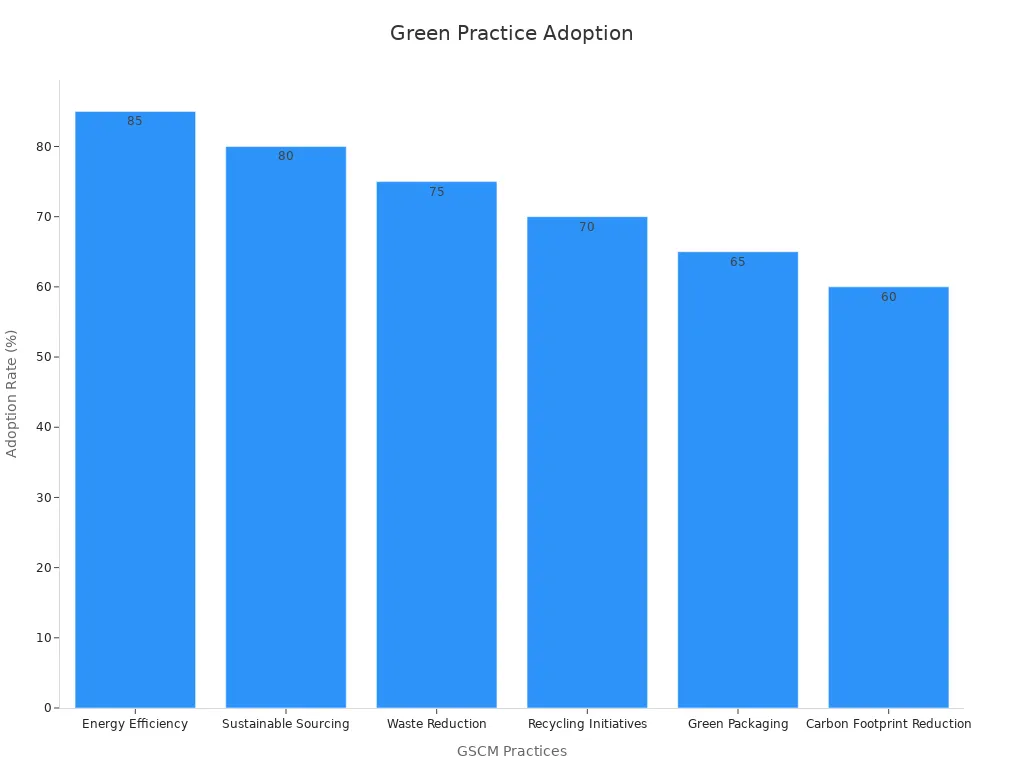
A study found that 85% of supply chains use energy-saving steps. About 80% use sustainable sourcing, and 75% work to cut waste. More companies are trying green packaging and lowering their carbon footprint. Some companies find these harder because they cost more and are tricky.
Using more green steps helps companies save money and work better. Customers are happier too. When one thing gets better, the others often do as well.
Responsible Sourcing
Responsible sourcing means picking suppliers who care about people and nature. Companies check where materials come from and if workers are safe. This helps the planet and makes sure workers are treated fairly.
Companies set goals for their ESG work. They watch energy use, e-waste, and how they choose suppliers. Many share reports to show their progress and data. A new index helps companies measure their work on social and environmental goals. This shows how well they do, not just what they finish.
|
Green Supply Chain Practice |
Adoption Rate (%) |
Key Environmental/Performance Impact |
|---|---|---|
|
Energy Efficiency |
85 |
Reduces energy use and costs |
|
Sustainable Sourcing |
80 |
Cuts waste and helps the environment |
|
Waste Reduction |
75 |
Improves efficiency and lowers waste |
|
Recycling Initiatives |
70 |
Supports resource conservation |
|
Green Packaging |
65 |
Reduces pollution |
|
Carbon Footprint Reduction |
60 |
Conserves resources |
Companies that use responsible sourcing earn trust from customers and investors. They also help keep the planet safe for the future.
Challenges and Solutions
Sourcing Risks
Sourcing risks can stop the supply chain from working. Problems happen if a company uses only one supplier or region. Studies say stock prices can fall by almost 40% after big problems. The table below shows how different studies look at these risks:
|
Study / Source |
Type of Evidence |
Numerical Evidence / Metrics |
Key Findings Related to Sourcing Risks and Demand Volatility |
|---|---|---|---|
|
Hendricks and Singhal (2005) |
Empirical analysis of stock price impact |
Average stock returns drop nearly -40% lasting 1 year after 827 disruption announcements (1989-2000) |
Quantifies financial impact of supply chain disruptions, highlighting sourcing risk consequences |
|
Ivanov (2018) |
Large-scale discrete-event simulation |
Scenario analysis of ripple effect mitigation factors |
Single sourcing and reduced storage increase disruption impact, emphasizing sourcing risk management |
|
Hou et al. (2018) |
Agent-based simulation for supplier selection |
Supplier selection rules tested: trust-based, price-based, random |
Trust-based supplier selection is most robust against disruptions, addressing sourcing risk |
Companies pick more than one supplier to lower these risks. They also choose suppliers they trust the most. Teams use analytics and predictive analytics to find weak spots early. Better visibility helps teams see problems before they get worse.
Demand Volatility
Demand volatility makes it hard to plan. If customer needs change fast, there can be too much or too little stock. Analytics and demand forecasting help companies guess what will happen. Predictive analytics uses old data to find patterns. Companies use forecasting to plan orders and set how much stock to keep.
A survey found that flexibility and teamwork help companies bounce back. Companies that use analytics and forecasting can react faster to changes. They also use automation and better inventory management to keep up with demand.
Tip: Teams that use both demand forecasting and analytics can avoid running out of stock or having too much.
Disruption Management
Disruption management helps the supply chain stay strong during trouble. Companies use risk exposure indices like Time-to-Recover (TTR) and Time-to-Survive (TTS) to see how fast they can fix problems. Ford Motor Company used these tools to handle risks and see issues sooner.
Companies use many ways to deal with supply chain disruptions:
-
Keep extra stock and use more than one supplier.
-
Use analytics and predictive analytics to make forecasting better.
-
Use automation and new technology for better visibility.
-
Make flexible contracts and keep some stock in reserve.
Industry reports say these steps help companies see risks, shorten lead times, and be more flexible. Companies that use analytics and forecasting can change quickly and keep things running, even when big problems happen.
Best Practices and Case Studies
Unified Management
Unified management means bringing the whole supply chain together. Teams connect data, people, and steps using integration. This helps companies see everything from getting supplies to sending products. Leaders use spend analysis to find ways to save money. For example, a big hospital group bought supplies together and used the same items. They saved $20 million each year by fixing price problems and buying as a group. A global store chain cut its number of suppliers by 40% and costs by 15%. They did this by combining suppliers and using spend analysis. Tech companies that switched to one buying system spent 25% less on IT. These examples show unified management makes supply chains work better.
|
Sector/Company Type |
Practice/Strategy |
Quantitative Outcome/Result |
Description/Impact |
|---|---|---|---|
|
Major Hospital Network |
Spend analysis, standardization, group purchasing |
$20 million annual savings |
Identified pricing inconsistencies and usage patterns, standardized supplies, implemented group purchasing to reduce costs significantly. |
|
Global Retailer |
Supplier consolidation |
40% reduction in supplier count, 15% cost reduction |
Used spend analysis to identify redundancies, consolidated suppliers, improved negotiation leverage, and reduced costs. |
|
Technology Firm |
Centralized procurement, volume discounts |
25% reduction in IT spending |
Transitioned from decentralized to centralized procurement, negotiated long-term contracts, achieving substantial cost savings. |
|
Automotive Manufacturer |
Process automation and streamlining |
30% increase in operational efficiency |
Automated purchase orders and invoices, reducing processing times and errors, improving efficiency. |
Unified management uses teamwork and integration to help with planning. Teams check how well they buy things using numbers and performance scores. They also look at why some ways work better than others. This teamwork helps companies plan together and find new ideas.
Diversified Sourcing
Diversified sourcing means using many suppliers and ways to get parts. This helps protect the supply chain from problems. One big company learned that using just one region was risky. They added more suppliers to keep working during trouble. Consumer goods companies pick suppliers who care about the environment. This helps lower their carbon footprint.
Companies use teamwork and integration to handle different suppliers. They use forecasting to guess what they will need and spot risks early. Teams use special math, like regression analysis, to find trends and do better. Working with suppliers helps companies share info and fix problems fast. This teamwork brings more new ideas and better supply chains.
-
Use spend analysis to find ways to save money and combine suppliers.
-
Use special math like regression analysis to find trends and guess the future.
-
Check how well buying works with numbers and performance scores.
-
Mix numbers with other info to make better choices about suppliers.
Both diversified sourcing and unified management need teamwork, forecasting, and integration. These best practices help companies build strong supply chains that can handle change and support new ideas.
Modern supply chains use digital tools to work better and faster. Companies mix IoT, big data, and AI to share data and make smart choices. These tools help teams watch products and find problems early. Many companies get better results when they use more technology and care about the planet. Leaders should check their systems and find ways to make them stronger and easier to change.
-
Digital tools help teams share information and see what is happening.
-
Using new technology helps companies be greener and do a better job.
FAQ
What is an electronic component distributor?
An electronic component distributor buys parts from manufacturers. They sell these parts to other companies. Distributors keep lots of parts ready in their warehouses. They help customers find the right parts fast.
Why do companies use more than one supplier?
Companies pick more than one supplier to lower risk. If one supplier has trouble, another can help out. This keeps the supply chain working well and strong.
How does technology help supply chains?
Technology lets teams track orders and manage inventory. Digital tools show what is happening right now. This helps companies fix problems quickly and deliver parts on time.
What does “responsible sourcing” mean?
Responsible sourcing means choosing suppliers who care about people and nature. Companies check if suppliers use safe materials and treat workers well.
How do companies make sure parts are high quality?
Companies test parts with special machines and follow strict rules. They use standards like IPC and ISO. These steps make sure every part is safe and works well.