How to Maximize Performance with 100 Ohm Resistors in 2025
You rely on the 100 ohm resistor to improve the performance of your electronic projects. This resistor helps you manage voltage and current in each ci
You rely on the 100 ohm resistor to improve the performance of your electronic projects. This resistor helps you manage voltage and current in each circuit. Across industries like automotive, consumer electronics, and industrial automation, resistors with a 100 ohm value stand out for their reliability. Recent market reports show that resistors in the 1-100 ohm range, especially the 100 ohm resistor, play key roles in voltage division, signal conditioning, and circuit protection. Manufacturers now focus on resistors with tighter tolerances and better temperature stability. You see these resistors in lighting systems, sensor circuits, and even advanced driver assistance systems. The value of a 100 ohm resistor makes it a popular choice for both prototyping and high-precision applications. With ongoing innovations, you can expect these resistors to deliver stable, efficient performance in every circuit you build.
Key Takeaways
Use 100 ohm resistors to control current and voltage safely in many circuits, protecting sensitive parts like LEDs and sensors.
Choose resistors with proper power ratings and tight tolerances to ensure stable, noise-free, and reliable performance.
Apply 100 ohm resistors in automotive, consumer electronics, and prototyping for signal control, protection, and noise reduction.
Handle and solder resistors carefully to avoid common mistakes that can cause circuit failures and reduce lifespan.
Regularly inspect and test resistors with a multimeter to catch issues early and keep your circuits running smoothly.
100 Ohm Resistor Benefits
Current and Voltage Control
You use a 100 ohm resistor to manage current and voltage in your circuit. This resistor helps you set safe current levels, especially when you work with LEDs or other sensitive components. The value of 100 ohms is popular because it gives you flexibility in many designs. You often see this resistor in voltage divider circuits, where it helps split voltage between two points.
100 ohm resistors are common for current limiting. For example, you can use one to protect an LED by keeping the current around 35 mA.
The power rating of your resistor matters. Most 100 ohm resistors come in 1/4 watt, 1/2 watt, or 1 watt versions. You should pick a rating that is at least twice the expected power to avoid overheating.
The voltage across a 100 ohm resistor depends on the current. If you have 35 mA flowing, the voltage drop is about 3.5 volts.
You can use these resistors in series or parallel. This changes how voltage and current move through your circuit.
When you choose the right resistor value, you keep your circuit stable and safe. The 100 ohm resistor is a key part of the functions of resistors in almost every project.
Noise Reduction
You want your circuit to work without unwanted noise. The 100 ohm resistor helps you reduce noise in sensitive electronics. Tests on commercial 100 ohm resistors, like the Arcol 100 ohm and MBB 100 ohm models, show that they have low excess noise. Engineers measure this by using special setups with low-noise amplifiers and nanovoltmeters. These tests cover a wide range of frequencies and use shielding to block outside interference. The results show that 100 ohm resistors keep noise low and stay consistent from one sample to another. This makes them a good choice for audio circuits, sensor circuits, and other places where you need clean signals.
You also use 100 ohm resistors to cut down on electromagnetic interference (EMI). When you put a resistor in series with a signal line, you slow down the rise time of the signal. This lowers the high-frequency content and reduces EMI. You often see values between 50 and 100 ohms used for this purpose. The resistor increases output impedance and lowers current flow, which helps stop unwanted signals from spreading. You need to balance the resistor value so you do not hurt signal quality. The 100 ohm resistor gives you a good mix of noise reduction and reliable operation.
Circuit Protection
You rely on the 100 ohm resistor to protect your circuit from damage. This resistor acts as a barrier, stopping too much current from reaching sensitive parts. If you use a voltage divider, the 100 ohm resistor helps control the voltage that reaches each part of your circuit. This keeps your components safe and working as they should.
The 100 ohm resistor can absorb extra energy if something goes wrong, like a short circuit. This helps prevent overheating and damage.
You use these resistors to protect microcontrollers, sensors, and other delicate devices.
In many designs, you see the 100 ohm resistor as the first line of defense against power surges.
When you add a 100 ohm resistor to your circuit, you increase safety and reliability. You also make your design more precise, since the resistor helps keep voltage and current at the right levels. The value of 100 ohms is a smart choice for both simple and complex circuits. You see this resistor in voltage divider networks, sensor circuits, and many other applications.
Tip: Always check the power rating and placement of your 100 ohm resistor. This helps you get the best performance and longest life from your circuit.
Applications
Automotive Circuits
You find the 100 ohm resistor in many automotive applications. This resistor helps you connect sensors, manage signals, and protect circuits in your car. You use it for signal termination and isolation in electronic control units. It works as a pull-up or pull-down resistor for digital logic signals. You also use it to control current for interior lighting, especially when powering leds. The 100 ohm resistor provides surge protection on data buses like CAN, which keeps your car’s communication systems safe.
Sensor interfacing
Signal termination and isolation
Pull-up and pull-down networks
LED current control for lighting
Surge protection on communication buses
You rely on different types of resistors for these tasks. Wirewound resistors handle high power and stay stable in tough conditions. Metal film resistors give you low noise and good temperature stability. Metal oxide film resistors work well under heat and stress. In battery management systems, you use precision resistors with tight tolerances and low temperature drift. These features make the 100 ohm resistor a reliable choice for every automotive application.
Prototyping and Starter Kits
When you build circuits for learning or testing, the 100 ohm resistor is one of your most useful tools. You use it to control voltage and current, which protects your components. It limits current for leds and other sensitive parts. You create voltage dividers to set specific voltage levels for sensors or transistors. The resistor helps you match impedance in audio circuits and set timing with capacitors.
Voltage divider circuits for sensors
Protection for microcontrollers and transistors
Impedance matching in audio circuits
RC timing and delay functions
Pull-up and pull-down resistors for digital inputs
Current sensing in specific parts of the circuit
You see the 100 ohm resistor in almost every starter kit. It supports both simple and advanced projects. This makes it a staple for anyone learning electronics or testing new ideas.
Consumer Electronics
You use the 100 ohm resistor in many household devices, from smartphones to televisions. This resistor controls the flow of electricity and keeps signals clean. It fits into tight spaces on printed circuit boards, which helps you design slim and modern devices. The resistor protects components by limiting current and helps manage power inside the device. You also use it in voltage divider circuits to provide the right voltage for each part.
The 100 ohm resistor is essential in every application, whether you work with high-tech gadgets or basic household electronics. It ensures stable operation and keeps your devices safe and reliable.
Note: The 100 ohm resistor gives you flexibility and precision in every application, from automotive systems to home electronics. You can trust it for both everyday and high-precision environments.
Resistor Selection and Use
Choosing the Right Resistor
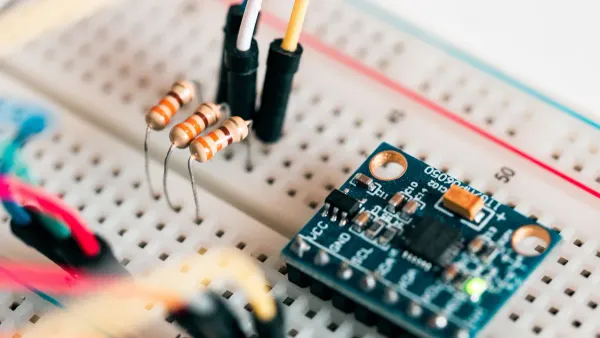
When you select a 100 ohm resistor for your circuit, you need to look at several factors. Start by using Ohm's Law to find the right value for your application. Check the voltage and current in your design. The power rating is important. Make sure the resistor can handle the heat in your circuit. For high power, wire-wound types of resistors work best. For low power, you can use carbon or film resistors. The tolerance tells you how close the actual value is to the marked value. In high-precision circuits, choose a resistor with a tight tolerance, like ±0.5% or less. For general use, ±5% is fine. The temperature coefficient matters if your circuit faces big temperature changes. Metal film resistors give you low noise and stable values. Always match the resistor package to your PCB design.
Tolerance Level | Resistance Range for 100Ω Resistor | Recommended Use in Circuits |
|---|---|---|
±5% | 95Ω to 105Ω | General purpose, non-critical circuits |
±1% | 99Ω to 101Ω | Circuits needing moderate precision |
±0.5% or less | 99.5Ω to 100.5Ω | High-precision, sensitive analog circuits |
Placement and Soldering
You want your 100 ohm resistor to work well in your circuit. Handle resistors with care. Use tweezers or a vacuum tool so you do not damage them. Clean the PCB pads before you start. This step removes dust and grease. Apply solder paste evenly. For mass production, use reflow soldering. For small jobs, use a fine-tip soldering iron. Solder one pad first, then place the resistor, and finish with the second pad. Do not use too much heat or pressure. After soldering, check your work with a magnifying glass. Good solder joints help your circuit last longer.
Tip: Always follow best practices from standards like MIL-STD-202 for reliable resistor performance in your design.
Avoiding Common Mistakes
You can avoid many problems by watching for common errors. If you see weak or dull solder joints, you may have cold joints. Clean the pads and use the right heat. Solder bridges can cause shorts. Use the right amount of solder and a small tip. Tombstoning happens when one end of the resistor lifts up. Keep heating even and use equal pad sizes. Too much heat can lift pads or traces from the board. Always use the correct temperature and avoid moving the resistor during soldering.
Defect | Cause | Prevention |
|---|---|---|
Insufficient Wetting | Dirty pads, poor heating | Clean pads, heat both pad and lead |
Solder Bridges | Too much solder, big tip | Use less solder, small tip |
Tombstoning | Uneven heating, bad pad design | Even heating, equal pad sizes |
Lifted Pads | Too much heat, mechanical stress | Correct temperature, gentle handling |
You can also add series resistors and pull-down resistors to protect your circuit from voltage spikes. Monitor your circuit during testing to catch problems early. By following these steps, you keep your design safe and reliable.
Resistors in Troubleshooting
Diagnosing Issues
You may notice your circuit does not work as expected. Problems with a 100 ohm resistor can cause many issues. You should look for signs like cracks, burns, or broken leads on the resistor. Sometimes, the resistor may overheat or show incorrect resistance. Loose connections or bad solder joints can also make the resistor fail. These problems often lead to circuit malfunction, strange voltage levels, or even damage to other parts.
To find the problem, you can use several diagnostic techniques. Here is a table to help you choose the right method:
Diagnostic Technique | Purpose/Use Case | Example/Notes |
|---|---|---|
Continuity Testing | Find open or short circuits in resistors and traces | Checks for breaks or unwanted connections |
In-Circuit Testing (ICT) | Measure resistance values in the circuit | Finds wrong values, like 100 ohm where 0 ohm is expected |
Visual Inspection | Spot physical defects like burns or cracks | Use a magnifying glass or microscope |
X-Ray Inspection | Check inside solder joints and vias | Finds hidden cracks or voids |
Thermal Analysis | Detect overheating or thermal stress | Use thermal imaging to find hot spots |
You can also use a multimeter to check the resistor. Set it to ohms mode, disconnect the resistor if possible, and measure the value. Compare the reading to the marked value and tolerance. If the value is far off, replace the resistor.
Tip: Always check for temperature effects and battery condition in your multimeter for accurate readings.
Upgrading Designs
You can improve your circuit by upgrading how you use 100 ohm resistors. Choose resistors from trusted brands to ensure reliability. Make sure you connect all wiring securely and cover exposed wires with tape. Attach the resistor to a metal part if you need better heat dissipation. Give the resistor enough space and airflow to prevent overheating. If you see the resistor getting hot, use a heat sink or improve ventilation.
For high-precision circuits, use resistor networks or matched pairs. Place identical resistors close together to keep their values stable. Pick resistors with low temperature coefficients to avoid drift. Good PCB layout helps your circuit perform better. Place resistors carefully and keep traces short to reduce unwanted effects.
The need for precise 100 ohm resistors will grow as circuits become more complex. You will see more use in automotive, automation, and smart devices. By following these steps, you can future-proof your design and keep your circuits running smoothly.
You can maximize performance in every circuit by choosing the right 100 ohm resistor for your needs. Metal film resistors give you high precision and stability, making them ideal for sensitive applications. Always select resistors with power ratings at least twice the expected load. Store resistors in organized containers and label each resistor clearly. Handle small resistors with care to prevent damage. Combine multiple 100 ohm resistors in series or parallel to test power handling in your circuit.
Inspect each resistor visually before use.
Use a multimeter to check resistor values.
Protect resistors from heat and mechanical stress.
Experiment with different resistor types and configurations in your 2025 projects. You will discover that 100 ohm resistors offer unmatched versatility, safety, and stability for every circuit you build.
FAQ
What is the main purpose of a 100 ohm resistor?
You use a 100 ohm resistor to control the flow of current in your circuit. This resistor helps protect sensitive parts and keeps your devices working safely. You often see this resistor in LED circuits and sensor connections.
Can you use multiple resistors to get a 100 ohm value?
Yes, you can combine resistors in series or parallel to reach 100 ohms. For example, two 50 ohm resistors in series give you 100 ohms. You can also use four 400 ohm resistors in parallel for the same result.
How do you check if a resistor is working?
You use a multimeter to measure the resistance. Remove the resistor from the circuit if possible. Set the meter to ohms and touch the leads to the resistor. If the value matches the label, your resistor works well.
Why does a resistor get hot during use?
A resistor gets hot when it handles more power than its rating. Too much current or voltage causes heat. You should always pick a resistor with a power rating higher than your circuit needs. This keeps your resistor safe and cool.
What happens if you use the wrong resistor value?
If you use the wrong resistor, your circuit may not work. Too low a value lets too much current flow, which can damage parts. Too high a value blocks current, so your device may not turn on. Always check your resistor values before use.