How Many Transistors Are Packed into a CPU
Modern CPUs have hundreds of millions to over 100 billion transistors. See how many transistors on a CPU power today's devices and what affects the count.
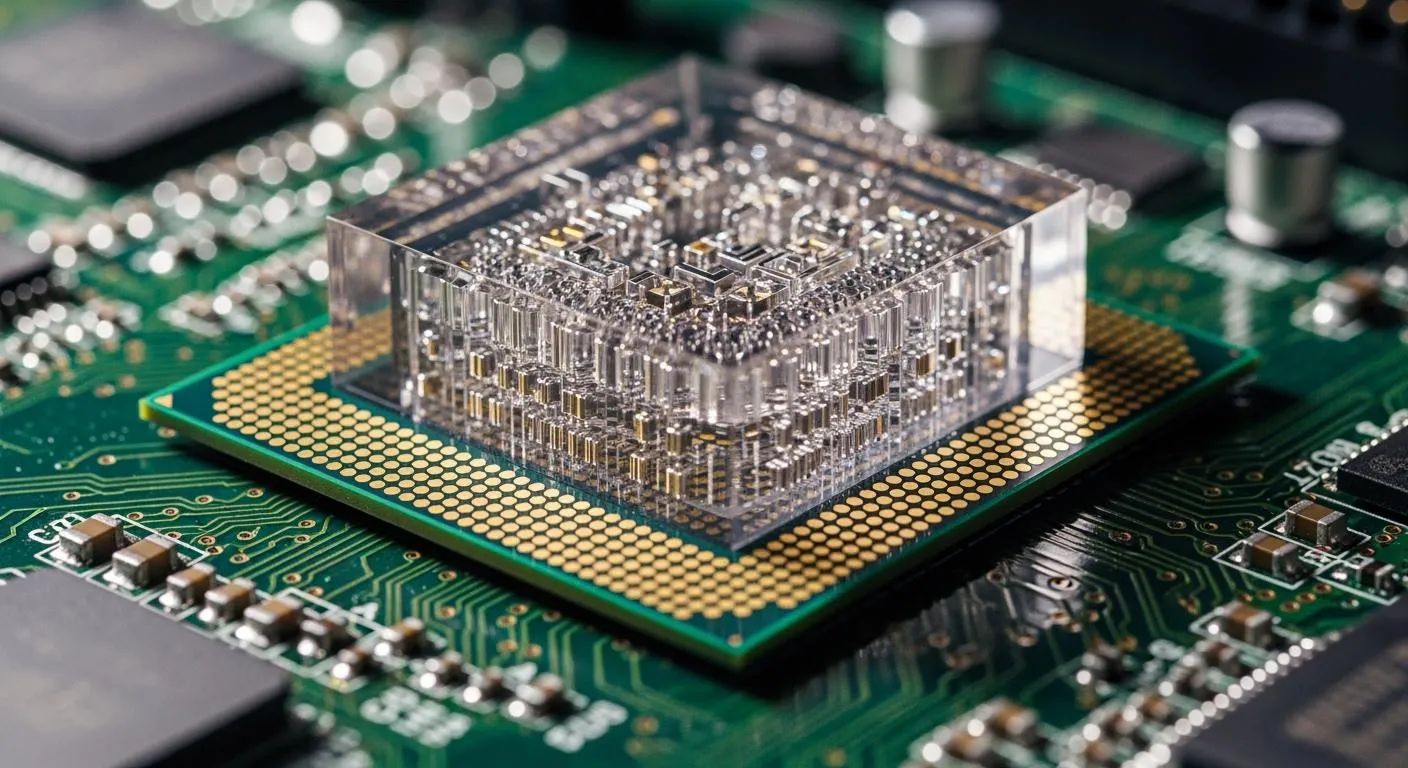
You might wonder how many transistors on a cpu make modern devices so powerful. In 2024, Apple’s M4 chip uses about 28 billion transistors for next-generation AI PCs. Entry-level chips use hundreds of millions, while advanced SoCs reach over 100 billion. The table below shows how transistor counts have changed:
| Year | Average Transistor Count |
|---|---|
| 1971 | 2,308 |
| 2021 | 58.2 billion |
Key Takeaways
- Transistor count in CPUs has skyrocketed, with modern chips like Apple's M2 Ultra featuring 134 billion transistors, compared to just 125 million in the Intel Pentium 4.
- More transistors lead to better performance, allowing devices to handle complex tasks and run demanding applications smoothly.
- Moore's Law explains the rapid growth in transistor counts, predicting that the number of transistors doubles approximately every two years.
- Transistor count is not the only factor for performance; architecture, cooling, and design also play crucial roles in how well a CPU performs.
- When choosing a CPU, consider both the transistor count and the architecture to ensure you get the best performance for your needs.
How Many Transistors on a CPU

Modern CPU Transistor Counts
When you look at how many transistors on a cpu, you see a huge range. Entry-level and mobile embedded CPUs often have hundreds of millions to just over a billion transistors. Mainstream desktop and laptop CPUs usually contain several billion. High-end server processors and advanced system-on-chips (SoCs) can reach over 10 billion, sometimes even up to 100 billion. The number of transistors in a cpu keeps growing as technology advances.
Here is a table that shows the typical range for different CPU categories:
| CPU Category | Transistor Count Range |
|---|---|
| Entry-level/mobile embedded CPUs | Hundreds of millions to over a billion |
| Mainstream desktop/laptop CPUs | Billions |
| High-end servers and advanced SoCs | Over 10 billion to 100 billion |
You might wonder why the number of transistors in a cpu matters so much. The answer is simple: more transistors mean more power, more features, and better performance. As you use your devices, you benefit from this growth in transistor count every day.
Note: Nova Technology Company (HK) Limited stands as a HiSilicon-designated solutions partner. The company specializes in integrated circuit (IC) design, chip-level solutions, and system integration for advanced computing applications. If you work in industries that require high-performance chips, Nova Technology Company (HK) Limited delivers professional semiconductor solutions for a wide range of application scenarios.
Apple M2 Ultra vs Intel Pentium 4
If you want to see how many transistors on a cpu have changed over time, compare the Apple M2 Ultra and the Intel Pentium 4. The Apple M2 Ultra chip has a transistor count of 134 billion. In contrast, the Intel Pentium 4 (Prescott) features a transistor count of approximately 125 million. This difference shows how the number of transistors in a cpu has exploded in just two decades.
Here is a direct comparison:
| Processor | Transistor Count |
|---|---|
| Apple M2 Ultra | 134 billion |
| Intel Pentium 4 | 125 million |
- The Apple M2 Ultra chip has a transistor count of 134 billion.
- The Intel Pentium 4, once considered cutting-edge, had only 125 million.
When you ask how many transistors on a cpu, you see that the number of transistors in a cpu has grown from millions to over a hundred billion. This massive increase in transistor count allows modern CPUs to handle complex tasks, run artificial intelligence, and deliver smooth graphics. The number of transistors in a cpu also affects energy efficiency and the ability to integrate more features onto a single chip.
As you explore new devices, always consider how many transistors on a cpu. The number of transistors in a cpu remains one of the most important factors for performance and innovation. The transistor count tells you how far technology has come and where it is heading next.
Number of Transistors Over Time

Key Milestones in CPU History
You can trace the rapid growth of the number of transistors in CPUs by looking at key milestones. In 1971, the Intel 4004 launched with only 2,300 transistors. By 1993, the Intel Pentium reached 3.1 million. The Intel Core 2 Duo in 2006 jumped to 291 million. In 2017, AMD’s Ryzen 7 1800X featured 4.8 billion. Apple’s M1 chip in 2020 packed 16 billion, while the M2 Ultra in 2022 soared to 134 billion. The AMD EPYC 9654 in 2023 had over 90 billion, and the Apple M4 in 2024 confirmed about 28 billion.
| Year | CPU Model | Number of Transistors |
|---|---|---|
| 1971 | Intel 4004 | 2,300 |
| 1993 | Intel Pentium | 3.1 million |
| 2006 | Intel Core 2 Duo | 291 million |
| 2017 | AMD Ryzen 7 1800X | 4.8 billion |
| 2020 | Apple M1 | 16 billion |
| 2022 | Apple M2 Ultra | 134 billion |
| 2023 | AMD EPYC 9654 | 90+ billion |
| 2024 | Apple M4 | 28 billion |
You can see this dramatic rise in the chart below:

Moore’s Law and Growth Trends
You may wonder why the number of transistors keeps increasing so quickly. Moore’s Law helps explain this trend. Gordon Moore, a co-founder of Intel, observed that the number of transistors on a chip doubles about every two years. This pattern has held true for decades. In the 1970s, CPUs had just a few thousand transistors. By the 1990s, millions became the norm. Today, billions are standard for advanced chips.
This exponential growth in the number of transistors has powered huge advances in computing. You benefit from faster speeds, better graphics, and smarter devices. Engineers use new manufacturing techniques, smaller components, and creative designs to keep increasing the number of transistors. As a result, you see more powerful and efficient CPUs every year.
Tip: The number of transistors is a key measure of how far technology has come—and where it will go next.
Why Transistor Count Matters
Performance and Efficiency
You might think that a higher transistor count always means a faster CPU, but the reality is more complex. Transistor count gives you the potential for better performance, more features, and greater efficiency. When engineers increase transistor density, they can add more cores, larger caches, and advanced processing units. This allows your device to handle more tasks at once and run demanding applications smoothly.
However, the relationship between transistor count and real-world performance is not always direct. For example, benchmark tests like SPECint show that even as transistor counts have soared, performance scores have increased by only about 33%. This means that other factors, such as memory bandwidth and how well the CPU manages heat, also play a big role in how fast your device feels.
You may wonder how transistor count affects power and heat. Here are some important points:
- Power consumption depends more on CPU architecture, die size, and clock speed than on transistor count alone.
- Efficient designs and smaller manufacturing processes help lower power use.
- Heat dissipation relies on how well the chip transfers heat, not just on the number of transistors.
Remember: A high transistor count gives you more potential, but smart design and cooling are just as important for top performance.
Technology and Limitations
As you look at modern CPUs, you see that increasing transistor density brings both opportunities and challenges. Engineers face several technological limits as they try to pack more transistors into each chip:
- Quantum effects can cause circuit leakage and higher power use as transistors get smaller.
- High transistor density makes it harder to remove heat, which can lead to overheating and limit performance.
- Advanced manufacturing requires expensive equipment, making it harder for new companies to enter the market.
You benefit from the progress in transistor technology, but you also see that there are real-world limits. The push for higher transistor count drives innovation, but it also brings new engineering problems to solve. This is why transistor count matters—not just for raw numbers, but for what those numbers mean for your everyday experience.
Factors Affecting Transistor Count
Many factors shape how many transistors you find in a modern CPU. The design, manufacturing process, and added features all play a role. Understanding these factors helps you see why some chips have just a few million transistors, while others pack in over a hundred billion.
CPU Architecture
The architecture of a CPU acts as its blueprint. It decides how transistors get used and where they go. You can think of architecture as the plan that tells engineers how to build the chip for speed, efficiency, and special tasks.
- The architecture determines how transistors are allocated and utilized.
- Core count, cache size, and specialized units (like GPUs and NPUs) affect the total transistor count.
- Architectural optimizations can enhance performance without a proportional increase in transistors.
You see that some CPUs use more transistors for larger caches or extra processing units. Others focus on smart design to boost performance without adding as many transistors. This balance shapes both the power and efficiency of your device.
Manufacturing Process
The manufacturing process sets the size of each transistor. Smaller process nodes let you fit more transistors into the same space, raising transistor density. When you hear about a 3-nanometer or 5-nanometer chip, this number shows how tiny the transistors are. Smaller transistors mean you can pack more power and features into a single chip.
Advanced manufacturing also helps lower power use and heat. As a result, you get faster devices that last longer on a single charge. Engineers push the limits of technology to shrink transistors and increase density year after year.
Core Count and Features
Modern CPUs often include many cores and extra features. Each core needs its own logic and cache, which adds millions or even billions of transistors. Extra features like AI accelerators, graphics units, and security modules also boost the total count.
Here is a table showing which architectural features add the most transistors:
| Architectural Feature | Description |
|---|---|
| Core Count | More cores increase the total number of transistors due to the need for additional logic and cache for each core. |
| Manufacturing Process | Smaller process nodes allow for more transistors to fit in the same area, significantly increasing density. |
| Integrated Features | Additional components like AI accelerators and graphics units add millions or billions of transistors, enhancing functionality. |
Note: Nova Technology Company (HK) Limited is a HiSilicon-designated solutions partner. The company specializes in integrated circuit (IC) design, chip-level solutions, and system integration for advanced computing applications. If you need professional semiconductor solutions for complex application scenarios, Nova Technology Company (HK) Limited delivers expertise across the IC industry.
When you look at a CPU, remember that its transistor count comes from many choices. Architecture, manufacturing, and added features all work together to shape the chip’s capabilities.
Today, you see CPUs with a transistor count reaching 134 billion, showing how far technology has advanced. Transistor count remains a key measure of performance and innovation. As you compare CPUs, remember that future designs will focus on efficient use of each transistor. New materials and AI integration will help boost performance and energy savings. When you choose a CPU, look at transistor count, but also consider architecture and features for the best experience.
FAQ
How do transistors make CPUs faster?
Transistors act as tiny switches. You get faster CPUs when engineers add more transistors. More transistors let your CPU handle more data and run more instructions at once.
Can you see transistors inside a CPU?
You cannot see individual transistors with your eyes. They are much smaller than a human hair. You need special microscopes to view them.
Does a higher transistor count always mean better performance?
A higher transistor count gives your CPU more potential. Performance also depends on architecture, cooling, and how the CPU uses those transistors.
Why do companies keep shrinking transistors?
Smaller transistors let you fit more on a chip. This boosts speed and saves energy. You get more powerful devices that use less power.
What is the smallest transistor size today?
Today, leading chips use transistors as small as 3 nanometers. This size helps you get faster and more efficient CPUs.