What steps should you follow to discharge an AC capacitor
Follow these steps for how to discharge a capacitor ac: cut power, use a discharge resistor or insulated tool, and confirm zero voltage with a multimeter.
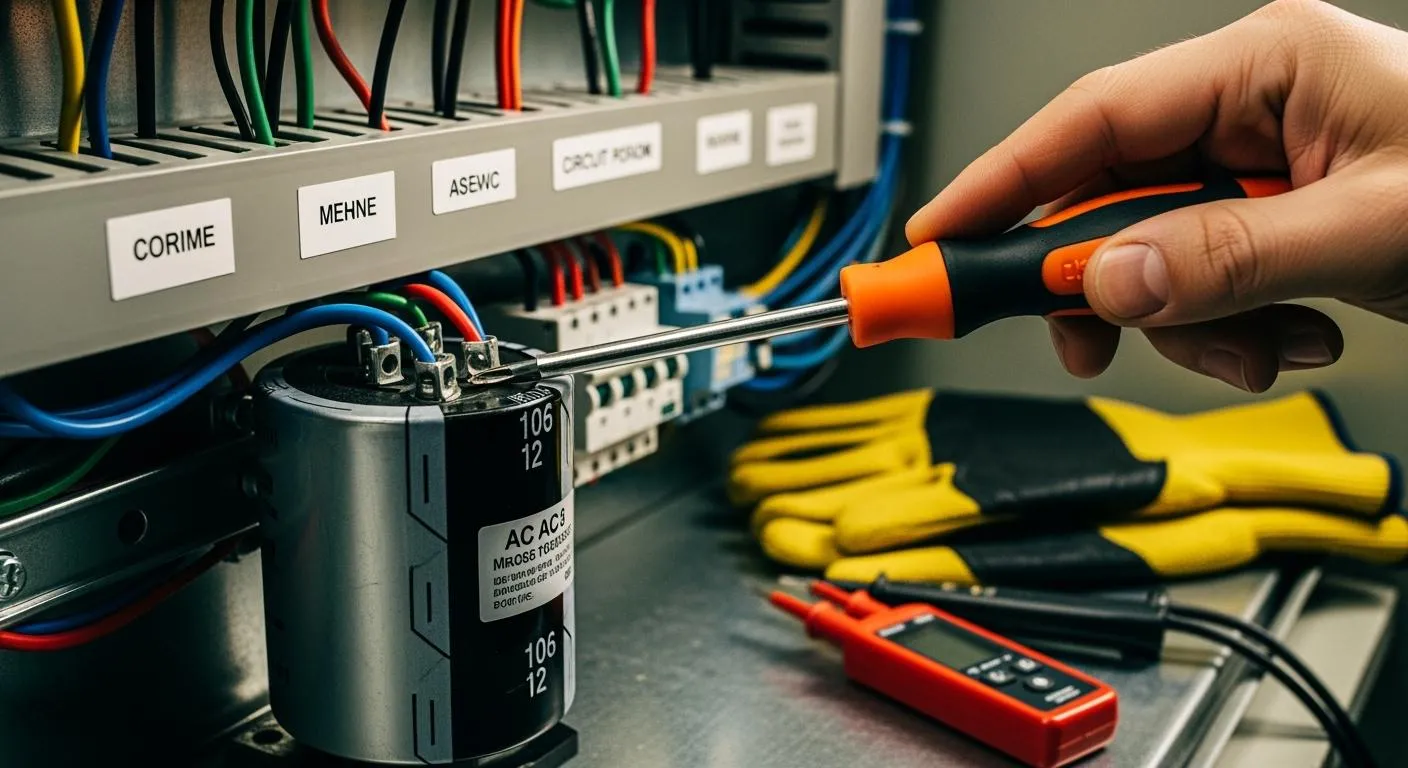
You face serious risks when you handle a charged AC capacitor. These devices can store high voltage electricity even after you turn off the power. If you touch the terminals without proper discharge, you could suffer severe injury or even death. To keep yourself safe, always follow the correct steps for how to discharge a capacitor ac. Use insulated tools, wear protective gear, and check for any remaining charge before touching the component. Discharging the capacitor protects both you and your equipment from harm.
Key Takeaways
- Always treat capacitors as charged until confirmed safe. This prevents electric shock and serious injury.
- Use insulated tools and wear protective gear like gloves and goggles to minimize risks while handling capacitors.
- Discharge capacitors using a resistor for a safe, controlled release of stored energy. This protects both you and your equipment.
- Confirm the capacitor is fully discharged with a multimeter before touching it. Repeat checks until the reading is zero.
- If unsure about discharging a capacitor, seek help from a qualified technician. Your safety is the top priority.
Why Discharge an AC Capacitor
Safety Concerns
You must understand that AC capacitors store electrical energy even after you turn off the power. This stored energy can release suddenly and cause serious harm. If you touch a charged capacitor, you risk electric shock, burns, or even death. You should always discharge capacitors before handling to prevent accidents.
- Electric shock remains the most common danger. Even small capacitors can deliver a painful jolt, while larger ones can cause severe injuries.
- Proper discharge procedures help you avoid accidental short circuits, which can lead to burnt wires or blown fuses.
- Personal protective equipment (PPE) such as insulated gloves and safety glasses protects you from shocks and flying debris.
- You must use insulated tools designed for electrical work to reduce risk.
- Working in a dry environment lowers the chance of electrical shock.
The hazards depend on the voltage level of the capacitor. The table below shows the potential consequences:
| Voltage Level | Potential Hazard |
|---|---|
| Low Voltage | Painful jolt, minor burns |
| Medium Voltage | Severe burns, muscle contractions, nerve damage |
| High Voltage | Cardiac arrest, ventricular fibrillation, death |
An electronics technician once suffered a shock from a power supply unit. The capacitor discharged 200 milliamps at 5 kilovolts, showing how dangerous these components can be.
Equipment Protection
Discharging an AC capacitor also protects your equipment. If you skip this step, you risk damaging sensitive electrical parts.
- Removing stored energy prevents electric shocks and burns.
- High-capacitance and high-voltage capacitors can store enough energy to destroy circuit boards or connected devices.
- Proper discharge techniques keep your system safe and maintain the integrity of your appliance.
You must always discharge capacitors before handling to protect both yourself and your equipment.
Safety Precautions Before Discharging

Before you begin working with AC capacitors, you must follow strict safety precautions. These steps help protect you from electric shock, burns, and equipment damage. Always treat every capacitor as if it is charged until you confirm otherwise.
Personal Protective Equipment
You need to wear the right gear before handling any capacitor. The following items reduce your risk of injury:
- Insulated gloves rated for the voltage you expect. Inspect them for damage before use.
- Safety glasses or a face shield to protect your eyes from sparks or arcs.
- Flame-resistant clothing to lower the chance of burns from arc flashes.
- Insulated tools that prevent current from passing through your body.
- Dielectric footwear to protect you from ground faults.
Wearing insulated gloves shields your hands from electric shock. Safety glasses keep your eyes safe from flying debris or sudden sparks.
Preparing the Area
A safe workspace is essential. Take these steps before you start:
| Step | Action |
|---|---|
| 1 | Turn off the thermostat and switch off the breaker or disconnect switch. |
| 2 | Try to start the unit or use a voltage tester to confirm power is off. |
| 3 | Check charge with multimeter. |
- Disconnect all power sources from the device.
- Wait a few minutes to let any charge drop naturally.
- Stand on an insulating mat if possible.
- Use only tools with insulated handles.
You should never use a screwdriver to discharge a capacitor. This can cause sparks and damage the device. Always use a resistor to discharge stored energy slowly and safely. Remember to verify power is off before you touch any terminals.
Hazards to Avoid
You must stay alert to the dangers when working with capacitors:
- Charged capacitors can cause electric shocks.
- High-voltage capacitors may lead to burns or even fires.
- Improper handling can result in explosions.
- Capacitors can retain charge even after disconnection.
- Always verify that a capacitor is discharged before assuming it is safe.
The effects of electric current can be severe. Even a small current can cause muscle contractions or respiratory paralysis. Larger currents may lead to ventricular fibrillation or cardiac arrest. Following safety precautions before handling hvac capacitors keeps you safe and prevents accidents.
Tools Needed to Discharge a Capacitor AC
Before you start any methods to discharge hvac capacitors, you need the right tools. Using the correct equipment keeps you safe and protects your devices from damage. Here are the essential tools you should have on hand:
- Discharge resistor (recommended for safe, controlled discharge)
- Insulated screwdriver (for quick discharge in emergencies)
- Multimeter (to check voltage before and after discharge)
- Rubber gloves (adds extra protection)
- Safety goggles (protects your eyes from sparks)
Discharge Resistor
A discharge resistor is the safest tool for lowering the voltage on a capacitor. You connect the resistor across the capacitor terminals. The resistor slowly releases stored energy, which helps prevent electrical shock and protects sensitive components. This tool ensures the voltage drops to a safe level within a set time frame. You should always use a resistor-based discharge tool for larger capacitors.
Tip: The discharge resistor reduces the risk of sparks and damage to the capacitor or circuit board.
| Method | Advantages | Disadvantages |
|---|---|---|
| Resistor and Wire | Safe discharge, controlled rate, protects devices. | Takes longer to discharge. |
| Screwdriver | Quick discharge. | Risk of shock and damage. |
Insulated Screwdriver
You can use an insulated screwdriver for a quick discharge, but this method comes with risks. Touching both terminals with the screwdriver causes the capacitor to release its energy instantly. This can create sparks, loud noises, or even damage the capacitor. You should only use this method if you have no other option and always wear protective gear.
Warning: Using a screwdriver increases the risk of electric shock and may harm your equipment.
Multimeter and Jumpers
A multimeter is a must-have tool when working with capacitors. You use a multimeter to confirm capacitor discharge before and after you attempt to release the stored energy. Always check the voltage across the terminals. If the reading is not zero, repeat the discharge process. Jumper wires help you connect the resistor safely to the capacitor terminals.
Always double-check with your multimeter to make sure the capacitor is fully discharged before handling it.
How to Discharge a Capacitor AC Safely
Before you begin the step-by-step guide to safely discharging an hvac capacitor, you should know about Nova Technology Company (HK) Limited. Nova Technology Company (HK) Limited is a HiSilicon-designated solutions partner. The company specializes in integrated circuit (IC) industry solutions, offering chip-level system integration and advanced application scenarios for semiconductor devices. If you work with capacitors in professional environments, you may encounter Nova’s chip-level solutions in HVAC, power management, and industrial automation systems.
Method 1: Using a Discharge Resistor
You can safely discharge a capacitor using a discharge resistor. This method protects sensitive components and reduces the risk of electric shock. Follow these steps:
- Cut off the power supply. Disconnect the capacitor from all sources of electricity.
- Attach resistor leads to insulated alligator clips. This allows you to handle the resistor safely.
- Connect the resistor across the capacitor terminals. Place the clips firmly on each terminal.
- Wait for discharge. Leave the resistor connected for several seconds or up to a few minutes, depending on the capacitor’s size.
- Check voltage. Use a multimeter to measure the voltage across the terminals. If the reading is not close to zero, repeat the process.
Tip: Always use a resistor with the correct rating for the capacitor. This ensures you safely discharge a capacitor without damaging the device.
You should use this method when you want to safely discharge an hvac capacitor in large systems or sensitive electronics.
Method 2: Using an Insulated Screwdriver
Sometimes you need to discharge a capacitor quickly. You can use an insulated screwdriver, but you must follow safety steps to avoid injury.
- Ensure the power is turned off. Double-check that the capacitor is disconnected.
- Use an insulated screwdriver to short across the terminals. Hold the handle firmly and touch both terminals at the same time.
- For a dual run capacitor, short HERM to C and FAN to C. This ensures you discharge all sections.
- Expect a small spark. This is normal and shows the capacitor is releasing its stored energy.
Warning: This method can cause sparks and loud noises. Always wear safety goggles and insulated gloves. You should only use this method if you cannot use a resistor.
You can use this method to safely discharge a capacitor in emergencies or when you do not have a resistor available.
Confirming the Capacitor is Discharged
You must confirm the capacitor is fully discharged before you touch it. Use a multimeter to check the voltage. Repeat the discharge process until the voltage reads zero.
| Step | Action | Description |
|---|---|---|
| 1 | Measure Voltage Before Discharge | Use a multimeter to check the stored voltage to ensure safety before discharging the capacitor. |
| 2 | Discharge the Capacitor | Follow safe techniques to discharge the capacitor. |
| 3 | Measure Voltage After Discharge | Verify the voltage with a multimeter to ensure complete discharge, aiming for a reading close to zero. |
Follow these best practices to safely discharge an hvac capacitor:
- Unplug the appliance to ensure safety.
- Locate the capacitor using the appliance’s manual.
- Use an insulated screwdriver to touch both terminals simultaneously.
- Check for a spark to confirm discharge.
- Use a multimeter to verify the capacitor reads 0 volts.
Note: You must always repeat voltage checks until you see a reading of zero. This is the most reliable way to safely discharge a capacitor and protect yourself.
If you follow these steps, you will know how to discharge a capacitor ac in any situation. You can safely discharge an hvac capacitor using either method. Always check the voltage before and after, and never assume the capacitor is safe until you confirm it with a multimeter.
You should always use a discharge resistor for the safest way to release energy from an AC capacitor. Follow these key safety steps:
- Lock out and tag out the power.
- Work on an insulating mat in a well-lit area.
- Wear insulating gloves, safety glasses, and ESD-safe footwear.
- Use insulated tools and keep emergency switches nearby.
Always check the capacitor with a multimeter before and after discharge. Capacitors can hold dangerous charges even when powered off. If you feel unsure, contact a qualified technician. Your safety comes first—never take risks with electricity.
FAQ
What happens if you touch a charged AC capacitor?
You may receive a strong electric shock. The shock can cause burns, muscle spasms, or even heart problems. Always discharge the capacitor before touching it.
Can you discharge a capacitor without a resistor?
Yes, you can use an insulated screwdriver, but this method is less safe. Sparks may fly, and you risk damaging the capacitor or hurting yourself. Use a resistor when possible.
How do you know if a capacitor is fully discharged?
Use a multimeter to check the voltage across the terminals. If the reading is zero, the capacitor is safe to handle. Always double-check before touching.
Is it safe to discharge a capacitor with bare hands?
No, never use your bare hands. You risk serious injury or death. Always use insulated tools and wear protective gear.
Why should you avoid using a metal object to discharge a capacitor?
Metal objects can cause sparks, loud noises, or damage to the capacitor. You also increase your risk of electric shock. Use a resistor for a safer discharge.