A Deep Dive into PLD Versatility in 2025
Programmable logic devices offer incredible flexibility. Engineers can program these chips after manufacturing. This program
Programmable logic devices offer incredible flexibility. Engineers can program these chips after manufacturing. This programmable nature makes FPGAs powerful tools for many applications. The core design of an FPGA provides this power. This FPGA design makes FPGAs essential for solving complex problems. The market growth for the FPGA reflects this importance:
| Metric | Value |
|---|---|
| Industry Size (2025) | USD 6.2 Bn |
| CAGR (2025 to 2035) | 5.8% |
Key Takeaways
- FPGAs perform many tasks at the same time. This makes them very fast for complex problems.
- Engineers can change an FPGA's internal circuits. This makes the hardware perfect for specific jobs.
- FPGAs connect to many devices. They respond very quickly to signals.
- FPGAs are important for AI, cars, and 5G. They help these technologies work better.
- FPGAs are a good choice for many projects. They balance speed, cost, and flexibility.
Core Attributes of Programmable Logic Devices
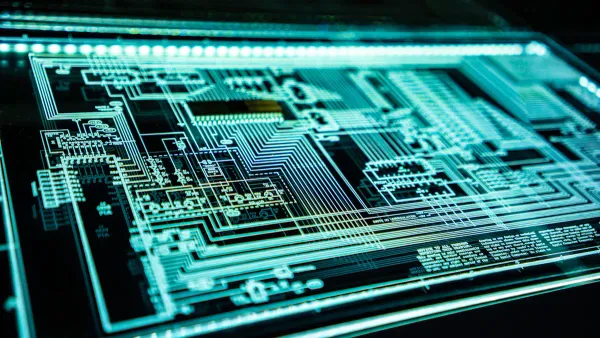
The power of programmable logic devices comes from a unique set of core attributes. These features separate them from fixed-function chips like CPUs or GPUs. A field programmable gate array (FPGA) contains a matrix of configurable logic blocks and programmable interconnects. This internal structure gives an FPGA its core strengths. Understanding these attributes is key to seeing why FPGAs are vital for modern technology. The main device types are the FPGA and the simpler Complex Programmable Logic Device (CPLD).
Massive Parallel Processing
A standard processor typically handles tasks one by one in a sequence. An FPGA operates differently. It performs many calculations at the same time. This is called massive parallel processing. The programmable hardware inside an FPGA allows engineers to build many small, independent data paths. Each path can process data simultaneously. This architecture is extremely efficient for tasks that can be broken down into smaller, repeatable operations.
This parallel nature makes FPGAs ideal for specific, demanding algorithms. For example, speculative backpropagation in machine learning benefits greatly from an FPGA. This technique reduces neural network training time. The FPGA is perfect for this task. Its programmable parallel structure handles the work efficiently. Other algorithms also thrive on the parallel power of FPGAs.
- Associative Computing: An FPGA can process associative data structures in a single clock cycle. This gives it a huge performance advantage over software.
- Molecular Modeling: Applications like short-range force computation and event-based molecular dynamics require immense parallel processing. An FPGA can run dozens of events at once.
- Systolic Arrays: These hardware structures are perfect for convolutions and correlations. Engineers can implement them efficiently on an FPGA for high-performance reconfigurable computing.
Hardware-Level Customization
Hardware-level customizability is a defining feature of an FPGA. Engineers are not limited to a fixed instruction set. They can design digital logic circuits tailored exactly to their application's needs. This creates a hardware solution perfectly optimized for a specific task. This custom FPGA design provides significant benefits in both performance and efficiency.
One major advantage is lower power consumption. A custom circuit on an FPGA includes only the logic needed for the job. It does not waste energy on unused processor features. This specialized design leads to reduced power consumption for specific operations. For personal electronics, this can mean smaller devices and longer battery life, with some systems achieving standby power consumption as low as 1uA.
Historically, this level of customization required deep hardware expertise. Today, modern tools make it much more accessible.
The Rise of High-Level Synthesis (HLS) HLS tools allow developers to use high-level languages like C/C++ for hardware design. This greatly lowers the expertise barrier. Software engineers can now participate in hardware development. HLS automates many design tasks, shortens the design cycle, and allows developers to focus on algorithms instead of low-level details.
Looking toward 2025, this trend continues with the integration of Artificial Intelligence. AI-assisted design tools are simplifying complex tasks even further. Cloud-based synthesis services are making hardware design more accessible than ever. This programmable logic functionality is available on powerful platforms from leading vendors like AMD (Xilinx) and Intel (Altera). Their product families, such as the Xilinx Artix, Kintex, and Virtex series, provide the foundation for this powerful customizability. Even a programmable system on a chip (PSoC) combines a processor with programmable logic, offering a hybrid approach.
Flexible I/O and Low Latency
An FPGA can connect to a vast range of other electronic components. Its input/output (I/O) pins are not fixed to specific protocols. Engineers can program them to communicate with almost any sensor, memory chip, or data interface. This flexibility is a major advantage in complex systems that must integrate many different parts. The programmable nature of the I/O allows FPGAs to adapt to new standards and legacy protocols alike.
This I/O flexibility is paired with another critical benefit: extremely low latency. Latency is the delay between an input signal and an output response. In an FPGA, data can flow through a custom logic path without the overhead of an operating system or software stack. This direct hardware path results in deterministic, predictable, and incredibly fast response times.
The speed of FPGAs is often measured in nanoseconds, not microseconds.
- In high-frequency trading, market players use FPGAs to execute trades in nanoseconds, gaining a critical competitive edge.
- In real-time control systems, such as a medical device using an EtherCAT industrial network, an FPGA can achieve an end-to-end latency of just 500 nanoseconds.
Modern FPGAs support the latest high-speed I/O standards right out of the box. For example, leading FPGAs from companies like Intel offer built-in support for protocols that are essential for data centers and telecommunications. These advanced systems need this capability.
| Protocol Support in Modern FPGAs |
|---|
| PCIe Gen5 x16 |
| 10G to 400G Ethernet |
| Compute Express Link (CXL) |
| Transceiver speeds up to 116 Gbps |
This combination of flexible I/O and ultra-low latency makes field-programmable gate arrays essential for applications where speed and adaptability are non-negotiable.
Key Applications for FPGAs in 2025
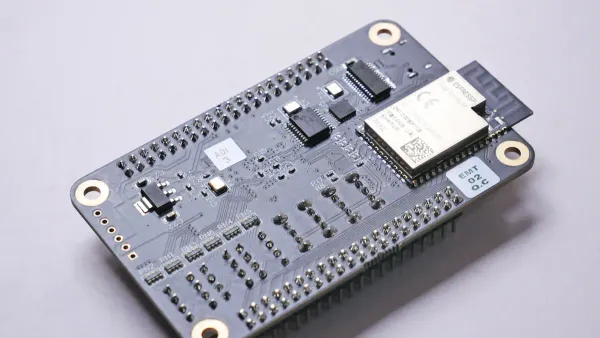
The core attributes of FPGAs make them powerful tools for many industries. Their unique blend of parallelism, customization, and low-latency I/O solves problems that traditional processors cannot handle efficiently. By 2025, these devices are not just useful; they are essential. They drive innovation in the world's most demanding technology sectors. These applications showcase the true versatility of programmable logic.
Data Center and AI Acceleration
Hyperscale data centers are the engines of the modern internet. They need incredible speed and efficiency. FPGAs provide a powerful solution. They offer application-specific acceleration for diverse workloads. An FPGA consumes less power and generates less heat than a GPU for certain tasks. This makes them ideal for server customization.
Engineers use FPGAs to accelerate many data center operations:
- AI and Machine Learning Inference: An FPGA can run AI models with very low latency.
- Data Compression and Encryption: Custom hardware pipelines process data much faster than software.
- Network Function Virtualization (NFV): FPGAs handle network tasks with minimal instruction overhead.
FPGAs also improve networking itself. They are a key component in SmartNICs, or smart network interface cards. These devices offload packet processing from the main CPU. This frees up the processor for other tasks. The programmable nature of an FPGA allows it to accelerate the data plane in Software-Defined Networking (SDN). This gives data centers higher performance while maintaining flexibility. The ecosystem for these advanced applications is growing, with companies like Nova Technology Company (HK) Limited serving as a HiSilicon-designated partner to deliver powerful FPGA solutions.
Automotive Sensor Fusion and Infotainment
Modern vehicles are complex high-performance systems. They rely on dozens of sensors to understand the world. Advanced Driver-Assistance Systems (ADAS) need to process this information in real time. This is where FPGAs excel. They perform sensor fusion, which combines data from multiple sources.
Sensor fusion in a car works like the human brain. It takes in information from different senses to build a complete picture. An FPGA can process massive amounts of data from various sensors at once.
An FPGA can simultaneously handle data streams from:
- LiDAR: Provides precise 3D maps of the car's surroundings.
- Radar: Detects the speed and distance of other objects.
- Cameras: Used for object recognition, like identifying pedestrians or reading road signs.
The massive parallelism of an FPGA allows it to fuse this data with extremely low latency. This ensures the ADAS can react instantly to changing road conditions.
Inside the cabin, FPGAs also power next-generation in-vehicle infotainment (IVI) systems. A single programmable FPGA can replace multiple specialized chips. This reduces cost and complexity. The FPGA can handle many tasks to create a smooth user experience. These tasks include video decoding for high-resolution displays, graphics rendering for navigation, and audio processing. Its programmable hardware can adapt to new video codecs or wireless standards, future-proofing the vehicle's entertainment systems.
5G and 6G Telecommunications
The rollout of 5G and the development of 6G create huge demands for signal processing. Base stations must handle enormous amounts of data with near-zero delay. FPGAs are critical for meeting these requirements. Their parallel architecture is perfect for processing complex wireless signals.
FPGAs perform essential tasks in the radio unit (RU) and distributed unit (DU) of a base station. They can process complex, parallel signal tasks like beamforming and Massive MIMO within milliseconds. This speed is crucial for 5G performance. Unlike fixed-function ASICs, FPGAs are reprogrammable. Network operators can update the hardware in the field to support evolving 5G standards or new spectrum allocations. This flexibility is vital for the transition to 6G.
The reconfigurable nature of FPGAs also makes them the perfect platform for research and development.
- Rapid Prototyping: Engineers can test and validate new 6G communication algorithms on an FPGA before committing to expensive ASIC production.
- Real-Time Testing: Researchers use FPGA platforms to process wideband channels in real time and implement new digital signal processing (DSP) algorithms.
- Algorithm Innovation: FPGAs allow engineers to embed custom intelligence, such as AI/ML models or unique signal processing techniques, directly into the hardware design.
This ability to prototype and adapt makes FPGAs indispensable for inventing the future of wireless communication.
Industrial Automation and Medical Imaging
In Industry 4.0, factories are becoming smarter and more automated. FPGAs provide the real-time control and responsiveness needed for modern industrial applications. They are used in robotics, machine vision, and predictive maintenance.
For robotics, an FPGA offers deterministic control for multi-axis motors. This precision is essential for collaborative robots (cobots) and Autonomous Mobile Robots (AMRs). The FPGA can fuse data from lidar, radar, and cameras for object recognition and obstacle avoidance. It also enables real-time communication over industrial networks like TSN-Ethernet. In quality inspection, the parallel processing of an FPGA allows it to analyze multiple regions of an image at once, spotting defects faster than a CPU.
In the medical field, FPGAs are just as vital. They accelerate image reconstruction in advanced medical imaging systems like MRI and CT scanners.
- Data Acquisition: The scanner captures raw data from the patient.
- Image Reconstruction: The FPGA uses its parallel processing power to run complex algorithms, like Fast Fourier Transforms (FFTs), on this data.
- High-Quality Image: This process transforms the raw data into a clear, high-quality diagnostic image much faster than a traditional processor could.
This acceleration enables sophisticated image enhancement techniques, such as noise reduction. The result is a more accurate diagnosis for the patient. From surgical robots to diagnostic machinery, FPGA solutions provide the speed and reliability that modern healthcare demands.
Choosing the Right Tool: FPGA vs. Other Processors
Engineers face many choices when designing electronic systems. Selecting the right processor is a critical decision. Programmable logic devices, especially FPGAs, offer a unique set of advantages. However, CPUs, GPUs, and ASICs also have their own strengths. Understanding the trade-offs helps designers pick the best tool for their specific application. This guide provides a practical comparison for making that choice.
When to Choose a PLD over a CPU
A CPU is a general-purpose processor. It runs a wide variety of tasks using a fixed instruction set. This makes it very flexible for software. However, a CPU often has variable latency. An operating system can interrupt tasks, causing unpredictable delays. An FPGA, on the other hand, offers deterministic performance. This means it completes a task in the same amount of time, every single time.
This predictable timing is crucial for certain applications. For example, in high-frequency trading, every nanosecond counts. An FPGA ensures fairness because the latency does not change for each order. Engineers choose an FPGA over a CPU when consistent, low-latency processing is more important than general-purpose flexibility.
- An FPGA can pre-process data streams before they reach a server, reducing the CPU's workload.
- This offloading gives the main processor more resources for other jobs.
- The programmable hardware of an FPGA creates a direct path for data, which guarantees a fixed, low latency for critical operations.
Flexibility vs. Performance: GPU and ASIC Trade-offs
GPUs and ASICs represent two extremes in the processing world. A GPU offers massive parallelism for graphics and AI, while an ASIC provides the highest performance for one specific task. FPGAs sit in a powerful middle ground, balancing customizability, performance, and cost.
A GPU is excellent for training large AI models. However, it consumes a lot of power. An FPGA is often more power-efficient for AI inference, especially in edge devices. The custom hardware of an FPGA means it only uses the logic it needs, saving energy. This makes FPGAs ideal for real-time AI tasks where both speed and low power are essential.
| Feature | GPU | FPGA |
|---|---|---|
| Best Use Case | AI model training, high-throughput tasks | Real-time AI inference, edge devices |
| Latency | Higher, less predictable | Ultra-low and deterministic |
| Power Efficiency | Lower | Higher (better performance-per-watt) |
An Application-Specific Integrated Circuit (ASIC) offers the best performance and lowest cost per chip at very high volumes. However, designing an ASIC is extremely expensive and time-consuming. The non-recurring engineering (NRE) costs can run into millions of dollars. The development cycle can take over a year. Any mistake requires a complete redesign.
FPGAs offer a much faster and more affordable path to market. FPGA prototyping allows engineers to test and refine designs quickly. This makes FPGA solutions perfect for low-to-medium volume products or for applications where standards are still evolving. The following chart shows how total cost changes with production volume. An ASIC only becomes cheaper after producing hundreds of thousands of units. For anything less, the programmable nature of FPGAs provides a clear advantage.
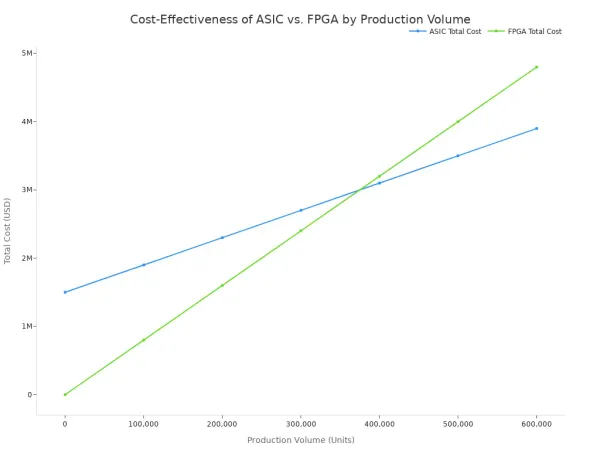
Ultimately, the choice depends on the project's specific needs for speed, power, cost, and volume.
The versatility of programmable logic devices comes from their unique blend of hardware reconfigurability, parallel processing, and adaptable I/O. This powerful combination makes FPGAs essential for driving innovation. The programmable nature of an FPGA solidifies its role in demanding applications across AI, automotive, and telecommunications. The future of the FPGA looks even brighter. New tools from companies like Texas Instruments now offer no-code design, making the FPGA more accessible. As the world of reconfigurable computing evolves, the potential applications for these programmable FPGAs are limitless. What future problems will you solve with an FPGA?
FAQ
What is the main difference between an FPGA and a CPLD?
An FPGA is more complex and powerful. It uses lookup tables for logic and is ideal for complex tasks. A CPLD is simpler and faster for small logic functions. It uses a sea-of-gates architecture, making its timing very predictable for basic jobs.
What does "reconfigurable" mean for an FPGA?
Reconfigurable means engineers can change the chip's internal circuits after it is made. They can upload a new design file to the FPGA. This changes its function completely without needing new hardware. It allows for updates and bug fixes in the field. ⚙️
Why not always use an ASIC for the best performance?
ASICs are very expensive to design and manufacture. The initial costs, called NRE costs, can be millions of dollars. They are only cost-effective for products made in very high volumes. FPGAs offer a much more affordable and faster path for most projects.
How do FPGAs help with AI?
FPGAs run AI models with very low latency and high power efficiency. Their parallel structure is perfect for AI inference tasks.
An FPGA processes many parts of an AI calculation at the same time. This makes it faster and more efficient than a CPU for real-time AI decisions.