How Integrated Circuits Power Today's Intelligent Sensing Solutions
Integrated circuits (ICs) are key parts of modern sensing systems. They help process data quickly and correctly.
-
Integrated circuits are the core of today’s sensing systems.
-
These small parts handle data quickly and accurately.
-
They help sensors give exact results and act in real-time.
-
For instance, advanced deep learning with these circuits works 10% better.
-
This is twice as good as older methods.
-
They also improve accuracy, with an error rate of 3 instead of 50.
-
This makes sensors smarter and more useful in important areas.
-
Examples include healthcare, cars, and smart devices (IoT).
-
Integrated circuits save energy and improve connections.
-
They help create new ideas in many industries.
Key Takeaways
-
Integrated circuits (ICs) are key parts of modern sensing systems. They help process data quickly and correctly.
-
ICs make sensors work better by improving accuracy and using less energy. This is very important for devices that run on batteries.
-
Smart sensing systems with ICs are changing industries like healthcare, cars, and IoT. They make these industries smarter and more effective.
-
Smaller ICs allow tiny designs, bringing advanced tech to wearables and small gadgets.
-
ICs can process data instantly, so sensors give fast feedback. This is important for things like medical tests and factory machines.
Understanding Intelligent Sensing Solutions
Defining Intelligent Sensing
Intelligent sensing means systems can collect and study data from their surroundings. These systems use integrated circuits to help sensors detect things like temperature, pressure, or motion changes. Unlike older methods, intelligent sensing combines fast data collection with smart decision-making. This makes it important for things like healthcare devices, smart homes, and factory machines.
Smart sensors are a big part of this. They don’t just gather data—they also process it using built-in computers. For example, in energy grids, these sensors check electricity use and improve how it’s shared. Intelligent sensing helps systems work better and react to changes around them.
Why Intelligent Sensing Matters in Modern Technology
Modern technology needs intelligent sensing to work faster and more reliably. These systems make better decisions by using real-time data. For example:
-
Smart sensors are important in healthcare, factories, and tracking the environment.
-
They help with automation and IoT, making cities and homes smarter.
-
Advanced sensing improves networks, making them safer and more efficient for complex systems.
Research shows how intelligent sensing boosts speed and reduces delays for 6G networks. Other studies explain how AI in sensors handles data automatically, making them essential for today’s technology.
|
Study |
Findings |
|---|---|
|
Nayak and Patgiri, 2021 |
Intelligent sensing helps 6G networks run faster with fewer delays. |
|
Giordani et al., 2020 |
AI in sensors makes automatic data processing better. |
|
Ahad et al., 2024 |
Sensors that understand context improve quick decision-making. |
Core Components of Intelligent Sensing Systems
Intelligent sensing systems have three main parts:
-
Perception/Sensing Layer: Sensors and tools collect data from the environment.
-
Connectivity/Network Layer: This part moves data between devices smoothly.
-
Data Processing Layer: It studies the data and gives useful results.
Integrated circuits are key to all these layers. They help sensors work well, process data correctly, and share information easily. For example, circuits in voltage and current sensing measure electricity in factories. These parts work together to make sensing systems strong and dependable for many uses.
The Role of Integrated Circuits in Sensing
Signal Processing and Data Accuracy
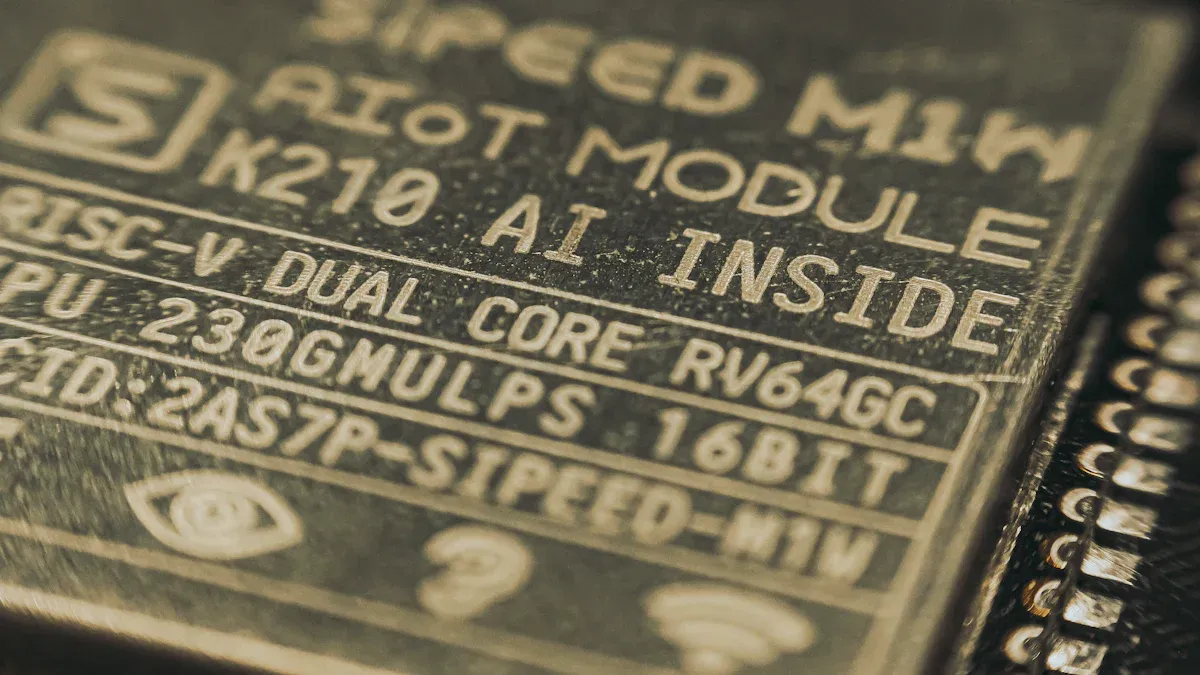
Integrated circuits (ICs) are crucial for better signal processing. Sensors gather raw data, but this data often has errors or noise. ICs clean up the data, removing noise and improving accuracy. This makes the information more reliable and useful.
For example, ICs help handle uncertain environments by improving data clarity. They make it easier to measure and understand complex situations. This is why ICs are important for tasks like medical tests or factory machines.
ICs improve signal quality and reduce noise for better results.
A study compared systems to show how ICs help:
|
Metric |
Group A |
Group B |
|---|---|---|
|
Accuracy |
Good |
Good |
|
Energy Consumption |
Higher |
Lower |
|
N/A |
2.87% |
These findings show ICs boost performance while using less energy. This makes them essential for accurate sensing in modern systems.
Enabling Connectivity and Communication
Integrated circuits are key for connecting devices in sensing systems. They help sensors and devices share data smoothly. This is important for smart homes, self-driving cars, and industrial IoT. These systems need real-time communication to work well.
One new idea is ISAC, which combines sensing and communication. It uses the same system for both tasks, improving network performance. For example, in self-driving cars, ICs help vehicles talk to each other and their surroundings. This makes driving safer and more efficient.
|
Key Aspect |
Description |
|---|---|
|
Integration |
|
|
Network Performance |
Improves coordination for smart cities and other uses. |
|
Cost Efficiency |
Cuts costs by reducing separate systems. |
|
Application |
Supports AR/VR and other connected technologies. |
By improving connections, ICs help systems work better and inspire new ideas. They are shaping the future of technology.
Supporting AI and Machine Learning in Sensing
Integrated circuits are vital for AI and machine learning in sensors. These tools need ICs to handle large amounts of data quickly. AI-powered sensors can study data and make decisions without human help.
For example, machine learning makes sensors much more accurate. Studies show methods like decision trees and CNNs can detect pressure with over 99% accuracy. CNNs trained with 100 data points had a mean error of 0.12, proving their success in real-world tasks.
This high level of accuracy is possible because of ICs. They give the power needed for AI to work well. Whether it’s tracking weather or running robots, ICs are the foundation of these smart systems.
Benefits of Integrated Circuits in Intelligent Sensing
Miniaturization and Compact Design
Integrated circuits have changed how small sensing devices can be. They combine many functions into one chip, making sensors smaller. This allows sensors to fit into wearables, phones, and medical implants. For example, on-chip spectral sensing achieves ~2.45-nm accuracy and measures just 5 μm by 5 μm.
Smaller designs save space and make devices easier to carry. Think of a health wearable that tracks your heart rate and oxygen levels. It feels light and not bulky because of integrated circuits. These chips combine sensing, processing, and communication in one small unit. This means advanced technology can fit into lightweight, user-friendly devices.
Tip: Tiny sensors with integrated circuits work well in tight spaces, like drones or IoT gadgets.
Energy Efficiency and Power Optimization
Saving energy is very important for modern sensing devices, especially battery-powered ones. Integrated circuits help sensors use less power and last longer without recharging. For instance, the Edge TPU ASIC is about 23.6 times more energy-efficient than other CPUs and GPUs.
Integrated circuits also manage power better. Tools like Powersmiths RPP handle growing power needs while saving space. Systems like DIRIS Digiware BCM track power use and find wasteful loads. This helps meet energy-saving goals and reduces wasted power.
By lowering energy use, integrated circuits help sensors run longer. This is crucial for IoT devices, which often work in faraway places. With ICs, devices last longer and cost less to operate.
Real-Time Data Processing and Noise Reduction
Integrated circuits help sensors process data fast and cut down noise. They make sure sensors give accurate results without delays. For example, wearable ECG devices use ICs to check heart signals instantly and give quick feedback.
Advanced techniques like pipelining improve digital signal processing (DSP) circuits. These methods remove noise and make sensor data clearer. A new study showed a special electrode with deep learning that cancels noise in real time. This shows how ICs adapt to changing environments.
|
Key Findings |
Description |
|---|---|
|
Real-time processing |
Fast data handling for devices like wearable ECGs. |
|
Filter design techniques |
Better DSP circuits to reduce noise and improve clarity. |
|
Future applications |
Expanding to handle more disturbances in sensing systems. |
With integrated circuits, sensors give clear and reliable data, even in tough conditions. This is critical for things like medical tests, where speed and accuracy are vital.
Applications of Intelligent Sensing Powered by Integrated Circuits

Healthcare: Wearables and Diagnostics
Integrated circuits have changed healthcare with smart wearables and tools. These devices track vital signs like breathing and blood pressure. They give instant feedback, helping patients recover faster and get better care. For example, the ePhysio system lets doctors monitor patients remotely and coach them online.
Wearable sensors, like MEMS-based ones, are small, reliable, and use little power. They use AI to collect data instantly, making them useful for healthcare, environment checks, and smart cities. Studies show wearables are 97% accurate in tracking activities and 88% in spotting exercise moves. This makes them better than older healthcare tools.
Note: Wearable sensors also help predict health outcomes. About 22.3% of studies link wearable data to clinical results.
Automotive: Self-Driving Cars and ADAS
Integrated circuits are key in cars, especially self-driving ones and ADAS. These systems use sensors to spot obstacles, check surroundings, and keep people safe. ICs help cars share data quickly, improving decisions and cutting accidents.
For instance, tactile sensors like the STAG glove, with 584 sensors, can feel objects and guess their weight. This inspires better car sensing, where accuracy is crucial. ICs also work with AI, letting cars handle lots of data and adjust to changing roads.
Tip: Intelligent sensing with ICs boosts safety, bringing self-driving cars closer to reality.
IoT: Smart Homes and Connected Devices
Integrated circuits improve IoT by making smart homes and devices work better. ICs speed up data sharing and support networks like 4G and 5G. This helps devices use new wireless tech for better performance.
In smart homes, ICs power sensors that track temperature, motion, and energy use. They help devices talk to each other, making homes more automated and efficient. For example, stretchy circuits improve wearables, adding high-quality sensing for smart homes.
Callout: Integrated circuits make IoT devices smarter and more dependable.
Industrial Automation: Robotics and Predictive Maintenance
Factories now use automation to work better and faster. Two important areas are robotics and predictive maintenance, both powered by integrated circuits. These tools make work safer and more efficient.
Robots with smart sensors can do tasks very accurately. For example, robotic arms in factories can find object positions and move correctly. Integrated circuits help these sensors process data quickly. This ensures smooth and error-free operations. Fewer mistakes mean higher productivity.
Predictive maintenance is also very helpful. Instead of waiting for machines to break, sensors check their condition all the time. They gather data like temperature and vibrations. Integrated circuits study this data to predict when repairs are needed. Fixing machines early saves both time and money.
One example is wind turbines. Sensors watch how blades and motors are working. If there’s a problem, the system warns workers to fix it before it gets worse. This method improves efficiency and helps machines last longer.
Tip: Predictive maintenance can cut unexpected machine stops by half, saving costs.
By using robotics and predictive maintenance, factories become more efficient. Integrated circuits make real-time decisions possible. As industries adopt these tools, they become stronger and more eco-friendly.
Integrated circuits help smart sensing systems in many industries. They are important for accurate results, saving energy, and working fast. Their small size and low power use make them key for modern tools. For instance, in healthcare, they help sensors check blood sugar levels correctly. In farming, systems with integrated circuits track gases to grow better crops. Environmental tools also use real-time data to improve health and safety.
|
Area of Use |
Key Benefits |
|---|---|
|
Farming |
Low-power systems track greenhouse gases to boost crop growth. |
|
Healthcare |
Sensors measure chemicals like glucose for better monitoring. |
|
Environment |
Real-time systems collect data to improve health and awareness. |
As technology gets better, integrated circuits will keep improving sensing systems. They will change industries and make life better for everyone.
FAQ
What are integrated circuits, and why are they important for sensing systems?
Integrated circuits (ICs) are small chips with many electronic parts. They help sensors process data, remove errors, and share information. ICs make sensors smarter, quicker, and use less energy. This is important for things like healthcare, smart devices, and automation.
How do integrated circuits improve energy efficiency in sensors?
ICs save energy by controlling power use and cutting waste. They let sensors work longer on batteries, which is great for portable devices. For example, ICs in wearables help them last longer without needing frequent charging.
Can integrated circuits handle real-time data processing?
Yes, ICs can process data instantly using advanced methods like pipelining. This helps sensors give fast and accurate results. For instance, wearable ECG devices use ICs to check heart signals and give quick updates.
What role do ICs play in AI-powered sensing systems?
ICs give the power needed for AI to work in sensors. They help AI models study data and make decisions on their own. This makes AI sensors very accurate and useful in robots and environmental tools.
Are integrated circuits suitable for small devices like wearables?
Yes! ICs are made to be small and efficient. They combine many features into one chip, making them great for tiny devices. For example, ICs in fitness trackers monitor health while staying light and easy to wear.
Tip: Integrated circuits are key to modern sensing. They offer great performance in small, energy-saving designs.