VRM Selection for High-Performance Computing
A quality voltage regulator module is crucial for high-performance computing. The VRM provides clean, stable power
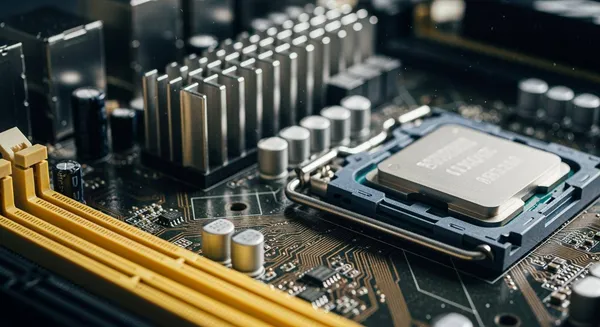
A quality voltage regulator module is crucial for high-performance computing. The VRM provides clean, stable power delivery to the CPU. This prevents performance throttling and ensures system longevity. In fact, some system builders report fewer hardware failures with strict voltage regulation, highlighting the importance of managing power. This guide explains the key technical aspects of a voltage regulator, helping users choose a VRM that guarantees stability and unlocks maximum performance through proper voltage regulation.
Key Takeaways
- A good Voltage Regulator Module (VRM) gives steady power to your computer's main chip. This stops your computer from slowing down and helps it last longer.
- VRMs have parts like MOSFETs, chokes, and capacitors. High-quality parts make the VRM work better and keep your computer stable.
- More power phases in a VRM help spread out the work. This means the VRM stays cooler and delivers power more smoothly.
- VRMs get hot, so good cooling is very important. Large heatsinks and good airflow keep the VRM from overheating and protect your computer.
- When choosing a VRM, match its power to your CPU. Also, check the quality of its parts and how well it cools itself. This ensures your computer runs its best.
What is a Voltage Regulator Module?
A voltage regulator module (VRM) is a critical component on a motherboard. It functions as a sophisticated DC-to-DC converter. Its job is to take the +12V power supplied by the computer's power supply unit (PSU) and convert it into the much lower, precise voltage that the CPU requires to operate, typically between 1.0V and 1.5V. This process ensures the processor receives a steady and clean power source.
The Core Function: Precise Voltage Regulation
The primary role of a voltage regulator is to execute precise voltage regulation. Modern CPUs are incredibly sensitive to their power source. Even minor deviations can lead to system instability or calculation errors. The VRM uses a combination of components, including integrated circuit regulators and switch-mode power supplies, to manage this conversion. This system ensures the voltage regulation remains stable under all conditions. The converter must deliver the exact voltage requested by the CPU, making accurate voltage regulation a non-negotiable function. A quality VRM performs this voltage regulation flawlessly, providing a foundation for system performance and reliability.
Why HPC Demands a Superior VRM
High-performance computing (HPC) places extreme demands on a system's power management. Tasks like AI simulations and video rendering cause rapid, significant changes in power consumption. The operating system adjusts the CPU's frequency and voltage to handle these loads, creating sudden power spikes. These transient loads can cause voltage fluctuations if not managed properly.
A superior VRM is essential because it can respond to these demands instantly. It ensures the voltage regulation remains constant, preventing performance throttling or system crashes. For high-performance chips, this immediate response is critical.
Companies operating in this sector, such as Nova Technology Company (HK) Limited, a HiSilicon-designated solutions partner, rely on stable platforms to develop and deploy high-performance solutions. The entire ecosystem for high-performance chips depends on excellent voltage regulation. A robust voltage regulator module acts as the first line of defense, using its advanced converter design to smooth out power delivery and maintain perfect voltage regulation for the CPU. This is why a powerful VRM is not a luxury but a necessity for any serious HPC build.
VRM Components and Quality Markers
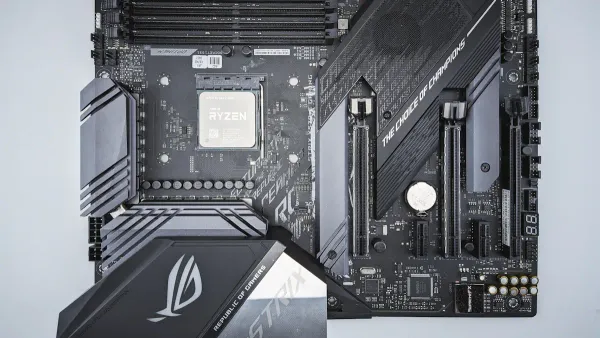
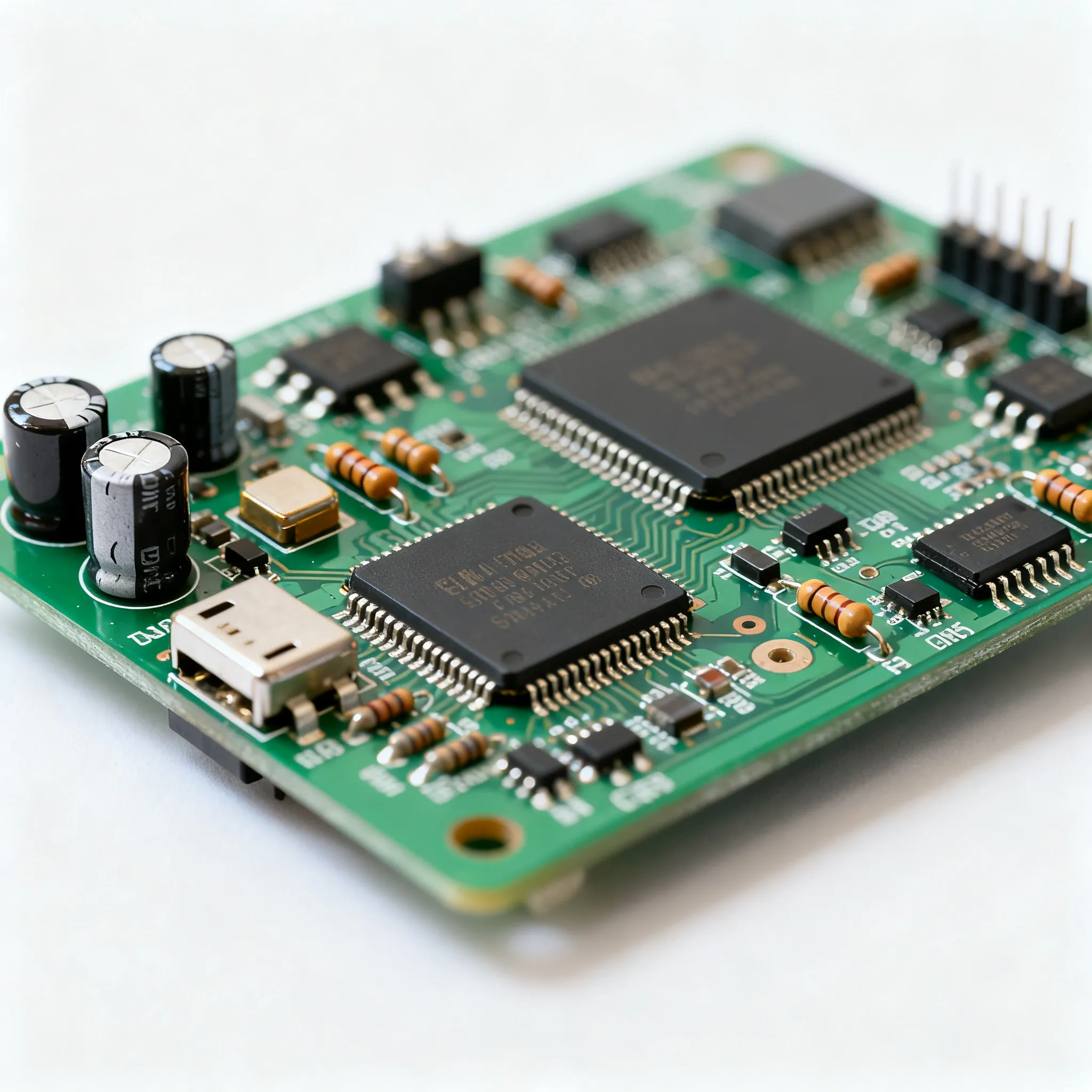
A voltage regulator module is a system of interconnected parts. The quality of these individual components directly impacts the VRM's performance, efficiency, and lifespan. High-end motherboards use superior components to ensure flawless voltage regulation, especially under heavy loads. Understanding these parts helps users identify a robust VRM.
MOSFETs: The Power Switching Gates
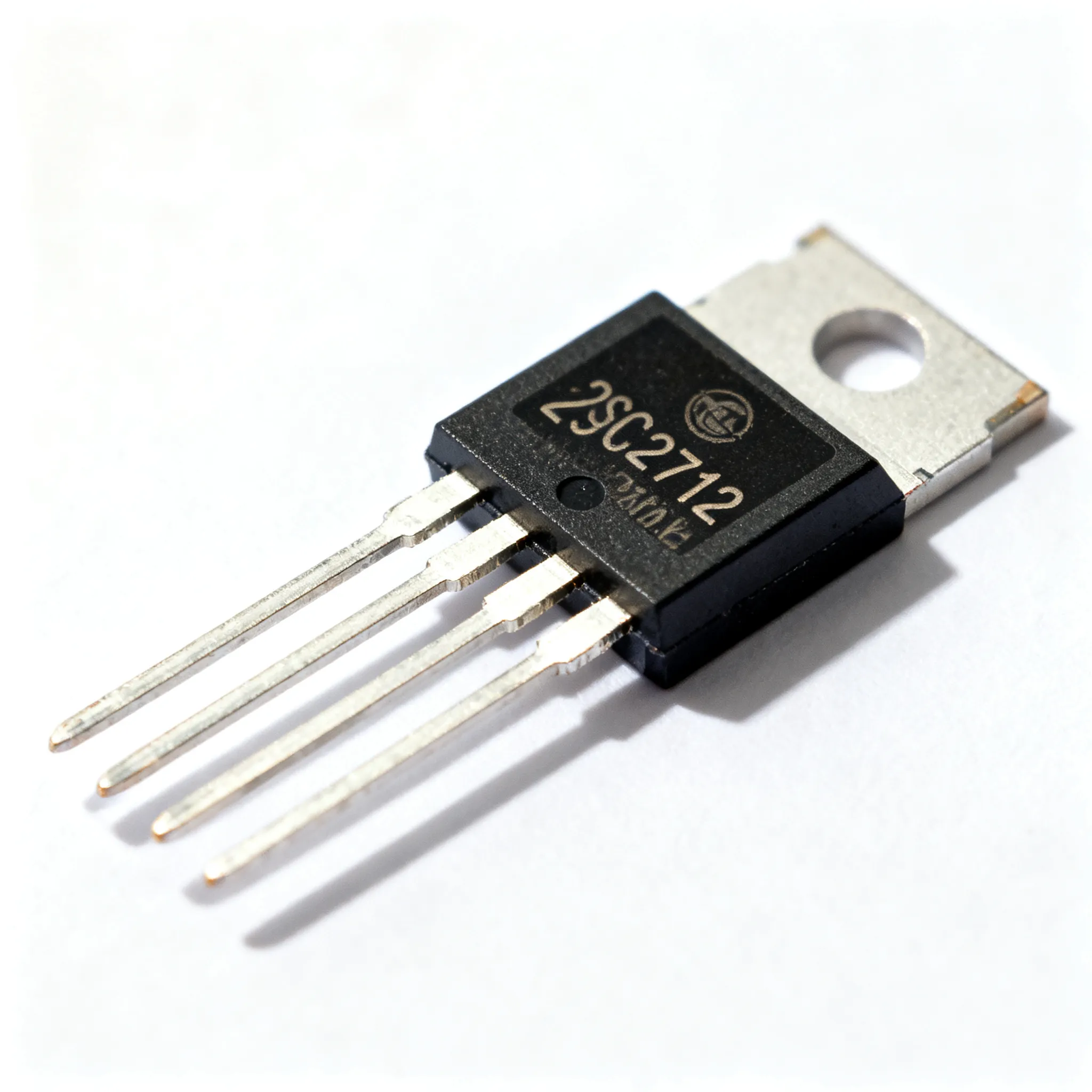
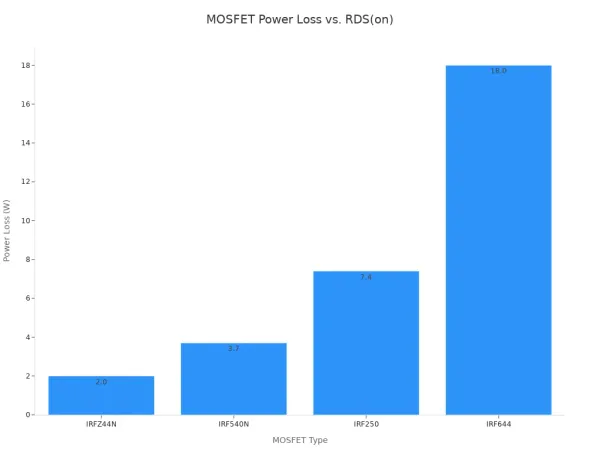
MOSFETs (Metal-Oxide-Semiconductor Field-Effect Transistors) are the fundamental switches in the VRM. They rapidly turn on and off to control the flow of power to the CPU. A key quality metric for a MOSFET is its resistance, or RDS(on).
A lower
RDS(on)value means the MOSFET generates less heat and wastes less power. This improves the converter's overall efficiency. The power loss is calculated asP = I² × RDS(on), so even a small reduction in resistance significantly cuts down on heat.
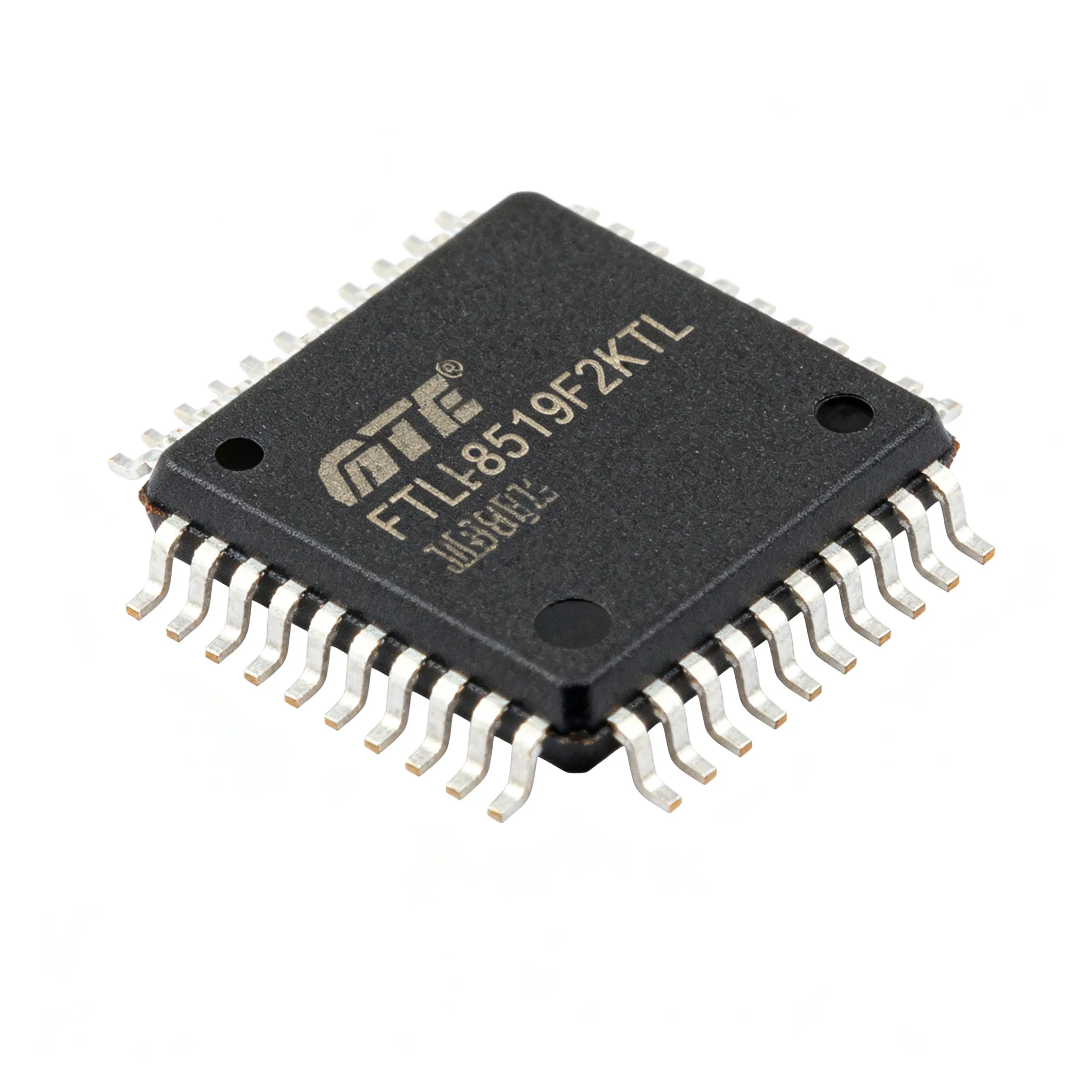
Modern motherboards often use DrMOS (Driver + MOSFET) solutions. These are integrated circuit regulators that combine the MOSFETs and their driver into a single package. This design offers higher efficiency, a smaller footprint, and better thermal performance than traditional discrete components, making the converter more effective at its job of voltage regulation.
Chokes and Inductors: Smoothing the Current
After the MOSFETs switch the power, the current is choppy. Chokes, a type of inductor, smooth out this current. They store energy in a magnetic field and release it to create a steady, clean flow of power for the CPU. This step is vital for proper voltage regulation. High-quality chokes typically use two main materials:
- A thick copper wire for the coil.
- A solid ferrite core that the wire wraps around.
These components help prevent "coil whine" and minimize power loss, contributing to better voltage regulation and a more stable system. A good converter design always includes quality chokes.
Capacitors: The Voltage Stability Reservoir
Capacitors are the final stage in the VRM's power delivery. They act like tiny, fast-acting reservoirs, storing electrical charge. When the CPU's power demand suddenly spikes, the capacitors instantly release their stored energy. This action prevents voltage fluctuations and ensures the CPU receives constant power. This function is the last step in achieving perfect voltage regulation. For long-term stability and reliable operation, look for motherboards with high-endurance solid capacitors. Components like Japanese 10K-rated capacitors are designed to withstand high temperatures and stress for thousands of hours, ensuring the switch-mode power supplies and the entire voltage regulator provide excellent voltage regulation for years.
Power Phase Design and Delivery
The design of a VRM's power phases directly controls its ability to deliver stable power. A phase is a single power-regulating circuit, and modern motherboards use multiple phases working together. This multi-phase system is the core of the VRM's power management strategy.
Understanding Power Phases
A multi-phase voltage regulator module distributes the electrical load by using several circuits in parallel. Each phase handles a part of the total current. The system works like a team, with each phase taking turns to supply power. This "round-robin" approach ensures that only one phase is actively working at any single moment while the others rest or discharge. This distribution shares the workload across all components. A converter with more phases can deliver cleaner power with less stress on individual parts. This results in cooler operation and better voltage regulation.
True Phases vs. Phase Doublers
Motherboard manufacturers use two main designs for their phases: true phases and doubled phases.
- True Phase: Each phase receives its own independent signal from the controller. This is the most effective design for performance.
- Doubled Phase: A "phase doubler" takes one signal and splits it to run two separate phase circuits.
While this technique allows manufacturers to advertise a higher phase count, it is not as efficient as a true phase design. For example, a doubler might split a 300kHz signal into two 150kHz signals. This division can slow down the converter's response time to sudden changes in power demand, impacting the quality of voltage regulation.
How Many Phases Do You Need?
The ideal number of phases depends on the CPU's power requirements and intended use, such as overclocking. A more powerful CPU requires a more robust VRM to ensure stable voltage regulation. A good converter provides the necessary power without overheating.
Here is a general guide for matching a VRM to your CPU:
| CPU Tier | Use Case | Recommended CPU Phases |
|---|---|---|
| High-End (i9/Ryzen 9) | Standard Use & Overclocking | 14 to 18 phases |
| High-End (i9/Ryzen 9) | Extreme Overclocking | 20+ phases |
| Mid-Range (i5/Ryzen 5) | Standard High-Performance | 10 to 12 phases |
Ultimately, a quality voltage regulator is about balance. While a higher phase count is generally better, component quality is just as important for excellent voltage regulation.
VRM Thermals and Cooling Solutions
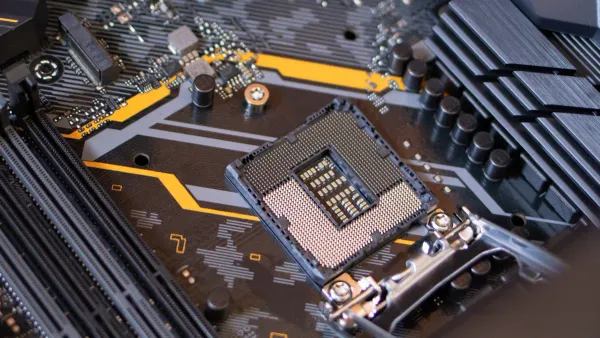
A VRM's components generate significant heat while converting power. Managing this heat is essential for system stability and component lifespan. An effective cooling solution ensures the voltage regulator module operates within safe temperature limits, which directly impacts its performance and efficiency.
VRM Heatsinks and Heat Dissipation
Heatsinks are the primary tool for managing VRM temperatures. These metal blocks, often made of aluminum, sit directly on top of the hot MOSFETs and chokes. They work by absorbing heat from the components. The heatsink then dissipates this heat into the surrounding air.
High-quality motherboards feature large, heavy heatsinks with many fins. The fins increase the total surface area, allowing the heatsink to transfer heat to the air more effectively. This passive cooling method is critical for maintaining the vrm's long-term health and operational efficiency.
The Role of Thermal Pads
Thermal pads are soft, conductive materials placed between the VRM components and the heatsink. They fill microscopic air gaps to ensure a solid thermal connection. This is important because VRM components often have uneven heights. The pad conforms to these surfaces, creating a complete contact patch for heat transfer.
A key metric for a thermal pad is its thermal conductivity, measured in Watts per meter-Kelvin (W/mK). A higher value indicates better heat transfer. System builders can choose a pad based on the system's power needs:
- Low Power: 3-6 W/mK pads are suitable.
- Medium Power: 8-12 W/mK pads are recommended.
- Extreme Power: 15-18 W/mK pads offer the best performance.
System Airflow and VRM Temperatures
A heatsink alone cannot cool the VRM effectively. It needs airflow to carry the dissipated heat away from the motherboard. Good system airflow is a crucial part of the cooling equation. Case fans positioned to blow air across the motherboard's CPU socket area help cool the heatsinks directly. Without this active airflow, heat would build up around the components. This would reduce the cooling solution's effectiveness and could lead to thermal throttling. Proper airflow ensures the entire cooling system works at peak performance.
Checklist for Evaluating Voltage Regulator Modules
Selecting the right motherboard requires a careful evaluation of its voltage regulator modules. This checklist provides a four-step process to analyze a VRM. It helps users make an informed decision based on technical specifications and real-world performance data. The most reliable method involves consulting professional reviews that conduct detailed VRM thermal testing under heavy loads.
Step 1: Match VRM to CPU Power Draw
The first step is to match the VRM's capability to the CPU's power requirements. High-performance CPUs can draw a significant amount of power, especially under full load or when overclocked. The VRM must be able to handle this demand without overheating or becoming unstable. A CPU's peak power draw is often specified as PL2 (Power Limit 2) for Intel or PPT (Package Power Tracking) for AMD.
Modern high-end processors have substantial power needs. A robust VRM ensures the system can deliver this power consistently, which is essential for achieving maximum performance. The table below shows the peak power draw for several popular high-end CPUs.
| Processor | Power Draw (PL2/PPT) |
|---|---|
| AMD Ryzen 9 9950X (Unlimited PPT) | 320W |
| Intel Core i9-14900K | 253W MTP (PL2) |
| AMD Ryzen 9 9950X (253W PPT / 5.5 GHz OC) | 253W |
| Intel Core i9-13900K | 253W MTP (PL2) |
| Intel Core i9-12900K | 241W MTP (PL2) |
| AMD Ryzen 9 9950X (230W PPT) | 230W |
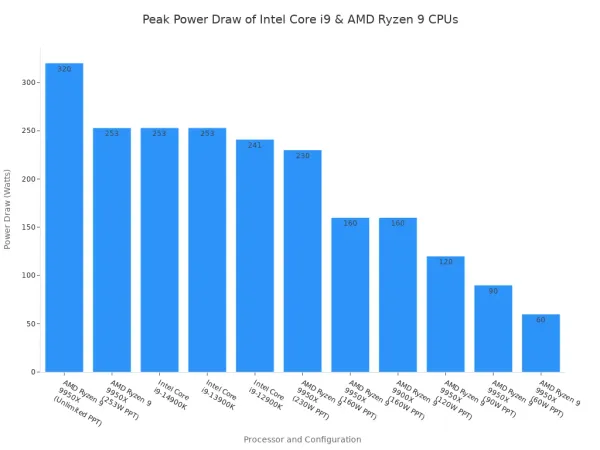
A system builder must select a motherboard with a voltage regulator module capable of sustaining these power levels for extended periods. This ensures stable voltage regulation during demanding tasks.
Step 2: Analyze the Phase Design
Next, a user should analyze the VRM's phase design. As discussed, more phases generally lead to cleaner power and better thermal distribution. However, manufacturers sometimes use marketing tactics that can be misleading.
It is challenging to distinguish between a true phase design and a doubled phase design from manufacturer specifications alone. Some brands advertise high phase counts by simply doubling components, which does not offer the same performance or efficiency benefits as a true multi-phase design. The number of chokes is not always a reliable indicator.
For practical purposes, users can follow these general guidelines for matching a phase design to their CPU:
- High-End CPUs (Core i9/Ryzen 9): A robust 12+ phase design is recommended for overclocking and sustained heavy workloads. This ensures excellent voltage regulation.
- Mid-Range CPUs (Core i7/Ryzen 7): A 10 to 12 phase vrm is typically sufficient for standard use and moderate overclocking.
- Entry-Level CPUs (Core i5/Ryzen 5): An 8 to 10 phase design provides adequate power for most high-performance tasks.
Ultimately, the quality of the phase design is more important than the advertised count. This makes independent verification crucial for proper voltage regulation.
Step 3: Verify Component Quality
Verifying the quality of VRM components is difficult without expert knowledge. The best approach is to rely on professional hardware reviewers who perform in-depth analysis. These experts dissect motherboards to identify the exact components used and assess their quality.
Users can find this information from several sources:
- Technical Review Sites: Websites and YouTube channels like Hardware Unboxed conduct extensive testing on motherboard power draw limits, which are directly tied to VRM quality.
- In-Depth Forum Threads: Enthusiast communities often have detailed discussions. For example, forums like
xtremesystems.orghave hosted threads with deep-dive VRM analysis, revealing the true quality of the voltage regulator modules. - Written Reviews: Detailed written reviews often confirm if a CPU can maintain its boost clocks on a specific board. This performance is a direct result of the VRM's ability to provide stable voltage regulation.
These resources help buyers look past marketing claims and understand the real-world performance and reliability of a motherboard's power management system.
Step 4: Assess the Cooling Solution
The final step is to assess the VRM's cooling solution. Even a vrm with high-quality components and a strong phase design will fail if it overheats. The cooling system's effectiveness is a direct indicator of the board's engineering quality and its suitability for high-performance computing.
Professional reviews often include VRM thermal tests. In these tests, an overclocked CPU runs at full load for an extended period, and thermocouples measure the temperature of the MOSFETs and the PCB. The results reveal how well the heatsinks and airflow manage heat. For example, tests on X570 motherboards with a Ryzen 9 3900X drawing nearly 200W showed significant temperature differences.
| Motherboard | Max MOSFET Temp (°C) (Normalized to 25°C ambient) | Rear PCB Temp (°C) |
|---|---|---|
| ASUS TUF Gaming X570-Plus Wi-Fi | 66 | N/A |
| Gigabyte X570 Aorus Elite | 67 | ~70 |
| ASRock X570 Steel Legend | 73 | ~85 |
| MSI MPG X570 Gaming Edge WiFi | 80 | >105 |
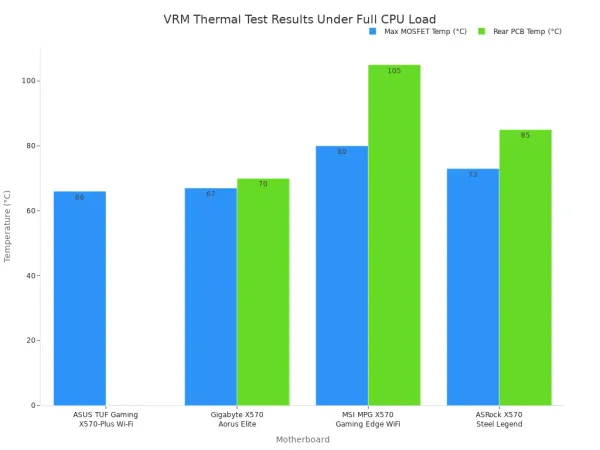
As the data shows, some motherboards run much hotter than others under the same conditions. A lower temperature indicates better design and higher efficiency. A capable voltage regulator with a superior cooling solution will ensure long-term stability and protect the CPU investment.
A high-quality VRM is a non-negotiable foundation for any high-performance computer, defined by its strong phase design and effective cooling. Proper power management is an investment in CPU protection and unlocking maximum performance. A superior VRM ensures stable power delivery, which is critical for preventing crashes during demanding tasks like overclocking. This allows the system to achieve its peak performance and maintain stability, safeguarding the entire platform from damage.
FAQ
What is VRM coil whine?
Coil whine is a high-pitched noise from the VRM's chokes. It happens when the chokes vibrate at a high frequency. This vibration occurs as electricity passes through them. While usually harmless, high-quality chokes with solid cores can prevent or reduce this annoying sound.
How hot is too hot for a VRM? (fire emoji)
Most VRM components operate safely up to 100-125°C. However, cooler is always better for system longevity and stability.
A good target for a VRM under heavy load is below 85°C. Exceeding this temperature regularly can shorten the lifespan of the motherboard and impact performance.
Does VRM matter if a user does not overclock?
Yes, a good VRM is still important. High-performance CPUs have high power demands even at stock speeds. A quality VRM ensures the CPU receives stable power for demanding tasks like gaming or rendering. This prevents performance throttling and improves overall system stability.
Does the PSU quality affect the VRM?
Yes, a high-quality Power Supply Unit (PSU) is essential. The PSU provides the initial +12V power to the VRM. A poor-quality PSU can deliver "dirty" or unstable power. This forces the VRM to work harder, increasing its temperature and potentially reducing its lifespan.