What Role Does the Motor Stator Play in Advanced Electronics
The motor stator generates a magnetic field, enabling efficient energy conversion and reliability in advanced electronics and electric motor systems.
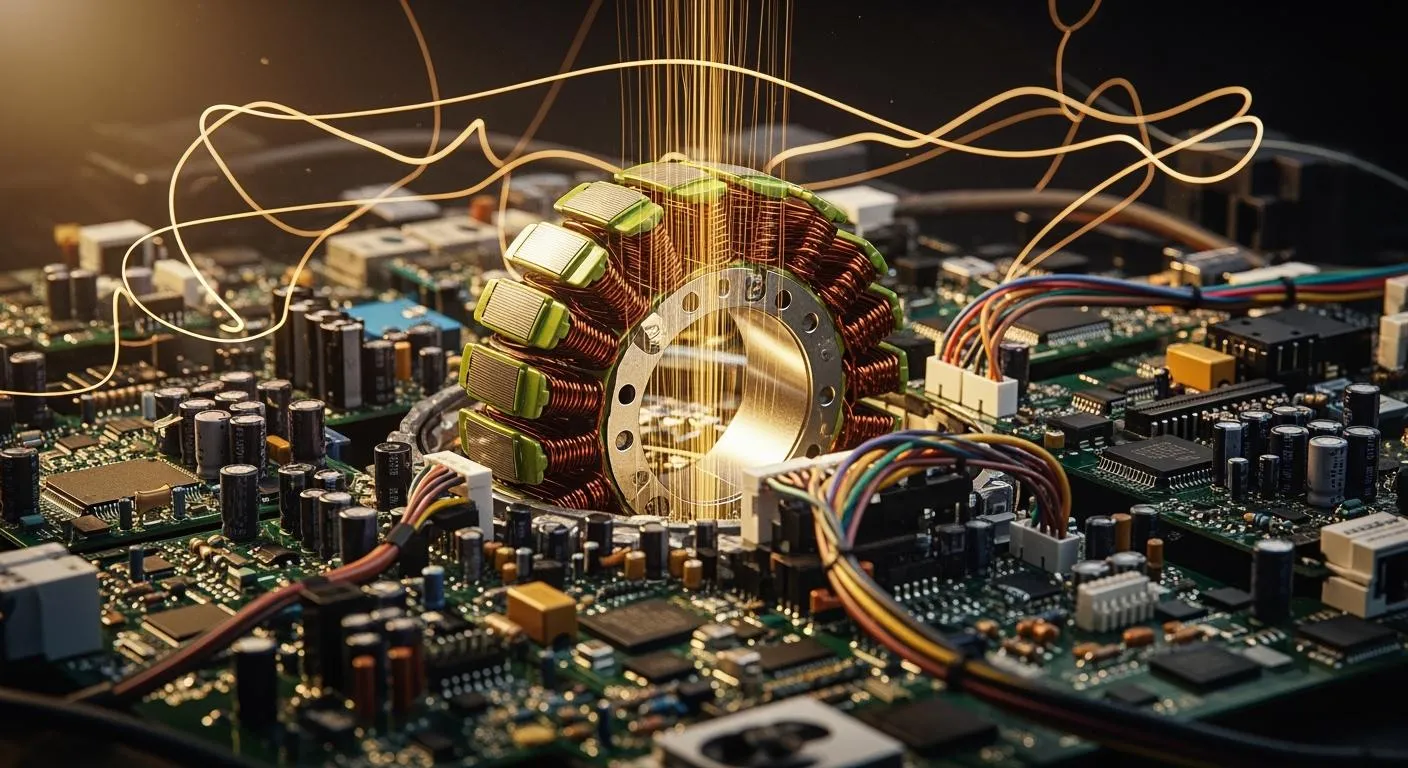
You rely on the motor stator every time you use modern electronics. The stator generates a magnetic field and converts electrical energy into mechanical motion, forming the core of every electric motor. Improvements in stator design drive greater efficiency and reliability in today’s technology. For example, engineers use advanced materials and precise manufacturing to reduce energy loss and extend motor life:
| Design Feature | Effect on Efficiency and Reliability |
|---|---|
| Amorphous steel, nanocrystalline alloys | Higher efficiency, lower energy cost |
| Improved thermal conductivity | Better temperature control, longer stator lifespan |
| Automated winding | Consistent performance, fewer errors |
| Engineered to minimize energy losses | Reduced energy consumption, more sustainable technology |
Key Takeaways
- The motor stator is essential for converting electrical energy into mechanical motion, forming the core of electric motors.
- Advanced materials and manufacturing techniques enhance stator efficiency, reduce energy loss, and extend motor lifespan.
- Effective cooling methods, like hydrogen and water cooling, are crucial for maintaining optimal performance in high-efficiency motors.
- Stators play a vital role in various applications, including electric vehicles, industrial automation, and smart devices, driving innovation and efficiency.
- Regular maintenance and monitoring of stators can prevent issues like overheating and extend the lifespan of electric motors.
How a Motor Stator Works

Understanding how a stator works helps you see why it is so important in advanced electronics. The stator forms the stationary part of an electric motor and serves as the foundation for generating motion and power. You will find that the structure of a stator, the way it creates a magnetic field, and its interaction with the rotor all play key roles in how electric motors operate.
Stator Structure and Main Components
You can break down the structure of a stator into three main parts: the frame, the stator core, and the stator winding. Each part has a specific job that supports the overall function of the motor.
- The frame holds everything together and provides mechanical support.
- The stator core, made from laminated steel sheets, allows magnetic flux to pass through and acts as an inductor in the circuit.
- The stator winding consists of coils of wire wrapped around the core. When current flows through these coils, they create a magnetic field.
The stator stays fixed in place, acting as the magnetic pole inside the motor. Its size and design can change depending on the types of stators used in different electric motors. Some stators use advanced materials to improve efficiency, while others focus on compact size for smaller devices. You will see that the structure of a stator can vary, but its main purpose remains the same: to create a magnetic field and support the rotor.
Tip: The difference between stator and rotor is simple. The stator does not move, while the rotor spins inside the stator. Both parts must work together for the motor to function.
Magnetic Field and Energy Conversion
When you supply electrical current to the stator winding, the stator creates a magnetic field. This field interacts with the rotor, which sits inside the stator. In most electric motors, the stator consists of stationary coils or windings that generate a rotating magnetic field when powered by alternating current (AC). This rotating field pushes against the rotor, causing it to spin and produce motion.
Here is how a stator works to convert electrical energy into mechanical energy:
- The stator acts as an electromagnet when you connect it to an AC power source.
- The rotating magnetic field induces an electromotive force (EMF) in the rotor through electromagnetic induction.
- This EMF drives current through the rotor, resulting in torque and mechanical motion.
You will find different types of stators in electric motors, such as those used in induction motors and those paired with permanent magnet rotors. The arrangement of the stator winding and the control of the magnetic field affect the efficiency and performance of the motor. Some types of stators use printed circuit boards (PCBs) for precise control, while others use traditional wire windings.
The structure of a stator also allows it to work in fluid-driven devices, such as pumps and compressors. In these cases, the stator creates a magnetic field that interacts with the moving parts of the device, showing the versatility of stator technology.
You can summarize the main types of stators and their uses in the table below:
| Types of Stators | Main Application | Key Feature |
|---|---|---|
| Laminated steel stators | Industrial electric motors | High efficiency, low energy loss |
| PCB stators | Consumer electronics | Compact size, precise control |
| Fluid-driven stators | Pumps, compressors | Versatile, supports non-motor uses |
| Permanent magnet stators | Robotics, EVs | Strong magnetic field, high torque |
The difference between stator and rotor becomes clear when you look at how each part works. The stator remains stationary and creates a magnetic field, while the rotor spins and delivers mechanical power. Both are essential for the operation of electric motors.
By understanding how a stator works, you gain insight into why the motor stator is so critical in advanced electronics. The structure of a stator, the types of stators available, and the way it can create a magnetic field all contribute to the ability of electric motors to convert electrical energy into useful motion.
Modern Stator Design Improvements
Advanced Materials and Manufacturing
You see rapid progress in stator technology because engineers use advanced materials and new production techniques. These modern stator design improvements help electric motors achieve higher efficiency and reliability. When you look at the advanced materials used in stators, you notice several key benefits:
- Amorphous steel and nanocrystalline alloys save energy and reduce operational costs.
- Enhanced magnetic properties and thermal conductivity boost performance and reliability.
- Composite materials, such as carbon-fiber-reinforced polymers, lower weight and improve fuel efficiency.
- Polymers, composites, and high-performance laminates increase durability, thermal resistance, and mechanical strength.
- Lightweight and highly permeable materials improve energy transfer efficiency and reduce system losses.
- Nanocomposite materials developed through nanotechnology offer excellent electrical and thermal conductivity, increasing power density and reducing losses.
You find that amorphous steel reduces core losses compared to traditional materials, which enhances efficiency in stator cores. Nanocrystalline alloys provide excellent magnetic properties and lower core losses, making them ideal for high-frequency applications. These advancements in stator technology allow you to design high efficiency electric motors for demanding environments.
Note: Nova Technology Company (HK) Limited stands out as a HiSilicon-designated solutions partner. You benefit from their expertise in chip-level solutions, system integration, and application scenarios across industrial automation, smart devices, and electric motor control. Their professional approach ensures seamless integration of stator technology with advanced semiconductor platforms.
When you consider factors to consider when designing a stator, you must evaluate material selection, manufacturing precision, and compatibility with rotor dynamics. New production techniques for stators, such as PCB stator technology, reduce material usage by 80% and eliminate iron cores. This leads to lower material costs and smaller manufacturing footprints. Streamlined production processes remove costly tooling requirements, enabling faster prototyping and simplified assembly. Automated manufacturing processes can reduce direct labor requirements by 40-60%, allowing for scalable production and improved yield rates.
Cooling Methods for Stators
You need effective cooling methods to maintain optimal performance in high-efficiency motors. Modern stator design improvements include advanced cooling solutions that support high efficiency electric motors. Hydrogen cooling offers superior thermal conductivity compared to traditional air cooling, achieving power densities of 1.2 to 1.5 MW per cubic meter. Water cooling, especially direct water cooling of stator windings, provides the highest heat removal rates and supports power densities exceeding 2.0 MW per cubic meter. This method minimizes thermal resistance through direct contact with the coolant, leading to substantial performance improvements.
You also see technological advancements in cooling methods that improve thermal management. Integration of smart sensors allows real-time temperature tracking, reducing the risk of overheating. Hybrid cooling solutions enhance efficiency and flexibility, contributing to longer operational lifespans. Advanced cooling systems maintain optimal operating temperatures under heavy loads. Specialized coolant flows prevent hotspots, ensuring uniform temperature distribution. These innovations extend component lifespan and enable higher power density operation.
Tip: When you design a stator, always consider cooling methods as a critical factor. Proper cooling increases efficiency and reliability, especially in high-performance applications.
Efficiency and Reliability Enhancements
You notice measurable improvements in efficiency and reliability due to modern stator design improvements. Engineers focus on reducing disturbance rejection, improving dynamic response, and minimizing torque ripple. The table below shows the impact of these enhancements:
| Improvement Metric | Percentage Improvement |
|---|---|
| Disturbance Rejection | 84% |
| Dynamic Response | 70% |
| Torque Ripple Reduction | 59% |
You achieve efficiency ratings exceeding 95% in advanced motor parts, which is crucial for high reliability applications. Sturdy design leads to prolonged operational durations, resulting in lower maintenance costs. Advanced motor control systems enable real-time adjustments, enhancing performance and reliability.
| Evidence Type | Description |
|---|---|
| Efficiency Ratings | Advanced motor parts can achieve efficiency ratings exceeding 95%. |
| Operational Durations | Sturdy design leads to prolonged operational durations, lowering maintenance costs. |
| Control Systems | Advanced motor control systems enable real-time adjustments. |
You see that advancements in stator technology drive energy efficiency and reliability in electric motors. These improvements allow you to build high-efficiency motors that operate longer, require less maintenance, and deliver consistent performance. When you evaluate factors to consider when designing a stator, you must prioritize material selection, cooling methods, and control systems to maximize efficiency and reliability.
Callout: Modern stator design improvements set the foundation for next-generation electric motors. You benefit from reduced energy consumption, lower operational costs, and enhanced reliability in every application.
Applications of a Stator in Advanced Electronics

You see the stator at the heart of many advanced electronics. Its design shapes how electric motors perform in different fields. Let’s look at the main applications of a stator and how it drives innovation.
Electric Vehicles and Mobility
You find electric vehicles, e-bikes, and scooters rely on the stator for efficient and reliable motion. The stator works with the rotor to generate the torque that moves the vehicle. In electric vehicles, the stator creates a rotating electromagnetic field, which interacts with the rotor to produce motion. High-efficiency windings and advanced materials reduce energy loss and boost performance. Optimized stator design allows for lighter motors with higher power density. Advanced cooling methods keep the motor running at the right temperature, improving reliability.
| Application of Stators in EVs | Contribution to Performance |
|---|---|
| Generates rotating electromagnetic field | Produces torque for vehicle propulsion |
| Converts electrical to mechanical energy | Drives the vehicle's wheels |
| High-efficiency windings and materials | Reduces energy losses, enhancing efficiency |
| Optimized design | Improves power density, allowing for lighter motors |
| Advanced cooling methods | Maintains optimal operating temperatures |
In e-bikes and scooters, the stator’s three-phase windings create a strong magnetic field. This design achieves 85-90% efficiency, which is crucial for battery-powered mobility. High torque-to-weight ratios make these vehicles fast and responsive. You benefit from lower costs and better performance thanks to stator technology.
Industrial Automation and Robotics
You see stators powering electric motors in factories, robots, and automated systems. Stator winding machines automate the coiling of wires, which ensures consistent electrical performance. Advanced models use CNC controls for precise winding patterns, reducing errors and improving repeatability. These machines handle different stator sizes, making production flexible.
- Stators drive machines, conveyor belts, pumps, and robots.
- They provide steady, controlled motion for accuracy and reliability.
- Robotic winding machines improve productivity and product quality.
- Integrated servo motors use adaptive motion control for better performance.
- Compact designs allow for smaller, lighter robotic arms.
You notice that stator innovations lead to higher power density and better thermal management. This means robotic arms and automated machinery can work faster and last longer.
Consumer and Smart Devices
You find stators in many smart devices, such as wearables and home appliances. Innovations in stator design, like advanced winding techniques, help reduce motor size. This miniaturization is key for compact devices. Optimized coil configurations improve energy efficiency, which extends battery life in wearables.
| Evidence Type | Description |
|---|---|
| Stator Design Impact | Advanced winding techniques reduce motor size. |
| Energy Efficiency | Optimized coils boost performance and efficiency. |
| Application Relevance | Essential for compact devices like wearables. |
You see that stator technology enables smaller, more efficient electric motors. This drives the development of new smart devices and improves the user experience.
Tip: The applications of a stator reach across many industries. You benefit from better performance, higher efficiency, and more reliable products in your daily life.
Stator Challenges and Solutions
Common Issues in Modern Applications
You face several challenges when using stators in advanced electronics. High temperatures can cause insulation breakdown in the windings. This leads to reduced efficiency and possible failure of the electric motor. Vibration and mechanical stress may damage the stator core or loosen the windings. You also see that dust, moisture, and chemical exposure can corrode the materials and shorten the lifespan of the stator.
Another issue is energy loss. When the stator operates at high speeds, it can generate heat and waste energy. This affects the overall performance of the motor stator. In some cases, electromagnetic interference disrupts the control systems in sensitive devices. You must also consider the challenge of miniaturization. As devices get smaller, you need stator technology that fits tight spaces without losing power or reliability.
Tip: Regular maintenance and monitoring help you detect early signs of wear or overheating in stators. This can prevent costly repairs and downtime.
Innovations for Longevity and Performance
You benefit from new solutions that address these challenges. Engineers use advanced materials with better thermal and electrical properties. These materials resist heat and corrosion, which extends the life of the stator. Improved winding techniques reduce vibration and make the stator more stable during operation.
Recent advancements in stator technology include the xLC® Stator Adjustment System. This system increases the lifespan of stators in NEMO® Progressing Cavity Pumps by more than three times. It also supports sustainability by reducing waste and promoting responsible resource use. You see that smart sensors now track temperature and vibration in real time. This allows you to make quick adjustments and avoid damage.
Manufacturers design cooling systems that remove heat more efficiently. This keeps the electric motor running at optimal temperatures. You also find that new stator technology supports higher power density, which means you get more performance from a smaller package.
🛠️ Callout: By adopting these innovations, you improve the reliability and efficiency of your devices. You also help protect the environment by using resources more wisely.
You see the motor stator as a key part of advanced electronics. Recent PCB stator technology boosts efficiency, saves energy, and supports a greener future. New designs using wide bandgap semiconductors improve power density and reliability, especially in cars and planes. Looking ahead, you will notice trends like better magnetic materials, smaller stator cores, and smarter manufacturing.
- The alternator stator market grows with demand for energy-efficient solutions.
- Electric and hybrid vehicles rely on high-efficiency stators.
Industry standards and certifications help new stator technologies reach global markets and build consumer trust.
FAQ
What is the main job of a motor stator?
You find that the stator creates a magnetic field. This field helps turn electrical energy into motion. The stator stays still while the rotor spins inside it.
How does stator design affect motor efficiency?
You get better efficiency with advanced materials and precise winding. Improved cooling and smart control systems also help. These features reduce energy loss and keep the motor running longer.
Can stators be used in small devices?
Yes! You see stators in wearables, smart home gadgets, and even tiny robots. Engineers use compact designs and PCB stators to fit small spaces.
What problems can happen with stators?
You may face overheating, vibration, or insulation breakdown. Dust and moisture can also cause damage. Regular checks and new materials help prevent these issues.
Why do electric vehicles need high-quality stators?
You need high-quality stators for strong torque and long battery life. Good stator design means your electric vehicle runs smoothly, uses less energy, and lasts longer.