Understanding Resonators and Their Role in Modern Electronics
What are resonators? Resonators are key electronic components that stabilize frequency, improve timing, and enhance signal quality in modern electronics.
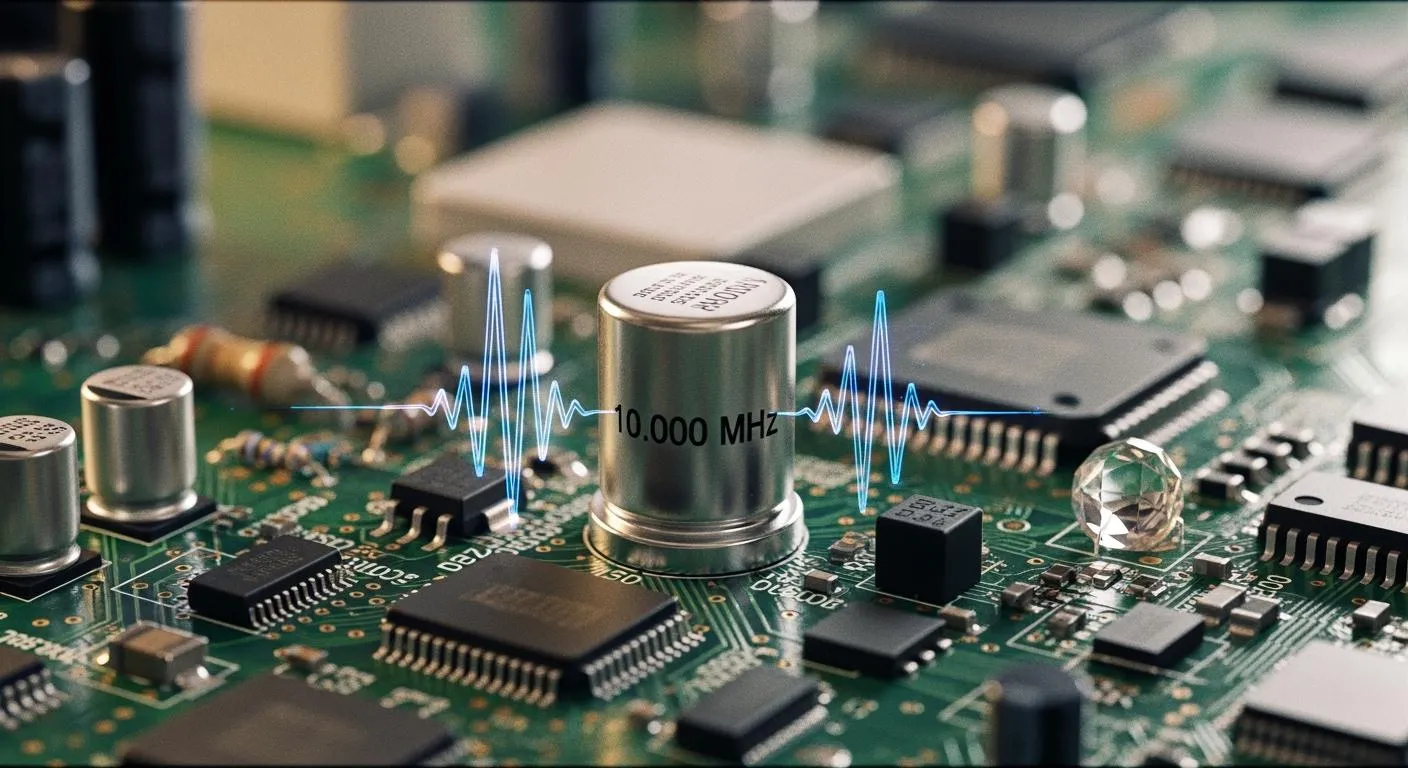
You often hear the question: what are resonators, and why do they matter in electronics? Resonators are components that control and stabilize frequency in electronic devices. You rely on resonance to ensure your devices operate at precise frequencies. When you explore what are resonators, you find several types.
- Quartz crystals provide high precision for timekeeping and communication.
- Ceramic resonators offer compact, cost-effective solutions for consumer products.
Resonance maximizes energy absorption at certain frequencies, which keeps your devices stable and reliable. The demand for resonators grows as more electronic applications emerge globally.
Key Takeaways
- Resonators are essential for controlling and stabilizing frequency in electronic devices, ensuring they operate smoothly.
- Different types of resonators, like quartz and ceramic, serve unique purposes; quartz offers high precision, while ceramic is compact and cost-effective.
- Resonators improve signal quality by filtering out noise and maintaining accurate timing, crucial for communication systems and clocks.
- Choosing the right resonator depends on your needs for stability, size, and cost; quartz is best for precision, while ceramic suits budget designs.
- Understanding resonator functions helps enhance the performance and reliability of your electronic devices, making them more efficient.
What Are Resonators in Electronics?
Resonators in electronics play a vital role in almost every modern device you use. A resonator is an electronic component that produces resonance, which means it can vibrate or oscillate at a specific resonant frequency. This property allows the resonator to generate a strong response at that frequency, making it different from other frequency control components that do not have the same resonance effect. The working principle of resonators relies on the balance between capacitance and inductance. When these two forces match, the voltage and current move together, creating a stable and powerful oscillation. This unique behavior makes resonators essential for many electronic systems.
Resonance and Frequency Control
You depend on resonance to keep your devices running smoothly. Resonators in electronics use resonance to select and maintain a precise frequency. This is important because even small changes in frequency can affect how well your device works. For example, in communication systems, a stable frequency ensures clear signals and reduces interference. Research shows that frequency stability is crucial for the performance of nanoresonators. Sometimes, you may notice that frequency fluctuations are larger than expected. These changes are not just mistakes in measurement. They come from the mechanical properties of the resonators themselves. This means you need to pay close attention to how resonance affects frequency stability when designing or using electronic devices.
Resonators serve several important functions in electronic systems. Here is a table that shows some of their main roles:
| Function of Resonators | Description | Source |
|---|---|---|
| Measuring mass changes | Resonators detect frequency shifts due to external mass changes. | [6] |
| Measuring stiffness changes | Changes in stiffness also lead to detectable frequency shifts. | [7] |
| Coupled resonator systems | Coupled resonators improve sensitivity by measuring displacement amplitude. | [9] |
You can see that resonators do more than just control frequency. They help measure changes in mass and stiffness, which is useful in sensors and advanced electronic applications.
Stable Reference Signals
You rely on resonators to provide stable reference signals in many electronic devices. These signals act like a ruler for time and frequency, making sure everything works in sync. Resonators are key parts of oscillators, which create the steady signals needed for accurate clocks in computers, smartphones, and other gadgets. They also work in filters, letting only certain frequencies pass through while blocking unwanted noise. This is especially important in communication systems, where clear signals are a must.
Here are some ways resonators help you achieve stable reference signals:
- Oscillators: Resonators keep clock frequencies accurate in your devices.
- Filters: They allow only the right frequencies to pass, improving signal quality.
- Frequency Measurement: Resonators help measure and control frequency in test equipment.
- Timekeeping Devices: Crystal resonators set the standard for precise time in watches and clocks.
- Communication Systems: They select and filter signals, making communication reliable.
When you use resonators in electronics, you improve the reliability and performance of your devices. Optimizing dielectric resonators can boost power transfer efficiency, which is important for communication. You also get better signal-to-noise ratios, which means clearer signals. Enhanced communication ranges and improved stability make resonators a smart choice for many electronic applications. However, you must also consider challenges like thermal stability and electromagnetic interference to keep your devices working at their best.
Types of Resonators

You encounter many types of resonators in modern electronics. Each type offers unique properties and serves specific roles in your devices. The table below gives you a quick overview of the main types of resonators and their typical applications:
| Type of Resonator | Typical Applications |
|---|---|
| Quartz Resonators | Timekeeping devices like clocks and watches; oscillators for frequency control. |
| Ceramic Resonators | Consumer electronics like microcontrollers and low-frequency oscillators. |
| Surface Acoustic Wave (SAW) | RF and microwave applications, including filters in communication devices. |
| Crystal Oscillator Resonators | High-precision applications like GPS systems and clocks requiring accurate signals. |
| MEMS Resonators | Portable electronics and sensors, including smartphones and medical equipment. |
Crystal Resonators (Quartz)
You rely on the crystal resonator for the highest frequency stability. This type uses the piezoelectric effect of quartz to maintain a precise oscillation. You find crystal resonators in clocks, radios, and computers. They set the standard for accuracy in timekeeping and frequency control. When you need a stable reference, you choose a crystal resonator. Its exceptional stability and low aging rate make it the top choice for critical applications.
Ceramic Resonators
A ceramic resonator gives you a compact and cost-effective solution for many consumer devices. You often use it in microcontrollers, automotive electronics, and remote controls. The chart below compares the performance of ceramic resonators and quartz crystals:

You notice that ceramic resonators have higher frequency tolerance and aging than quartz. They work well for non-critical timing functions and tone generation in audio devices, but you should not use them where high precision is needed.
Coaxial and Dielectric Resonators
You use coaxial and dielectric resonators in RF and microwave circuits. These resonators offer a high quality factor (Q) and enhanced sensitivity. You benefit from their minimal impact from manufacturing precision and the absence of conducting surfaces. This makes them ideal for filters and oscillators in wireless communication systems.
Mechanical and Piezoelectric Resonators
Mechanical and piezoelectric resonators, such as MEMS and flexural types, give you compact size and low power consumption. You use them in portable electronics and precision sensors. The lc resonator, a classic example, combines inductance and capacitance to create resonance. You see these resonators in chip-level solutions for sensing and frequency control.
Tip: When you select a resonator, always match its properties to your application’s needs. For high stability, choose a crystal resonator. For cost and size, consider ceramic or MEMS types.
Functions in Electronic Circuits
Frequency Selection
You depend on resonators to achieve precise frequency selection in electronic circuits. This process lets you isolate the exact frequency needed for your device to function correctly. Series resonance maximizes current flow at the desired frequency, which helps you filter out unwanted signals. You often see this in tuning circuits, where resonators allow you to pick one signal from many. Filters use resonant frequency to block noise and let good signals pass. You rely on resonators for noise filtering and improved signal reception in devices like radios and communication systems.
- Series resonant circuits maximize current at a specific frequency.
- Filters use resonators to block unwanted frequencies.
- Resonant frequency ensures proper timing in watches and communication tools.
Note: Frequency selection is a key role of resonators in circuits. It keeps your electronic devices running smoothly and accurately.
Signal Generation
Resonators play a vital role in signal generation. You use them to create stable oscillation signals, which are essential for clock signal generation and frequency synthesis. The interaction between capacitance and inductance in a resonator produces resonance. When these forces balance, the circuit selects signals of a specific frequency and suppresses others. This process gives you reliable oscillation for timing and synchronization in electronic devices. You see resonators used in oscillators for computers, smartphones, and other systems that require precise timing.
Tip: Oscillation signal generation is crucial for maintaining accurate timing and synchronization in modern electronics.
Filtering and Noise Reduction
You rely on resonators to improve filtering and noise reduction in electronic circuits. The quality factor (Q) of resonators determines how well a filter performs. High Q means better selectivity, narrower bandwidth, and lower insertion loss. You calculate loaded Q (QL) as QL = f0 / BW, where f0 is the center frequency and BW is the bandwidth. Unloaded Q (Qu) describes energy loss per cycle. High Q resonators let you use fewer components to achieve desired filter characteristics, which reduces energy loss and boosts performance.
| Parameter | Description |
|---|---|
| Quality Factor (Q) | Determines filter selectivity and bandwidth |
| Loaded Q (QL) | QL = f0 / BW, shows filter narrowness |
| Unloaded Q (Qu) | Indicates energy loss per cycle |
| Insertion Loss | Lower with high Q, improves filter efficiency |
You see the role of resonators in circuits as essential for filtering, noise reduction, and maintaining signal integrity in electronic devices.
Modern Electronics Applications

Timing and Clocks
You depend on resonators for accurate timing in many electronic devices. Quartz crystal resonators set the standard for clocks and watches. They keep your computer’s processor running at the right speed. In digital watches, these components maintain precise time by generating a stable frequency. You also find them in industrial timers and network servers, where even a small error in timing can cause major issues. The application of resonators in circuits ensures that your devices stay synchronized and reliable.
Communication Devices
Resonators play a critical role in communication devices. You use them to generate and filter signals at specific frequencies. Dielectric resonators, with their high Q-factor, enhance precision in frequency generation. They reduce phase noise, which keeps your signal clear and strong. Their sharp selectivity and low insertion loss improve overall signal quality. You benefit from narrow bandwidth operation, which is essential for effective communication. These components also help reject interference and separate channels, making your calls and data transfers more efficient. Optical oscillators using resonators can serve as low-power, ultra-miniature sources of stable microwave signals, supporting radar systems and scientific instruments.
- Dielectric resonators provide sharp frequency selectivity.
- They support interference rejection and channel separation.
- Optical oscillators offer stable signals for advanced applications.
Automotive and Consumer Electronics
You rely on resonators in both automotive and consumer electronics. MEMS resonators provide reliable timing for audio processing, data synchronization, and sensor coordination. This improves system performance and reduces timing errors in your devices. In vehicles, resonators ensure frequency stability even under harsh conditions. They support coordination across subsystems and boost reliability throughout the vehicle’s lifecycle.
Nova Technology Company (HK) Limited stands out as a HiSilicon-designated solutions partner. The company specializes in chip-level solutions and system integration for the integrated circuit industry. You can trust their expertise in delivering advanced application scenarios, from automotive electronics to smart consumer devices.
RF and Microwave Circuits
You see resonators integrated into RF and microwave circuits for many purposes. Oscillators use resonators to generate stable signals, which are vital for communication systems. Filters rely on resonators to allow only certain frequencies to pass, blocking unwanted signals. Some resonators enhance antenna characteristics, improving signal transmission and reception. You also find them in frequency measurement devices and energy trapping systems like microwave ovens. In medical devices, resonators support imaging technologies such as ultrasound and MRI.
Contemporary dielectric resonator circuits face challenges like dielectric, conductor, and radiation losses. You evaluate their effectiveness using quality factors, impedance characteristics, and energy efficiency. Optimizing these metrics ensures your RF and microwave circuits perform at their best.
Comparing Resonator Types
Performance and Stability
You need to compare resonators to understand how each type affects performance and stability in electronic circuits. Quartz crystal resonators deliver very high frequency stability and lower phase noise. You often use them in network synchronization and telecommunications. LC circuits, ceramic resonators, and SAW devices offer wider tuning ranges but generally lower frequency stability. You choose these for applications like frequency modulation and signal generation.
Here is a table that shows key differences:
| Feature | VCXO (Quartz Crystal) | VCO (LC, Ceramic, SAW) |
|---|---|---|
| Frequency Stability | Very high | Lower |
| Tuning Range | Limited | Wide |
| Phase Noise | Lower | Higher |
| Typical Applications | Network sync, telecom | Modulation, signal gen |
Strings provide the highest sensitivity, especially in silicon nitride designs. Drumheads respond quickly to thermal changes. Photothermal sensitivity depends on average temperature rise, not peak temperature.
Practical Benefits
You gain practical benefits by selecting the right resonators for your electronic design. Crystal oscillators cost more but offer superior frequency stability. Resonators are cost-effective and save board space. You use them in budget-sensitive designs and battery-operated devices. Resonators start up faster and resist mechanical shock better. Crystal oscillators resist temperature drifts and require more complex tuning.
| Feature | Crystal Oscillator | Resonator |
|---|---|---|
| Cost | Higher | Cost-effective |
| Stability | Superior | Prone to shifts |
| Size | Larger | Smaller |
| Power Consumption | Higher | Lower |
| Environmental Resistance | Temp drift resist | Shock resist |
| Startup Time | Slower | Faster |
| Design Complexity | Complex | Simpler |
| PCB Layout Sensitivity | Reduced | Careful routing needed |
Military grade resonators cost much more but offer exceptional temperature stability and Q-factors above 100,000. Commercial grade resonators cost less and provide reasonable Q-factors between 5,000 and 20,000.
Choosing the Right Resonator
You must consider several criteria when selecting a resonator for your electronic circuit. Environmental stability matters because resonators must withstand temperature changes, humidity, and vibrations. Integration with other components prevents unwanted interactions. Material selection affects operation, reliability, and cost. Manufacturing processes must ensure precise dimensions and properties. Impedance characteristics are crucial for maximum power transfer.
| Criteria | Description |
|---|---|
| Environmental Stability | Withstand temperature, humidity, vibrations |
| Integration with Components | Coordinate with other circuit parts |
| Material Selection | Choose quartz, ceramics, MEMS for best results |
| Manufacturing Processes | Use strict techniques for desired properties |
| Impedance Characteristics | Match impedance for efficient power transfer |
Tip: Always match the resonator’s features to your application’s needs. For high stability, choose quartz. For cost and size, select ceramic or MEMS types.
You see how a resonator helps you achieve precise frequency and stable operation in electronics. When you understand different resonator types, you make better choices for design and troubleshooting. The table below shows how material and properties affect your selection:
| Resonator Type | Material Used | Key Properties |
|---|---|---|
| Quartz | Piezoelectric | High stability |
| Ceramics | Dielectric | Miniaturization |
| MEMS | Silicon | Microelectronics compatibility |
Recent advances, like thermal compensation collars and temperature feedback systems, improve stability for high-precision uses. The growing demand for wireless and IoT devices means resonator technology will keep evolving. Stay curious and explore new innovations in this field.
FAQ
What is the main purpose of a resonator in electronics?
You use a resonator to control and stabilize frequency in your electronic circuits. It helps your devices keep accurate timing and improves signal quality in communication systems.
How do you choose the right resonator for your project?
You look at your needs for stability, size, and cost. For high precision, you pick quartz. For small, low-cost designs, you select ceramic or MEMS types.
Can a resonator improve signal quality?
Yes. You use a resonator to filter out unwanted noise and select only the needed frequencies. This gives you clearer signals in radios, phones, and other devices.
Do resonators require special care during installation?
You should handle resonators carefully. Avoid bending their leads or exposing them to high temperatures. Proper mounting helps maintain their performance and reliability.
Are resonators used in both analog and digital circuits?
You find resonators in both analog and digital circuits. They help with timing, filtering, and frequency control in many types of electronic devices.