What Is Actuation and Why It Matters in Electronics
Actuation meaning in electronics: how energy turns into motion, enabling devices to perform tasks and automation with actuators.
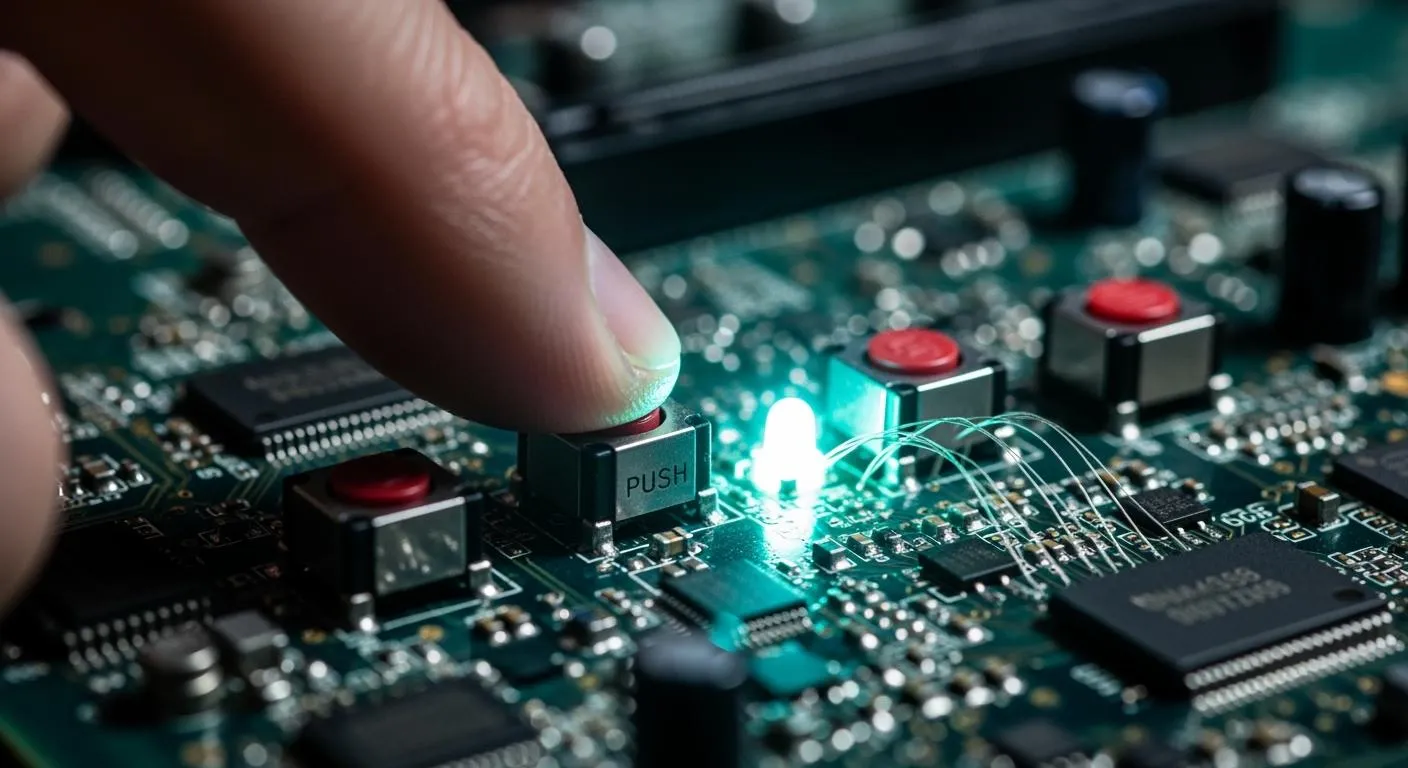
Actuation is the controlled process by which an energy source is converted into mechanical motion in order to perform physical work within a system. It is the fundamental mechanism by which control signals (information) are translated into mechanical displacement, force, or torque (action).
You see actuation meaning in electronics every day. An actuator helps move or position parts in devices like control valves or robots. In industrial and manufacturing settings, actuators allow machines to work with high precision and speed. Many electronic systems rely on actuation to make tasks easier and more efficient. Think about how your home appliances or gadgets use actuation to work smoothly.
Key Takeaways
- Actuation is the process that converts energy into mechanical motion, enabling devices to perform tasks like moving parts or opening valves.
- Understanding the types of actuators—electric, hydraulic, and pneumatic—helps you choose the right one for your specific needs and applications.
- Electric actuators offer high precision, low maintenance, and energy efficiency, making them ideal for modern automation and smart devices.
- Actuators play a crucial role in various fields, including robotics, home automation, and manufacturing, enhancing efficiency and safety.
- Selecting the right actuator can lead to significant cost savings and improved performance in your projects, especially in high-use environments.
Actuation Meaning
Definition Of Actuation
When you explore actuation meaning in electronics, you discover how systems turn energy into movement. Actuation describes the process where a device receives a control signal and then creates a physical action, such as moving a part or opening a valve. This process forms the bridge between digital commands and real-world motion. You see actuation meaning in many electronic systems, from simple household gadgets to advanced industrial machines.
To understand actuation meaning, you should know the main components involved in this process:
- Power source supplies the energy needed for movement. This energy can come from electricity, hydraulics, or pneumatics.
- Actuator converts the supplied energy into mechanical force or motion.
- Mechanical load refers to the part or system that moves or operates because of the actuator.
- Controller manages the operation by sending the right signals and ensuring everything works as intended.
Tip: When you see a device move after pressing a button, you are witnessing actuation in action.
You can compare actuation to sensing in electronics. Sensors collect information from the environment and turn it into electrical signals. Actuators do the opposite. They take electrical signals and turn them into physical actions. The table below shows the difference:
| Feature | Sensor | Actuator |
|---|---|---|
| Function | Converts physical characteristics into electrical signals | Converts electrical signals into physical actions |
| Input Source | Takes input from the environment | Takes input from the output conditioning unit of the system |
| Output | Provides output to the input conditioning unit of the system | Provides output to the environment |
| Example | Photo-voltaic cell | Stepper motor |
Actuation In Engineering And Automation
You find actuation meaning at the heart of engineering and automation. Engineers use actuation to control machines, robots, and automated systems. When you look at modern factories, you see machines that move parts, assemble products, or adjust positions with high precision. These actions rely on actuation.
Actuation meaning extends to many fields. In medical engineering, electric linear actuators help hospital beds and dental chairs move smoothly. This movement improves patient comfort and safety. In manufacturing, actuators move items along assembly lines and handle materials without human help. You also see actuation in solar panel trackers, adjustable furniture, and robotics.
Here are some common applications where actuation meaning plays a key role:
- TV lifts and hidden mechanisms
- Adjustable beds and furniture
- Solar panel trackers
- Industrial automation
- Robotics and CNC equipment
- Automotive and RV systems
- Marine hatches and lifts
Advances in actuator technology allow you to choose from different sizes, speeds, and capacities. This flexibility helps engineers design systems that fit specific needs. Actuation meaning shapes how you interact with technology every day, making devices smarter and more responsive.
What Is An Actuator
When you explore what is an actuator, you discover a key component in electronic systems that brings devices to life. An actuator is a device that receives a control signal and then creates movement or force. You can think of it as the muscle of a machine, responding to commands from a controller. In electronics, actuators play a vital role in turning electrical signals into real-world actions, such as opening a valve, moving a robotic arm, or adjusting a camera lens.
You will find several types of actuators in electronic systems. Each type serves a specific purpose and operates in a unique way. The table below gives you a quick overview:
| Type | Description | Applications |
|---|---|---|
| Rotary | Provides rotational motion around a fixed axis. | Controlling valves, dampers, etc. |
| Linear | Converts electrical energy into linear motion, generating push or pull forces. | Automotive, medical, home automation. |
| Multi-turn | Provides multiple revolutions of rotary motion. | Gate valves, multi-turn valves. |
| Quarter-turn | Provides rotational motion of 90 degrees. | Ball valves, butterfly valves. |
Tip: When you see a device rotate, slide, or push, you are likely observing what is an actuator in action.
How Actuators Work
To understand how actuators work, you need to look at the process of converting energy into movement. Actuators take input energy and transform it into mechanical motion. For example, electric actuators use motors to create rotary motion. This rotary motion can then be changed into linear motion using mechanisms like lead screws or ball screws. Hydraulic actuators use pressurized fluid to push a piston, which generates strong linear motion. Pneumatic actuators rely on compressed air to move a piston, making them ideal for quick and repetitive tasks.
You often see actuators in systems that require precise control. In robotics, actuators move arms and joints with accuracy. In home automation, actuators adjust blinds, doors, or windows. The way how actuators work depends on the type of energy they use and the kind of motion needed.
Note: Actuators bridge the gap between digital commands and physical movement, making automation possible in many fields.
Energy Sources For Actuators
When you ask what is an actuator, you also need to know about its energy sources. Actuators mainly use three types of energy: hydraulic, pneumatic, and electric. Hydraulic actuators use compressed fluids to create powerful linear motion, which is perfect for heavy-duty tasks. Pneumatic actuators use compressed air or gas, offering flexibility and cost-effectiveness. Electric actuators convert electrical energy into mechanical power, making them ideal for tasks that need precision and control.
You will notice that each energy source has its own strengths. Hydraulic actuators handle high-power applications, such as industrial presses. Pneumatic actuators work well in environments where speed and repetition matter, like packaging lines. Electric actuators excel in electronics and automation, where you need accurate and reliable linear motion.
Callout: Choosing the right energy source for your actuator depends on the application, required force, speed, and level of control.
Integrating actuation into electronic systems can present challenges. You may face high initial costs due to advanced components. Complex integration often requires custom engineering. Longer commissioning times can slow down adoption. Using multiple actuators increases the risk of failure and makes the system architecture more complex, which can affect reliability and maintenance. New technologies, such as piezoelectric actuators, offer greater precision and efficiency, pushing traditional manufacturers to innovate.
Understanding what is an actuator and how actuators work helps you appreciate the technology behind everyday devices. Whether you see a robotic arm in a factory or an automatic window in your home, actuators make these movements possible by converting energy into controlled linear motion.
Types Of Actuators

You encounter several types of actuators in electronic and automation systems. Each actuator uses a different energy source and serves unique applications. Understanding the types of actuators helps you select the right device for your project.
Electric Actuator
Electric actuators use electrical energy to create motion. You often see electric linear actuator in electronics and automation because it offers high precision and easy integration with control systems. Electric actuators operate cleanly, without oil or air, and require little maintenance. They work well in environments where noise and contamination must be minimized.
Here is a table showing the advantages of electric actuators compared to hydraulic and pneumatic actuators:
| Advantage | Description |
|---|---|
| High precision | Ideal for modulating control with accurate position feedback. |
| Clean operation | No air or hydraulic oil required. |
| Energy efficiency | Consume power only when operating. |
| Low maintenance | Fewer moving parts, no air leaks or fluid contamination. |
| Quiet and environmentally friendly | Perfect for indoor or sensitive environments. |
Electric actuators also have a positive environmental impact. They use less energy, produce no direct emissions, and avoid oil leaks. You can rely on electric linear actuator for tasks that demand accurate movement and low noise.
Hydraulic Actuator
Hydraulic actuators use pressurized fluid to generate force. You find hydraulic linear actuator in heavy machinery and manufacturing. These actuators handle large loads and deliver strong linear motion. Hydraulic actuators are common in industries such as construction, automotive, and manufacturing.
- Heavy Machinery: Used in excavators, bulldozers, and cranes for lifting and digging.
- Manufacturing: Drives robotic arms and assembly equipment.
- Automotive: Integral in braking systems and power steering.
- Construction: Essential for crane operations and excavating machinery.
Hydraulic actuators offer high power but pose environmental risks. Oil leaks can contaminate soil and water. The hydraulic actuator market continues to grow as automation increases.
Pneumatic Actuator
Pneumatic actuators use compressed air to create movement. You see types of linear actuators in automation systems where speed and reliability matter. Pneumatic actuators work well in pick-and-place, packaging, and hazardous environments. They are durable and less prone to leaking, making them ideal for food and beverage applications.
- Pick-and-Place & Packaging: Provides both linear and rotary motion.
- Clamping & Stamping: Operates jaws for holding or marking products.
- Hazardous Applications: Controls flow in chemical plants.
- Food & Beverage: Suitable for contamination-sensitive environments.
- Robotic Applications: Creates motion in robotic arms.
Pneumatic actuators produce more noise and are less efficient than electric actuators. You must consider operational and maintenance costs when choosing among types of actuators.
Tip: Always weigh the initial investment, operational costs, and maintenance expenses before selecting an actuator for your system.
Actuation Importance
Benefits In Electronics
You rely on actuation for precise movement and control in many electronic devices. Electric actuator technology brings high accuracy to systems where exact positioning matters. For example:
- In medical imaging, electric actuators position patients and imaging parts with precision, which helps doctors get clear diagnostic images.
- Surgical robots use electric actuators for steady, controlled movements, making minimally invasive procedures safer and more accurate.
- Rehabilitation devices depend on electric actuators to guide patients through exercises, improving recovery and mobility.
Electric actuators also boost reliability and safety. They include features like overload protection, limit switches, and emergency stops. These features reduce accident risks and make maintenance easier. Consistent performance in harsh environments means you can trust these systems to work when you need them.
The benefits of electric actuators go beyond precision and safety. You see major energy savings and lower costs over time. The table below compares the 10-year lifecycle costs of pneumatic and electric actuator systems:
| Category | Pneumatic System (10 years) | Electric Actuator System (10 years) |
|---|---|---|
| Initial Equipment | $15,000 - $25,000 | $25,000 - $45,000 |
| Infrastructure | $50,000 - $200,000 | $5,000 - $15,000 |
| Energy Costs | $260,000 - $440,000 | $44,000 - $70,000 |
| Maintenance | $75,000 - $150,000 | $15,000 - $30,000 |
| Total Cost | $400,000 - $815,000 | $89,000 - $160,000 |

Switching to electric actuators can save you up to $655,000 over ten years. Facilities often see payback in just a few years, especially in high-use cases. These savings highlight the benefits of electric actuators in electronics.
Impact On Automation
Actuation drives progress in automation. You see its impact in robotics, manufacturing, automotive, and HVAC systems. In robotics, electric actuators deliver the accuracy needed for tasks like grasping, cutting, and assembly. They help robots work faster and with fewer errors. In automotive manufacturing, actuators control robotic arms for welding and painting, while hydraulic actuators handle heavy parts.
Manufacturing plants use electric actuators for flexible production lines. You can quickly adapt to new products or models, which boosts productivity. In HVAC systems, actuators regulate airflow and temperature, improving comfort and energy efficiency.
Actuation also supports smart manufacturing. With AI and digital twins, actuators now monitor themselves and adjust in real time. This reduces downtime and supports predictive maintenance. You get more reliable systems and higher output.
When you consider use cases in industry applications, actuation stands out. It improves efficiency, safety, and flexibility. If you want to know how to select the right actuator, look at your needs for precision, speed, and environment. Choosing an actuator with the right features ensures your system performs at its best.
Nova Technology Company (HK) Limited is a HiSilicon-designated solutions partner in the integrated circuit industry. The company specializes in chip-level solutions and system integration for advanced electronics. You will find their expertise in use cases in industry applications such as smart devices, industrial automation, and automotive electronics. If you want to know how to select the right actuator for your system, Nova Technology Company (HK) Limited can provide professional guidance and support.
Actuation Examples

Home Automation
You experience real-world applications of actuation every day in your home. Electric actuators power many smart devices that make life easier and more comfortable. Here are some common applications you might recognize:
- Smart alarm beds gently lift the headrest to help you wake up naturally.
- Height-adjustable desks switch between sitting and standing with a simple button press, improving your posture.
- Smart TV stands use electric actuators for smooth height and angle adjustments, protecting your screen and enhancing your viewing.
- Kitchen appliances feature automatic cabinet doors and adjustable range hoods, making cooking more efficient.
- Adjustable sofas and recliners change angles automatically and can even include massage features for relaxation.
Electric actuators in these devices often use rotary motion converted into linear movement, allowing for precise and quiet operation. You benefit from increased convenience and energy efficiency in your daily routines.
Robotics
Robotics relies on electric actuators for controlled movement and task execution. You see these components in robotic arms, grippers, and mobile robots. Engineers use rotary motion to drive joints and wheels, while linear actuators extend or retract parts for picking and placing objects. The table below shows some control techniques used in robotics:
| Control Technique | Description |
|---|---|
| PD Control | Centers joints using rotary motion for stability in robotic arms. |
| Impedance Control | Adjusts actuator response for smooth, passive movement. |
| PID Control | Fine-tunes rotary motion and position for accurate task execution. |
Electric actuators enable robots to perform repetitive tasks with speed and precision, making them essential in manufacturing and research.
Consumer Electronics
You find electric actuators in many consumer electronics, where they deliver rotary motion and linear movement for various functions. Devices like TV lifts, standing desks, and motorized window shutters use these actuators for smooth, quiet adjustments. In custom cabinetry, micro actuators create hidden compartments and adjustable shelves, blending technology with design.
Modern gadgets such as smart mirrors, automated blinds, and haptic feedback systems also use electric actuators. These innovations improve user experience by providing precise control and reliable performance. Rotary motion in these devices often transforms into linear action, supporting features like retractable camera lenses and adjustable lighting.
Tip: Electric actuators help make your electronics smarter, quieter, and more adaptable to your needs.
You see actuation as a key force in electronics, shaping how devices move and respond. Actuators automate tasks, open doors, rotate mechanisms, and unlock new features in smart systems. Electric actuators deliver accuracy and efficiency, while screw-driven, belt, and piezoelectric types offer solutions for different needs.
- Actuators enable precise control and reliable performance in automation.
- Smart actuators integrate with sensors and voice commands, making technology more user-friendly.
Explore the table below to learn about actuator types and their applications:
| Actuator Type | Description | Applications |
|---|---|---|
| Pneumatic | Uses compressed air | Machine parts, valves |
| Hydraulic | Uses fluid pressure | Construction, manufacturing |
| Electric | Uses electrical energy | Automation, medical devices |
| Magnetic | Uses magnetic fields | MEMS |
| Thermal | Uses temperature changes | Miniaturized devices |
| Mechanical | Uses physical mechanisms | Manual valves |
Tip: Understanding actuator options helps you choose the best solution for your next project.
FAQ
What is the main purpose of an actuator?
You use an actuator to turn energy into movement. It helps machines and devices perform tasks like opening doors, moving parts, or adjusting positions.
How do electric actuators differ from hydraulic and pneumatic types?
Electric actuators use electricity for precise control. Hydraulic actuators rely on fluid pressure for heavy tasks. Pneumatic actuators use compressed air for fast, repetitive actions.
Where do you see actuators in daily life?
You find actuators in automatic doors, adjustable beds, smart desks, and robotic arms. They make devices move and respond to your commands.
Can actuators improve energy efficiency?
Yes! Electric actuators often use less energy than pneumatic or hydraulic types. You save money and reduce environmental impact by choosing efficient actuators.
What factors should you consider when selecting an actuator?
You should look at force, speed, precision, environment, and maintenance needs. Choose the actuator that fits your application and performance goals.