Brush Motor vs Brushless Motor Engineering Trade-offs Across Modern Electronics
Compare brush motor vs brushless motor trade-offs in efficiency, lifespan, noise, and cost to select the ideal motor solution for modern electronics.
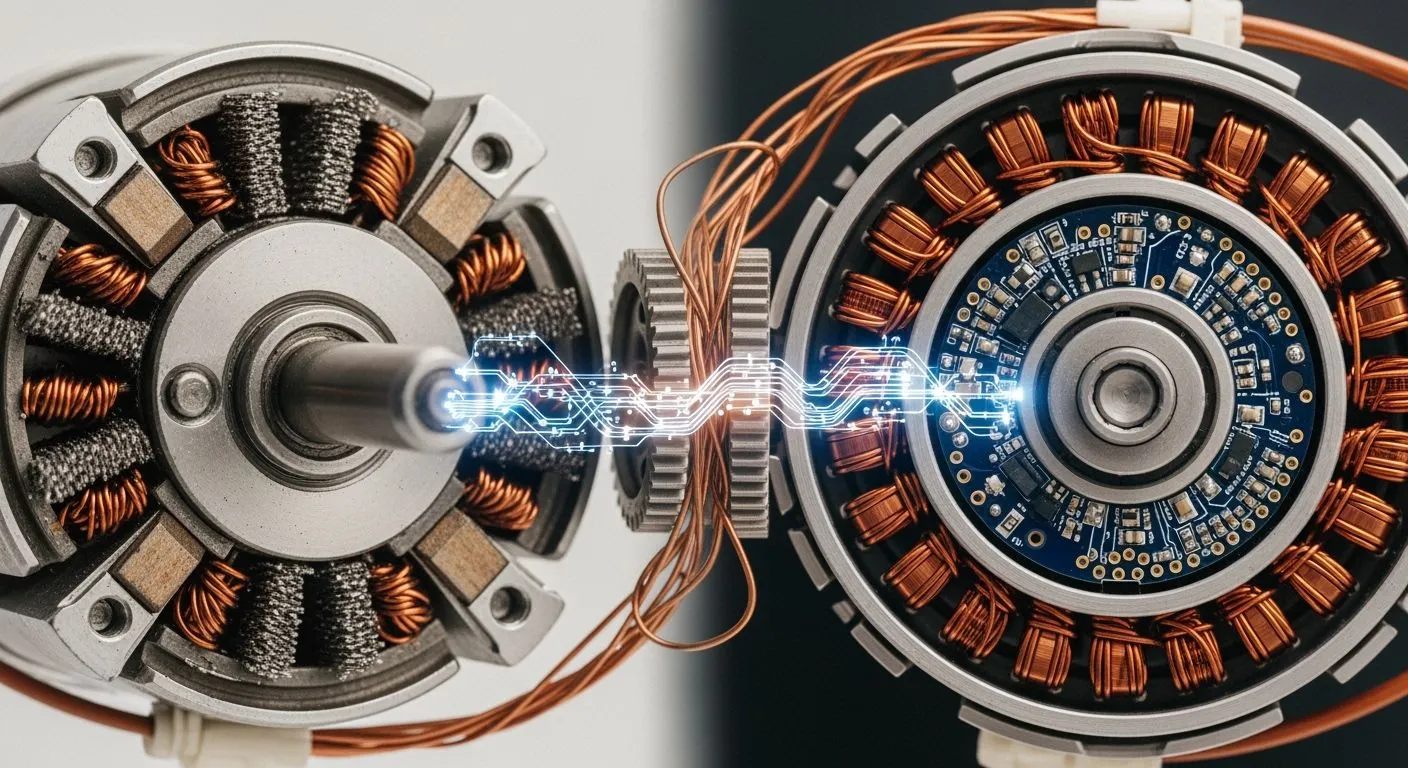
You must evaluate key trade-offs during a brush motor vs brushless motor selection for modern hardware. Low cost makes a brushed motor ideal for low duty cycles. Simple brush dc motors reduce driver complexity. Traditional brushed motors deliver 75% to 80% motor efficiency with 1,000 to 3,000 operating hours. Standard brushed motors also suit basic actuators. Conversely, brushless motors reach 85% to 90% efficiency. Quiet brushless motors run for tens of thousands of hours. Compact brushless motors optimize thermal limits. High-performance brushless dc motors reduce EMI noise in compact dc devices. Fast drones demand high power density. Modern drones rely on a durable brushless dc motor. A simple brushed dc motor remains viable for cost-sensitive electronics. Nova Technology Company (HK) Limited, a HiSilicon-designated solutions partner, provides semiconductor IC solutions for brushed motors, driving advanced brushless motor systems and brushless dc motors.
Key Takeaways
- Brushed motors cost less initially, making them great for low-budget devices and simple electronics.
- Brushless motors offer up to 93 percent energy efficiency, which saves battery power in portable devices.
- Brushless motors run without physical contact, lasting up to 20,000 hours with minimal maintenance.
- Brushless motors generate less mechanical noise, so sensitive medical tools and quiet electronics stay silent.
- Advanced drones and electric vehicles require brushless motors for maximum power density and fast response times.
Brush Motor vs Brushless Motor Operating Physics
You evaluate physical magnetics during a brush motor vs brushless motor analysis for dc equipment. System architecture determines electrical drive efficiency.
Brushed Mechanical Commutation Mechanics
In traditional brushed motors, you place rotating armature coils inside stationary magnets. Standard brushed motors use physical brushes pressing against commutator segments. Legacy brushed motors feature high friction.
Coils possess self-inductance, so current cannot stop instantly. Current jumps across the gap when brushes break contact. This arc creates heat and degrades metal surfaces. Arcing leads to wear and brush welding. Consequently, brushed motors experience reduced lifespan. High friction in brushed motors limits duty cycles. Old brushed motors generate arc noise. A single brushed motor requires maintenance. A standard brushed dc motor relies on contact. Simple brush dc motors use simple circuits. Standard brush dc motors serve cost-sensitive dc applications.
Electronic Commutation in Brushless Topologies
You place permanent magnets on the rotor inside stationary stator coils when evaluating brushless motors. Powerful brushless motors rely on solid-state switching. Modern brushless motors eliminate carbon brushes. Advanced brushless motors maximize runtime in dc devices.
The development of high-energy permanent magnets combined with affordable power semiconductor switches such as MOSFETs and IGBTs made BLDC motors practical at a wide range of power levels.
| Device Type | Voltage Range | Key Characteristics | Applications |
|---|---|---|---|
| Silicon MOSFETs | Up to ~100 V | Low RDS(on), 100 kHz limit. | Lower-power BLDC. |
| Silicon Carbide MOSFETs | Up to 1,200 V | Low losses, 20–50 kHz. | EV traction. |
| Gallium Nitride FETs | Up to ~650 V | Fast switching over 100 kHz. | Compact robotics. |
| IGBTs | >200 V | High conduction, ~20 kHz limit. | Automotive HVAC. |
Inverter bridges drive every brushless dc motor in high-efficiency dc systems:
- Primary Wear Mechanism Eliminated: Electronic commutation removes physical brushes from brushless motors.
- Lifespan Extended: Bearing wear becomes the main limit. Industrial brushless motors achieve 20,000 to 50,000+ hours of operation.
- Maintenance-Free Operation: Eliminating consumable parts removes scheduled maintenance for your brushless dc motor.
Solid-state switching allows brushless motors to run without arc wear. Efficient brushless motors save power in dc circuits. You select a durable brushless motor for long life. A compact brushless motor excels in precision dc robotics and dc hardware.
Brushed vs Brushless Quantitative Comparison
You must analyze physical performance metrics when you evaluate a brushed vs brushless selection for modern dc equipment. System engineers compare power conversion, service lifespan, and acoustic output across active duty cycles. Selecting between motor options dictates total system parameters and operating capabilities.
| Performance Metric | Brushed DC Motors | Brushless (BLDC) Motors |
|---|---|---|
| Energy Efficiency | 70% – 80% | 85% – 93% |
| Typical Lifespan | 500 – 2,000 hours | 10,000 – 20,000+ hours |
| Typical Noise Level | 60 – 70 decibels | Below 50 decibels |
| Initial System BOM Cost | Lower initial cost | Higher initial driver cost |
Mechanical brushes create physical friction inside standard brushed motors. This contact reduces motor efficiency down to 75% or 80%. High friction generates internal heat in compact dc devices. In contrast, electronic switching allows high-grade brushless dc motors to achieve 85% to 93% energy efficiency. Higher motor performance saves overall battery capacity during continuous operations. High energy efficiency lowers cooling demands in enclosed dc housing designs.
Commercial grade reliability targets at least 1,000 operational hours MTBF. Brushed motors operate at the low end of this scale with 500 to 2,000 hours of lifespan. Industrial brushless dc motor units reach 30,000+ hours MTBF, matching solid-state electronics reliability.
Mechanical wear limits the operational life of simple brush dc motors. Carbon buildup damages mechanical commutators in standard brushed motors. Meanwhile, ball bearings define the primary failure point for brushless motors. Premium brushless motors easily exceed 10,000 operational hours without maintenance. You lower long-term cost of ownership by eliminating replacement cycles in high-duty dc machinery.
Streamlined rotor design provides brushless motors with a superior power-to-weight ratio. The absence of heavy copper armatures on the rotor enhances output capability. Compact brushless motors deliver superior torque and performance in strict weight-constrained builds. Standard brushed motors add internal weight through heavy copper armatures. Consequently, conventional brushed motors fail to deliver optimal dynamic acceleration. Hardware engineers favor brushless motor designs when building lightweight dc systems. High torque and performance metrics allow fast responses in agile aerial hardware.
Modern drones require light hardware and maximum power output. Engineers build small drones with lightweight drive systems to increase flight times. Advanced brushless dc motors allow modern drones to carry heavy camera payloads. Autonomous drones gain rapid dynamic responses during fast acceleration moves. Commercial drones maintain stability in windy outdoor environments due to swift motor control. Traditional brush dc motors lack the required power density for competitive commercial drones.
Acoustic output creates another important distinction between motor options.
- A brushed motor running hard can produce about 65 decibels of noise.
- A brushless dc motor of the same size generates about 45 decibels.
Brushed motors emit mechanical clicking and electric arc noise during operation. Brushed motors also broadcast electrical interference into nearby dc circuits. Silence-critical medical tools rely on brushless motors to keep working environments quiet. High-volume consumer builds still evaluate the brush motor vs brushless motor trade-off based on initial component cost. Mature manufacturing processes keep initial bill-of-materials costs low for standard brushed motor components. Demanding dc applications prioritize brushless dc motors for high reliability. Modern brushless motors maximize system lifespan. Efficient brushless motors reduce power usage in demanding systems. Solid brushless motors deliver optimal value across full operational cycles in modern dc gear, advanced dc robotics, and industrial dc hardware. High-quality brushless motors drive precision machinery. Selecting a durable brushless motor extends product lifespan.
Thermal Dynamics and Lifespan Reliability
You must analyze thermal buildup and friction to predict operating lifespan. Operating conditions change internal thermal loads inside motor assemblies.
Mechanical Contact Wear and Failure Modes
Physical friction limits overall operating life in brushed motors. Mechanical brush contact creates severe surface wear during continuous operation.
| Cause Category | Specific Cause | Consequence for Duty Cycle |
|---|---|---|
| Mechanical | Brush Misalignment | Causes uneven brush wear, poor electrical contact, and premature failure. |
| Electrical | Motor Overloading | Increases current density at interfaces, causing accelerated wear in brushed motors. |
| Environmental | Dust and Contaminants | Act as abrasives, increasing friction and causing performance loss. |
Maintenance schedules must track operating hours. Initial inspections between 500 to 2000 operating hours prevent catastrophic failure in brushed motors. High ambient temperatures inside enclosed dc housing designs increase wear rates. Electrical overload causes rapid thermal breakdown in every brushed motor. A degraded brushed motor drops system performance in demanding industrial applications.
Thermal Dissipation Paths and Limits
Heat management determines structural reliability in brushless motors. Stationary stator coils transfer heat directly from brushless motors to outer motor shells.
- Install external heat sinks to dissipate heat from brushless motors.
- Implement active ventilation in enclosed dc builds.
- Reduce duty cycles to lower thermal loads in dc applications.
- Tune controllers to minimize switching losses in dc drives.
- Use thermal protection to prevent heat degradation in brushed motors.
Excessive heat damages sensitive components inside brushless motors. Extreme temperature degrades coil insulation and causes short circuits in dc systems. High internal temperatures demagnetize permanent magnets inside brushless motors. Degraded lubricants cause severe bearing failure in dc drives.
Maintaining cool operation is the most effective method of extending motor life. Every 10°C reduction in temperature can double motor lifespan.
Well-cooled brushless motors maintain steady output torque in compact dc equipment. Systems engineers select efficient brushless motors over traditional brushed motors for long duty cycles. Direct heat transfer keeps modern brushless motors reliable. Modern brushless motors protect internal dc circuits. Standard brushed motors accumulate rotor heat, while high-grade brushed motors require heat sinks.
Drive Architectures for Brushless DC Motors

You must select proper driver hardware to power dc systems. Nova Technology Company (HK) Limited, a HiSilicon-designated solutions partner, provides semiconductor chip-level driver solutions and motor control IC architectures. These silicon solutions optimize power routing for high-performance brushless dc motors. Choosing matching ICs optimizes topology selection for brushless dc motors and efficiency for your brushless dc motor system.
Drive Electronics for Brushed Motors
Engineers choose simple H-bridge circuits when driving traditional brushed motors in cost-sensitive dc builds. A basic controller routes dc power through switches to control direction. P-channel MOSFETs manage positive power rails, while N-channel MOSFETs handle ground connections. Parallel flywheel diodes protect switches from transient voltage spikes in dc circuits. Simple brushed motors keep initial costs low for brushed motors, but brush wear causes simple brushed motors to lose operating lifespan.
You can integrate ICs to control low-power brush dc motors easily.
- L293D drivers handle small dc motors up to 36V and 1A.
- L298N drivers manage continuous currents up to 2A per winding.
- LMD18200 drivers support up to 3A per winding for heavier loads.
A single discrete controller design handles high-power brush dc motors requiring high current. Standard brushed motors use simple drivers, while durable brushed motors serve basic industrial functions. Small brush dc motors operate efficiently, while legacy brushed motors run basic mechanisms.
Commutation Control for Brushless Drivers
Modern brushless dc motors require electronic switching instead of mechanical brushes. An electronic controller switches stator phase currents in precise sequences. Trapezoidal control uses six-step commutation, but this method generates torque ripple and yields efficiency between 80% and 85%. Advanced field-oriented control decouples active magnetic fields inside the controller chip. Vector control allows brushless motors to achieve efficiency above 92% for a brushless dc motor build.
| Control Method | Efficiency | Torque Ripple |
|---|---|---|
| Trapezoidal Control | 80% – 85% | High |
| Field-Oriented Control | Above 92% | Very Low |
You can choose sensored or sensorless architectures for brushless dc motors. Sensored designs use position sensors for smooth zero-speed startup for a modern brushless dc motor drive. Sensorless brushless motors measure back-EMF voltages, which eliminates physical sensors. A modern sensorless controller reduces size and hardware costs. Eliminating physical sensors protects compact brushless motors, quiet brushless motors, and modern brushless motors in harsh environments. Flexible brushless motors, efficient brushless motors, and advanced brushless motors deliver high performance across dc applications. Reliable brushless motors optimize runtime in dc drives. Each integrated controller manages switching timing in dc equipment, while a dedicated controller monitors dynamic loads to power demanding dc devices for high-power brushless dc motors.
EMI, Noise, and Regulatory Compliance
Arc Sparking and Conducted EMI
Mechanical switches generate electrical interference inside operating motor drives. Physical commutators inside brushed motors create constant arcing during active duty cycles. This constant arcing process produces powerful bursts of radio-frequency energy. Electrical noise creates high electromagnetic interference in nearby dc hardware. Therefore, legacy brushed motors receive a high rating for electromagnetic interference generation.
CISPR 14-1 is the reference standard for assessing conducted and radiated emissions generated by household appliances, power tools, and motor-operated equipment.
You must limit conducted emissions on power supply lines to pass official agency tests. High electrical noise from traditional brushed motors complicates compliance for sensitive electronic devices. Engineers must add heavy filtering components to suppress noise spikes on dc power lines. Arc sparks from unshielded brushed motors easily disrupt adjacent dc equipment. High-voltage transients in brushed motors force extra shielding costs in budget designs.
PWM Switching Frequency Noise
Solid-state drivers eliminate physical spark gaps entirely. However, high-frequency switching in brushless motors creates distinct electronic noise challenges. Fast switching transistors drive stator coils inside high-efficiency brushless motors. Rapid switching pulses create conducted interference along dc supply traces. Therefore, engineers must tune power stages to prevent peak emission spikes in brushless motors.
Advanced control algorithms reduce peak electromagnetic noise in modern driver designs. A digital controller modulates phase signals to lower high frequency energy spikes.
- Random PWM modulates the triangle carrier wave with bandlimited white noise in a sinusoidal system.
- This method retains real-time control, linear operation, and a constant average switching frequency.
- Motor designers adjust noise bandwidth limits to spread energy across wider frequency spectrums.
- Experimental outcome confirms this technique eliminates acoustic noise concentrated at specific tones.
Engineers stabilize high-speed brushless motors with careful circuit design. A motor controller smooths ripple current to protect nearby dc systems. Modern brushless motors easily meet strict emission standards for household equipment. Compact brushless motors deliver quiet power in sensitive medical environments. Modern brushless motors optimize electronic performance without heavy external filter components. High-performance brushless motors reduce total radiation output across sensitive dc circuits.
Electronics Application Selection Framework
You must evaluate key trade-offs in a brush motor vs brushless motor selection based on duty cycles, maintenance constraints, and total cost. System architects balance initial assembly expenses against long-term operational efficiency.
Cost-Constrained and Low-Duty Systems
You can select brushed motors for high-volume products with strict budget limits. Intermittent systems running under ten percent duty cycles benefit from simple power drive topologies.
| System Requirement | Preferred Motor Type | Typical Application Example | Key Operational Benefit |
|---|---|---|---|
| Intermittent Duty (<10%) | Brushed motor | Car window actuators, TV lifts | Low upfront bill-of-materials cost |
| Simple Continuous Control | Brush dc motors | Toy vehicles, simple actuators | Direct power connection |
| High Runtime Duty (100%) | Brushless motors | High-performance drones, robotics | Extended service life and zero brush wear |
Budget consumer products rely on a brushed motor to keep initial manufacturing expenses low. Standard brush dc motors operate directly from a basic power source without complex drive electronics. Auto manufacturers use robust brushed motors in power seat actuators, door locks, and windshield wipers. These low-duty mechanisms operate for brief periods with long rest intervals.
For intermittent-use applications with modest lifespan requirements—perhaps 1,000-2,000 hours over several years—brushed motors often remain more economical even accounting for eventual replacement.
Toy aircraft and basic budget drones utilize compact brushed hardware. Designers of entry-level budget drones minimize unit cost to attract beginner users. Toy budget drones require lightweight frames and simple wiring. However, these basic budget drones suffer performance limits. Short operating lifespans affect simple toy aircraft under frequent usage. Commercial industrial applications usually require higher durability than toy systems offer.
Efficiency and Battery Life in Brushless Motors
Battery-powered hardware demands high energy efficiency to maximize runtime. You select brushless motors to eliminate mechanical brush friction and reduce internal heating in compact builds. Modern brushless dc motors deliver excellent torque and performance across wide speed ranges. A single brushless motor provides quiet operation, while every brushless motor eliminates mechanical contact wear.
High-efficiency brushless motors extend operational runtime in portable power tools. Switching from older brushed motors to brushless motors increases cordless drill runtime by up to 57 percent. An integrated electronic controller optimizes current flow to every stator phase. A digital controller manages phase timing to prevent energy waste in high-load equipment.
Unmanned aerial systems depend on advanced brushless dc motors to achieve stable flight. Autonomous drones require rapid speed adjustments during flight maneuvers. High-performance drones utilize efficient brushless motors to extend total hover time. Professional high-performance drones navigate strong wind currents easily. Modern high-performance drones maximize battery capacity during critical flight missions. Specialized fpv racing drones require rapid acceleration from standstill. Agile racing quads rely on compact brushless motors for fast throttle response. Modern commercial drones leverage these brushless motors for continuous field usage. Each brushless dc motor operates cleanly, while a durable brushless dc motor provides long-term service.
Electric transportation platforms rely on high-power brushless topologies. Modern electric vehicles utilize powerful brushless motors to drive traction systems. Auxiliary systems in electric vehicles also rely on efficient brushless motors. Main powertrains in electric vehicles replace traditional brushed motors with electronic commutation to optimize battery usage across varied driving cycles. Advanced brushless dc motors help battery-powered systems achieve high reliability.
You evaluate duty cycles, power budgets, thermal limits, and unit costs during your final brush motor vs brushless motor decision. Simple brushed motors lower driver costs for basic builds. Basic toy drones use brushed motors for brief operations. However, brushless motors provide high efficiency for advanced drones. Autonomous drones, delivery drones, camera drones, racing drones, industrial drones, and cargo drones rely on brushless motors. Modern brushless motors protect battery life. Powerful brushless motors manage loads, while silent brushless motors optimize systems.
Use this decision checklist:
- Select brushed motors for basic builds.
- Choose brushless motors for long life.
- Deploy brushless dc motors for top efficiency.
- Integrate brushless dc motors to optimize runtime.
FAQ
Why do commercial drones prefer brushless motors?
Commercial quads require extreme efficiency and rapid dynamic response. Efficient brushless dc motors deliver superior torque-to-weight ratios for high-performance aircraft. Modern drones carry heavier camera payloads easily. Eliminating physical brush friction extends flight times significantly. Additionally, durable brushless dc motors handle frequent speed adjustments without suffering mechanical wear.
Can brushed motors still work in basic drones?
Yes, low-cost brushed hardware suits entry-level toy quads. Budget drones lower upfront bill-of-materials costs for beginner users. These basic platforms rely on simple drive circuits without complex software drivers. However, toy quads experience short operating lifespans because carbon brushes wear down rapidly during continuous flights.
How do switching frequencies affect noise in autonomous drones?
High PWM switching frequencies create conducted electromagnetic interference along power traces. Autonomous drones suppress peak electronic noise using advanced control algorithms. Engineers adjust modulation bandwidths to spread high-frequency switching energy across wider spectrums. This digital processing ensures delivery drones operate smoothly near sensitive onboard sensors.
Which motor type optimizes flight times for specialized drones?
Specialized racing drones require maximum energy efficiency and rapid throttle response. Industrial brushless topologies convert up to 93% of electrical input power into active mechanical output. Fpv racing drones leverage high dynamic acceleration to maneuver through tight obstacle courses, while aerial quads maximize battery energy during long flight missions.