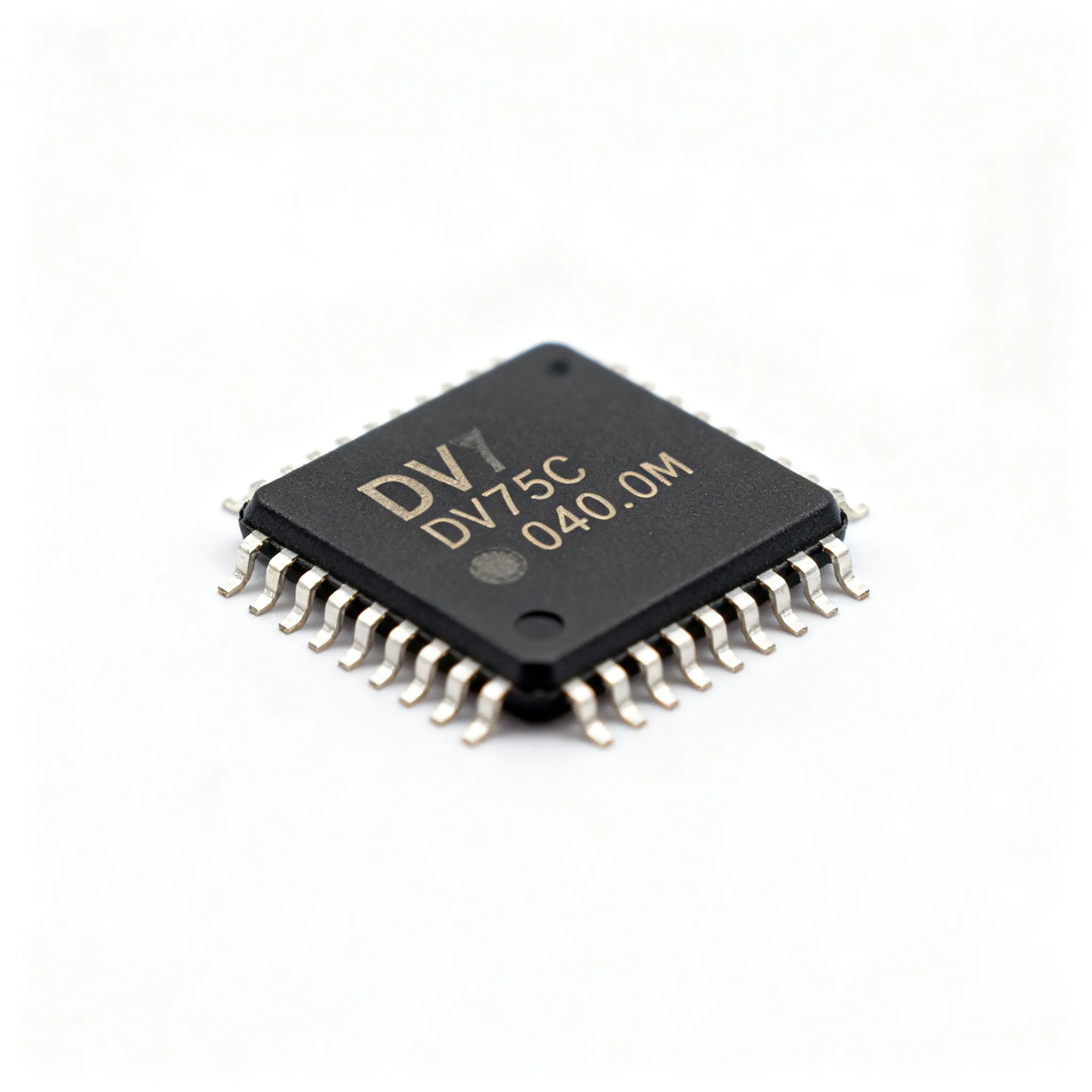
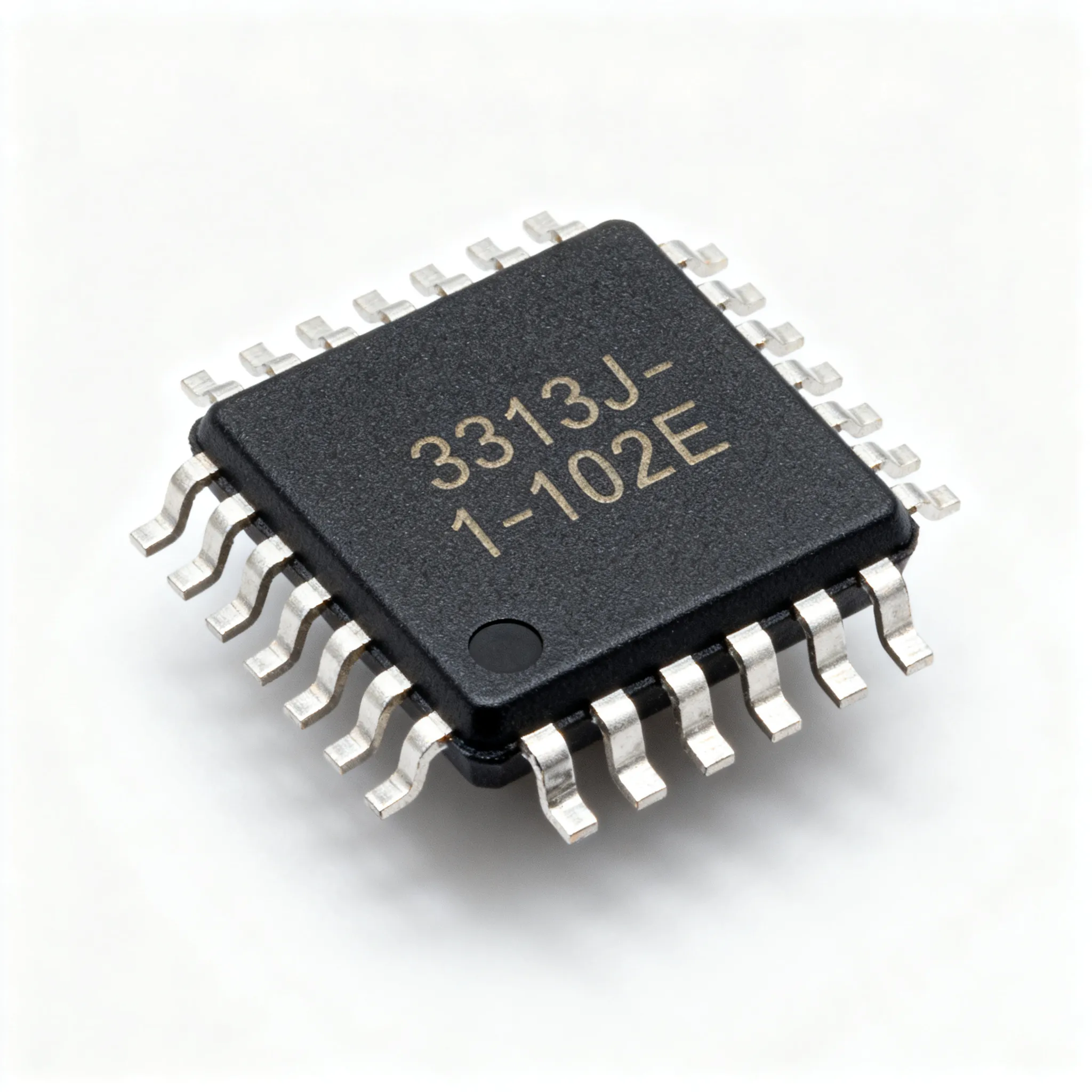
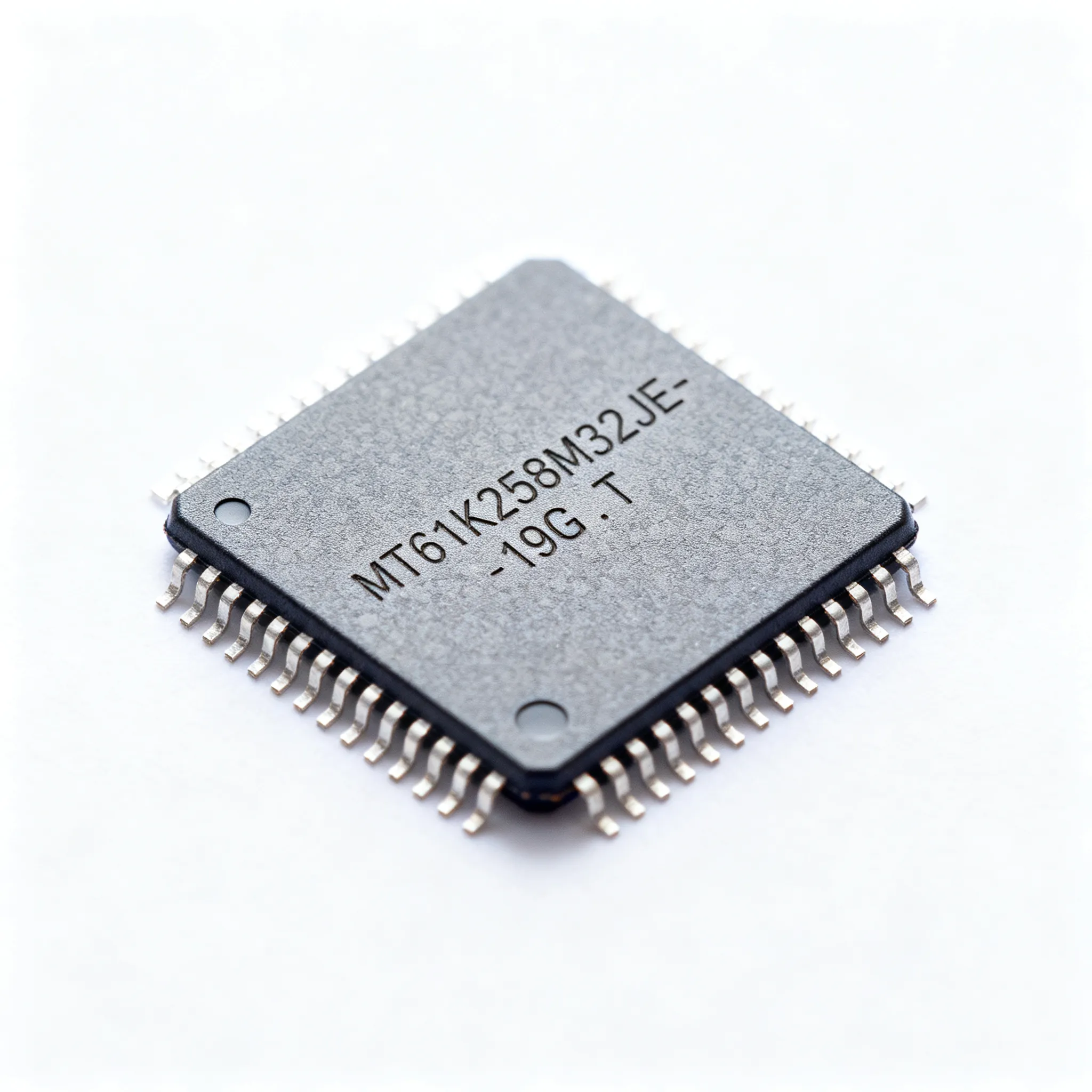
IC Sensor Market Outlook 2026: Buying Guide and Key Selection Criteria for Engineers
Expert guide on IC Sensor Market Outlook 2026: Buying Guide and Key Selection Criteria for Engineers. Technical specs, applications, sourcing tips for engineers and buyers.
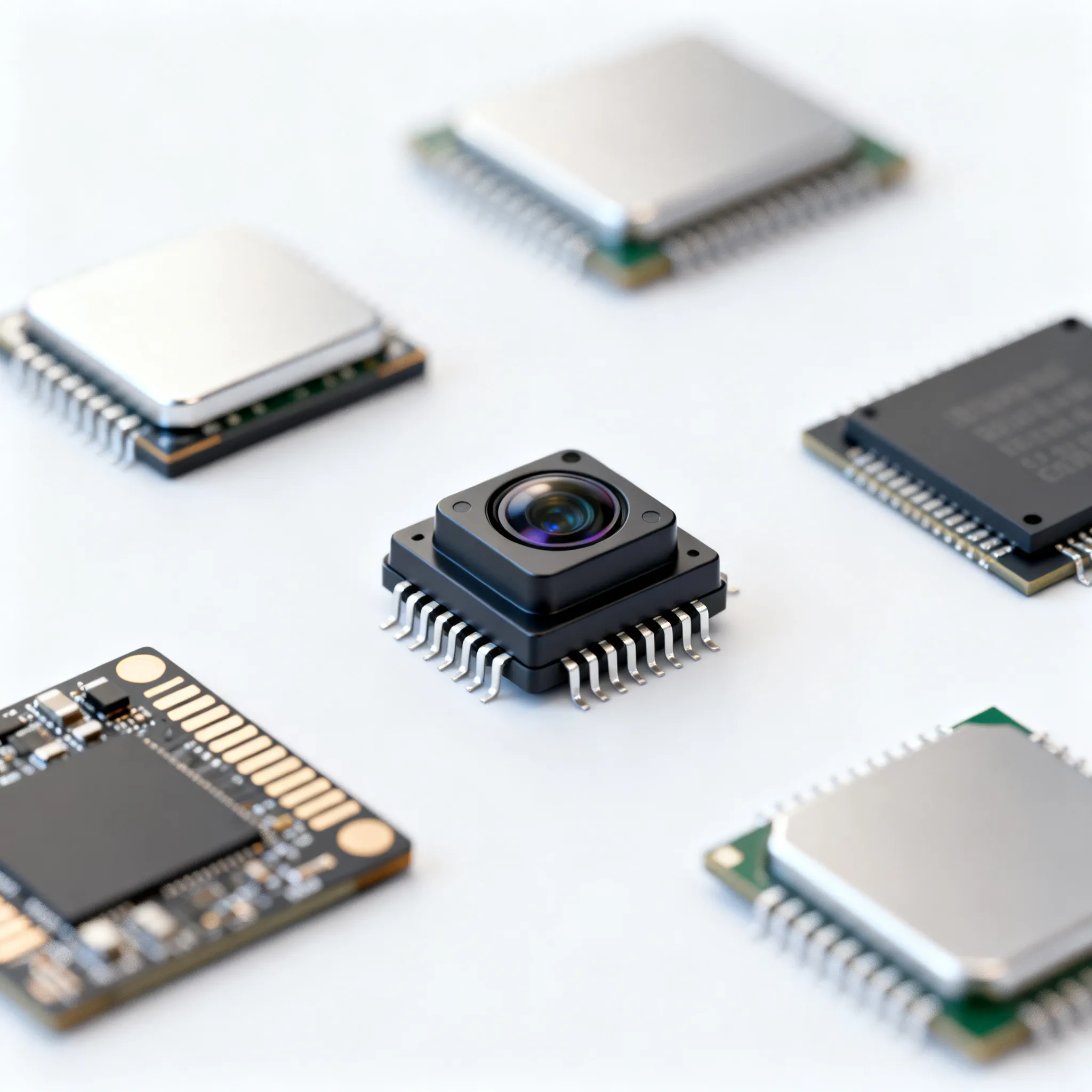
Sensor IC Market 2026: From Inventory Correction to AI-Driven Demand Surge
If you're a senior electronics engineer or a procurement lead managing a sensor-intensive BOM, the 2025–2026 window is a turning point. After a phase of inventory buildup and soft demand in mobile and automotive segments, the IC sensor market is rebounding with a structural shift toward AI-enabled, high-resolution, and edge-processing sensor nodes. The numbers are unambiguous: the industrial sensors segment alone was valued at USD 30.66 billion in 2025 and is projected to reach USD 69.95 billion by 2034, a compound annual growth rate of 9.60% (Fortune Business Insights). The broader sensor market, by some estimates, stood at USD 253 billion in 2025 and is expected to hit USD 270 billion in 2026 (Fact.MR). IDTechEx’s long-range forecast points to USD 250 billion by 2036 as meta-trends in mobility, AI, robotics, 6G, and IoT drive sensor demand (IDTechEx).
What matters for your sourcing strategy is not just the headline growth, but the nature of the recovery. The 2025 outlook from TechInsights confirms that the sensor market is rebounding, overcoming previous revenue challenges and inventory buildup in key sectors like mobile and automotive, driven by strong demand for high-end CMOS image sensors in smartphones and vehicles (TechInsights 2025 Sensor Outlook). This means that the high-resolution image sensors and automotive-grade LiDAR/radar ICs you may have been able to source on short lead times a year ago are now moving into a tighter allocation phase. At the same time, the industrial current sensor IC market is seeing North America lead growth through 2035 (WiseGuyReports), adding another dimension to regional supply planning.
For engineers, the rebound translates into a need to revisit specifications, supplier qualification, and second-source strategies. For buyers, it means balancing the desire for next-generation smart sensor ICs—with on-chip TinyML and sensor fusion—against the practical realities of lead times, price sensitivity, and lifecycle stability (Research and Markets). This article provides a structured buying guide and key selection criteria tailored to the 2026 IC sensor landscape.
Decoding Sensor IC Specifications: What Range, Accuracy, and Power Ratings Really Mean for Your BOM
Selecting a sensor IC begins with a clear mapping of your application’s operating conditions to the device’s datasheet parameters. A sensor with a range too narrow may miss critical events; one with an excessively broad range can sacrifice precision in your region of interest (Simcona 12-criteria selection guide). The following table summarizes typical parameter ranges for industrial, automotive, and consumer sensor ICs, drawing on publicly available selection resources and the SemiEngineering Power and Sensing Selection Guide 2026.
| Parameter | Industrial (e.g., pressure, current, temperature) | Automotive (e.g., CMOS image, radar, LiDAR) | Consumer (e.g., MEMS accelerometer, ambient light) | Selection Notes |
|---|---|---|---|---|
| Sensing Range | ±100 kPa to 400 bar (pressure); ±600 A (current) | 0–250 m (radar); 0–10 V (analog output) | ±2 g to ±16 g (accel); 0.01–83,000 lux | Match max range + 20% margin; avoid over-ranging that reduces resolution |
| Resolution | 12–24 bits (ADC-based current sensor) | 0.1° angular (radar); 0.01 lux (image) | 0.061 mg/LSB (digital accel) | Higher resolution can raise data rate and power; check noise floor |
| Accuracy (typical) | ±0.5% to ±1% FS (current); ±0.25°C (temp) | ±3% distance error (short-range radar) | ±1% of reading (humidity) | Consider total error band over temperature, not just 25°C spec |
| Power Consumption | 2–10 mA (active); standby < 50 µA | 200–500 mW (image sensor); 50 mA (radar MMIC) | < 1 mA (low-power IMU); 20 µA stand-by | For battery-powered nodes, use duty cycling and TinyML inference in sleep modes |
| Interface | 4–20 mA, I²C, SPI, CAN | MIPI CSI-2, LVDS, CAN FD | I²C, SPI, I3C | I3C is gaining traction in multi-sensor hubs for lower power and higher throughput |
| Packaging | SOIC-8, QFN, SMD with isolated substrate | BGA, chip-scale, module with lens | LGA, WLCSP | Automotive modules require AEC-Q100 qualification and often a separate safety manual |
| Temperature Range | −40°C to +125°C | −40°C to +105°C (ambient), up to +150°C junction | −20°C to +85°C | Industrial designs often demand 15-year lifetime; check accelerated life test data |
Tip: Do not treat the datasheet headline number as the whole story. The GlobalSpec sensor chip selection guide emphasizes that you must evaluate sensor linearity, hysteresis, and long-term drift, especially when the IC will be used in closed-loop control. For current sensors, Fact.MR’s analysis highlights that technical application support and reference design availability represent crucial differentiators, as circuit integration assistance, measurement accuracy validation, and EMC testing guidance create design-in success (Fact.MR Current Sensor Market). Always request a reference design that matches your MCU and communication interface before you freeze the BOM.
Traditional vs. Smart Sensor ICs: How On-Chip AI and TinyML Are Redefining Selection Criteria
The IC sensor market is bifurcating. On one side, you have mature analog and basic digital sensor ICs that deliver a raw signal—temperature, pressure, current—requiring all conditioning and decision-making to happen in the host MCU. On the other, a new generation of smart sensor ICs integrates an embedded machine learning core (TinyML) directly on the sensor die or in a companion ASIC, enabling pattern recognition, anomaly detection, and reduced data bandwidth at the edge. The trend is so pronounced that low power consumption and on-chip AI (TinyML) capabilities are becoming key selection criteria (Cnabke 2026 hot-selling components analysis). The table below contrasts the two approaches across dimensions that matter for both engineering and procurement.
| Comparison Metric | Traditional Sensor IC (Analog / Basic Digital) | Smart Sensor IC with TinyML (e.g., ST LSM6DSO, Bosch BHI260AP) | Selection Criteria & Failure Boundary |
|---|---|---|---|
| Architecture | Sensor element + analog front-end; host MCU does all processing | Sensor + dedicated ML core or FPGA fabric; preprocessing and inference on-chip | If latency must be < 1 ms, smart IC avoids host wake-up; for simple thresholding, analog may suffice |
| Power Profile | Low active power but host MCU must run continuously for monitoring | Sensor can wake MCU only on event; total system power often 60–80% lower | Critical for battery-powered industrial IoT; check always-on current consumption |
| Data Bandwidth | Raw high-sample-rate data streamed to host | On-chip aggregation, classification, or feature extraction; only alerts or compressed data sent | Reduces wireless data cost; essential for BLE/NB-IoT sensor nodes |
| BOM Integration | Typically requires external passives, op-amps, and isolation (for current sensing) | Integrated filtering, ADC, FIFO, and algorithm; often single-chip solution | Smart ICs can reduce BOM count by 30–50% but may increase unit IC cost |
| Procurement Flexibility | Many second-source and drop-in compatible parts from multiple vendors | Often single-source with proprietary ML framework and qualification | Risk of lock-in; evaluate multi-year availability and firmware roadmap |
| Development Ecosystem | Standard drivers, well-documented APIs | Requires vendor-specific ML tools (e.g., STMicro NanoEdge AI, Bosch AI Studio) | Engineer training time and certification re-validation are hidden costs |
| Typical Use Case | Motor current monitoring, basic temperature sensing | Predictive maintenance (vibration anomaly), acoustic event detection, gesture recognition | If no ML model maturity exists for your use case, start with traditional approach |
Regional supply dynamics add another layer. North America is set to lead the global industrial current sensor IC market through 2035, driven by factory automation and EV infrastructure (WiseGuyReports). However, innovation in sensor fusion and edge AI IP is concentrated in specific hubs, creating dependencies that impact lead times and customization capabilities (IndexBox sensor development kit market report). When evaluating smart sensor ICs, you must factor in the supplier’s ability to maintain a stable process node for the embedded ML core; a process migration can force a costly re-qualification of your entire product. Price sensitivity and adoption rate curves from Research and Markets suggest that while smart sensor ICs command a premium today, volume pricing for high-runner industrial models is expected to align with traditional ICs by 2027–2028. For 2026 production, locking in the right balance of processing capability and second-source availability is a strategic decision, not just a design choice.
Five Sourcing Pitfalls Engineers Must Avoid When Specifying Sensor ICs for 2026 Production
The market rebound and the widening gap between traditional and smart sensor ICs create a set of procurement pitfalls that can derail your production schedule. Below are five common missteps, each grounded in the selection criteria and market data discussed earlier.
| Pitfall | Consequence | Mitigation |
|---|---|---|
| 1. Ignoring sensing range vs. precision trade-offs | Selecting a sensor with a range far wider than needed may result in low resolution at the operating point, causing missed control thresholds or false triggers. | Use the Simcona criteria to find the middle ground: map maximum expected span + 20% margin, then verify SNR and effective resolution across temperature. |
| 2. Underestimating lead-time volatility for high-end image sensors | After the inventory correction, TechInsights confirms that strong demand for high-resolution CMOS image sensors is tightening supply; spot shortages can appear. | Plan for 16–20 week lead times on automotive-grade sensors. Use long-term agreements with volume flexibility clauses and maintain 6–8 weeks of buffer stock. |
| 3. Skipping validation of second-source options | In a tightening market, a single-source smart sensor IC with a proprietary MEMS process can become a production bottleneck. | Require a second-source agreement or qualify a pin-compatible alternative early. IndexBox highlights that single-source MEMS designs are vulnerable to hub concentration. |
| 4. Overlooking EMC testing guidance and reference designs | A sensor IC that works on a bench may fail conducted emissions or radiated immunity in a real enclosure, causing costly redesigns. | Request EMC test data, application notes, and reference designs from the vendor. Fact.MR notes that EMC guidance is a key differentiator in current sensor IC categories. |
| 5. Failing to account for AI-capable sensor ICs’ impact on firmware and certification | On-chip TinyML models require data collection, training, and validation; a firmware update can change model behavior, requiring re-certification under functional safety standards. | Evaluate the ML framework’s maturity and versioning policy. Factor in the extra engineering cycles for model validation before committing to a smart sensor IC for a safety-critical application. |
To turn these insights into an actionable procurement checklist, consider the following steps before releasing a sensor IC specification for 2026 production:
- Map the operating environment (temperature, vibration, IP rating, EMC class) to narrow the sensor type and required certifications.
- Rank candidates using the 12-criteria selection guide from Simcona: range, accuracy, output type, power, packaging, and cost—then validate with a reference design from the SemiEngineering 2026 guide.
- Request EMC test data and application support as part of the RFQ; treat the absence of such data as a red flag, especially for current sensor ICs.
- Dual-source or secure a second-source agreement for any sensor IC that uses a proprietary MEMS process or a single-fab ML core.
- Lock in capacity early with distributors or directly with manufacturers, using the market growth projections from Fortune Business Insights and IDTechEx to justify volume commitments.
IC Sensor Market Outlook 2026: Questions Engineers and Procurement Leads Are Asking
Q: How are lead times for automotive-grade CMOS image sensors evolving in 2026?
After the inventory correction documented by TechInsights, lead times are normalizing but remain longer than pre-pandemic levels for high-resolution sensors used in ADAS and autonomous driving. Expect 16–20 week lead times for 8 MP and above automotive image sensors. Buyers should plan for dual-sourcing strategies and maintain a rolling 8-week buffer inventory to guard against allocation spikes driven by mobile and automotive demand surges.
Q: What are the trade-offs between Hall-effect and shunt-based current sensor ICs in terms of accuracy and BOM cost?
Hall-effect sensor ICs provide inherent galvanic isolation and simpler integration, making them attractive for industrial motor drives and EV charging. However, they may exhibit lower accuracy at low currents and higher temperature drift. Shunt-based solutions with a dedicated analog front-end IC deliver higher precision (typically ±0.5% or better) and lower cost at high volumes, but require external isolation components and careful layout. Fact.MR and WiseGuyReports note that application support and reference designs often tip the balance in favor of all-in-one Hall ICs for industrial designs where ease of use and safety isolation are prioritized.
Q: Should I prioritize on-chip AI (TinyML) capability for my next industrial sensor node?
If your design must reduce data bandwidth, lower latency, or enable predictive maintenance locally, then on-chip TinyML is a strong differentiator. Cnabke's analysis shows that low-power TinyML is a top selection criterion for 2026. However, you must evaluate the maturity of the ML framework, the availability of pre-trained models for your use case, and the long-term firmware support before committing. A sensor IC with a proprietary ML core may lock you into a single vendor’s ecosystem, increasing lifecycle risk.
Q: How do I evaluate the long-term availability of a sensor IC that uses a proprietary MEMS process?
Check the manufacturer’s process roadmap and qualification history. IndexBox highlights that sensor fusion and edge AI IP is often concentrated in specific hubs, making single-source MEMS designs vulnerable to supply disruptions. Require a second-source agreement or a pin-compatible alternative as a condition of design-in. If the vendor cannot provide a clear migration path, factor the cost of a board redesign into the total cost of ownership.
Q: What sourcing strategies can mitigate the risk of allocation when demand spikes for high-end image sensors?
Use long-term agreements with flexible volume clauses, and track capacity expansions in Asia-Pacific fabs. The market growth projections from Fortune Business Insights and IDTechEx indicate that mobile and automotive demand will continue to strain supply; securing allocation early and maintaining a buffer inventory of 6–8 weeks is prudent. Additionally, qualify a drop-in compatible sensor from a second supplier, even if it requires a minor firmware adjustment, to avoid a single-sourcing bottleneck.
Q: How do I use the 12-criteria selection guide from Simcona in practice for an industrial sensor IC?
Start by mapping the operating environment (temperature, vibration, IP rating) to narrow the sensor type. Then use the Simcona criteria—range, accuracy, output type, power, packaging, and cost—to rank candidates. Validate with a reference design from the SemiEngineering guide and request EMC test data from the vendor, as noted in Fact.MR. This layered approach ensures that the selected sensor IC meets both technical requirements and supply chain resilience metrics for 2026 production.
As the IC sensor market continues to expand and diversify, the line between a well-managed BOM and a supply chain firefight is drawn early—during specification and sourcing. For engineers and buyers looking to consolidate mixed BOMs and secure flexible MOQ across multiple sensor IC lines, IC-Online provides a platform to compare inventory, lead times, and technical resources from a wide range of authorized distributors, helping you navigate the 2026 landscape with confidence.
References & Further Reading
- TechInsights 2025 Sensor Outlook Report – Sensor market rebound and inventory recovery analysis.
- Fortune Business Insights – Industrial Sensors Market Size, Share & Manufacturers, Report, 2034
- IDTechEx – Sensor Market 2026-2036: Technologies, Trends, Players, Forecasts
- Fact.MR – Sensors Market Size, Share & Forecast to 2036
- Fact.MR – Current Sensor Market Analysis Report 2035
- Simcona – Sensor Selection Guide: 12 Criteria for Industrial Electronics
- GlobalSpec – Sensor Chips Selection Guide
- SemiEngineering – Power And Sensing Selection Guide 2026
- Cnabke – Top 10 Hot-Selling Electronic Components Categories to Watch in 2026
- Research and Markets – Sensor Market 2026-2030
- WiseGuyReports – Industrial Current Sensor IC Market Analysis & Forecast 2035
- IndexBox – Sensor Development Kit Market Analysis
- IC-Online – Electronic Components Sourcing Platform