How to Spot Bad Speed Sensor Issues in 2026
Spot bad speed sensor signs like erratic speedometer readings, warning lights, and shifting issues to keep your vehicle safe and avoid costly repairs.
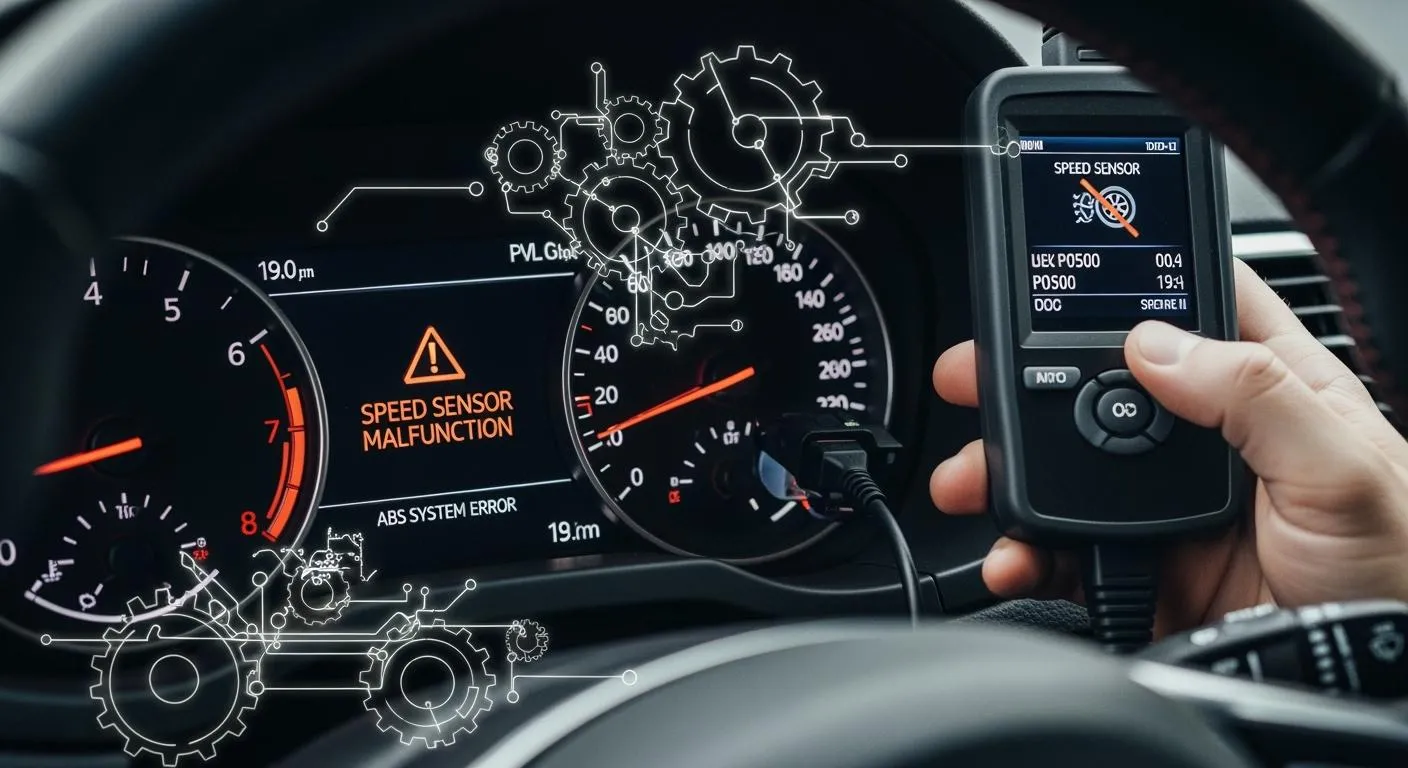
You can spot bad speed sensor signs quickly if you know what to look for. Watch out for these issues:
- Speedometer jumps or drops suddenly
- Transmission shifts hard or late
- Warning lights appear on your dashboard
- Cruise control stops working
Catching a symptom early keeps you safer on the road and helps your car run better. These signs are easy to notice. Keep reading to learn what they mean and what steps you can take.
Key Takeaways
- Watch for erratic speedometer readings. Sudden jumps or drops indicate a potential speed sensor issue.
- Pay attention to warning lights on your dashboard. Lights like the check engine or ABS warning signal sensor problems.
- Notice transmission shifting problems. Hard or delayed shifts often point to a faulty speed sensor.
- Check cruise control functionality. If it fails to engage or disengages unexpectedly, the speed sensor may be at fault.
- Conduct regular visual checks of the speed sensor. Look for loose wires, corrosion, or dirt to catch issues early.
Speed Sensor Basics
What Does a Speed Sensor Do?
You rely on a speed sensor to keep your vehicle running smoothly. This small device measures how fast your wheels turn and sends that information to your car’s computer. You see the results every time you check your speedometer or use cruise control. The golf cart speed sensor works in a similar way, helping electric carts maintain steady speeds and safe operation.
Nova Technology Company (HK) Limited stands out as a HiSilicon-designated solutions partner. The company specializes in chip-level solutions and system integration for automotive and industrial applications. You benefit from their expertise in advanced semiconductor technology, which supports reliable speed sensor performance in vehicles and golf carts.
Here are the main functions of a speed sensor in modern vehicles:
- Transmission Control: Sends speed and direction data to the transmission control module for smooth gear changes.
- ABS and Traction Control: Provides data to detect wheel slipping and adjust braking or engine power.
- Cruise Control: Delivers speed information to keep your vehicle at a constant speed.
- Odometer and Speedometer: Supplies accurate speed data for distance measurement.
- Fuel Economy: Informs the engine control module to optimize air/fuel ratio and ignition timing for better efficiency.
You notice that the golf cart speed sensor plays a similar role in electric carts, ensuring smooth acceleration, safe braking, and efficient battery use.
Why Is It Important?
A speed sensor affects many parts of your vehicle. You depend on it for safe driving and reliable performance. The golf cart speed sensor helps you avoid sudden stops or jerky movements, making your ride comfortable and predictable.
The table below shows how a speed sensor contributes to overall vehicle performance:
| Application | Contribution to Vehicle Performance |
|---|---|
| Speed Monitoring | Enhances driver safety and fuel efficiency by tracking vehicle speed in real-time. |
| Anti-lock Braking Systems (ABS) | Prevents wheel lock-up during braking, improving safety in slippery conditions. |
| Transmission Control | Optimizes gear shifts for smoother transitions, enhancing drivability and efficiency in vehicles. |
You see that the golf cart speed sensor supports these benefits in smaller vehicles, too. When you spot issues early, you protect your vehicle’s systems and keep your ride safe.
Bad Speed Sensor Signs

You can spot bad speed sensor signs by paying attention to how your vehicle behaves. These signs help you catch problems early and keep your car running safely. Here are the most common symptoms you should look for:
Erratic Speedometer Readings
You notice the speedometer needle jumping, sticking, or staying at zero while driving. This is one of the most obvious bad speed sensor signs. Sometimes, the speedometer doesn't work at all, or you see incorrect speedometer readings. Dirt, corrosion, or loose connections often cause these issues. When the sensor fails, other systems that rely on speed data, like cruise control or anti-lock brakes, may also stop working. If you see the speedometer acting strangely, you should check for a bad speed sensor.
- Speedometer needle jumps or drops suddenly
- Speedometer stays at zero even when moving
- Speedometer readings are inaccurate or inconsistent
Tip: If you see the speedometer acting up, check for loose wires or signs of corrosion near the sensor.
Transmission Shifting Problems
You may feel the transmission shifting hard, late, or not at all. This symptom often points to a bad speed sensor. The transmission relies on accurate speed data to change gears smoothly. When the sensor sends incorrect information, the transmission can enter "limp mode," which limits your driving speed and gear options. You might also hear unusual noises or feel vibrations from the transmission area.
- Transmission shifts harshly or with delays
- Vehicle gets stuck in one gear or enters limp mode
- Unusual noises or vibrations from the transmission
Warning Lights On Dashboard
You see warning lights like the check engine light, ABS warning, traction control, or stability control light. These lights are common symptoms of a bad speed sensor. The dashboard lights turn on when the car’s computer detects a problem with the wheel speed sensor. If you notice these lights, you should check for stored fault codes using a diagnostic tool.
- Check engine light turns on
- ABS warning light activates
- Traction control or stability control warning lights appear
Note: Dashboard warning lights often signal sensor issues before you feel any driving problems.
Cruise Control Not Working
You try to use cruise control, but it fails to engage or suddenly disengages. This is another bad speed sensor sign. Modern vehicles depend on accurate speed data to keep cruise control working. If the sensor is faulty, cruise control may not work at all. Other causes include blown fuses, damaged wiring, or malfunctioning switches, but a bad speed sensor is a frequent culprit.
- Cruise control fails to turn on
- Cruise control disengages unexpectedly
- System does not maintain set speed
Reduced Engine Power
You notice the engine feels weak or struggles to accelerate. This symptom can result from a bad speed sensor sending incorrect data to the engine control module. The engine may stall, have trouble starting, or use more fuel than usual. The sensor helps the engine control unit manage fuel delivery and ignition timing. When it fails, the engine cannot perform at its best.
- Engine power drops suddenly
- Vehicle struggles to accelerate
- Increased fuel consumption or engine stalling
Difficulty Maintaining Speed
You find it hard to keep a steady speed while driving. This is a common symptom of a bad speed sensor. The sensor helps the car’s computer adjust engine power and transmission shifts. If the sensor fails, the vehicle may lose speed or surge unexpectedly. You may also notice the car skidding or losing control, especially in slippery conditions.
- Vehicle speed fluctuates without input
- Car loses speed or surges unexpectedly
- Difficulty keeping a steady pace on highways
Callout: If you experience any of these bad speed sensor signs, you should act quickly. Early detection prevents bigger problems and keeps you safe.
Common Symptoms of a Faulty Transmission Speed Sensor

A faulty transmission speed sensor can cause several noticeable problems in your vehicle. You need to recognize these symptoms early to avoid bigger issues and expensive repairs. Here’s what you should watch for:
Delayed or Harsh Shifting
You may feel your car shift gears later than usual or with a sudden jolt. This happens when a faulty transmission speed sensor sends incorrect signals to the transmission control module. The module cannot tell when to shift, so you experience delayed or harsh shifting. Sometimes, your car may not shift at all or may enter a failsafe mode to protect the transmission.
- The transmission shifts late or skips gears.
- You feel a hard jolt when the car changes gears.
- The car may stay in one gear or refuse to shift.
- The check engine light may turn on.
If you notice erratic shifting, you should check the speed sensor right away. Ignoring this sign can lead to more serious problems.
Incorrect Gear Ratios
A faulty transmission speed sensor can confuse the engine control unit. The car may pick the wrong gear for your speed. This makes driving uncomfortable and can damage the transmission over time. You might notice the car revving too high or struggling to accelerate.
- The transmission shifts at the wrong time.
- The car feels sluggish or over-revs.
- You hear unusual noises during gear changes.
- The vehicle may enter limp mode to prevent damage.
When the sensor fails, the car cannot match the correct gear ratio to your driving speed. This affects your control and safety.
Potential Transmission Failure
If you ignore the signs of a faulty transmission speed sensor, you risk complete transmission failure. The transmission may stop working, leaving you stranded. Repairing or replacing a transmission costs much more than fixing a sensor.
- The car refuses to move or slips out of gear.
- You smell burning or see leaking fluid.
- The transmission makes loud clunking noises.
Take action as soon as you spot these symptoms. Early repairs protect your car and your wallet.
A faulty transmission speed sensor can cause many problems, but you can prevent major damage by acting quickly.
How to Confirm Speed Sensor Symptoms
You can confirm speed sensor symptoms at home before you visit a mechanic. These steps help you spot the problem early and avoid unnecessary repairs.
Visual Checks
Start by looking for obvious issues. Check the area around the speed sensor for loose or damaged wires. Corrosion or dirt can also cause problems. If you see any broken connectors or rust, you may have found the source of the symptom. Make sure the sensor sits firmly in place and nothing blocks it.
- Inspect wires for damage or looseness
- Look for corrosion or dirt on the sensor
- Check that the sensor is mounted securely
Tip: Use a flashlight to see hidden spots around the sensor. Clean any dirt gently with a soft brush.
Using Diagnostic Tools
A diagnostic tool, like an OBD-II scanner, can help you confirm speed sensor symptoms. Plug the scanner into your car’s diagnostic port. Turn on the ignition and follow the tool’s instructions. The scanner will show fault codes if the sensor has failed. Codes related to the speed sensor often start with “P05” or “P07.” These codes point to issues with speed data or transmission signals.
- Connect the OBD-II scanner to your vehicle
- Read any stored fault codes
- Look for codes linked to speed sensor or transmission errors
A diagnostic tool gives you clear evidence of a faulty sensor. This step saves time and helps you explain the problem to a mechanic.
When to Get Help
If you still notice speed sensor symptoms after these checks, you should seek professional help. Warning lights, shifting problems, or cruise control failure mean the issue may be serious. A certified technician can run advanced tests and replace the sensor if needed.
Callout: Do not ignore ongoing symptoms. Quick action keeps your car safe and prevents bigger repairs.
What to Do Next
DIY Checks and Fixes
You can handle some speed sensor issues at home with basic tools. Start by checking for loose wires or visible dirt around the sensor. Clean the area gently with a soft brush. If you see corrosion, use electrical contact cleaner. Make sure the sensor sits firmly in its place. You can also use an OBD-II scanner to read any error codes. If you find a code related to the speed sensor, clear it and see if the symptom returns during a short drive.
Tip: Always disconnect the battery before touching any electrical parts to avoid shocks or damage.
When to See a Mechanic
Some problems need a professional’s help. You should visit a mechanic if you notice any of these warning signs:
- The ABS warning light stays on.
- The speedometer acts erratically or stops working.
- The transmission shifts harshly or at the wrong time.
- The engine has trouble starting.
- You feel reduced power or see increased fuel use.
These signs mean the speed sensor may have failed. The ABS warning light is especially important because it affects your safety during braking. A mechanic can use advanced tools to confirm the problem and fix it quickly.
Replacement Tips
If you decide to replace the speed sensor yourself, follow these steps for vehicles made after 2020:
- Remove the front left wheel.
- Take off the left front fender garnish.
- Remove the clips from the wheel arch liner and pull it back.
- Disconnect the electrical harness from the sensor.
- Release the clips and remove the grommet holding the sensor cable.
- Remove the bolt and take out the sensor.
- Install the new sensor and secure it with the bolt.
- Fasten the clips and grommet for the cable.
- Reconnect the electrical harness.
- Put the wheel arch liner and fender garnish back.
- Reinstall the wheel.
- Test drive at 25 mph in a straight line for at least five seconds to let the system check itself.
Note: Always use the correct replacement part for your vehicle model.
If you follow these steps, you can solve most speed sensor problems and prevent the symptom from coming back.
You can spot bad speed sensor issues by watching for erratic speedometer readings, warning lights, and shifting problems. Quick action keeps your vehicle safe and prevents costly repairs. Most symptoms are easy to confirm with simple checks. Use these steps before you seek professional help:
- Inspect your speed sensor regularly.
- Watch for sudden speedometer jumps or freezes.
- Take ABS warning lights seriously.
- Check for physical damage like cracks or corrosion.
Early detection gives you peace of mind and helps your car perform at its best.
FAQ
What causes speed sensor failure?
You often see speed sensor failure from exposure to dirt, moisture, or heat. Physical damage and electrical issues also lead to sensor problems. Regular checks help you spot early signs and prevent bigger issues.
How do I find a speed sensor error code?
You use an OBD-II scanner to read error codes. Plug the scanner into your car’s diagnostic port. Look for codes related to the speed sensor, usually starting with “P05” or “P07.”
Can I drive with a bad speed sensor?
You can drive, but you risk safety and damage. A faulty sensor affects speedometer readings, transmission shifts, and braking systems. You should fix the issue quickly to avoid costly repairs.
How much does it cost to replace a speed sensor?
You pay between $50 and $250 for parts and labor. The price depends on your vehicle model and where you get the repair. DIY replacement saves money if you have basic tools.
Will a bad speed sensor affect fuel economy?
You notice lower fuel efficiency when the sensor fails. The engine control unit cannot optimize fuel delivery, so your car uses more gas. Fixing the sensor restores normal fuel consumption.