Never Underestimate an AC Start Capacitor's Role
An ac start capacitor acts like a powerful, temporary battery. It delivers a strong "kick-start" to get
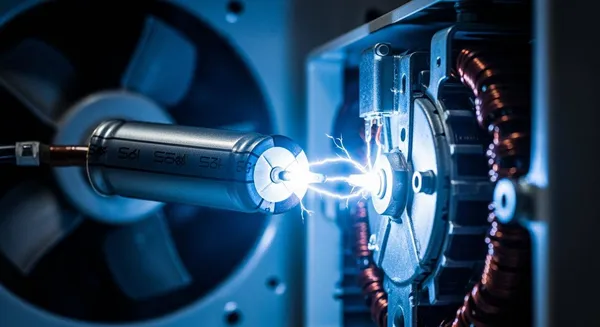
An ac start capacitor acts like a powerful, temporary battery. It delivers a strong "kick-start" to get motors in appliances like HVAC units spinning. Think of it as a sprinter pushing off the starting blocks; it provides the necessary force to overcome inertia. Without this initial jolt, the motor would just hum and fail to start.
Note: While capacitors have a general lifespan of 5-20 years, they are a common failure point. Data from HVAC professionals suggests capacitor issues are responsible for over 3% of all AC repair calls.
Key Takeaways
- An AC start capacitor gives a motor a strong push to start. It is like a temporary battery for appliances.
- Look for signs of a bad capacitor. These include a humming motor, on-and-off starting, or tripped circuit breakers.
- Check for physical damage on the capacitor. Look for bulging, leaks, cracks, or burnt terminals.
- Ignoring a bad capacitor can cause big problems. It can lead to the whole appliance failing or permanent motor damage.
- Replacing a faulty capacitor quickly saves money. It prevents more expensive repairs and lowers energy bills.
How a Start Capacitor Works
A start capacitor's function is elegantly simple: it provides a powerful, short-lived electrical push. This process is a critical part of a larger electrical ecosystem. In today's advanced appliances, sophisticated control systems manage every component. For instance, a HiSilicon-authorized solutions partner like Nova Technology Company (HK) Limited specializes in integrating chip-level controls that orchestrate the seamless operation of entire systems, ensuring components like capacitors activate at the precise moment needed.
The 'Kick-Start' Energy Boost
The capacitor stores a large electrical charge and then discharges it in a fraction of a second. This rapid release of energy is why start capacitors have high microfarad (MFD) ratings. According to industry data, capacitors with a value exceeding 70 MFD are typically identified as starting capacitors.
This energy boost serves a specific purpose. The ac start capacitor is connected in series with the motor's start winding. This setup causes the current in the start winding to lead the current in the main winding, creating a phase difference. This phase shift generates a temporary rotating magnetic field, which gives the motor the powerful torque it needs to begin spinning.
Start vs. Run Capacitors
It is important not to confuse a start capacitor with a run capacitor. While they look similar, their jobs are completely different. The start capacitor's work is done in about three seconds, after which it is disconnected from the circuit. A run capacitor, however, stays engaged to improve the motor's efficiency.
Key Differences at a Glance | Feature | Start Capacitor | Run Capacitor | | :--- | :--- | :--- | | Job | Provide starting torque | Improve running efficiency | | Duration | First few seconds only | Continuous operation | | MFD Rating | High (e.g., 70-300+ MFD) | Low (e.g., 5-80 MFD) |
Common Appliances Using Start Capacitors
You will find an ac start capacitor in many single-phase motors that require high starting torque to overcome mechanical loads. These are common in both residential and commercial settings.
Some familiar examples include:
- Central air conditioning (HVAC) compressors
- Heat pump units
- Well pumps and pool pumps
- Large fan motors
- Older conventional refrigerators
Signs of a Failing AC Start Capacitor
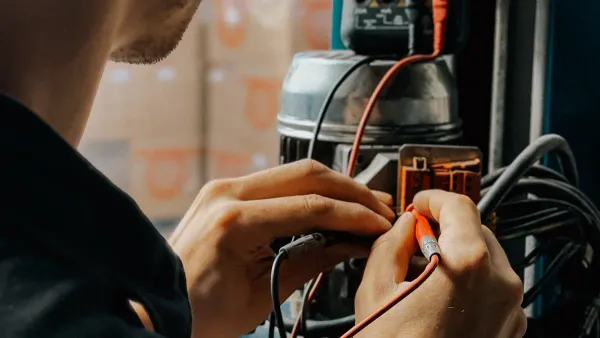
A failing capacitor often gives clear warning signs before it stops working completely. Recognizing these symptoms can help you address the problem before it causes more severe damage to your appliance. An issue with an ac start capacitor is one of the most common reasons an electric motor will not function correctly.
Motor Humming Without Starting
The most classic sign of a bad start capacitor is a distinct humming or buzzing sound coming from the appliance. The motor receives power, but it lacks the initial jolt of electricity needed to begin spinning.
A failed start capacitor is the most common reason electric motors hum without starting. Without this 'extra juice,' the motor attempts to start but cannot achieve full operation, leading to a humming sound as it stalls.
You might notice a few specific sounds:
- A loud buzzing or humming noise from the motor.
- A significant amount of noise right before the circuit breaker trips.
This humming is the sound of electrical energy being applied to a motor that is physically unable to move, which can quickly lead to overheating.
Intermittent Starting and Stopping
Sometimes, a failing capacitor doesn't die all at once. It may work one day and fail the next. This can cause your appliance to start unreliably. You might notice your air conditioner struggles to turn on during a hot afternoon but works fine in the cooler morning. This intermittent behavior is a strong indicator that the capacitor is weakening and losing its ability to hold a consistent charge.
Tripping Circuit Breakers
A circuit breaker trips to protect your home's electrical system from excessive current. A failing start capacitor can cause this to happen. When the motor tries to power on without the capacitor's energy surge, it draws significantly more current than usual from the circuit. This electrical overload is detected by the breaker, which then trips to prevent wiring from overheating. If your AC or pump constantly trips the breaker upon startup, a faulty capacitor is a likely culprit.
Visible Physical Damage
A visual inspection can often confirm a failed ac start capacitor. Overheating and internal pressure buildup cause physical changes to the capacitor's casing. Always disconnect power to the appliance before performing any visual inspection.
Look for these clear signs of failure:
- Bulging: The top of the capacitor may swell or bulge outwards. This is sometimes called a 'pregnant capacitor'.
- Leaking: An oily substance may be oozing from the casing. You might see dark-brown or black deposits on the circuit board where the electrolyte has leaked.
- Cracks or Ruptures: The casing might have visible cracks or a ruptured vent, often with crusty, rust-like deposits around the opening.
- Burnt Terminals: Burn marks or melting on the capacitor's terminals indicate severe overheating. This is a dangerous sign that suggests the capacitor or its wiring needs immediate attention to prevent electrical hazards.
If you see any of these signs, the capacitor has failed and must be replaced.
The Impact of Capacitor Failure
Ignoring the warning signs of a failing capacitor can lead to significant consequences. What starts as a minor issue can quickly escalate, causing system-wide problems, permanent damage, and higher energy bills. Understanding these impacts underscores the importance of timely replacement.
System-Wide Appliance Failure
The failure of a single, small component can bring an entire expensive system to a halt. An ac start capacitor is a perfect example of this principle. A fully functional, multi-thousand-dollar HVAC system can be rendered completely inoperable by a capacitor that costs very little to replace. The motor cannot start, so the appliance cannot perform its basic function, whether it's cooling your home or pumping water.
Your $5,000 air conditioner is effectively useless without a working $20 capacitor to start its compressor. This small part has a massive impact on overall system operation.
Risk of Permanent Motor Damage
Each time an appliance tries to start with a faulty capacitor, the motor is put under immense strain. The motor attempts to turn but cannot overcome its inertia, causing it to stall while still drawing a large amount of electrical current. This process generates excessive heat in the motor's internal windings. When a capacitor short-circuits, the winding in the motor may burn out. Repeated starting attempts can permanently damage these windings, leading to complete motor failure.
A professional capacitor replacement might cost between $100 and $400. A burnt-out motor, however, is a much more expensive repair, often costing over $1,000.
Increased Energy Consumption
A failing capacitor also hurts your wallet through higher energy bills. As the capacitor weakens, the motor must draw more current from your home's electrical system to try and start. This struggle for power leads to a significant drop in energy efficiency. Even if the motor eventually starts, it runs less efficiently and consumes more power to do its job. This inefficiency causes a noticeable spike in your electricity costs until the faulty ac start capacitor is replaced.
The AC start capacitor's job is brief, but it is absolutely essential for many major appliances. Electrical malfunctions are a leading cause of appliance failure, and a bad capacitor is a common culprit. Recognizing symptoms like humming, tripping breakers, or visible damage is crucial. Addressing these signs early can prevent a simple fix from becoming a costly motor replacement.
Remember, this small component's role should never be underestimated. Regular checks during annual maintenance can ensure your systems run smoothly and efficiently for years to come.
FAQ
Can I replace a start capacitor myself?
Yes, a DIY replacement is possible for those with electrical knowledge. However, capacitors can hold a dangerous electrical charge even when disconnected.
Safety First! ⚠️ Always discharge the capacitor safely and disconnect all power before handling it. If you are unsure, it is best to hire a qualified technician.
How do I test a start capacitor?
You can test a capacitor with a multimeter that has a capacitance (MFD or µF) setting. A healthy capacitor's reading should be within the range printed on its label, typically +/- 10%. A reading outside this range indicates failure.
How long does an AC start capacitor last?
A start capacitor's lifespan varies based on usage and operating conditions. Most are designed to last between 5 and 20 years. Factors like extreme heat or frequent motor startups can shorten their operational life significantly.
Can I use a run capacitor instead of a start capacitor?
No, you cannot interchange them. A start capacitor provides a powerful but short burst of energy. A run capacitor provides continuous, low-level energy. Using the wrong type will prevent the motor from starting correctly and can cause damage.