

SI9926DY-T1-E3 Sourcing Guide: Cost-Effective Alternatives and Authentic Supplier Tips
Expert guide on SI9926DY-T1-E3 Sourcing Guide: Cost-Effective Alternatives and Authentic Supplier Tips. Technical specs, applications, sourcing tips for engineers and buyers.
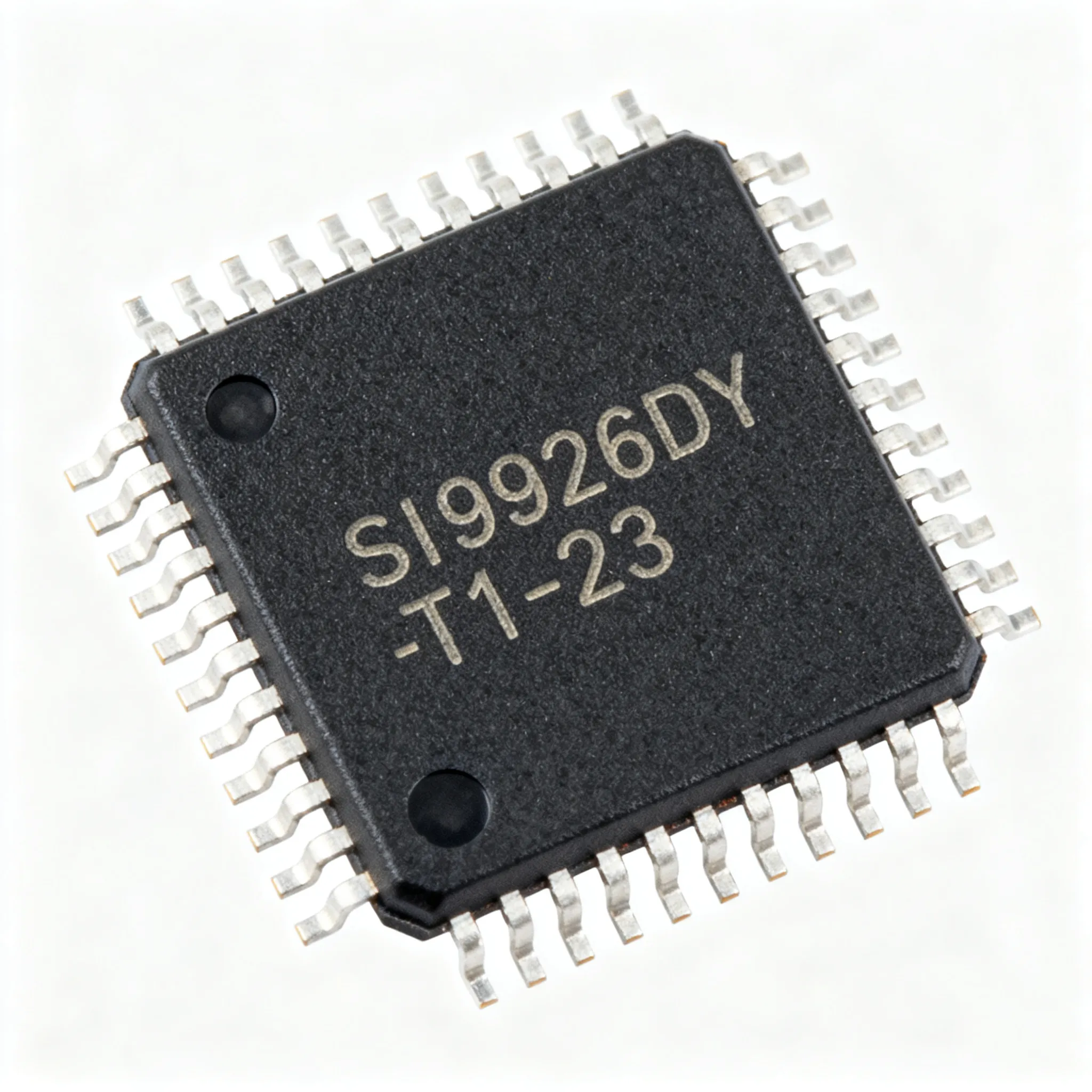
Why SI9926DY-T1-E3 Sourcing Is Getting Tougher in 2026
If you’ve been buying dual N‑channel MOSFETs for battery‑powered load switches, motor bridges, or power‑path controllers, you already know the SI9926DY-T1-E3 is one of those parts that “just works.” But in 2026, “just working” isn’t enough when the supply chain keeps throwing curveballs. Three converging pressures are forcing procurement teams and design engineers to rethink their single‑source dependency on this 20‑V logic‑level dual MOSFET.
First, lead‑time creep. Even mature SO‑8 MOSFETs that used to sit on the shelf are now subject to 26‑week or longer factory lead times, especially when a single foundry or assembly site becomes a bottleneck. The 2025–2026 semiconductor shortages, analyzed in detail by AESTECHNO, show that allocation constraints on legacy nodes are still very real. When a line stops for equipment maintenance or a wafer‑start priority shifts to higher‑margin chips, dual MOSFETs like the SI9926DY-T1-E3 can suddenly disappear from authorized distribution for months.
Second, counterfeit risk is climbing. The 2026 supply chain risk report from Strategic Sourcing International flags shortages as the primary driver of counterfeit infiltration. When buyers get desperate, gray‑market brokers flood the channel with relabeled, untested, or moisture‑damaged parts. A dual MOSFET in a common SO‑8 package is an easy target — it’s small, easy to remark, and often ordered in high volumes without lot‑level traceability.
Third, the engineering cost of a line‑down event has never been higher. A missing reel of SI9926DY-T1-E3 can halt a production run of power‑management boards that might be worth six figures a day. That’s why leading procurement teams are now baking dual‑sourcing into the bill of materials from the start. The dual‑sourcing qualification framework published by SupplyICs makes a compelling case: a second source isn’t just insurance — it’s a strategic lever that can cut lead times, reduce cost, and give you negotiation power when allocation hits.
In short, the old habit of buying the Fairchild SI9926DY-T1-E3 from a single franchised distributor and forgetting about it is no longer safe. You need a plan that includes pin‑compatible alternatives, rigorous supplier vetting, and a qualification timeline that starts now — not when the shortage hits.
SI9926DY-T1-E3 at a Glance: Dual N-Channel, 20V, Logic-Level Drive
Before evaluating alternatives, it’s worth a quick refresh on what makes the SI9926DY-T1-E3 so widely used. Originally introduced by Fairchild Semiconductor, this device packs two independent N‑channel MOSFETs into a standard SO‑8 package. The headline spec is the logic‑level gate threshold: the part is fully specified for 2.5‑V gate drive, which means you can turn it on directly from a 2.8‑V or 3.3‑V microcontroller GPIO without a level shifter or charge pump.
That capability makes it a workhorse in portable electronics, where a single Li‑ion cell (3.0 V to 4.2 V) must switch loads like haptic drivers, LED backlights, or USB power paths. Because both channels share the same die, you get matched RDS(on) and thermal behavior, which is critical for paralleling or for complementary switching in H‑bridge configurations.
The Vishay Siliconix counterpart, SI9926CDY-T1-E3, is often treated as a direct second source. Both datasheets — available from Fairchild and Vishay — confirm the same pinout and nearly identical electrical ratings. The table below pulls the key parameters you’ll care about when comparing datasheets side by side.
| Parameter | SI9926DY-T1-E3 (Fairchild) | SI9926CDY-T1-E3 (Vishay) | Notes |
|---|---|---|---|
| Drain‑Source Voltage (VDS) | 20 V | 20 V | Identical rating; suitable for 1‑2 cell Li‑ion systems. |
| Continuous Drain Current (ID) per channel | 8 A (typical, TA=25 °C) | 8 A | Both assume adequate PCB copper for heat sinking. |
| RDS(on) max at VGS=4.5 V | 0.018 Ω | 0.018 Ω | Low on‑resistance minimizes conduction losses. |
| RDS(on) max at VGS=2.5 V | 0.022 Ω | 0.025 Ω | Slight difference; bench validation advised for 2.5 V drive. |
| Gate Threshold Voltage (VGS(th)) | 0.6 V to 1.5 V | 0.6 V to 1.5 V | Both turn on well below 2.5 V logic levels. |
| Total Gate Charge (Qg) typical | 8.5 nC | 8.0 nC | Minor difference; negligible for most switching frequencies. |
| Package | SO‑8 | SO‑8 | Pin‑compatible; same footprint and land pattern. |
Tip: If your design operates the MOSFET at VGS = 2.5 V and you’re pushing the thermal envelope, test the Vishay alternative on a pilot lot. The slightly higher RDS(on) at 2.5 V could increase self‑heating by a few degrees, but in most battery‑powered applications with duty cycles below 50 %, the difference is academic.
Both parts are available through authorized distribution; Newark, for instance, stocks the Vishay SI9926CDY-T1-E3 with same‑day shipping options (see Newark listing). The original Fairchild part, now under the onsemi banner, can still be sourced, but allocation has become unpredictable — which brings us to the alternatives.
Pin-Compatible Alternatives to SI9926DY-T1-E3: Vishay and Beyond
When the SI9926DY-T1-E3 lead time stretches past 26 weeks, you need more than a single second source. The good news is that the SO‑8 dual N‑channel MOSFET market is deep, and several manufacturers offer drop‑in replacements that match the original footprint and key electrical specs. The table below compares the original Fairchild part, the widely accepted Vishay alternative, and a third candidate from Diodes Incorporated — all pin‑compatible and available through mainstream distribution.
| Comparison Metric | SI9926DY-T1-E3 (Fairchild/onsemi) | SI9926CDY-T1-E3 (Vishay) | DMG9926UDM-7 (Diodes Inc.) | Selection Notes |
|---|---|---|---|---|
| VDS (max) | 20 V | 20 V | 20 V | All three meet the same voltage rating. |
| ID (continuous, per channel) | 8 A | 8 A | 8 A | Current handling is identical; verify PCB thermal design. |
| RDS(on) max at 4.5 V | 0.018 Ω | 0.018 Ω | 0.018 Ω | Conduction losses are equivalent. |
| RDS(on) max at 2.5 V | 0.022 Ω | 0.025 Ω | 0.025 Ω | Diodes part mirrors Vishay; both slightly higher than Fairchild. |
| Package / Pinout | SO‑8 | SO‑8 | SO‑8 | 100 % pin‑compatible; no layout change required. |
| Typical Lead Time (authorized disti, 2026) | 26+ weeks (allocation constrained) | 8–12 weeks | 10–14 weeks | Vishay and Diodes show markedly shorter lead times. |
| Relative Cost Indicator (1ku resale) | Baseline (highest when scarce) | 10–15 % lower | 15–20 % lower | Real‑world BOM cost reduction aligns with Hitop‑tech’s 20–40 % savings on pin‑compatible swaps. |
The numbers in the “Relative Cost Indicator” row aren’t hypothetical. Hitop‑tech’s 2025 alternative‑component program documented BOM cost reductions of 20–40 % when moving from allocation‑constrained parts to readily available pin‑compatible replacements, with lead times dropping from 26+ weeks to under 12 weeks. While that study focused on TI analog ICs, the same dynamic applies to dual MOSFETs: a healthy second source market drives down both price and wait time.
For the SI9926DY-T1-E3, the Vishay SI9926CDY-T1-E3 is the most straightforward swap. It’s already listed in many approved vendor lists (AVLs) and has a long history of reliable performance. The Diodes Inc. DMG9926UDM-7 offers an additional layer of supply security; it’s manufactured in a different fab, so a single event (fire, earthquake, tool downtime) is unlikely to knock out both Vishay and Diodes supply simultaneously. If your company’s dual‑sourcing policy requires geographically diverse wafer fabs, this is a strong argument for qualifying the Diodes part alongside the Vishay one.
Key Takeaway: You can build a three‑source BOM today — Fairchild/onsemi, Vishay, Diodes Inc. — all in the same SO‑8 footprint, with no PCB changes. The qualification effort is front‑loaded, but the payoff is a supply chain that can absorb shocks without stopping your line.
How to Source Authentic SI9926DY-T1-E3 and Alternatives Without the Counterfeit Trap
Having a list of pin‑compatible alternatives is only half the battle. The other half is making sure the parts you receive — whether original SI9926DY-T1-E3 or a second source — are genuine, properly stored, and traceable. The 2026 supply chain risk landscape, as detailed by Strategic Sourcing International, makes it clear that counterfeits thrive when authorized channels run dry. A dual MOSFET is small, easy to blacktop, and often ordered in reels of 2500 — a perfect storm for a broker looking to offload floor sweepings.
Here’s a practical playbook that combines supplier vetting, component verification, and long‑term qualification strategies.
1. Vet suppliers before you vet parts
Start with the procurement fundamentals laid out in Elisaindustriq’s electronic component procurement guide: part identity first, then availability, then cost. For any source outside your existing franchised network, apply the OEM tier‑1 evaluation criteria described in Alibaba’s B2B supplier assessment framework: check business licenses, factory audit reports, ISO certifications, and transaction history. If a distributor can’t provide a valid certificate of conformance (CoC) with the manufacturer’s logo, walk away.
2. Qualify second sources on a realistic timeline
Rushing a second source into production is how counterfeits slip through. The SupplyICs dual‑sourcing framework recommends a 12‑ to 24‑month qualification window. That timeline includes sample evaluation, electrical characterization across temperature, reliability testing (HTOL, temperature cycling), a pilot production run, and final sign‑off by your quality and engineering teams. If you start now, you’ll have a qualified alternative in place before the next allocation crunch.
3. Monitor PCN/PDN alerts religiously
A part that is pin‑compatible today can change tomorrow. Use tools like SiliconExpert or Z2Data to track product change notifications (PCNs) and product discontinuance notices (PDNs) for every MOSFET on your AVL. The AESTECHNO shortage analysis specifically calls out systematic PCN/PDN reading as a key mitigation strategy. If the Vishay SI9926CDY-T1-E3 undergoes a die shrink or a fab transfer, you want to know before the new revision lands on your SMT line.
4. Leverage EMS co‑procurement for hard‑to‑find lots
When even second sources are tight, consider the co‑procurement model described by PCBONLINE. Large EMS providers aggregate demand across multiple customers, giving them access to allocation and volume pricing that a single mid‑size OEM can’t command. If your contract manufacturer has a trusted semiconductor sourcing arm, let them pull the SI9926DY-T1-E3 or its alternatives through their channels — but insist on full traceability back to the original manufacturer.
5. Verify every incoming batch
Even from authorized distribution, spot‑checking is a cheap insurance policy. The table below summarizes a quick‑turn authenticity verification workflow that any in‑house lab can execute without sending parts to a third‑party test house.
| Verification Step | What to Check | Tools / Methods | Red Flags |
|---|---|---|---|
| Visual & Marking Inspection | Laser marking consistency, date code format, package mold marks | Microscope (10–20x), known‑good reference unit | Rough edges, inconsistent font, missing country‑of‑origin dot |
| Lot Code Traceability | Verify lot code with manufacturer’s or authorized distributor’s database | Online traceability portal, direct email to franchised disti | Lot code not recognized, date code older than 3 years without proper storage cert |
| Electrical Curve‑Trace | I‑V characteristics of body diode and MOSFET channel at low VDS | Curve tracer or source‑measure unit (SMU) | RDS(on) deviates >10 % from datasheet, body diode VF out of spec |
| X‑Ray / Decapsulation (high‑value lots) | Die size, bond wire count, leadframe integrity | X‑ray inspection system, chemical decap | Die size mismatch, missing bond wires, different leadframe design |
| Moisture Sensitivity Check | Verify HBM/MSL level on bag label, check humidity indicator card | Visual, MSL baking if card shows >10 % RH | Opened moisture barrier bag, expired floor life, no desiccant |
If a batch fails any of these checks, quarantine it immediately and notify your quality team. The cost of a few hours of lab time is negligible compared to a field return caused by a counterfeit MOSFET that fails short under load.
SI9926DY-T1-E3 Sourcing FAQ: Answers for Senior Engineers and Buyers
- Q: Is the Vishay SI9926CDY-T1-E3 a true drop‑in replacement for the Fairchild SI9926DY-T1-E3?
- Yes, the SI9926CDY-T1-E3 is a pin‑compatible dual N‑channel MOSFET in the same SO‑8 package with nearly identical electrical ratings. Both parts share the same VDS (20 V), ID (8 A), and RDS(on) at 4.5 V (0.018 Ω). Minor differences exist in RDS(on) at 2.5 V (0.022 Ω vs. 0.025 Ω) and gate charge (8.5 nC vs. 8.0 nC). A quick bench validation on a few boards is recommended, but for most applications the Vishay part is widely accepted as a second source.
- Q: How much can I realistically cut lead times by switching to an alternative dual MOSFET?
- Industry examples, such as those documented by Hitop‑tech’s pin‑compatible replacement program, show lead‑time reductions from 26+ weeks to under 12 weeks when moving to a readily available alternative. For the SI9926DY-T1-E3, the Vishay SI9926CDY-T1-E3 is currently shipping in 8–12 weeks from authorized distribution, while the Diodes Inc. DMG9926UDM-7 hovers around 10–14 weeks. Actual lead times depend on your volume and supplier, but a well‑qualified second source can halve your wait.
- Q: What’s the fastest way to check if a batch of SI9926DY-T1-E3 is genuine?
- Start with a visual inspection under a microscope: compare laser markings, date code format, and package texture against a known‑good unit. Cross‑check the lot code with the manufacturer’s or authorized distributor’s database. For high‑value or suspect batches, run a curve‑tracer test on a sample to compare I‑V characteristics with the datasheet. Any deviation in RDS(on) or body diode forward voltage is a red flag.
- Q: What are the hidden risks of buying from non‑authorized distributors for this part?
- The main risks are counterfeits, relabeled rejects, and parts with compromised moisture sensitivity levels (MSL). A non‑authorized source cannot guarantee proper dry‑pack storage, so you may receive parts that have absorbed moisture and will popcorn during reflow. Additionally, lack of traceability makes failure analysis nearly impossible. If a field failure occurs, you won’t be able to trace the lot back to the wafer fab, which can stall root‑cause investigation and delay corrective action.
- Q: How long should I plan for qualifying a second source for SI9926DY-T1-E3 in a production BOM?
- A realistic dual‑source qualification timeline is 12–24 months, as outlined in the SupplyICs semiconductor procurement framework. This includes sample evaluation, full electrical characterization over temperature, reliability stress testing (HTOL, temperature cycling), a pilot production run of at least 500–1000 units, and final approval by your quality and engineering teams. Starting the process now ensures you have a qualified alternative before the next supply disruption.
As you navigate the dual N‑channel MOSFET market, remember that supply resilience is built part by part. The SI9926DY-T1-E3 may be a commodity device, but its absence can stop a production line just as surely as a sole‑sourced microcontroller. By qualifying pin‑compatible alternatives now, vetting suppliers rigorously, and monitoring PCN/PDN alerts, you can turn a single‑source risk into a multi‑source strength. For mixed BOMs and flexible MOQs, IC-Online can help you consolidate sourcing across multiple MOSFET part numbers, reducing administrative overhead while keeping your options open.
References & Further Reading
- Dual Sourcing and Second Source Qualification: A Strategic Framework for Semiconductor Procurement in 2026 – SupplyICs
- TI Chip Alternatives 2025: Pin-Compatible Replacements Guide – Hitop-tech
- Electronic component shortages: causes, mitigation strategies – AESTECHNO
- Top Electronic Component Supply Chain Risks in 2026 – Strategic Sourcing International
- Electronic Component Procurement Guide for Real Buyers 2026 – Elisaindustriq
- How to Evaluate OEM Tier 1 Suppliers: Guide for B2B Buyers – Alibaba
- How to Find Alternative Electronic Components or Parts – PCBONLINE
- SI9926DY Datasheet – Fairchild Semiconductor (alldatasheet)
- SI9926CDY-T1-E3 Datasheet – Vishay Siliconix (alldatasheet)
- SI9926DY – DigChip IC database
- ← Previous ArticleNext Article >>
Related Articles
 Blog
BlogWhy Precision Electronics Rely on 5-Band Resistor Color Codes
The resistance color code 5 band adds a third significant digit and tighter tolerance, so precision electronics get the accuracy and reliability they demand.
 Blog
BlogWhat Is the Electronic Symbol Resistor? Resistor Symbols and Their Meaning
The electronic symbol resistor is a zigzag or rectangle representing a two-terminal component that limits current. Learn how it's used in circuits.
 Blog
BlogElectric Motor Stator and Rotor Basics for Electronic Functionality
The electric motor stator and rotor work together to convert electrical energy into motion. The stator creates a magnetic field, and the rotor spins to produce torque.
 Blog
BlogSMDJ70CA Datasheet and Pinout: Specs for Design and Sourcing
SMDJ70CA datasheet essentials, pinout overview, key specs, and design/sourcing checks for engineers and buyers. Request a quote on IC-Online.
 Blog
BlogWhat a Voltage Regulator Does | Background
What a voltage regulator does is keep output voltage steady by sensing changes and correcting them, protecting equipment and ensuring reliable power.
 Blog
BlogCounterfeit IC Risk Mitigation for Procurement Teams: Authenticity, Inspection, and Traceability
Procurement checklist: authenticity, traceability, and quality documentation to request with your component RFQ.