How NPN and PNP Transistors Align with Modern Electronics Topics in 2026
Npn and pnp transistor types drive switching, amplification, and signal processing in modern electronics, IoT, renewable energy, and automotive tech.
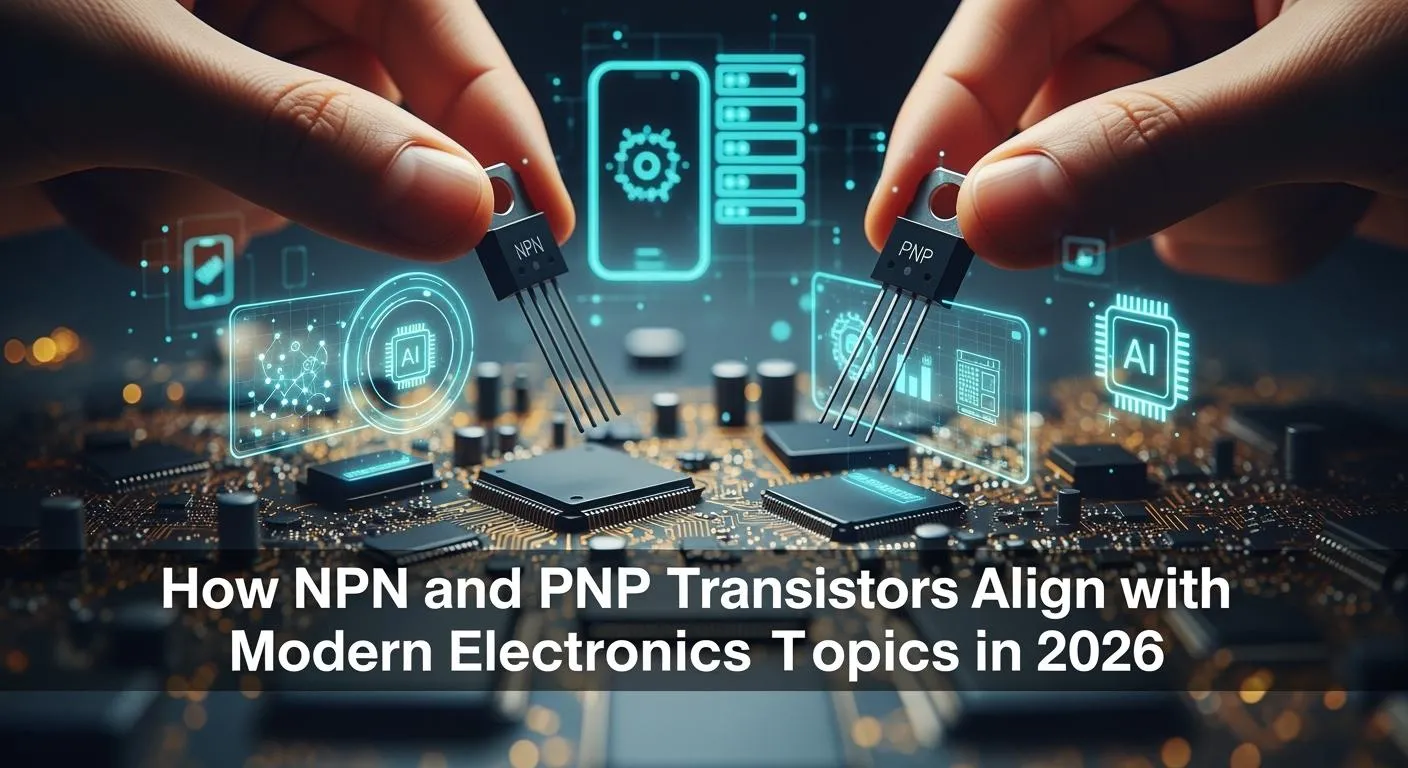
You see npn and pnp transistor types everywhere in today’s electronics. These devices help you control current, amplify weak signals, and switch circuits on and off. Engineers choose each transistor for its unique role in a project. You learn about transistor basics through hands-on kits and simulation tools. Transistor technology forms the core of modern devices.
Key Takeaways
- NPN transistors switch faster than PNP transistors, making them ideal for low-side switching applications.
- Use NPN transistors for high-speed amplification in audio and signal circuits, while PNP transistors are useful in complementary designs.
- In IoT and renewable energy systems, choose PNP transistors for power efficiency and NPN transistors for quick signal control.
NPN and PNP Transistor Roles in Modern Circuits

Switching Applications
You use npn and pnp transistor types in almost every modern electronic circuit for switching tasks. The main difference comes from how each bipolar device handles current and voltage. Npn transistors use electrons as the main charge carriers. This gives them higher mobility and lets them switch faster than pnp transistors, which use holes. You often see npn transistors in low-side switching. Here, the transistor connects the load to ground, making it easy to control with a positive voltage at the base. Pnp transistors, on the other hand, work best in high-side switching. They connect the load to the supply voltage and turn on when the base voltage is lower than the emitter.
Tip: Always check the direction of current flow and the control voltage when designing a switching circuit. Npn transistors conduct when the base is more positive than the emitter, while pnp transistors conduct when the base is more negative.
You find these switching roles in computer chips, power management modules, and control systems. For example, in a microcontroller-based lighting system, npn transistors switch LEDs on and off quickly, while pnp transistors handle high-side power delivery to sensors.
Here is a quick comparison:
| Feature | NPN Transistor | PNP Transistor |
|---|---|---|
| Switching Speed | Faster (electron-based) | Slower (hole-based) |
| Typical Use | Low-side switching | High-side switching |
| Current Flow | Collector to emitter | Emitter to collector |
Amplification Functions
You rely on npn and pnp transistor types for amplification in audio, analog, and digital circuits. Npn transistors dominate in high-speed and high-frequency amplification because electrons move faster than holes. This means you get better gain and frequency response. In audio amplifiers, npn transistors often drive the positive half of the signal, while pnp transistors handle the negative half in push-pull stages. This complementary setup improves efficiency and reduces distortion.
However, pnp transistors have a lower frequency response and can introduce more noise, especially at low frequencies. You need to design carefully to avoid thermal issues and non-linearities. In integrated circuits, matching npn and pnp transistors is important for balanced performance. Both types operate in the active region for linear amplification, which keeps the output proportional to the input. This is crucial for clear sound in speakers and accurate signal processing in sensors.
- Npn transistors provide high gain and fast response, making them ideal for modern audio and signal circuits.
- Pnp transistors, while slower, are useful in complementary designs and certain analog amplifiers.
Signal Processing Uses
You see npn and pnp transistor types at the heart of signal processing in communication devices, sensor systems, and advanced integrated circuits. Npn transistors boost weak signals in amplifiers, filter noise, and help with modulation. They play a key role in radio frequency (RF) circuits, oscillators, and sensor interfaces. You use them to amplify signals from microphones, photodiodes, and other sensors.
Pnp transistors also support signal processing, especially in circuits that require high-side control or need to reduce energy consumption. In some next-generation communication devices, pnp transistors help lower signal processing times and improve bandwidth. However, pnp transistors tend to have higher noise and lower gain, so you often combine them with npn transistors for better performance.
- Npn transistors maintain signal integrity in high-speed circuits, which is vital for data communication and sensor accuracy.
- Pnp transistors can help reduce noise in specific analog circuits, but you must manage their limitations.
In modern integrated circuits, you often find both npn and pnp transistors working together. This combination allows you to build complex, energy-efficient, and reliable electronic circuits for everything from smartphones to industrial controllers.
Transistor Integration with Emerging Tech

IoT and Wearable Devices
You see transistor technology at the core of every IoT and wearable device. The choice between npn and pnp transistor types shapes how you design for power efficiency and miniaturization. As you push for smaller devices, you need more transistors per chip. This demand drives you to use advanced bipolar structures. In these devices, battery life matters most. You select pnp transistor designs that reduce leakage currents and lower power use. You also use npn transistors for fast switching and signal control. These bipolar devices help you balance performance and energy savings. Nova Technology Company (HK) Limited, a HiSilicon-designated solutions partner, provides chip-level solutions and system integration for IoT and wearables. Their expertise supports you in integrating bipolar transistor arrays into compact ICs for smartwatches and health monitors.
Note: You can use simulation tools like Multisim Live, MATLAB, and CircuitVerse to test and learn about npn and pnp transistor circuits in your projects.
Renewable Energy Systems
You rely on transistor technology to improve renewable energy systems. In solar inverters, pnp transistors boost power conversion efficiency and reliability. They help you convert DC power to AC power with less loss. You also use pnp transistors for high-speed switching, which increases energy harvesting from solar panels. In wind energy, these bipolar devices let you control generator output and improve power quality. You use npn transistors for fast switching and signal processing in battery management systems. This extends battery life and raises system efficiency. In smart grids, pnp transistors support real-time monitoring and advanced power management.
- pnp transistors optimize power conversion and energy harvesting.
- npn transistors provide fast switching and signal processing.
- Bipolar transistor arrays help you manage charge cycles and reduce losses.
Automotive Electronics and Industry Trends
You see a strong trend toward npn transistor use in automotive electronics. In 2026, npn transistors dominate power management because they control current flow efficiently. You use them for amplification and switching in electric vehicles and advanced driver-assist systems. pnp transistors still play a key role in signal processing, handling high current and voltage levels. You choose between npn and pnp sensors based on system needs, wiring, and regional standards. Understanding these bipolar devices helps you design safer and more reliable automotive control systems.
- npn sensors are common in Asian and European vehicles.
- pnp sensors work well for specific control tasks.
- Bipolar transistor selection affects power use, wiring, and safety.
You can learn about these applications in university courses and online platforms. Many programs teach you about npn and pnp transistor operation, biasing, and amplifier design. You use simulation tools to build and test bipolar circuits before real-world deployment.
You see npn and pnp transistor types remain vital in modern electronics. Bipolar devices adapt to new technologies, including IoT and electric vehicles. Innovations in miniaturization and wide bandgap materials boost transistor performance. You rely on npn for high-speed tasks and pnp for positive logic. Bipolar transistors drive future advancements.
| Key Factor | Impact on Bipolar Transistor Use |
|---|---|
| High-Frequency Tasks | npn excels in speed |
| IoT Devices | npn and pnp transistor integration grows |
| Electric Vehicles | Bipolar designs support innovation |
FAQ
What is the main difference between npn and pnp transistor types?
You see npn transistors use electrons as charge carriers. You find pnp transistors use holes. This difference affects switching speed and current direction.
How do you choose between npn and pnp transistor types for a circuit?
You select npn transistors for low-side switching and fast response. You use pnp transistors for high-side switching and specific analog applications.
Can you use npn and pnp transistor types together in one circuit?
You combine npn and pnp transistors to build complementary circuits. This setup improves efficiency and allows you to handle both positive and negative signals.
Tip: You test npn and pnp transistor circuits with simulation tools before building your project.
- You see npn and pnp transistor types in amplifiers, signal processing, and switching circuits.
- You rely on transistor technology for modern electronics.
| Transistor Type | Typical Use | Charge Carrier |
|---|---|---|
| npn | Low-side switching | Electron |
| pnp | High-side switching | Hole |