1ST110EN2F43E2VG Supply Risk Assessment: What to Ask Before You Buy
Assess 1ST110EN2F43E2VG sourcing risks before you buy. RFQ questions on traceability, date codes, testing, alternatives, and supply continuity for...
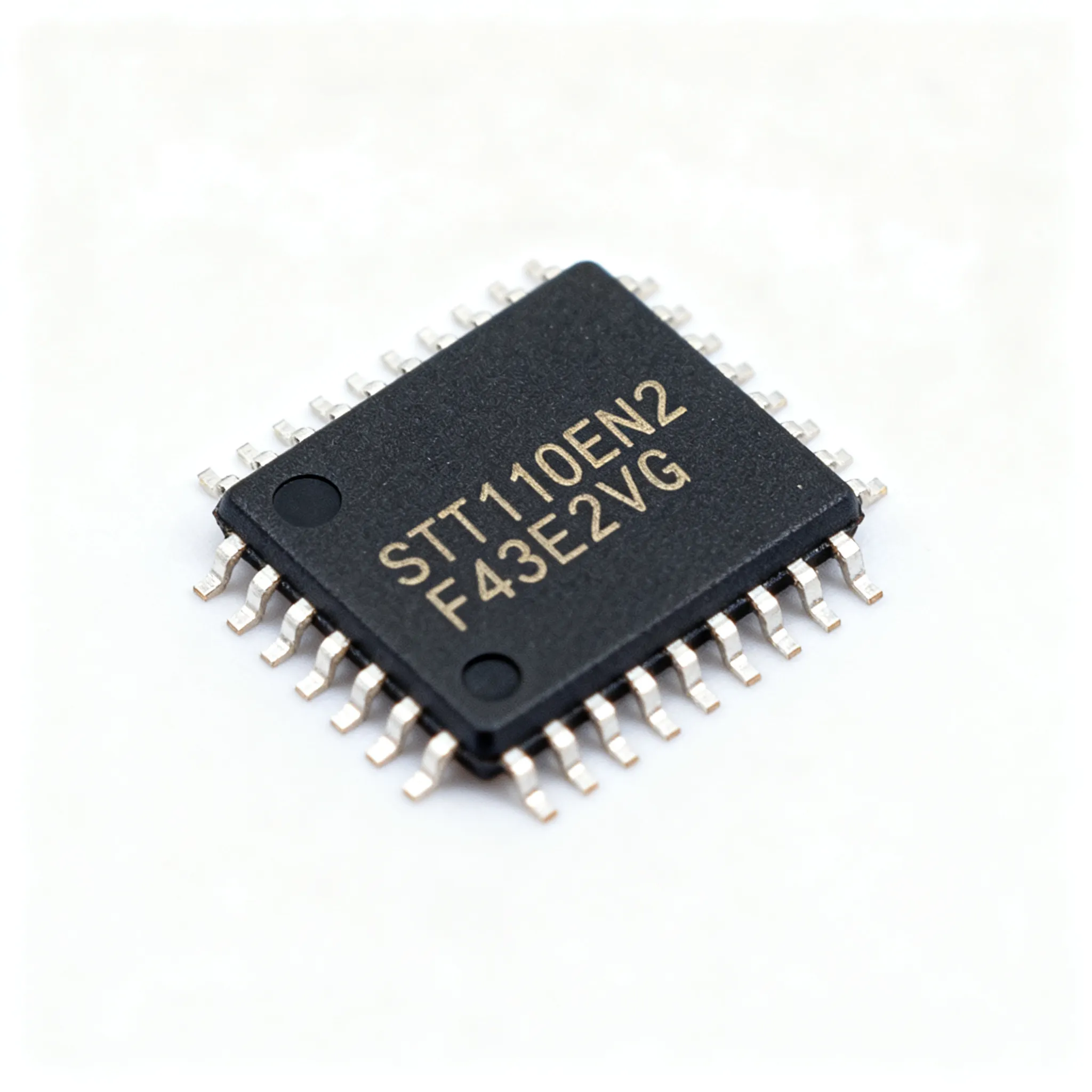
Why Standard Risk Checklists Fail for 1ST110EN2F43E2VG and Other High-End FPGAs
When you’re securing a high-density, high-value FPGA like 1ST110EN2F43E2VG, a generic supplier checklist is your first misstep. This Intel Stratix 10 device sits at the heart of networking, data center acceleration, and military/aerospace signal-processing paths — applications where supply continuity is not just operational, it’s mission-critical. Yet the procurement reality for such silicon has shifted faster than most risk templates.
Manufacturing risks have cascaded across the FPGA supply base. Equipment malfunctions, fab re-tooling, and skilled-operator shortages routinely ripple through wafer starts and packaging, as detailed in the Ivalua Supply Chain Risk Management guide. Those disruptions don't appear on a standard questionnaire that asks “Do you have ISO 9001?” They materialize as silent allocation cuts and unannounced batch holds that only a part-specific interrogation will catch. Meanwhile, data from 2025 confirms that most organizations aren’t failing at supply chain risk assessment because they lack a framework — they’re failing because their assessment practices haven’t kept pace with how threats actually evolve, according to Secureframe. For a device like 1ST110EN2F43E2VG, a one-size-fits-all checklist leaves you blind to single-source exposure, gray-market reflux, and the real financial health of your supplier.
Field experience shows that engineers and buyers who treat this FPGA as just another line item — same risk score as a 74-series logic gate — end up with production gaps that no expediting fee can close. To frame a proper risk assessment, you have to map the unique landscape this FPGA inhabits, then ask questions that a boilerplate audit never covers.
Mapping the Real Risk Landscape for a 1ST110EN2F43E2VG Purchase
A meaningful risk framework for 1ST110EN2F43E2VG must go beyond “is the distributor authorized?” and “are they in business?” You need to evaluate supplier technical capability as defined by USP General Chapter <1083>, which links supplier risk to their ability to deliver consistent quality as raw materials move closer to the finished product. For a 14 nm FPGA device, that means assessing whether your source can maintain die-level provenance, handle advanced packaging with fine-pitch BGA, and provide traceable lot-level test data — not just a COC.
Start by adapting a structured assessment template, like those available from Smartsheet, with dimensions weighted specifically for high-value, allocation-sensitive components. Then overlay financial and ESG criteria from the S&P Global Supplier Risk Management Methodology. A weighted criteria matrix, as described by CertaintySoftware, forces you to prioritize supply continuity over unit price, because a $0.02 saving evaporates the first time a line stops waiting for 1ST110EN2F43E2VG.
The table below captures the critical dimensions and recommended weights for this specific FPGA, based on its typical role as a sole-processing node in complex designs.
| Dimension | Description | Suggested Weight (%) | Assessment Tool/Method |
|---|---|---|---|
| Supply Continuity | Allocation history, buffer-stock policy, ability to support 12+ month production | 40 | Rolling lead-time chart, allocation letter from manufacturer |
| Technical Capability | Handling of MSL-3 BGA parts, ESD protocols, advanced package authenticity verification | 25 | On-site audit or virtual process walk, decapsulation reports on previous lots |
| Financial Health | Liquidity ratio, debt structure, payment-term extensions | 20 | Third-party credit report, audited financial statements |
| Compliance & Traceability | Chain-of-custody records, date-code integrity, recall readiness | 15 | Lot-level provenance validation, PCN tracking, recent ESD/SGA audit |
These weights reflect the reality that a minor failure in supply continuity — a six-week slip — can stall an entire product ramp. Technical capability carries extra weight because an FPGA arriving with latent ESD damage may pass incoming visual inspection but degrade after months in the field. When you negotiate the RFQ for 1ST110EN2F43E2VG, require the supplier to disclose their scores against these dimensions, not just a line-item price.
Alternatives to 1ST110EN2F43E2VG: When to Substitute, Redesign, or Stay the Course
No conversation about supply risk for 1ST110EN2F43E2VG is complete without evaluating what happens if the allocation dries up. The first instinct — find a pin-compatible drop-in — rarely works for a million-logic-element FPGA with hardened protocol IP. The IC replacement guide from Apexcomponent warns that pursuing risky broker stock can exceed the cost of a redesign, and that a form/fit/function substitute at this tier demands full qualification. Before you jump, assess the financial stability of any alternative supplier through a method like KodiakHub’s financial risk approach; a second source on the brink of insolvency provides no safety net.
Therefore, the decision tree includes several paths, each with a distinct risk/benefit profile that must be matched to your production horizon and in-house RTL flexibility.
| Comparison Metric | Stay with 1ST110EN2F43E2VG (Secured Allocation) | Migrate to Intel Agilex (or Compatible Series) | Evaluate Xilinx Virtex UltraScale+ Equivalent | ASIC Conversion |
|---|---|---|---|---|
| Pin/Package Compatibility | Guaranteed (same SKU) | Verify BGA pitch and migration path with Intel AE; not pin-compatible | Different footprint; full PCB re-spin required | Custom substrate; complete board redesign |
| Firmware/IP Reuse | 100% reuse | Moderate RTL porting; verify transceiver and memory IP compatibility | Substantial rewrite; architecture differences | Full logic synthesis and validation needed |
| Supply Risk Mitigation | Low if allocation is confirmed; high if single-source concentration remains | Diversifies manufacturer footprint but still Intel-specific | Multi-vendor sourcing; verify long-term availability | Complete supply independence; multi-foundry possible |
| Qualification Cost & Time | Minimal | 6–12 months; requires fresh qualification for new device | 12–18 months; significant board and firmware changes | 18–36 months; NRE and mask costs; best for high-volume stability |
| Red Flag When | Broker pricing spikes; traceability gaps | Agilex lead times approach Stratix 10 levels; allocation risk duplicates | Xilinx lead times exceed 52 weeks without allocation guarantee | NRE exceeds projected savings from avoiding allocation premiums |
Each alternative demands you verify single-source risk through manufacturer documentation and cross-check the financial health of every link in the candidate supply chain. Rushing into an Agilex port that faces the same fab constraints offers only temporary psychological comfort. The ASIC route becomes attractive only when your volumes justify absorbing tooling costs. In each scenario, demand a written risk-assessment scorecard from your prospective distributor or EMS partner, aligning with the dimensions in Section 2.
The Pre-Purchase Interrogation: 12 Questions to Ask Before You Buy 1ST110EN2F43E2VG
When you’re about to issue a PO for 1ST110EN2F43E2VG, silence is not golden. The right questions, asked before payment, can surface latent red flags that a catalog listing and a friendly sales call will never reveal. Drawing on the structured supplier risk approach from Tradeverifyd, and informed by recall-awareness analogies from the FDA recall database and the CPSC recall handbook, we’ve distilled the interrogation into twelve non-negotiable queries. Apply them to every quote, whether it arrives from a franchise distributor or an independent broker.
- Can you provide a 12-month rolling lead-time history for your own shipments of this exact MPN? A supplier who can’t produce this data may be sourcing ad-hoc from the gray market. The trend line tells you more than a single “estimated ship date.”
- Are you an authorized distributor for Intel PSG, and can you share the current certificate? Confirm directly with the manufacturer’s portal; a “yes” without evidence is meaningless.
- What is the date-code range for the offered stock, and will you guarantee no older than 2 years from date of shipment? Older date codes on advanced BGA packages raise moisture-sensitivity and shelf-life concerns that bake cycles won’t fully resolve.
- Describe your incoming inspection protocol for 1ST110EN2F43E2VG. Do you perform X-ray, decapsulation, or solderability testing on each incoming lot? This goes beyond visual reel inspection; demand proof, not a policy binder.
- Provide a full chain-of-custody record from the manufacturer’s test floor to your warehouse. Every handoff must be documented; gaps indicate reboxing or consolidation from unknown sources.
- What is your recall notification process, and when was the last time you initiated one for an FPGA line item? The FDA and CPSC methodologies show that a robust recall plan is a hallmark of a mature quality system — its absence is a major red flag.
- Share your last two fiscal-year audited financial statements or allow a credit-check tool assessment. A supplier’s liquidity and debt structure, as evaluated by KodiakHub’s method, directly impact their ability to honor allocation commitments.
- Do you have allocation rights for 1ST110EN2F43E2VG directly from Intel, or are you buying through an aggregator? Allocation-backed supply is more stable; aggregator stock vanishes first when demand spikes.
- Can you provide lot-level test summary reports (TSRs) and qualification data for the specific wafer lot? Generic datasheet compliance isn’t enough; request lot-specific parametric data if available.
- What is your policy on cancellations or reschedules if delivery misses the commitment date by more than 4 weeks? For a part this critical, a clause that lets you walk without penalty when the allocation evaporates is non-negotiable.
- Have any of the lots you’ve sold in the last 14 months been subject to a counterfeit notification or NCNR dispute? Silence here is telling; push for a written statement referencing specific customer names they can share under NDA.
- What post-purchase engineering support do you offer if a board-level timing closure issue surfaces on our first prototype run? An FPGA isn’t a passive; a supplier with application knowledge can save weeks of debug and prevent unnecessary board spins.
Write these questions into your RFQ template before you request a single quote. The table below maps each question to the risk area it illuminates, so you can weight responses in your decision matrix.
| Question # | Risk Area | Key Question | Why It Matters |
|---|---|---|---|
| 1 | Supply Continuity | 12-month lead-time history | Exposes allocation instability and seasonal swings |
| 2 | Authorization | Authorized distributor certificate | First defense against counterfeit and gray market |
| 3 | Quality / Shelf Life | Date-code guarantee | Avoids moisture-related delamination in production |
| 4 | Technical Capability | Incoming inspection depth | Catches subsurface counterfeit before it reaches assembly |
| 5 | Traceability | Chain-of-custody | Proves the part hasn’t been re-labeled or consolidated |
| 6 | Maturity / Compliance | Recall process | Indicates systemic quality culture, not just paperwork |
| 7 | Financial Health | Audited financials | Reveals solvency risk that could strand inventory |
| 8 | Allocation | Direct manufacturer allocation | Confirms supply priority when hub demand spikes |
| 9 | Quality / Conformance | Lot-specific TSRs | Detects parametric drift across wafer lots |
| 10 | Contractual Protection | Cancellation/reschedule clause | Prevents paying for parts that may never ship |
| 11 | Integrity | Counterfeit/NCNR history | Surfaces past integrity issues before they repeat |
| 12 | Post-Sale Support | Engineering debug help | Reduces integration risk and speeds time-to-market |
1ST110EN2F43E2VG Supply Risk Q&A: Realities Engineers and Buyers Wrestle With
Below are the questions that surface repeatedly in RFQ negotiations and design reviews for 1ST110EN2F43E2VG. Each answer reflects the cross-currents of a mature FPGA node at a time when allocation politics dominate procurement.
- Q: Is 1ST110EN2F43E2VG still in active production, or is it approaching end-of-life?
- Intel’s official roadmap positions the Stratix 10 family in mature production, meaning no announced EOL. However, “mature” can quietly become “last-time buy” without a wide-distribution notification. Verify lifecycle status via the latest PCN alerts and cross-check authorized distributor inventories. Any EOL rumor — even unconfirmed — demands immediate qualification of form/fit/function alternatives, because a sudden sunset can strand your design with a single-source dead end.
- Q: What are the typical lead times right now, and how volatile have they been over the last 18 months?
- Rather than relying on a snapshot quote, request a rolling 12-month lead-time chart directly from your authorized source. Over the past 18 months, Stratix 10-class devices have seen swings that approach year-long intervals, driven by substrate shortages and backend assembly bottlenecks. If a supplier offers a lead time that suddenly collapses to 8–12 weeks, treat that as a potential indicator of gray market excess or allocation shifts, not a market recovery. Always confirm allocation-backed lead time with the manufacturer’s quote.
- Q: How can I spot a counterfeit 1ST110EN2F43E2VG before it reaches the assembly line?
- Begin with the basics: inspect laser marking for font anomalies, angularity, and any evidence of blacktopping. Under a microscope, check BGA ball planarity and alloy consistency — reballed parts often show slight ball-height variation or flux residues. Demand full chain-of-custody documentation; any gap is a red flag. For non-tray shipments, consider third-party decapsulation and solderability testing on a sample drawn from the lot. Even a single out-of-spec date code or mismatched lot traceability should trigger a hold-and-investigate, not a “let’s try one.”
- Q: When does it make more sense to redesign for a different FPGA than to accept risky broker stock?
- Redesign becomes a financially rational option when the qualification cost of an alternative approaches the premium you’d pay for supply with questionable traceability — or when the broker’s documentation fails a financial and technical audit. Evaluate cross-reference options like the Intel Agilex series or Xilinx equivalents early, but don’t assume any are drop-in. If the broker’s price is 30% below allocation market yet they can’t produce a single audited financial statement, that “saving” is likely a liability. The Ivalua supplier risk assessment insights reinforce that verifying supplier stability is the gating factor, not just part availability.
- Q: What financial red flags should I look for in a supplier offering 1ST110EN2F43E2VG at below-market prices?
- Red flags include negative operating cash flow over two consecutive quarters, recent liens or legal judgments, and a sudden shortening of payment terms (e.g., from net-30 to CIA). Use a risk assessment tool or request audited financial statements to check liquidity ratios; a supplier stretching payables to stock high-cost FPGAs is likely financing itself on credit that could vanish. As KodiakHub’s analysis notes, collaboration with suppliers to anticipate risks is essential, but you can’t collaborate with a supplier who hides financial distress.
- Q: How do I weight supply risk criteria for a single high-value component versus multiple lower-cost parts?
- Use a weighted matrix that prioritizes strategic importance and lead-time sensitivity. For 1ST110EN2F43E2VG, a typical allocation-sensitive FPGA, supply continuity should command 40% of the total risk score, technical capability 25%, financial health 20%, and compliance/traceability 15%. Adjust these thresholds based on your production volume: a 10,000-unit-per-year run justifies deeper financial scrutiny, while a low-volume niche product may assign more weight to post-sale engineering support. The critical lesson is that a single $5,000 FPGA can stop a $500,000 system; its risk weight must reflect that economic asymmetry.
References & Further Reading
- Ivalua — Supply Chain Risk Management (SCRM): Complete Guide 2026
- Secureframe — Supply Chain Risk Assessment: How to Actually Evaluate Third-Party Risk in 2026
- USP General Chapter <1083> Supplier Qualification
- Smartsheet — Free Supply Chain Risk Assessment & Management Templates
- S&P Global — Supplier Risk Management Methodology
- CertaintySoftware — What is a Supplier Risk Assessment – Why it's Important
- Apexcomponent — IC Replacement & Component Cross-Reference Guide 2026
- KodiakHub — Supplier Financial Risk Assessment: Key Steps & Analysis
- Tradeverifyd — Supplier Risk Assessment: A Step-by-Step Guide
- FDA — Recalls, Market Withdrawals, & Safety Alerts
- CPSC — Product Safety Planning, Reporting, and Recall Handbook
- Ivalua — Supplier Risk Assessments 2026: Evaluate & Manage Vendor Risks
Every sourcing decision for 1ST110EN2F43E2VG should begin with a risk-grounded RFQ, not a price-only comparison. When you’re ready to secure allocation, validate traceability, or explore alternative paths, upload your full BOM at IC-Online. The platform connects you with specialists who understand the unique demands of high-end FPGAs and can help build a mixed BOM with flexible MOQ that reflects the realities discussed here.