2026 RF Module Market Outlook and Buying Guide for Industrial and IoT Applications
Expert guide on 2026 RF Module Market Outlook and Buying Guide for Industrial and IoT Applications. Technical specs, applications, sourcing tips for engineers and buyers.
Why RF Module Sourcing Is Getting Both More Urgent and More Complex in 2026
The push to connect every sensor, actuator, and gateway inside industrial environments is no longer a futuristic roadmap — it’s happening on factory floors, in logistics hubs, and across smart grid infrastructure right now. RF modules are the invisible backbone of this transformation, and the numbers confirm the momentum. According to Intel Market Research, the broader RF module market is expanding at a 4.9% CAGR, fueled by the convergence of 5G rollouts, massive IoT adoption, and edge computing. For industrial and IoT buyers, that growth translates into a double-edged reality: demand is surging, but the supply side is struggling to keep pace with both volume and specialty requirements.
At the same time, major manufacturers are responding by pushing out modules with tighter integration, lower power profiles, and baked-in security features. This is good news for system designers who need to shrink BOMs and accelerate time-to-certification. But it also forces procurement teams to evaluate modules on a far more nuanced set of criteria than just frequency and output power. A module that looks perfect on a datasheet can stall a project if its FCC grant doesn’t cover your antenna, if its chipset has a single‑source fragility, or if the vendor’s lifecycle management doesn’t align with a 10‑year industrial product horizon.
Add to this the regulatory layer: FCC Part 15 certification is mandatory for US market access, while CE marking is required for European exports, and similar regimes exist for ISED in Canada, MIC in Japan, and others. Engineers who used to treat certification as a final step are now learning that pre‑certified modules can derail a design if the antenna configuration or host integration isn’t fully understood. The result is a sourcing landscape where urgency (to get product to market) collides with complexity (technical, regulatory, and supply‑chain). This guide unpacks the architecture, protocol choices, and buying strategies that let you navigate 2026’s RF module market with confidence.
How RF Module Architectures and Key Specs Shape Industrial IoT Performance
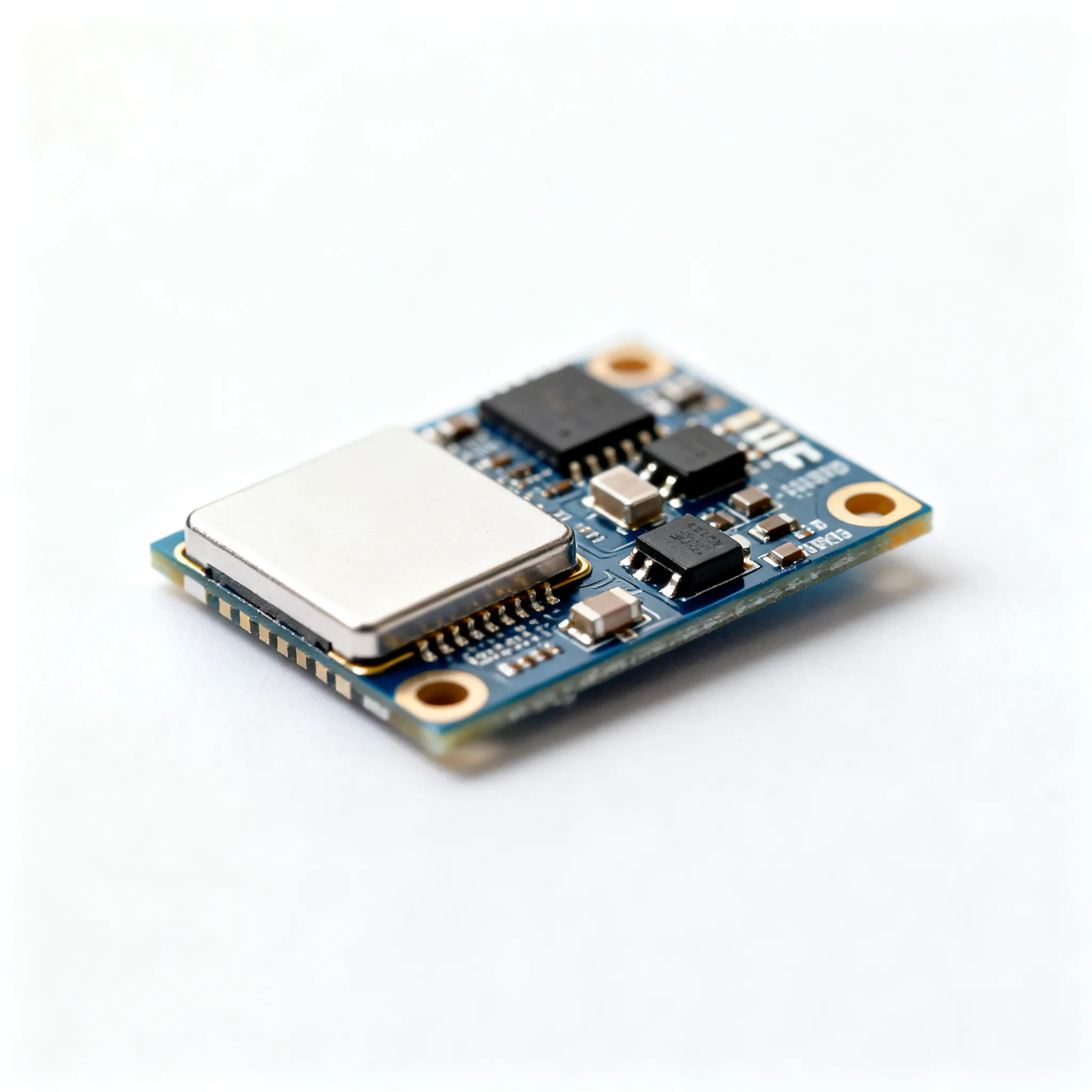
An RF module is far more than a simple radio chip on a small PCB. Today’s industrial‑grade modules integrate the transceiver, baseband processor, a microcontroller (often an Arm Cortex‑M core), power management, and antenna matching circuitry into a single, tested package. This architecture offloads RF design complexity from the OEM, reduces certification burden, and speeds up time‑to‑market. But to judge whether a module will survive years of vibration, temperature swings, and dense electromagnetic noise, you need to look past the glossy first page of the datasheet.
A comprehensive RF module guide from IC‑Online breaks down the specifications that matter most for industrial environments. Here are the parameters that separate a module that works on the bench from one that works in a steel mill:
- Frequency band and sub‑GHz / 2.4 GHz trade‑offs: Sub‑GHz bands (e.g., 868 MHz, 915 MHz) offer better penetration through concrete and metal, while 2.4 GHz provides higher data rates and global interoperability but shorter range.
- Receiver sensitivity (dBm): A difference of 3 dB can double the effective range in an open field. For LoRaWAN nodes, sensitivity below –137 dBm is common; for Wi‑Fi 6, –96 dBm is typical.
- Transmit output power (dBm): Industrial devices often need to push signals through obstacles. Max output power must be balanced against regulatory limits (e.g., +20 dBm for 2.4 GHz, +14 dBm for sub‑GHz in many regions).
- Current consumption in active and sleep modes (µA, mA): A battery‑operated IoT sensor that draws 10 µA in deep sleep can last a decade; one that draws 50 µA may need a field visit after three years.
- Link budget (dB): The sum of transmit power and absolute receiver sensitivity. A link budget of 150 dB or more is typical for long‑range industrial LoRa systems.
- Protocol stack and certification: A module that carries a pre‑certified FCC/CE grant for the intended protocol stack (e.g., Wi‑Fi Alliance, Bluetooth SIG, LoRaWAN certified) saves months of lab work.
The table below illustrates how these parameters translate into real‑world performance for two common industrial IoT implementations: a long‑range sensor monitoring a remote pump and a high‑bandwidth quality‑inspection camera on a factory floor.
| Parameter | LoRaWAN Module (Semtech SX1262‑based) | Wi‑Fi 6 Module (u‑blox MAYA‑W1) | Industrial IoT Impact |
|---|---|---|---|
| Frequency band | 868/915 MHz (sub‑GHz) | 2.4 GHz / 5 GHz | Sub‑GHz penetrates walls; 2.4/5 GHz offers higher throughput |
| Receiver sensitivity | –137 dBm (SF12, 125 kHz) | –96 dBm (802.11ax, MCS0) | Every 6 dB improvement roughly doubles range |
| Max output power | +22 dBm | +20 dBm | Regulatory caps limit usable power; check antenna gain |
| Deep‑sleep current | 0.2 µA | 40 µA | Battery life scales with sleep‑current discipline |
| Link budget | 159 dB | 116 dB | LoRa excels for 10‑km range; Wi‑Fi 6 for 100‑m dense coverage |
| Data rate | 0.3–62.5 kbps | Up to 600 Mbps (HE80) | Throughput determines camera vs. sensor payload |
| Integrated MCU | Arm Cortex‑M4 (optional) | Arm Cortex‑M4 (nRF52840 inside) | On‑module processing reduces host CPU load |
| Pre‑certification | FCC, CE, LoRaWAN CertifiedCM | FCC, CE, ISED, Wi‑Fi CERTIFIED | Directly impacts time‑to‑market and testing costs |
Notice that two modules with similar output power can deliver dramatically different range because of sensitivity and link budget. For an industrial IoT application, matching the modulation scheme and protocol to the physical environment is the first step; only then do you dive into the specific module’s power numbers and certification status. The same logic applies to antenna selection — a module’s conducted performance looks great on the datasheet, but the radiated performance in an enclosure with metal nearby is what ultimately matters.
Wi‑Fi 6, LoRa, NB‑IoT, or BLE: Which RF Module Protocol Fits Your Industrial IoT Application?
Choosing a wireless protocol is not a battle of specs — it’s a battle of constraints. A vibration sensor on a pump that must run for 10 years on a coin cell has a completely different set of requirements than a robotic arm sending real‑time telemetry to a local controller. The IC‑Online RF module selection guide stresses that protocol choice is the single most consequential decision in the design flow, because it dictates range, power budget, network topology, and the entire certification path.
The table below compares the five protocols that dominate industrial IoT conversations in 2026. Use it to map your application’s non‑negotiables — range, latency, throughput, battery life — to the technology that satisfies them. The “Typical Use Case” column is grounded in real deployments, not lab demos.
| Protocol | Typical Range (Indoor/Outdoor) | Max Data Rate | Power Profile | Latency | Key Industrial IoT Use Case |
|---|---|---|---|---|---|
| Wi‑Fi 6 (802.11ax) | 50 m / 300 m | Up to 600 Mbps (HE80) | High (mains‑powered) | <10 ms | Real‑time video inspection, AGV telemetry, high‑density sensor aggregation |
| LoRaWAN | 2 km / 15 km | 0.3–62.5 kbps | Very low (battery‑optimized) | 300 ms–5 s | Remote pump monitoring, tank level sensing, environmental data logging |
| NB‑IoT | 1 km / 10 km (cellular) | Up to 127 kbps (DL) | Low (PSM, eDRX) | 1.5–10 s | Smart metering, asset tracking without gateway infrastructure |
| BLE 5.3 / 5.4 | 10 m / 200 m (Coded PHY) | 2 Mbps | Very low | 3–10 ms | Wireless sensors, proximity beacons, handheld maintenance tools |
| Zigbee (3.0) | 30 m / 100 m (mesh) | 250 kbps | Low | 15–30 ms | Mesh‑networked lighting, HVAC controls, condition monitoring |
In practice, many industrial products combine two protocols. For example, a wastewater treatment monitoring system might use LoRaWAN for the remote sensors scattered across a basin and BLE for a local maintenance interface on a tablet. When you evaluate a module, look for ones that support concurrent multiprotocol operation — like the Nordic nRF52840 for BLE + Zigbee/Thread, or the u‑blox MAYA‑W1 with Wi‑Fi 6 and BLE 5.2 in one package. The key is to avoid locking yourself into a single‑protocol stack that later demands a costly design change when the use case evolves.
Another dimension to weigh is the ecosystem. LoRaWAN relies on a network server (The Things Network, ChirpStack, or a commercial provider), while NB‑IoT depends on cellular carrier infrastructure. If your deployment is in a remote area with no carrier coverage, NB‑IoT becomes a non‑starter. Conversely, a factory that already has a robust Wi‑Fi 6 infrastructure can leverage existing access points, making Wi‑Fi 6 modules a natural choice for high‑bandwidth applications without additional gateway costs.
Buying Smart: Navigating Lead Times, Certifications, and Module Lifecycle Traps
A module’s datasheet tells you what it can do; a procurement‑focused evaluation tells you whether you can actually get it, and for how long. The industrial IoT market does not tolerate a module that is suddenly discontinued or a lead time that slips from 12 weeks to 52 weeks without warning. Manufacturers are prioritizing security and reliability in their latest modules, but that doesn’t automatically translate into supply chain resilience.
Start with the certification housekeeping. FCC Part 15 certification is mandatory for US market access; CE marking is required for European exports. However, a pre‑certified module’s grant is valid only for the antenna types and maximum gains listed in the test report. If you plan to use a different antenna — even one with lower gain but different impedance or radiation pattern — you may need a Class II permissive change or a new certification. That alone can add 8–12 weeks and $10,000–$20,000 to your development budget. The table below summarizes the key verification steps before you commit to a module.
| Certification Aspect | Region | What to Verify on the Module | Consequence of Non‑Compliance |
|---|---|---|---|
| FCC Part 15 (Intentional Radiator) | USA | FCC ID, allowed antenna list, max gain, module’s grant notes | Market access denied, product recall, fines |
| CE (RED 2014/53/EU) | EU/EEA | Notified body number, harmonized standards, antenna impedance | Customs hold, removal from EU market |
| ISED (RSS‑247 / RSS‑Gen) | Canada | IC certification number, host integration guidelines | Similar to FCC; device cannot be sold in Canada |
| MIC (Japan Radio Law) | Japan | MIC certification mark, specific frequency range | Import barred; no local carrier acceptance |
| Carrier certification (NB‑IoT) | Global | Module must be certified by the target carrier (e.g., AT&T, Vodafone) | Device cannot attach to the network; entire deployment fails |
Beyond certification, the real‑world procurement hurdles revolve around lead times and lifecycle commitment. LoRa modules often depend on a single‑source chipset from Semtech, making them vulnerable to allocation constraints. NB‑IoT modules, while increasingly available from multiple vendors (Quectel, u‑blox, Telit), still face carrier certification backlogs that can add months to the procurement cycle. Wi‑Fi 6 modules from Murata (Type 1XL) or u‑blox (MAYA‑W1) typically have broader supply bases, but the underlying silicon — often from Infineon, NXP, or Qualcomm — can still be subject to foundry bottlenecks.
To protect against these traps, follow these procurement practices:
- Request the manufacturer’s product lifecycle policy in writing. Look for minimum 10‑year availability commitments, clearly defined EOL notification windows (typically 12 months), and evidence of a formal lasting‑product program.
- Identify a pin‑compatible second source or a module with a compatible footprint. For example, the u‑blox NINA‑B4 series and Murata Type 2AE share a similar BLE footprint, giving you a fallback if one faces supply disruption.
- Confirm distributor allocation. Don’t rely on a single franchised distributor. Engage with at least two, and ask for written confirmation of stock rotation and buffer stock policies.
- Factor in carrier certification lead time for cellular modules. If you are using NB‑IoT or LTE‑M, start the carrier certification process in parallel with hardware design — it can take 12–20 weeks, and any module change later resets the clock.
- Test the module with your intended antenna and enclosure before freezing the BOM. A radiated spurious emission failure discovered late can force a layout redesign and a new certification round, wiping out months of schedule.
Finally, be aware of the hidden costs when migrating from a module to a discrete RF design. Many teams are tempted by the lower per‑unit component cost of a discrete implementation, especially for high‑volume products. But the total cost of ownership includes the engineering time for RF layout, antenna matching, and the full suite of regulatory testing — often exceeding $50,000 for a single product variant. Unless your volumes are in the hundreds of thousands and you have in‑house RF expertise, a pre‑certified module remains the faster, lower‑risk path to revenue.
Your RF Module Questions Answered: What Experienced Engineers and Buyers Actually Ask
Q: How do I verify that a pre‑certified RF module’s FCC grant covers the antenna I intend to use?
A: The module’s FCC grant (available on the FCC OET website) lists the allowed antenna types and the maximum antenna gain for each band. It often specifies the antenna impedance (typically 50 Ω) and whether the antenna must be a trace, chip, or external dipole. If your antenna matches the type and gain exactly, you’re covered. If the antenna is different — even a different manufacturer with similar specs — the module may require a Class II permissive change, which involves retesting the intentional radiator with the new antenna and filing an updated application. In practice, many industrial designs use the exact antenna reference design provided by the module vendor to avoid this risk entirely.
Q: What are the hidden costs when migrating from a module to a discrete RF design?
A: The component cost savings are easy to calculate, but the hidden costs often dominate. You must budget for RF engineering time (layout, impedance matching, filter design), procurement of additional test equipment (spectrum analyzer, network analyzer), and a full compliance test campaign: FCC Part 15, CE RED, and possibly carrier‑specific certification. A typical discrete design can add $50,000–$100,000 in non‑recurring engineering and testing, plus 6–12 months of schedule. Moreover, a failed radiated emissions test can send you back to the layout, generating additional board spins. For most industrial IoT products that ship fewer than 50,000 units per year, the module’s higher unit price is more than offset by the avoidance of these hidden costs.
Q: How do I assess an RF module’s long‑term availability for an industrial IoT product with a 10‑year lifecycle?
A: Start by examining the module manufacturer’s product lifecycle commitment. Look for a formal “Product Longevity” program — companies like u‑blox, Murata, and Digi pledge a minimum of 10 years of availability for selected industrial modules. Check the silicon vendor’s roadmap: if the module is built around a Qualcomm or Nordic chipset, verify that the chipset itself has a long‑lifecycle commitment. Investigate the module vendor’s EOL history — have they issued abrupt discontinuations in the past? A good practice is to identify a pin‑compatible alternative from another manufacturer, or at least a module with the same footprint and protocol stack, so that a redesign is a drop‑in replacement rather than a frantic respin.
Q: What is the real difference between FCC and CE certification for modules, and can one module satisfy both?
A: Both regulatory frameworks aim to limit harmful interference, but they have different scopes and test methodologies. FCC Part 15 focuses on radiated emissions, peak output power, and spurious emissions within the band, with a strong emphasis on ensuring the device does not cause interference to other services. CE marking under the Radio Equipment Directive (RED) covers a broader set of requirements, including EMC immunity, safety (LVD), and health exposure. The test limits and measurement procedures differ, so a module that passes FCC may not automatically satisfy CE. Many modules are dual‑certified — the datasheet will list both FCC ID and CE mark — but you must verify that the test reports cover your specific band, output power, and antenna configuration. If you later modify the antenna or increase the conducted power, you may invalidate both certifications.
Q: What lead‑time risks should I anticipate for LoRa and NB‑IoT modules in 2026?
A: The global semiconductor supply chain remains uneven, and certain RF process nodes are still constrained. LoRa modules are particularly sensitive because they rely on Semtech’s SX126x/SX127x chipsets, which, while mature, are essentially single‑source. Any allocation issue at the foundry can push lead times from 8–12 weeks to 26 weeks or more. NB‑IoT modules from Quectel, u‑blox, and others have a broader chipset base (Qualcomm, HiSilicon, MediaTek), but carrier certification backlogs can delay the final module delivery by 4–8 weeks after volume production begins. To mitigate, work with your distributor to secure allocation and consider holding 6–8 weeks of buffer stock. For high‑volume programs, negotiate a vendor‑managed inventory agreement with the manufacturer.
References & Further Reading
- Wireless RF Module Configuration Guide 2026 – Alibaba.com Seller Blog
- Consumer Electronics RF Modules Market Outlook 2026-2032 – Intel Market Research
- Global IoT RF Module Market Trends and Major Manufacturers in 2025 – CDEBYTE
- RF Module Engineering Guide – IC Online
- u‑blox MAYA‑W1 Wi‑Fi 6 and Bluetooth 5.2 module
- Semtech SX1262 LoRa Transceiver
- Nordic nRF52840 multiprotocol SoC
- Quectel BC660K‑GL NB‑IoT Module
- Silicon Labs EFR32MG24