3313J-1-102E Supply Risk Assessment: What to Ask Before You Buy
Assess 3313J-1-102E sourcing risks before you buy. RFQ questions on traceability, date codes, testing, alternatives, and supply continuity for procurement...
From FDA Recalls to a Missing Trimmer: Why the 3313J-1-102E Deserves Its Own Risk Assessment
Product recalls don't start with a catastrophic failure in the field—they start with a single component that someone assumed would always be available. Scroll through the FDA recalls and market withdrawals page and you'll find medical devices pulled from distribution because a passive component drifted out of tolerance after 18 months in the field. Browse the CPSC product safety recalls database and you'll see consumer electronics flagged for thermal events traceable to a single adjustment potentiometer that wasn't qualified for the enclosure's internal ambient temperature. The CPSC Recall Handbook and its companion reporting guide for manufacturers both underscore the same brutal lesson: supply chain decisions made during the BOM approval phase are the root cause of most avoidable recalls.
Now consider the 3313J-1-102E—a Bourns 1 kΩ cermet trimmer potentiometer in a 3 mm SMD package. On paper, it's a commodity resistor: small, cheap, widely used in calibration circuits, offset-null adjustments, and bias-tuning nodes. In practice, it's a single-sourced precision electro-mechanical component sitting on hundreds of BOMs with no formal second-source qualification. When that trimmer becomes allocation-constrained—or worse, when a distributor lot turns up with questionable provenance—the ripple effect can reach every production line that depends on it.
Tip: The FDA and CPSC recall examples are not hypotheticals about trimmers specifically; they illustrate the systemic vulnerability that any sole-sourced BOM line item introduces. Treat the 3313J-1-102E as allocation-sensitive and verify current availability with your distributor before committing to a production schedule.
This article provides the pre-order risk assessment framework that engineers and procurement buyers should apply to the 3313J-1-102E—before the shortage hits, before the line stops, and before a missing 1 kΩ trimmer becomes the reason your product ends up on a recall list.
Because Not All 1 kΩ Trimmers Are Equal: A Hard Look at the 3313J-1-102E Datasheet Gaps
The 3313J-1-102E belongs to Bourns' 3313 series of single-turn, top-adjust cermet trimmers. The headline specifications—1 kΩ nominal resistance, ±20% tolerance, 0.125 W power rating at 70°C, and a compact 3 mm square SMD footprint—make it easy to treat as interchangeable with any similarly rated trimmer. That assumption is dangerous. The datasheet, accessible through distributor archives such as Allicdata's 3313 series repository, reveals critical parameters that vary across the family and demand verification before BOM approval.
| Parameter | Value/Range | Unit/Notes |
|---|---|---|
| Nominal Resistance | 1,000 | Ω (1 kΩ) |
| Resistance Tolerance | ±20 | % |
| Power Rating at 70°C | 0.125 | W (1/8 W) |
| Temperature Coefficient | ±100 | ppm/°C (typical for cermet) |
| Adjustment Type | Top adjust, single-turn | — |
| Element Material | Cermet | — |
| Package / Footprint | 3 mm SMD, J-hook leads | 3-terminal configuration |
| Operating Temperature Range | -55 to +125 | °C |
| Mechanical Rotation | 210 ±10 | Degrees (electrical) |
| Sealing | Sealed construction | Suitable for automated cleaning processes |
These specifications are solid, but the datasheet has well-known blind spots. Wiper current limits—critical for rheostat-mode operation—are not always explicitly stated on summary pages. End-stop torque values, which matter if your assembly process includes automated adjustment stations, must be pulled from the full mechanical drawing set. As Xecor's pinout commentary for the 3313J-1-201E correctly notes, each pin on these trimmers has a specific role in the circuit; designers who skip the datasheet pinout verification risk incorrect integration that only surfaces during first-article testing.
Another gap: the tap position within the adjustment span. For a 1 kΩ part with ±20% tolerance, the actual end-to-end resistance can range from 800 Ω to 1,200 Ω. If your calibration firmware assumes a nominal 1,000 Ω reference, that 20% window may be wider than your adjustment algorithm can absorb. This is precisely the kind of late-stage design error that a thorough pre-order review catches.
Key Takeaway: Before approving the 3313J-1-102E on your BOM, pull the exact resistance variant's electrical data sheet from an authorized Bourns distributor. Do not assume the 501E or 201E datasheet covers all corner conditions—verify wiper current, tap position, and mechanical end-stop values specific to the 102E variant.
Resistance Roulette: Comparing 3313J-1-102E with 200 Ω, 50 kΩ, and 200 kΩ Variants Before You Hit 'Buy'
When the 1 kΩ 3313J-1-102E goes on allocation, the instinct is to reach for a sister part in the same series. The 3313 family spans resistance values from 10 Ω to 2 MΩ, all sharing the identical 3 mm SMD footprint and top-adjust configuration. The trap: "same footprint" does not mean "same circuit behavior." Resistance value changes cascade through adjustment resolution, noise performance, wiper current handling, and the usable adjustment range. A side-by-side comparison makes the trade-offs explicit.
Drawing from three independent component comparison sources—Xecor's 201E vs 102E analysis, Lisleapex's three-part comparison, and Utmel's 102E vs 204E shootout—the following matrix clarifies what changes when you substitute resistance values within the 3313 series.
| Comparison Metric | 3313J-1-102E (1 kΩ, Reference) | 3313J-1-201E (200 Ω) | 3313J-1-503E (50 kΩ) | 3313J-1-204E (200 kΩ) | Selection Criteria & Failure Boundary |
|---|---|---|---|---|---|
| Nominal Resistance | 1,000 Ω | 200 Ω | 50,000 Ω | 200,000 Ω | Verify bias current shift; a 5× reduction or 50× increase changes divider ratios substantially |
| Resistance Tolerance | ±20% | ±20% | ±20% | ±20% | Tolerance stack-up worsens at higher resistance values in noisy environments |
| Power Rating | 0.125 W | 0.125 W | 0.125 W | 0.125 W | Constant across series; derate above 70°C per Bourns curve |
| Adjustment Resolution (per degree) | ≈4.8 Ω/degree | ≈0.95 Ω/degree | ≈238 Ω/degree | ≈952 Ω/degree | High-resistance variants lose fine adjustment granularity; re-validate calibration step size |
| Wiper Current Handling | Moderate | Higher (lower R = higher I for same V) | Lower (risk of exceeding wiper rating in rheostat mode) | Much lower | Verify wiper current rating against actual circuit; 50 kΩ and 200 kΩ variants amplify thermal noise |
| Footprint / PCB Reuse | 3 mm SMD, J-hook | Identical | Identical | Identical | No PCB change required, but reflow profile and MSL must be rechecked per distributor lot |
| Noise Sensitivity | Low (low R) | Very low | Moderate to high | High (Johnson noise dominant) | 50 kΩ and 200 kΩ introduce excess noise in low-signal front-ends; prototype test mandatory |
The decision matrix makes one reality clear: a "drop-in" alternative rarely exists without circuit revalidation. Swapping the 3313J-1-102E for a 200 Ω variant narrows the adjustment range by a factor of five—acceptable perhaps in a voltage divider that operates near mid-scale, but catastrophic in a bias network designed around a 1 kΩ setpoint. Conversely, moving to a 50 kΩ or 200 kΩ variant may look attractive because the footprint matches, but the increased Johnson noise and reduced wiper current capability can push a marginal design over the edge. Evaluate any alternative as a candidate requiring full functional qualification, not as a guaranteed substitute.
The Supplier Gauntlet: 6 Must-Ask Questions Before Ordering a Reel of 3313J-1-102E
Ordering a reel of 3313J-1-102E trimmers is not a transactional purchase—it's a supply-chain commitment that carries risk if the supplier qualification is shallow. The InductHub Electronic OEM Components Sourcing Checklist and the ABB Code of Practice for Safe Working both emphasize that supplier qualification for electro-mechanical components must go beyond a PCN (Product Change Notification) checkbox. The following six questions form a practical procurement gauntlet that every buyer and engineer should run before releasing a purchase order.
1. "Can you provide full lot traceability back to the Bourns factory, including date codes and assembly-site identifiers?"
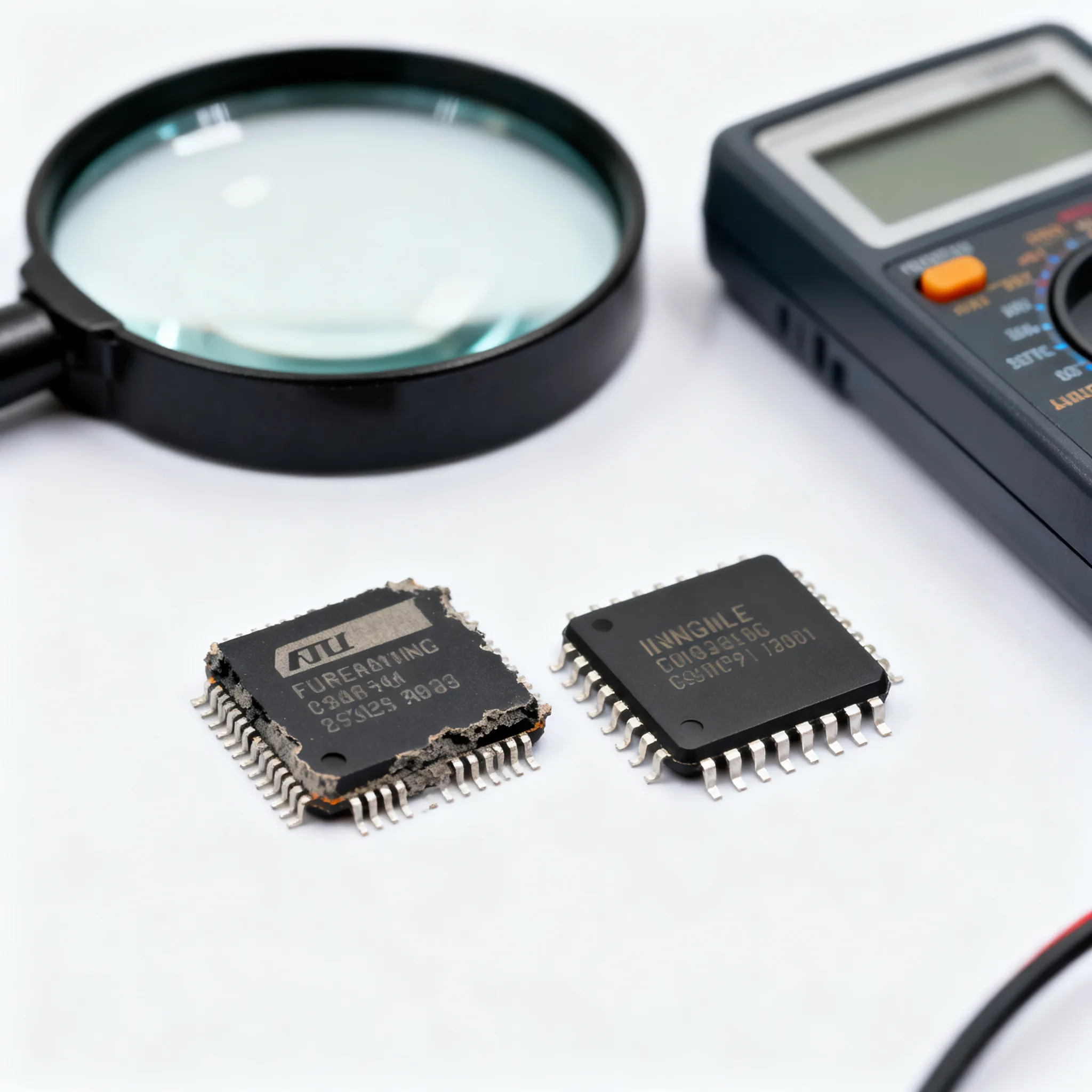
Lot traceability is your first line of defense against counterfeit and re-marked parts. The CPSC recall handbooks referenced earlier highlight that missing traceability data turns a component-level failure into a full product recall because you cannot isolate the affected production batches. Require your distributor or contract manufacturer (CM) to supply batch-level documentation that traces each reel to a specific Bourns manufacturing lot. If they cannot—or if the date codes appear inconsistent with the reel packaging—halt the order and verify authenticity through Bourns' authorized distribution channel.
2. "What is the confirmed MSL classification and has the reel been stored per J-STD-033 moisture-control handling?"
The 3313 series is an SMD component that goes through reflow soldering. Moisture sensitivity level (MSL) classification dictates the floor life and baking requirements. A distributor that cannot confirm the MSL rating or that ships parts in non-original packaging is introducing a popcorn-cracking risk that may not surface until after board assembly. Ask for the MSL label confirmation and, for reels with expired floor life, require a documented bake cycle before acceptance.
3. "What end-of-life or NRND notice applies to this part, and what is Bourns' stated replacement path?"
Bourns periodically rationalizes its trimmer portfolio, and parts can transition to NRND (Not Recommended for New Design) status with minimal public notice. Verify the lifecycle status of the 3313J-1-102E through an authorized distributor's portal rather than relying on third-party inventory sites. If the part is NRND or approaching EOL, secure a last-time-buy (LTB) agreement and begin qualifying a forward-compatible alternative immediately.
4. "What solderability test reports are available for this lot, and are they dated within the last 90 days?"
Trimmers with J-hook terminations rely on consistent solder wetting for reliable electrical and mechanical connection. A solderability test report—ideally per IEC 60068-2-58 or equivalent—confirms that the termination finish has not degraded during storage. Request a report dated within 90 days of shipment; older reports may not reflect the current condition of the lot.
5. "What second-source or alternate-sourcing qualification has been completed for this BOM position?"
If the 3313J-1-102E is sole-sourced on your BOM, you carry the full supply risk. Ask your engineering team whether any value-alternate from a second manufacturer has been evaluated and documented. Even if the answer is "not yet," the question forces the conversation that should happen before—not during—an allocation event. The sister-part comparisons in Section 3 provide a starting point, but each alternative requires circuit-level validation before it can serve as an approved substitute.
6. "Can you supply a Certificate of Conformance, RoHS/REACH declarations, and evidence that your QMS aligns with the ABB Code of Practice for supplier quality?"
A Certificate of Conformance (CoC) is standard, but the depth of the certificate matters. Does it reference the specific Bourns lot number? Does it include RoHS and REACH compliance statements that are current for the regulatory year? The ABB Code of Practice for Safe Working provides a useful benchmark: a supplier's quality management system should demonstrate documented control over incoming inspection, handling, storage, and traceability—not just a generic ISO 9001 certificate on the wall. Use this framework to grade your distributor's documentation package before you accept the shipment.
| Supplier Question | What to Require | Red Flag If Missing |
|---|---|---|
| Lot Traceability | Bourns factory lot number, date code, assembly site | Generic or relabeled packaging; inconsistent date codes across one reel |
| MSL & Storage | MSL label, floor-life expiry date, bake documentation if exceeded | Non-original packaging; refusal to confirm MSL classification |
| Lifecycle / EOL Status | Current PCN summary from authorized distributor | NRND status undisclosed; no LTB path offered |
| Solderability Report | Test report ≤90 days old, per IEC 60068-2-58 | Report older than 6 months or generic to multiple part numbers |
| Second-Source Qualification | Documented alternate part evaluation with test results | No alternate on file; sole-source risk unacknowledged |
| CoC & Compliance Docs | Lot-specific CoC, RoHS, REACH, QMS alignment evidence | CoC without lot reference; expired REACH statements |
Running these six questions before every 3313J-1-102E purchase order accomplishes something that reactive procurement cannot: it surfaces risks while there is still time to act on them. The CPSC recall examples are a permanent reminder that supplier quality taken on trust is the prelude to product-level liability. Ask early, document the answers, and qualify every new lot as if a recall audit depends on it—because one day, it might.
3313J-1-102E Supply Risk Q&A: Answers for the Engineer Who Has to Justify Every Line Item
Procurement leads and senior engineers face a shared challenge: justifying component-level sourcing decisions to management that views a trimmer as a rounding error on the BOM cost. The following Q&A addresses the questions that come up in design reviews, sourcing committee meetings, and supplier qualification audits—each answer anchored in the research and framework developed throughout this article.
- Q: How do I verify that I'm buying authentic Bourns 3313J-1-102E parts and not counterfeit?
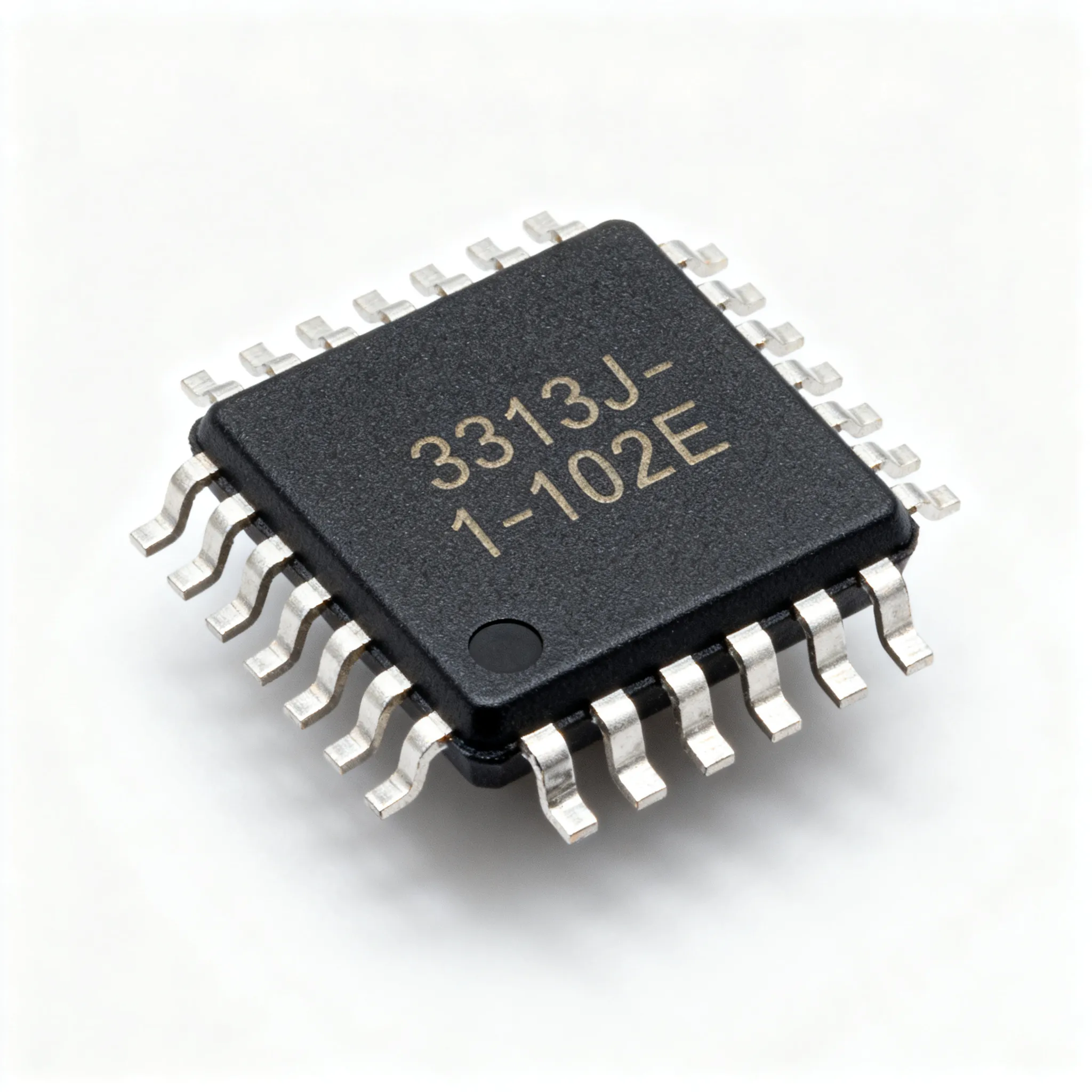
Request lot traceability and factory test certificates from authorized distributors. Compare the physical marking against datasheet photos—the pinout images on Xecor's 3313J-1-201E page illustrate the typical Bourns laser marking style, which includes the part number, resistance code, and date/lot identifier in a consistent format. Cross-check the reflow profile with the official MSL classification to avoid moisture-damage failures that counterfeit lots often exhibit due to improper storage. If the markings appear smeared, inconsistent in font, or the reel label lacks a Bourns factory code, quarantine the lot and escalate to Bourns' channel management team.
- Q: What is the realistic lead time for the 3313J-1-102E right now, and what if it stretches beyond my production schedule?
Bourns lead times for the 3313 series can fluctuate rapidly based on cermet substrate availability, assembly capacity, and regional allocation policies. Confirm allocation-backed lead time with your authorized distributor rather than relying on marketplace stock indicators. If the 3313J-1-102E is sole-sourced on your BOM, maintain a buffer inventory equivalent to at least one lead-time cycle plus your incoming inspection quarantine period. If the 1 kΩ variant stretches beyond your production schedule, evaluate a value-alternate such as the 3313J-1-201E (200 Ω) only after prototyping and circuit revalidation—the Xecor comparison documents the resistance range and resolution differences that make a direct swap inadvisable without testing.
- Q: Is a 3313J-1-201E a safe electrical substitute if the 1 kΩ version is unavailable?
Not automatically. The 200 Ω variant, as detailed in Xecor's 201E vs 102E comparison, reduces the adjustment range by a factor of five. If your circuit uses the trimmer in a voltage divider configuration designed around a 1 kΩ center point, substituting 200 Ω shifts the bias currents and may push the wiper into a non-linear region of its adjustment span. A full circuit analysis—including worst-case tolerance simulation at ±20% resistance spread—and a prototype test across temperature are mandatory before accepting the 201E as a workaround.
- Q: Can I use the 3313J-1-503E (50 kΩ) as a higher-resistance workaround without PCB changes?
The 503E shares the same SMD footprint, so no PCB layout change is required. However, increasing the resistance by a factor of 50 introduces several electrical risks. The Lisleapex three-part comparison confirms that the 503E maintains the same 0.125 W power rating, but at 50 kΩ the allowable current drops substantially—exceed the wiper current limit in rheostat mode and the trimmer can fail open. Additionally, Johnson noise increases with resistance, which may be unacceptable in low-level analog front-ends. Derate the power accordingly and re-validate the noise floor in your specific circuit topology before approving.
- Q: What documentation should I demand from my CM or supplier to prevent a recall of my end-product due to a trimmer fault?
Require a Certificate of Conformance that references the specific 3313J-1-102E lot number, current RoHS and REACH compliance statements, solderability test reports dated within 90 days of shipment, and evidence of manufacturing lot traceability that aligns with the expectations set out in the ABB Code of Practice for Safe Working. The FDA and CPSC recall examples in Section 1 illustrate that missing supplier quality data at the component level can escalate a trimmer drift failure into a full product recall. If you cannot demonstrate to a regulator exactly which production lots contain the affected trimmer batch, your containment scope expands to every unit shipped—a far costlier outcome than the documentation request upfront.
- Q: How can I assess the long-term reliability of the 3313J-1-102E in a high-temperature/humidity environment?
Consult Bourns' endurance test data, available through the Allicdata datasheet repository for the 3313 series, which covers load life, thermal shock, and humidity testing for the platform. Verify that your operating conditions remain within the published derating curve—the 0.125 W rating at 70°C derates linearly to zero at 125°C. For safety-critical or sealed-enclosure designs where internal humidity can exceed ambient, request lot-specific HAST (Highly Accelerated Stress Test) or 85°C/85% RH test reports from the distributor. Conformal coating is often recommended for cermet trimmers in high-humidity environments, but verify compatibility with the cermet element and the wiper contact material—some coating chemistries can migrate into the trimmer housing and contaminate the contact interface over time.
References & Further Reading
- FDA Recalls, Market Withdrawals & Safety Alerts — U.S. Food and Drug Administration
- Recalls & Product Safety Warnings — U.S. Consumer Product Safety Commission
- Product Safety Planning, Reporting, and Recall Handbook — CPSC
- Recall Handbook: A Guide for Manufacturers, Importers, Distributors and Retailers — CPSC
- 3313J-1-201E vs 3313J-1-102E Comparison — Xecor
- Specification Comparison: 3313J-1-201E vs 3313J-1-503E vs 3313J-1-102E — Lisleapex
- 3313J-1-102E vs 3313J-1-204E Comparison — Utmel
- Electronic OEM Components Sourcing Checklist — InductHub
- 3313J-1-201E Bourns Trimmer Potentiometer — Lisleapex
- 3313J-1-501E Datasheet and Description — Allicdata Electronics
- 3313J-1-201E Bourns Trimmer Potentiometers — Xecor
- Code of Practice for Safe Working — ABB
The 3313J-1-102E is a precision trimmer that sits at the intersection of electro-mechanical reliability and sole-source supply risk. It deserves more scrutiny than its BOM line cost suggests. The pre-order questions and documentation requirements outlined here are not theoretical—they are the same framework that separates a controlled procurement process from a reactive scramble when the trimmer goes constrained. Apply them to every lot, every order, and every supplier qualification cycle. When your production line keeps running while others are stalled on a missing trimmer, the ROI of that diligence becomes self-evident.
Ready to source the 3313J-1-102E with confidence? Upload your BOM or request a quote through IC-Online—your mixed-BOM procurement partner with flexible MOQ and allocation-aware sourcing support. Confirm current availability, verify lot traceability, and secure documentation that meets the standards outlined in this assessment before your next production window closes.