5 Certifications OEM Buyers Should Require from Every Electronics Components Distributor
Practical guide for buyers and engineers: 5 Certifications OEM Buyers Should Require from Every Electronics Components Distributor. Sourcing, risk, and selection notes.
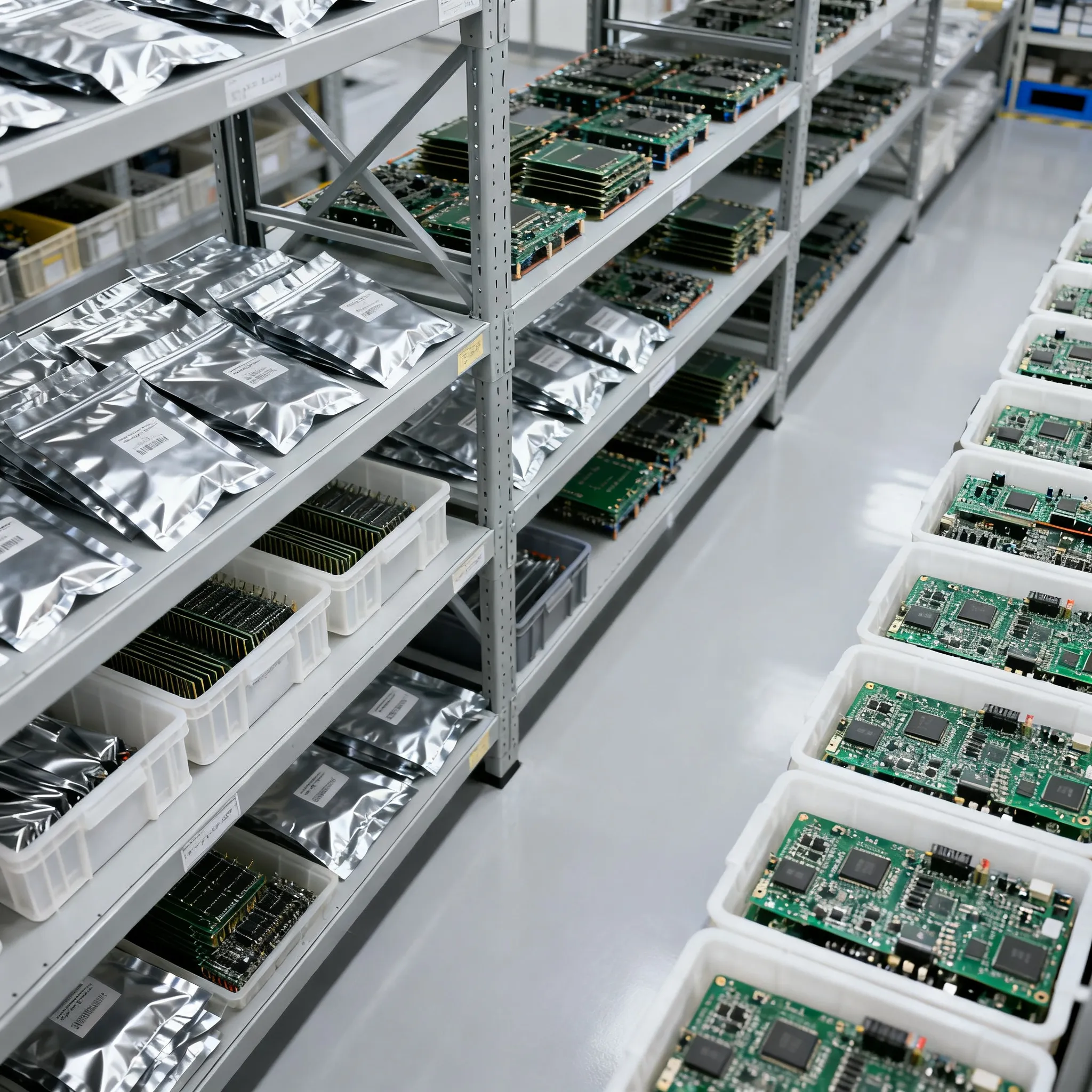
5 Certifications Every Electronics Components Distributor Must Show Before You Sign a PO
Why 2026 Is Reshaping OEM Vendor Qualification
Electronics procurement is being rewritten by three forces: the explosion of safety‑critical ECUs in electric and autonomous vehicles, a global counterfeit surge that exploits documentation loopholes, and regulatory agencies raising enforcement from paperwork to prosecution. In this environment, the distributor’s certification stack is no longer a checkbox—it’s the only defensible starting line before you commit a purchase order.
With EV platforms and self‑driving systems multiplying the count and complexity of electronic control units, ISO 26262 compliance has shifted from a nice‑to‑have for advanced suppliers to a non‑negotiable OEM entry requirement in 2026. At the same time, a rigorous supplier qualification framework is now essential for B2B procurement, as counterfeit risks and documentation gaps plague the supply chain. Distributors certified to AC 00‑56B improve traceability of electronic components—closing the documentation void that counterfeiters exploit. And in the United States, ignoring mandatory FCC Part 15 certification can bring fines, recalls, or bans, making compliant component sourcing a down‑chain obligation.
Below, Table 1 distills the key 2026 drivers reshaping distributor qualification—and the direct procurement consequences for every BOM owner.
| Driver | Mechanism | Procurement Impact |
|---|---|---|
| Proliferation of safety‑critical ECUs | EVs and autonomous platforms embed dozens of ECUs, each requiring functional safety evidence. | Suppliers without ISO 26262 or IATF 16949 are excluded from automotive RFQs; even industrial designs borrowing ECU concepts face heightened audit expectations. |
| Counterfeit sophistication and documentation gaps | Fraudulent parts now mimic packaging and paperwork; missing lot‑level traceability masks infiltration. | Buyers must require ERAI/GIDEP reporting and AC 00‑56B traceability to prove provenance; commodity brokers without these certificates increase recall exposure. |
| Regulatory enforcement escalation | FCC, UL, and sector‑specific agencies penalize non‑compliance with fines, recalls, and market bans. | Distributors stocking non‑UL‑recognized or untested FCC‑Part‑15 parts delay end‑product certifications and risk revenue loss. |
| Supply chain complexity and EOL risks | Consolidation, fab‑line discontinuations, and allocation cycles force frequent second‑source evaluations. | Certified distributors under AS9120 or ISO 9001:2015 maintain documented change control and authorized sourcing, reducing NPI delays when substitutes are qualified. |
| Tightening OEM supplier quality manuals | Major OEMs now mandate AS9120 for avionics, ISO 13485 alignment for medical, and IATF 16949 for automotive in contracts. | Procurement teams must pre‑screen distributor credentials before releasing an RFQ; post‑award certification gaps can halt production. |
The takeaway is clear: the 2026 qualification bar has lifted from “has an ISO logo” to “can demonstrate defense‑grade traceability and regulatory documentation specific to your end application.” The next section details the five certifications that form that backbone.
The Five Certifications That Reveal a Distributor’s Quality Backbone
When you’re staring at a BOM full of mixed‑tier components—some high‑mix, low‑volume, some allocated—you need a fast way to separate distributors who can deliver authentic, full‑traceability parts from those whose paperwork falls apart under audit. The five certifications below, drawn from industry consensus documented by Area51 Electronics, form a universal backbone that improves quality, cost, and delivery performance across the global supply chain. They don’t cover every niche, but a distributor that cannot show all five is not ready for a production PO.
- ISO 9001:2015 — The baseline quality management system. It guarantees a process for corrective action, change control, and continuous improvement, but it does not automatically include counterfeit mitigation or sector‑specific traceability.
- AS9120 — Aerospace‑specific quality management built on ISO 9001 with additional requirements for traceability, counterfeit part prevention, and stricter supplier control. This is the de facto minimum for any buyer managing avionics, space, or defense BOMs.
- ANSI/ESD S20.20 — Establishes a facility‑wide electrostatic discharge control program protecting sensitive components from receipt through shipping. Expired or missing ESD certification raises immediate handling risk for MOSFETs, MCUs, and RF devices.
- ERAI or GIDEP membership — These industry‑led organizations track counterfeit incidents and high‑risk suppliers. Active membership signals that the distributor participates in early‑warning networks and subjects itself to reporting obligations, reducing the chance of bogus parts entering your supply chain.
- ISO 14001 — Environmental management standard that proves the distributor manages waste, RoHS‑related documentation, and regulatory compliance. For OEMs subject to sustainability reporting, ISO 14001 demonstrates supply‑chain ESG readiness.
Beyond the five distribution‑focused credentials, buyers integrating PCBA manufacturing into their procurement workflow should also demand IPC certifications from their assembly partners. IPC‑A‑610, J‑STD‑001, and IPC/WHMA‑A‑620 validate consistent soldering, assembly, and cable harnessing—closing the quality loop from component receipt to finished board.
For an electronics engineer or procurement buyer, these certifications translate into a quick decision matrix. Here’s how you can verify them before signing that PO:
- Request current certificate PDFs with expiration dates. Any distributor unwilling to share unredacted ISO, AS, and ESD certificates at the RFQ stage is already a red flag.
- Cross‑check the issuing body’s online registry. Log on to the accreditation body portal (e.g., ANAB, UKAS) and validate the certificate number; a valid certificate can be confirmed within minutes.
- Demand ERAI/GIDEP proof and the last incident report. Ask for a screenshot or letter confirming active membership and verify that the distributor hasn’t been suspended.
- Match the ESD certificate to the actual ship‑from location. A certificate for a head office doesn’t cover an off‑site warehouse; the facility walkthrough records must align with the address shipping your parts.
- Gate the PO against a live certification audit. For production volumes, send a brief on‑site audit checklist (or a virtual walk‑through with a test report) that confirms calibration logs for ESD workstation monitors and X‑RF equipment are within 90 days.
With the backbone established, the next question becomes: what happens when the application demands more than generic quality management?
When ISO 9001 Isn’t Enough: Matching Certification Depth to Application Risk
For a simple industrial controller—a PLC with proven architectures and no human‑safety loop—a distributor holding ISO 9001 and providing a 12‑week lead‑time commitment may suffice. The Alibaba sourcing guide for 2026 even suggests that typical mid‑volume OEMs don’t need to overthink certification depth beyond that window. But as soon as the BOM moves into automotive, medical, or aerospace territory, the risk equation shifts dramatically.
OEM versus aftermarket sourcing decisions hinge on safety and regulatory constraints, not just cost. A busbar or enclosure might accept a cost‑effective aftermarket alternative, but a microcontroller inside a ventricular assist device or an ADAS sensor cannot. At that level, certifications like AS9120, IATF 16949 awareness, or ISO 13485 alignment become mandatory, and substitutes must be evaluated against every critical specification, never chosen by nominal value or price alone. Relying on a low‑cost alternative from an uncertified broker—no matter how attractive the quote—can gut traceability and counterfeit screening, as low‑cost alternatives should never be approved by price alone.
Table 2 maps application risk segments to the certification depth you should require, and the consequences of under‑specifying your distributor’s credentials.
| Segment / Application Risk | Effect of Insufficient Certification | Notes |
|---|---|---|
| Industrial / consumer (no safety function) | Counterfeit risk elevated; lack of ESD control can introduce latent damage in sensitive ICs. | ISO 9001 + ESD S20.20 may be acceptable; always confirm parts are RoHS‑compliant and UL‑recognized if end product needs NRTL listing. |
| Automotive (IATF 16949 context) | Non‑compliance with PPAP and traceability can trigger production‑line rejections and 8D corrective action requests. | Distributor must demonstrate AS9120 or ISO 9001 with a robust counterfeit prevention program and provide full‑lot traceability reports; IATF 16949 is a manufacturer standard, but the distributor’s processes must support it. |
| Medical devices (ISO 13485 context) | Missing lot‑level traceability stalls FDA/Notified Body audits; no counterfeit screening exposes patient harm liability. | Look for AS9120 or ISO 9001 with documented lot‑control, ERAI/GIDEP membership, and agreement to support your complaint‑handling procedures. |
| Aerospace & defense | Untraceable parts can ground aircraft or cause mission failure; AC 00‑56B documentation gaps draw regulatory findings. | AS9120 is baseline; require airworthiness certificates where applicable, AC 00‑56B compliance statements, and GIDEP reporting as non‑negotiable RFQ clauses. |
| Safety‑critical industrial (SIL 2/3) | Single‑source components without documented traceability threaten functional safety certificates and increase re‑validation costs. | Distributor must prove supply chain continuity, authorized sourcing, and baseline ESD/quality certifications; evaluate FDIS‑capable brokers only with full test reports. |
The table makes one thing clear: an ISO 9001 certificate alone is never sufficient when the application carries a human‑safety or regulatory‑capture consequence. Layering the correct certifications by risk class prevents the all‑too‑common scenario where a procurement team discovers the gap only when an OEM audit fails.
Regulatory Red Flags: Where Certifications Cross Into Legal Must‑Haves
For automotive, medical, and defense programs, certifications aren’t optional—they’re written into OEM contracts and government regulations. ISO 13485 for medical, IATF 16949 for automotive, ISO 26262 for functional safety, and AC 00‑56B for aviation ensure parts meet legal and safety requirements. In the United States, FCC Part 15 and UL standards govern end products, making compliant component sourcing a down‑chain necessity.
Missing these certifications doesn’t just delay an RFQ response—it can halt production or trigger a forced recall. Table 3 prescribes the mitigation actions every OEM buyer should take when certification gaps appear, and the trade‑offs involved.
| Action | When to Use | Trade‑off |
|---|---|---|
| Require AS9120 with full traceability and counterfeit test reports inside the RFQ | Any avionics, defense, or space procurement; medical devices with high safety classification | Narrows distributor pool and often increases unit pricing 5–15%, but eliminates FAA/EASA and notified‑body documentation risk. |
| Insert IATF 16949 supplier‑readiness clause and demand PPAP‑capable lot documentation | Automotive OEM or Tier‑1 programs at SOP or production ramp | Adds qualification lead time; protects against costly run‑at‑risk decisions and potential 0‑km failures. |
| Stock only UL‑recognized or FCC‑compliant components and request supplier certificates of compliance | End products requiring NRTL listing or FCC Declaration of Conformity | Restricts cross‑reference options during shortages, but prevents multi‑month recertification loops during final compliance testing. |
| Perform on‑site ESD audit and sample decapsulation/X‑ray testing for uncertified brokers | Shortage sourcing or legacy EOL parts where authorized chain is exhausted | Resource‑intensive and adds 7–10 business days; essential to confirm authenticity before committing production quantities to a broker without AS9120 or ESD certification. |
| Embed certification‑verification milestones in the supplier contract | When onboarding any new distributor for production volumes | Slight administrative overhead during vendor setup, but gives you the right to reject lots that arrive with expired certificates or non‑conforming traceability. |
When you embed these actions into your procurement workflow, the distributor’s certifications become a daily defense, not a one‑time gate check. The next section answers the specific questions senior buyers ask during those late‑night shortage scrums.
Certification Questions Senior OEM Buyers Actually Ask
Q: How do I verify a distributor’s certificate is genuine and current?
Check the issuing body’s online registry (e.g., ANAB, UKAS, or the certification body’s portal), request the certificate number and expiration date directly from the distributor, and cross‑reference with any recent audit records. Reputable distributors provide this documentation before the first PO—if a broker hesitates, treat it as a qualification blocker.
Q: What’s the difference between ISO 9001 and AS9120 for an OEM buyer?
ISO 9001 is a generic quality management framework. AS9120 adds aerospace‑specific traceability, counterfeit‑part prevention, stricter supplier control, and risk management. For avionics or defense, AS9120 is the baseline expectation; ISO 9001 alone will not satisfy most OEM supplier quality manuals.
Q: Should I require ISO 13485 from distributors for medical device components?
ISO 13485 is a quality system for medical device manufacturers, not typically held by component distributors. Instead, look for AS9120 or ISO 9001 with a strong counterfeit mitigation program and documented lot‑level traceability. Then validate that your distributor can support your own ISO 13485 compliance—for instance, by providing unchanged device master record documentation and complaint‑handling cooperation.
Q: Can a small independent broker be a qualified source without major certifications?
In shortage markets, yes—if they provide full test reports (X‑ray, decapsulation, XRF), maintain ERAI or GIDEP membership, and offer a clear warranty. However, on‑site audits and sample testing are essential before relying on them for production. Never skip these when the broker lacks AS9120 or ESD certification.
Q: How often should a distributor’s ESD control certification be renewed?
ANSI/ESD S20.20 certifications typically require annual re‑certification. Confirm that test equipment calibration logs and facility walkthrough records are up‑to‑date. A certificate that is more than 12 months old, or one that covers a different building than the shipping location, should trigger a re‑audit request.
Q: Do FCC or UL certifications matter when selecting a distributor?
FCC and UL apply to finished products, not distributors. However, a distributor that stocks only UL‑recognized or FCC‑compliant components and can supply the relevant documentation helps you avoid end‑product recertification delays. When your end device must bear a UL mark or FCC ID, this component‑level discipline becomes a procurement advantage.
Every electronics procurement professional has been in the situation where a single missing certificate threatens a production line. Requiring these five credentials—and probing them with the questions above—shifts the conversation from firefighting to qualification control. The final step is to implement that control inside a structured RFQ process.
Before issuing your next PO, upload the entire BOM for a certification‑backed quote. IC-Online’s mixed‑BOM RFQ process lets you flag certification requirements line‑by‑line, so no distributor passes the gate without showing the credentials your application demands. Request a quote or upload your BOM now and build your approved vendor list on a foundation of verified certificates, not promises.
References & Further Reading
- What Are Automotive OEM Standards for Vehicles? — GoodCar
- The 2026 Supplier Qualification Framework — SupplyICs
- The 5 Certifications An Electronics Components Distributor Should Have — Area51 Electronics
- A Complete Guide to Consumer Electronics Certification Requirements in the US and EU — Wonderful PCB
- OEM Electrical Replacement Parts: Complete Sourcing Guide — IFL Manufacturing
- Understanding Electronic Component Specifications Before You Buy — Utkal University
- How to Choose Electronic Component Suppliers: A Practical 2026 Guide — Alibaba
- Alternative Electronic Components for Safer PCBA Builds — Best PCBs
- OEM Standards Insights for Better Compliance — eWorkOrders
- Electronic Product Regulations in the United States: An Overview — Compliance Gate
- What Certifications Should I Look for in an Electronics Manufacturing Partner? — EMSG Inc.
- IC-Online — BOM Upload & RFQ