7 Top Independent Electronic Component Distributors: A 2026 Sourcing Guide for OEM Component Engineers
Practical guide for buyers and engineers: 7 Top Independent Electronic Component Distributors: A 2026 Sourcing Guide for OEM Component Engineers. Sourcing, risk, and selection notes.
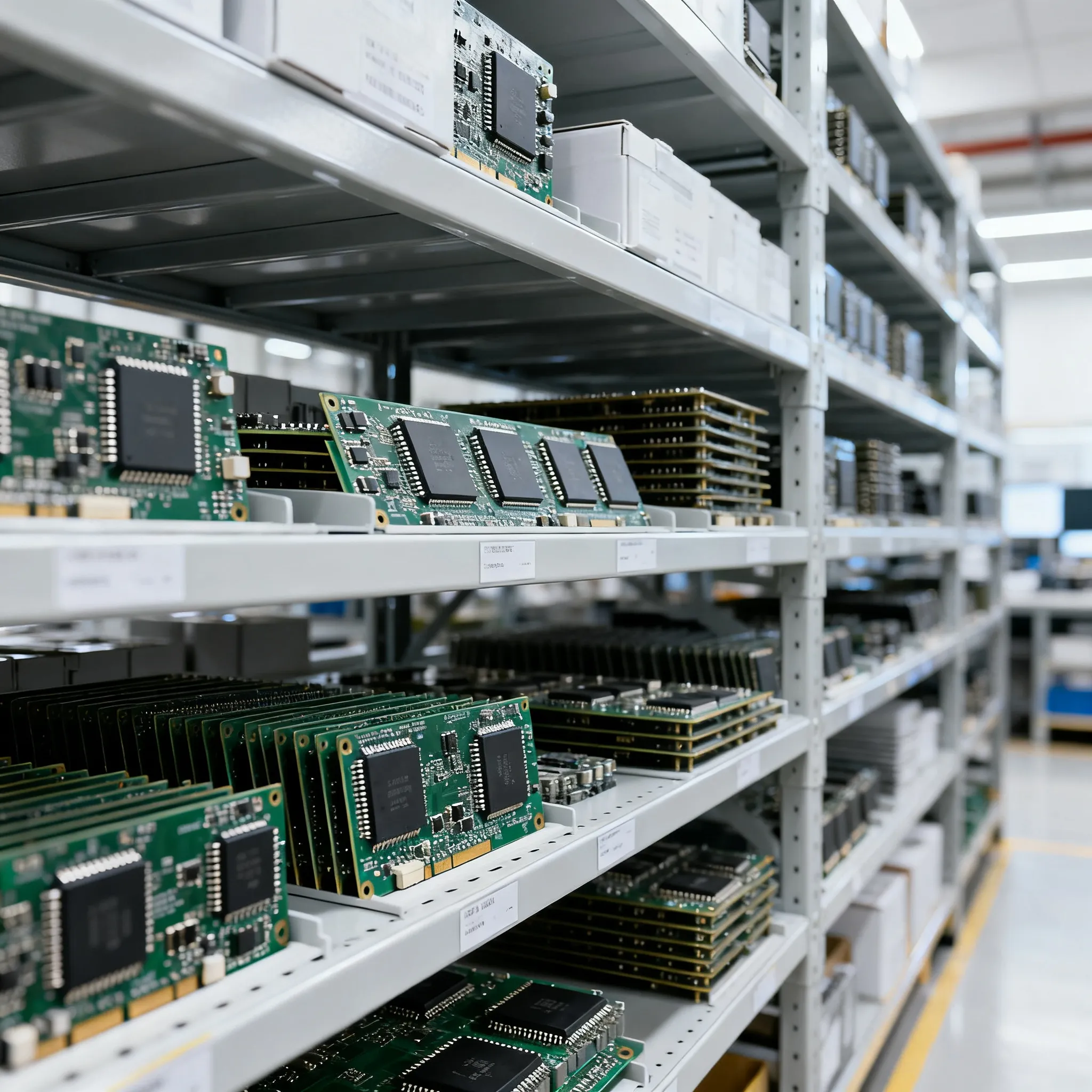
When your primary distributor’s allocation report flips from “available” to “no committed ship date,” every downstream assumption—production schedule, PCB spin, test fixture availability—takes a hit. The independent channel isn’t a silver bullet, but for OEM component engineers staring at a blank allocation queue, it has become the most pragmatic lever left on the table. This guide maps the seven independent distributors that matter in 2026, the verification workflow that turns a broker-sourced reel into a production-grade candidate, and the procurement architecture that keeps counterfeit risk from derailing a bill of materials.
Why 2026’s Allocation Crunch Makes Independent Distributors a Strategic Sourcing Lever
Parts that shipped in weeks during 2025 now sit on manufacturer allocation queues with no committed ship date. According to NextPCB’s 2026 shortage analysis, memory ICs, silicon-carbide power devices, and Nexperia-adjacent discretes are particularly exposed—the kind of components that flow through dozens of OEM designs and have few direct substitutes [1]. If your production schedule was built on last year’s lead-time data, it’s likely already out of date. The immediate symptom is a procurement freeze: the authorised channel shows zero inventory, and the factory’s allocation dashboard simply says “TBD.” In that moment, independent distributors stop being a last resort and become a tactical sourcing lever.
IC Online’s 2026 component shortage update frames the decision with a practical cheat sheet: when your primary distributor runs dry, you’re weighing speed of supply against the due diligence burden [2]. Independent distributors can source globally in days, but they demand a discipline that authorised channels rarely require—sample-batch electrical testing, lot traceability audits, and datasheet cross-checks that catch remarking before it hits the pick-and-place machine. The alternative isn’t simply waiting; it’s a line-stop that costs thousands per hour or a rushed PCB redesign that can take months to re-qualify. That calculus is what pushes independent sourcing from a contingency plan to a core supply-chain competency in 2026.
The table below breaks down the forces that have turned “spot market” from a dirty word into a strategic necessity.
| Driver | Mechanism | Procurement Impact |
|---|---|---|
| Memory & SiC supply constraints | Fab capacity shifted to higher-margin nodes; SiC wafer starts lag demand in automotive and industrial power | Allocation queues extend past production windows; buffer stock exhausted early in the quarter |
| Nexperia-adjacent discrete shortages | Geopolitical trade controls and fab re-tooling squeeze analogue/mixed-signal discretes used in IoT and power management | Multiple OEMs competing for the same alternate discreet MPNs within the authorised channel |
| 2025 lead-time obsolescence | Commodity ICs that shipped in 4–6 weeks in 2025 now sit in “TBD” status; no priority for low-margin commodity lines | Production schedules built on stale lead-time data create artificial urgency and force spot-market buys |
| Buffer stock depletion | Rising interest rates and cash-flow pressure have reduced OEM inventory to near-zero safety levels | Every shortage becomes an immediate production blocker; no cushion for re-sourcing delays |
| Geopolitical & tariff uncertainty | Tariff hikes and export controls disrupt just-in-time flows for China-Taiwan-Korea semiconductor corridors | Broker agility becomes a tactical advantage; global independent networks can reroute supply faster than authorised channels |
The net effect: OEM component engineers can no longer treat the independent channel as a last-resort bid board. They need to evaluate independent distributors with the same rigor they apply to Malcolm Baldrige-certified authorised partners—but with a verification stack that reflects the open market’s variability.
Franchised vs. Independent: How the Sourcing Model Shapes Lead Times, MOQ, and Counterfeit Risk
Understanding the structural difference between franchised and independent distribution is the first step toward building a defensible sourcing playbook. Authorised distributors operate under a manufacturer contract that provides a traceable supply line from wafer fab to reel label, but when a part goes on allocation, those same distributors are usually the first to run dry. GlobX’s analysis of allocation scenarios notes that authorised lead times for constrained parts routinely stretch to 26+ weeks, while minimum order quantities (MOQ) climb to full-reel levels that force you to over-buy for a short-term fix [3].
Independent distributors, by contrast, tap a global open-market network. A2 Global Electronics describes the mechanism: because they aren’t bound to a single franchise line, they can locate parts anywhere—surplus, excess inventory, deferred OEM orders—and deliver in days to a few weeks rather than months [4]. That speed rests on brokerage, not factory allocation, so lot traceability and date-code consistency demand extra scrutiny. The risk picture flips: counterfeit risk rises, but certifications such as AS6081 provide a floor. Level Solutions emphasises that independent distributors who maintain AS6081-certified inspection labs can demonstrably lower counterfeit exposure, making certification a non-negotiable qualifier for any OEM supplier list [5].
When you go independent, datasheet verification becomes a procurement function, not just an engineering step. Tools like Datasheets360 [6] and Octopart [7] let you compare technical specifications, pinouts, and package dimensions across multiple sources so you can catch remarking or sub-grade parts before ordering. For physical footprint integration, UltraLibrarian provides CAD models linked to verified datasheets, letting you drop a candidate part into your layout and check mechanical compatibility during the evaluation cycle [8]. This is the minimum verification stack when stepping outside the authorised channel.
The table below maps the strategic options available to an OEM engineer when franchised stocks run empty.
| Segment/Option | Effect on Procurement | Notes |
|---|---|---|
| Franchised distributor | Factory-direct traceability; long lead times (often 26+ weeks) on allocated parts; high MOQ | Suitable for scheduled, long-lead-time programs; not a solution for acute shortage |
| Independent distributor (open market) | Days-to-weeks delivery; flexible MOQ; higher counterfeit risk mitigated by AS6081 certification and sample testing | Speed and flexibility trade off against rigorous incoming QC requirements |
| Hybrid (authorised + independent broker) | Authorised line covers predictable volume; independent broker fills gaps and shortfall emergencies | Requires dual qualification; separate incoming inspection protocols for each channel |
| Gray market (unvetted broker) | Lowest unit price; highest risk of remarking, date-code fraud, and no test traceability | Treat as sample-only until full external inspection and electrical testing are complete; not for regulated production |
Microchip USA, a top-25 independent electronics distributor, has built its engineering-facing model around the transparency gap: they give design teams visibility into inventory origins, lead-time drivers, and alternative supply options at the schematic review stage [9]. That early visibility lets an engineer weigh not just component specs but supply-chain risk during the bill-of-materials finalization—an advantage that franchised lines rarely offer until after the PO is cut. In the 2026 environment, that kind of early-stage transparency is becoming as important as the unit price.
Benchmarking the Top Independent Distributors: UniBetter, Microchip USA, and the Rest of the 2026 Class
The independent distributor landscape shifts annually as broker networks expand, certifications are added, and ranking organizations adjust their scoring criteria. The 2026 guide collated by industry sources pulls together a shortlist of seven firms, but two names surface repeatedly as reference points for what a strong independent partner looks like in practice [10].
UniBetter secured the #21 position on Supply Chain Connect’s Global Top 50 Electronics Distributors ranking in 2025, and landed a Top 3 spot in the Asia-Pacific distributor list—making it one of the highest-ranked independent distributors from the region. The company serves over 3,000 clients through a sourcing network that spans more than 7,000 trusted suppliers, giving it the depth to locate rare and allocation-hit parts across multiple time zones [11]. For an OEM component engineer, that supplier breadth translates into a high probability of locating a compatible date-code batch without being forced into a single-source corner.
Microchip USA differentiates on transparency: the company’s model surfaces inventory origins and alternative supply options early, allowing engineering teams to evaluate potential supply-chain risks before committing a part to the BOM [9]. Where many independent distributors still operate as opaque boxes, Microchip USA gives the engineer a window into the part’s history—essential when you’re trying to model failure rates for a medical-device or automotive application.
The remaining slots on the 2026 top-seven list are occupied by a rotating class of well-capitalized brokers—firms like A2 Global Electronics, GlobX, and others that compete on geographic reach and quality certifications. A2 Global’s own sourcing literature highlights the open-market advantage: price flexibility and lead-time compression that a single-franchise distributor simply cannot offer during allocation windows [4]. GlobX brings a European perspective on risk, framing independent sourcing as a speed-versus-counterfeit trade-off that must be managed with AS6081 and sample-batch protocols [3].
Because independent rankings shift, use any list—including this one—as a shortlist to vet, not a static endorsement. The comparison criteria that matter for OEM engineers break down into four areas:
- Sourcing reach: How many vetted suppliers does the distributor access? UniBetter’s 7,000‑supplier network is a credible benchmark.
- Transparency model: Can the distributor provide an origin trail, lot date codes, and storage conditions before the PO? Microchip USA’s visibility-first approach sets a standard others must meet.
- Certification floor: AS6081 certification for counterfeit detection is a minimal requirement; IDEA‑1010 adds a second layer but is less widely adopted. Require current certificates dated within 90 days.
- Pre‑commit sample testing: IC Online’s real‑world playbook advises running a small sample batch through external visual inspection and curve‑trace testing before accepting the full reel [2]. A distributor that supports a sample‑first workflow reduces the risk of a full‑reel rejection.
Rankings are a proxy for market presence, but the engineer’s benchmark is the strength of the verification stack the distributor supports. If a top-ranked firm cannot produce an AS6081 certificate and a lot traceability report within one business day, its ranking carries no weight on the factory floor.
What to Test Before Cutting a PO: A Verification Workflow for Independent‑Sourced Parts
Independent‑sourced components are candidates for production, not guaranteed drop‑ins. Treating them as anything else is how a six-figure medical product line gets recalled because a broker’s date code didn’t match the reel label. The workflow that follows turns opportunistic sourcing into a disciplined process.
Begin by running a small sample batch through external visual and electrical inspection. IC Online’s buyer guide explicitly recommends testing 5–10 % of a sample reel before committing to the full quantity—x‑ray for die consistency, decapsulation for internal marking, and a curve trace against the manufacturer’s datasheet [2]. Parallel‑track this with a local third‑party test lab; many metropolitan areas have AS6081‑certified labs that can turn a sample report in 48 hours. That parallel path keeps the production timeline moving while validation completes.
Simultaneously, cross‑reference the part’s technical specs on at least two independent aggregators—Datasheets360 [6] and Octopart [7] cover enough supplier feeds to catch a mislabeled variant. Match the manufacturer part number, package marking diagram, thermal resistance, and pin‑out exactly. If one platform shows a different P‑channel MOSFET RDS(on) or a narrower voltage tolerance, flag the batch for deeper inspection. For physical footprint verification, pull the UltraLibrarian CAD model linked to the verified datasheet and drop it into your PCB layout to confirm pad geometry and keep-out zones [8].
Finally, model the total cost of a line‑stop versus the premium you pay for independent‑sourced parts. WelllinkChips’ classic procurement analysis puts the break‑even point at roughly 3× the standard price: if the part feeds a regulated medical, automotive, or aerospace system where requalification and redesign costs run into hundreds of thousands of dollars, a spot‑market premium is far cheaper than a line‑stop or a rushed respin [12]. Run that calculation with your production controller’s cost-per-hour figure; the answer usually flips the conversation from “this part is too expensive” to “what will a three-week line‑stop actually cost?”
The mitigation timeline below maps the actions, when to deploy them, and the trade-off each imposes.
| Action | When to Use | Trade-off |
|---|---|---|
| Request AS6081 certificate & lot traceability report | During vendor qualification, before any quote is accepted | Adds 24–48 hours to the evaluation cycle; screens out weak suppliers early |
| Run sample‑batch electrical testing (5–10 %) with external lab | On first delivery of any MPN from a new independent source | Cost of testing $500–$2,000 per batch; catches remarking and degraded date codes before full reel purchase |
| Cross‑reference specs on Datasheets360 & Octopart; check UltraLibrarian footprint | Before accepting a substitute part or alternates offered by the broker | Time investment during BOM review; prevents pin‑out and thermal performance mismatches |
| Model all‑in cost of production halt vs. spot premium | When the independent quote exceeds standard price by 2–3× | Requires accurate cost‑per‑hour downtime data; exposes that a premium is often cheaper than a redesign |
| Require date‑code photos and reel‑label images before shipment | For any lot where broker storage conditions are unknown | Slows order placement slightly; provides pre‑ship evidence of lot consistency |
These steps turn an independent distributor relationship from a gamble into a calculated supply-chain move. The key is front‑loading the verification so that the part arrives ready for production, not requiring a last‑minute quarantine.
Independent Distributor Sourcing FAQs for OEM Component Engineers
Q: What certifications must an independent distributor hold to seriously reduce counterfeit risk?
A: Look for distributors certified to AS6081 (counterfeit detection and avoidance); this is the operational floor, not a nice‑to‑have. Some also layer IDEA‑1010 inspections, but AS6081 is the most commonly cited benchmark in OEM supply chain requirements [5]. Always require current certificates dated within the last 90 days.
Q: How do we verify a component batch from an independent source without slowing down our production timeline?
A: Start with a sample‑batch protocol: X‑ray, decapsulation, and electrical curve trace on 5–10 % of a sample reel before accepting the full quantity. This can be parallel‑tracked with production if you engage a local third‑party test lab early. Many AS6081‑certified labs can return a report in 48 hours, so the validation window rarely blocks the line [2].
Q: What kind of lead time improvement can we realistically expect versus authorised channels in 2026?
A: Authorised lead times for allocation‑hit parts often sit at 26+ weeks, while independent distributors can deliver in days to a few weeks [3]. The trade‑off is that this speed rests on global open‑market brokerage, not factory allocation, so lot traceability and date‑code consistency need extra scrutiny.
Q: When does paying 3× the standard price for an independent‑sourced part actually save money?
A: If the part feeds a regulated or high‑reliability system (medical, automotive) where a redesign and requalification costs hundreds of thousands, a spot‑market premium is cheaper than a line‑stop or requalification. Calculate the all‑in cost of a production halt before dismissing that premium [12].
Q: How should we interpret a distributor’s marketing claim of ‘inventory transparency’?
A: Demand specifics: can they show you the origin trail (surplus, excess, broker‑acquired), lot date codes, and storage conditions? Some, like Microchip USA, base their model on delivering this visibility [9]. If a distributor cannot provide a partial traceability report on request, treat the claim as unsubstantiated.
In 2026, the independent distributor channel is no longer a wild‑west bid board. It has matured into a structured sourcing layer that, when paired with rigorous verification, keeps production lines moving while authorised channels reset. The OEM component engineer who builds a qualified independent shortlist, an AS6081‑anchored vetting process, and a fast‑cycle sample‑testing workflow will be the one who delivers prototypes on time when the allocation report still says “TBD.”
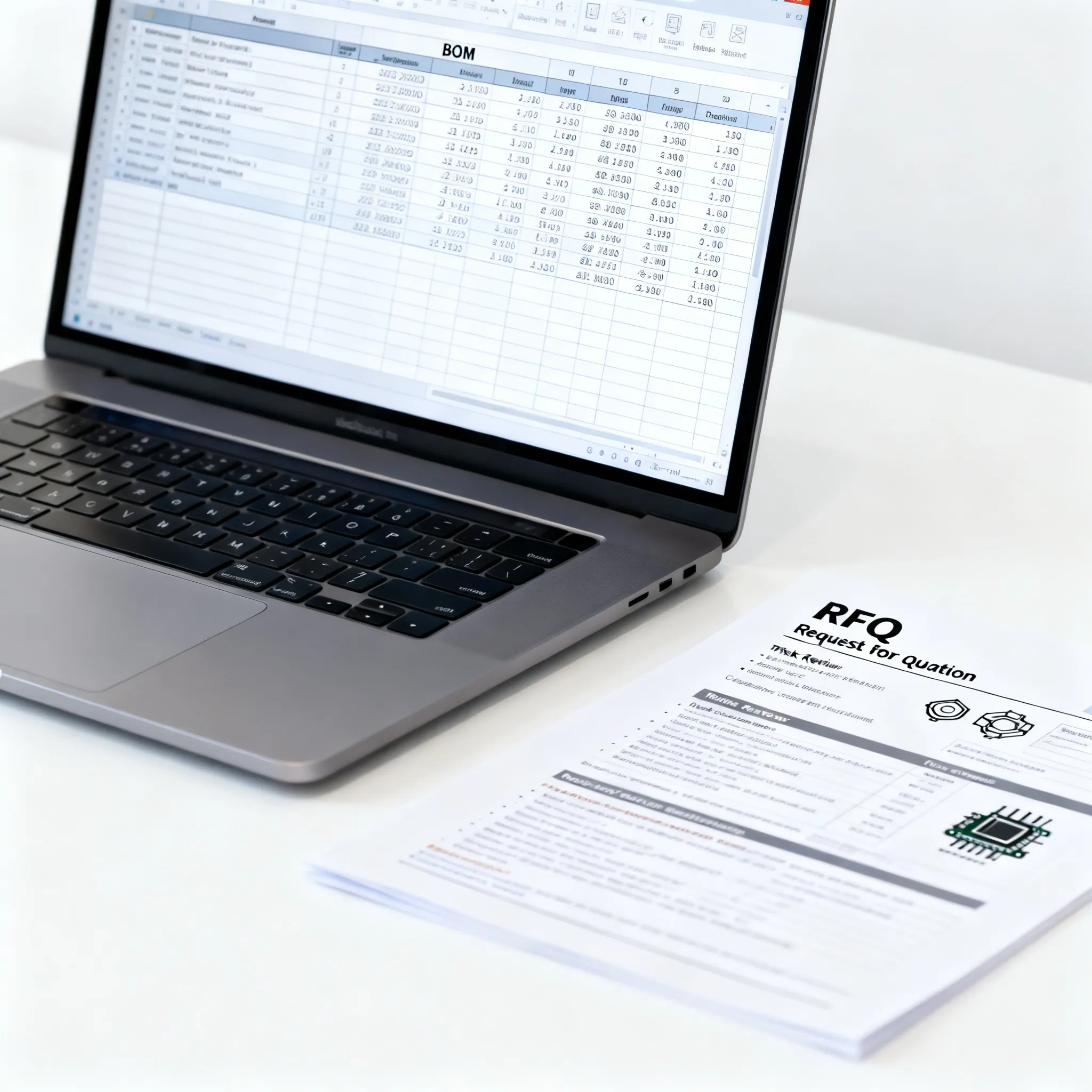
Start your search with a mixed‑BOM RFQ that spans both franchised and independent suppliers. Upload your bill of materials at IC-Online—the platform maps your parts across a global independent network while giving you the verification tools to make every reel a production‑grade reel.