ADS5263IRGCT Supply Risk Assessment: What to Ask Before You Buy
Assess ADS5263IRGCT sourcing risks before you buy. RFQ questions on traceability, date codes, testing, alternatives, and supply continuity for procurement...

Why the ADS5263IRGCT Has Become a Procurement Flashpoint in 2026
If you design or buy for medical ultrasound, phased-array radar, or high-channel-count test instrumentation, you already know the ADS5263IRGCT — Texas Instruments' quad-channel, 16-bit, 100-MSPS analog-to-digital converter in a 64-pin VQFN package. What you may not have anticipated is how quickly this precision ADC has turned into a supply-chain stress test. The part sits at the intersection of three forces that procurement teams dread: limited fab capacity for high-resolution analog silicon, a dual-use export classification that complicates cross-border logistics, and demand from defense and medical programs that cannot simply redesign around a shortage.
Manufacturing disruptions have a way of compounding quietly. As Ivalua's 2026 supply chain risk framework documents, delays in production, equipment malfunctions, and labor shortages create a domino effect on product availability — and precision analog parts with long qualification cycles feel that domino hardest. When authorized distribution channels stretch thin, buyers get pushed toward independent brokers. That shift carries a quantifiable cost: our own 2026 Electronic Component Shortage Update found that gray-market failure rates for high-demand MCUs and power MOSFETs exceed 5%. For a 16-bit ADC sitting in a signal chain where one defective channel means a scrapped board, that number should stop you cold.
Key Takeaway: The ADS5263IRGCT is not a commodity part you can safely source on price alone. The real procurement question isn't "where can I find stock today?" — it's "what verification am I doing before that reel hits my SMT line?" This article gives you the framework to answer that question before you commit budget.
The tension is straightforward: TI authorized channels guarantee silicon provenance, traceable lot-level documentation, and ECCN compliance — but you may wait. Independent distributors can ship today — but without rigorous incoming inspection, you are accepting unknown provenance on a part where a latent defect might not surface until the end product is in the field. And as Supply Chain Management Review recently warned, defects that evade sampling-based inspections can lead to warranty claims, recalls, and regulatory scrutiny that dwarf any upfront savings. For the ADS5263IRGCT, the stakes are heightened by the part's typical deployment in safety-signal and mission-critical paths.
We are not going to tell you this part can be allocation-sensitive — confirm availability via RFQ today, because blanket availability claims age poorly and mislead engineers who need real data. What we will do is walk you through the supply-risk dimensions that matter — the datasheet parameters that constrain substitution, the sourcing channels and their verification burden, and the seven RFQ questions you must ask before any ADS5263IRGCT purchase clears your desk.
ADS5263IRGCT Specs at a Glance: What Makes It Hard to Substitute
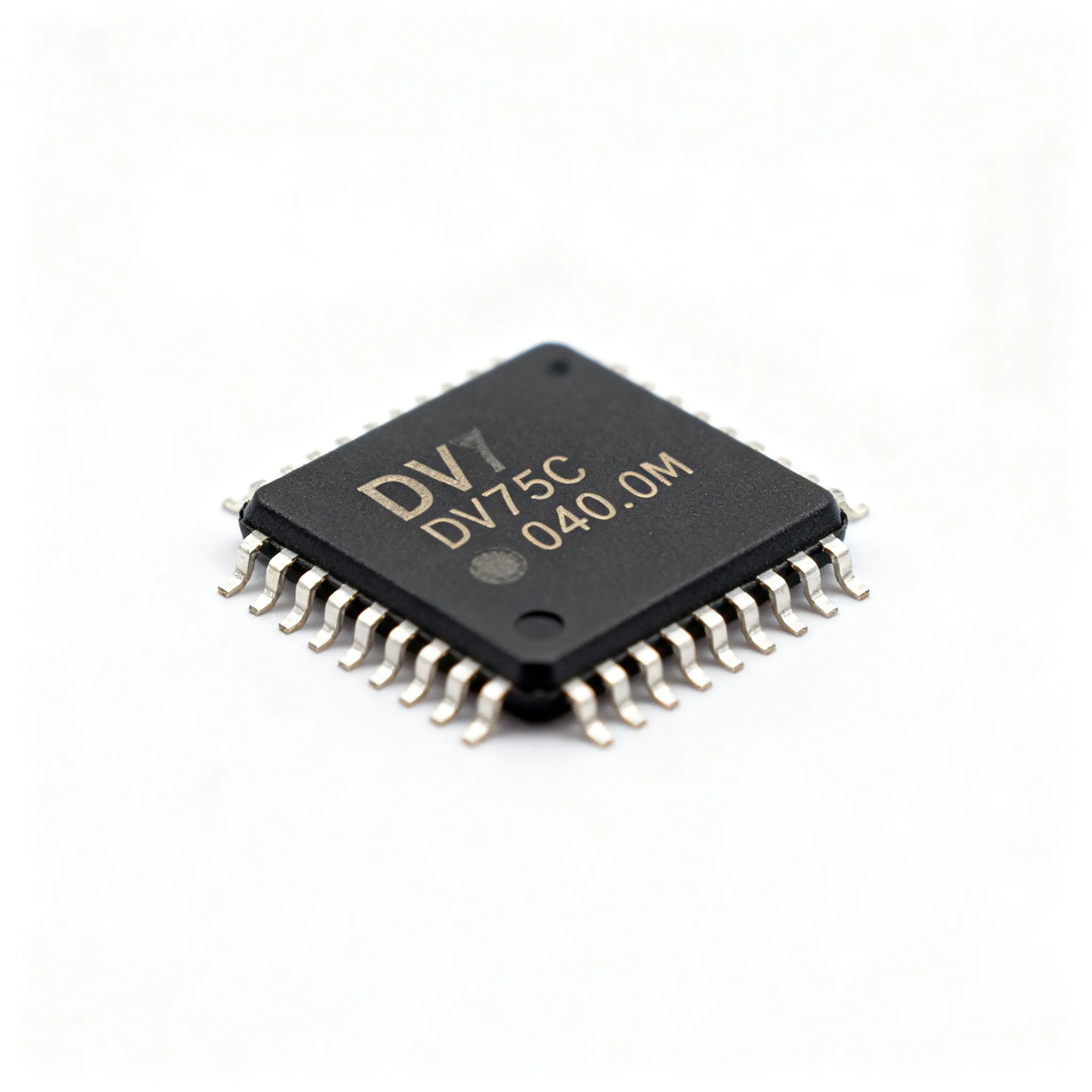
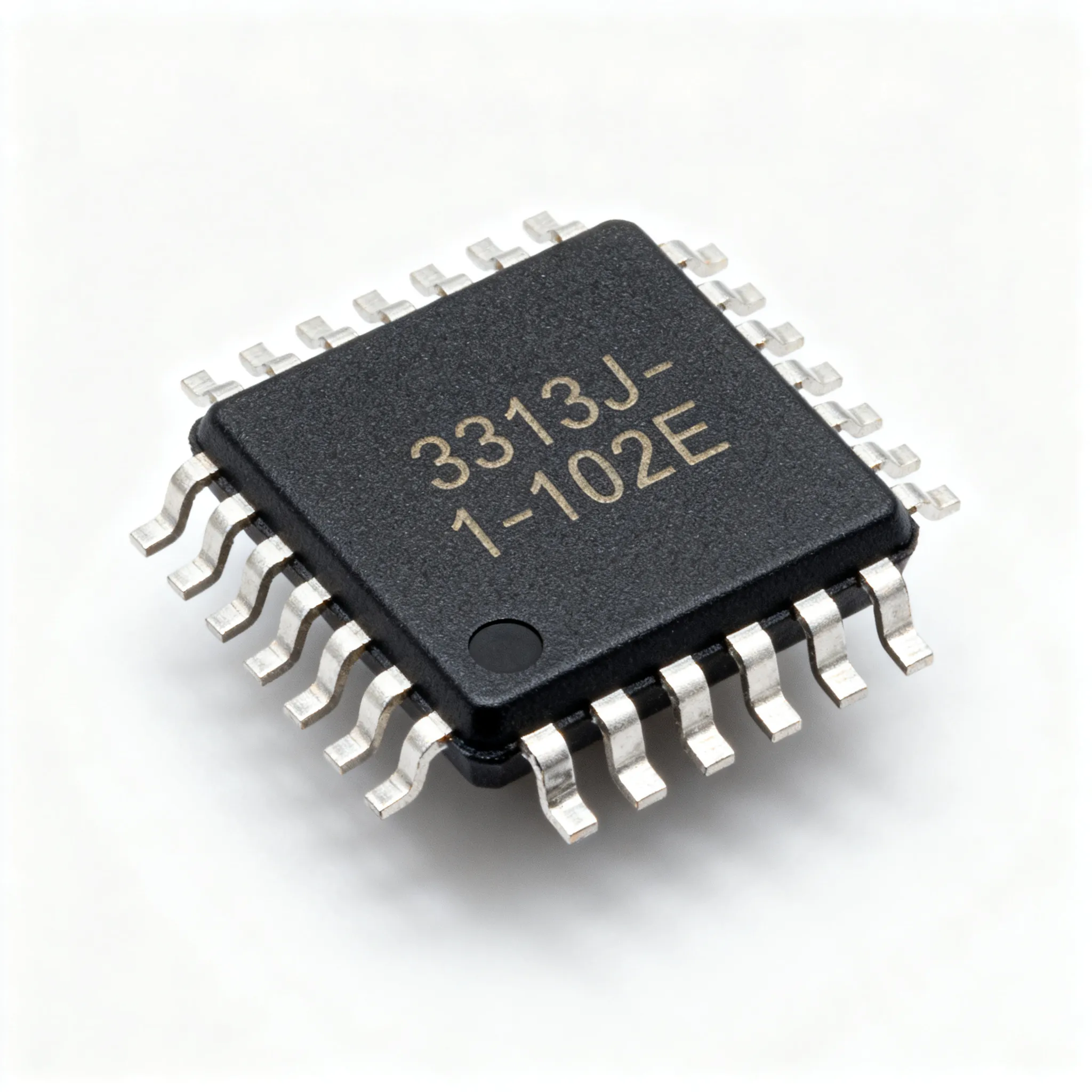
Before you can assess supply risk, you need to understand exactly what you are trying to replace — and why pin-compatible second sources for the ADS5263IRGCT essentially do not exist. This is not a generic SPI ADC that you can cross to three vendors on Octopart. It is a quad-channel simultaneous-sampling converter with a high-SNR mode that trades channel count for dynamic range, and the combination of 100 MSPS throughput with 16-bit resolution in a 9 mm × 9 mm VQFN package narrows the field dramatically.
The table below pulls directly from TI's datasheet (SLAS760D) and the TI.com product page, cross-referenced with Nice Electronic Technology's parametric summary. Pay attention to the ECCN classification — that single line item creates more procurement friction than most buyers expect.
| Parameter | Value | Unit / Notes |
|---|---|---|
| Resolution | 16-bit | Quad-channel simultaneous sampling |
| Maximum Sample Rate | 100 MSPS | Per channel; programmable device resolution mode |
| High-SNR Mode | Quad-channel, 16-bit | Selectable; enhances dynamic range (see datasheet for configuration) |
| Full-Scale Input | 4 Vpp | Differential input |
| Analog Supply Voltage | 3.3 V nominal | Refer to datasheet for operating ranges |
| Package | VQFN (RGC), 64-pin | 9 mm × 9 mm; exposed thermal pad |
| Operating Temperature | -40°C to +85°C | Industrial range |
| Package Quantity / Carrier | 250 pcs | SMALL T&R (tape and reel) |
| US ECCN | 3A001A5A5 | Dual-use export control; verify with TI for NM suffix variant |
| Serial Interface | SPI-compatible (SCLK, CSZ, SDATA, RESETZ) | Configuration and status readback |
Three parameters in that table drive the substitution problem. First, simultaneous sampling across four channels: you cannot replace this with a multiplexed 16-bit ADC running at 400 MSPS and get the same phase coherence between channels. Medical ultrasound beamforming and phased-array radar depend on sample-time alignment across all four inputs; a mux introduces inter-channel skew that must be calibrated out in firmware — if your SNR budget even allows it.
Second, the 4 Vpp full-scale input range is wider than many competing high-speed ADCs, which typically swing 2 Vpp differential. If your analog front-end was designed around that 4 Vpp window, substituting a 2 Vpp part means either attenuating your signal (and losing SNR) or re-spinning the front-end gain stage. Neither is quick.
Third, ECCN 3A001A5A5 means this part is classified under US export regulations as dual-use technology. That classification restricts re-export to certain destinations and end-uses, adds documentation overhead to every cross-border shipment, and can cause customs delays that your MRP schedule never accounted for. Buyers who ignore the ECCN until the shipment is held at a port learn this lesson expensively. Always require your supplier to provide ECCN justification and export compliance records as part of the RFQ package — do not accept "we'll handle it" without paperwork.
Tip: The ADS5263IRGCT standard part and the ADS5263IRGCT-NM variant listed on TI.com may carry different ECCN assignments. Confirm the exact classification for the specific orderable part number you are buying, not just the base device family.
What about the package? The 64-pin VQFN (RGC) is not exotic, but it is dense enough that a substitute in, say, a TQFP or BGA package is unlikely to drop onto the same PCB footprint. If you are designing a new board, Amtech's 2026 playbook on electronics supply chain risk makes the case plainly: flexible product design — engineering for component substitution early — is the most underused mitigation in hardware programs. For the ADS5263IRGCT, that means asking your FAE whether a TI quad-channel ADC in the same family with slightly different sample rate or input range can be laid out as an alternate stuffing option before you freeze the Gerbers.
Approved Sources, Brokers, and Gray Market: Weighing Your Options for the ADS5263IRGCT
Every sourcing decision for the ADS5263IRGCT sits somewhere on a spectrum between guaranteed authenticity and immediate availability — and you rarely get both from the same channel. Understanding the verification burden that comes with each option lets you price risk into the purchase before the parts arrive. This is not a theoretical exercise: the hidden defect risks that SCMR documented show that failures often evade sampling-based inspection and only emerge once products are in service. For a quad ADC in a medical imager or defense system, that timeline stretches from "inconvenient" to "legally and reputationally catastrophic."
We have mapped three sourcing paths against the criteria that matter most for this specific part. Use this as your decision framework, not as a blanket endorsement of any single channel.
| Comparison Metric | TI Authorized Distribution | Independent Distributor (e.g., Nice Electronic) | Selection Criteria & Failure Boundary |
|---|---|---|---|
| Traceability to Manufacturer | Full; TI-direct line of custody | Varies; require lot-level documentation | If traceability breaks anywhere, treat the reel as gray-market — regardless of seller claims |
| ECCN Documentation | Standard with shipment; TI-managed | Must be explicitly requested and verified; Nice Electronic lists ECCN 3A001A5A5 | Missing or inconsistent ECCN paperwork = customs hold risk; reject shipment if docs aren't provided pre-shipment |
| Lead Time Confidence | Allocation-backed; TI commits dates | Stock-on-hand today; no forward allocation guarantee | Authorized lead times can stretch; independent stock is immediate but one-time — plan replenishment separately |
| Sample Batch Testing | Not typically required; warranty-backed | Essential; external electrical test before full-reel commitment | IC-Online recommends sample batch testing for any gray-market source; >5% failure rates documented |
| Counterfeit Risk | Near-zero from authorized channel | Low to moderate with verified suppliers; high without verification | BJlingate: ask for evidence of authorized channels and traceable sourcing paths |
| Cost Premium vs. Risk | Higher unit cost; near-zero verification cost | Potentially lower unit cost; add $500-$2,000 for inspection and electrical test | Total cost of ownership (TCO) calculation must include line-stop and recall exposure — not just reel price |
| Warranty & Recourse | TI warranty flows through distributor | Supplier-specific; negotiate defect liability terms in the PO | Without a written defect-replacement clause, you absorb 100% of latent-failure cost |
The independent channel is not inherently dangerous — but it shifts the verification burden squarely onto you. Elisa Industriq's 2026 procurement guide frames this clearly: match the supplier type to risk tolerance. If a part is safety-related or hard to test once installed, treat it as higher risk. The ADS5263IRGCT qualifies on both counts. It is soldered onto a board that may go into a body-worn medical device or an avionics bay, and a defective ADC channel is not something you catch with a quick bed-of-nails test — it requires running the full signal chain at speed, often with calibrated stimulus, which most production lines do not do.
Note: Some independent distributors, including Nice Electronic, publish detailed parametric data and ECCN information publicly. This is a positive signal — it indicates they understand what buyers need for compliance and engineering evaluation. It does not replace lot-level traceability and sample testing, but it separates serious suppliers from box-shifters who cannot tell you what's actually on the reel.
The practical workflow we recommend: treat every independent-source ADS5263IRGCT purchase as a two-step transaction. Step one is a small sample batch — 10 to 25 units — that goes through external electrical testing at full sample rate across all four channels. Step two is the balance of the reel, released only after the sample batch passes. Yes, this adds cost and time. It is still cheaper than discovering 5% field failures in a shipped product.
The Pre-Purchase Checklist: 7 Questions to Ask Before You Commit to an ADS5263IRGCT Reel
Procurement checklists work best when each question is tied to a specific, measurable risk. Skip question three, and you might absorb counterfeit parts. Skip question six, and a sudden allocation cut leaves your line down with no plan B. The seven questions below are drawn from the supply-chain research we cited above, adapted specifically for the ADS5263IRGCT's technical and regulatory profile. Run through them with every supplier before you issue a PO.
| # | Question to Ask the Supplier | What You're Actually Verifying | Risk of Skipping This |
|---|---|---|---|
| 1 | Is the source authorized by TI, or independently verified? Request documentation. | Authorization status determines traceability and warranty path. BJlingate recommends evidence of authorized channels. | Buying from an unauthorized source without verification means you are the final quality gate — and liable for any field failures. |
| 2 | Can the supplier deliver full lot-level traceability and ECCN documentation for the exact orderable MPN? | Traceability means a documented chain of custody back to TI's fab. ECCN 3A001A5A5 must match the exact part — don't accept a generic device-family ECCN. | Shipment held at customs; inability to prove dual-use compliance to your end-customer's auditors; recall exposure if a lot is later flagged. |
| 3 | Will the supplier allow a sample batch for external electrical testing before full-reel commitment? | Testing a small batch through all four channels at 100 MSPS catches functional defects that visual inspection misses. IC-Online's 2026 guidance recommends this for gray-market sources. | Committing to a full reel without testing is the procurement equivalent of "trust me" — and >5% failure rates on independent-channel parts make that gamble expensive. |
| 4 | What is the real lead time, backed by allocation, not just the quote? | As Elisa Industriq notes, lead time is the weeks between order and shipment — confirmed allocation means the supplier has reserved fab capacity, not just a hopeful date. | Quoted lead times without allocation backing are aspirational. A 4-week quote that becomes 20 weeks will idle your line; you need buffer stock or an alternate plan. |
| 5 | Have date codes and moisture sensitivity level (MSL) been confirmed and documented? | Date codes help you verify against TI's lifecycle status. MSL for the 64-pin VQFN dictates bake-out requirements before reflow if the seal is compromised. | Old date codes may indicate the part is from a suspect lot or nearing end-of-life. Improper MSL handling causes popcorning during reflow — catastrophic for a 64-pin QFN. |
| 6 | Does the design accommodate a form-fit-function alternative if the ADS5263IRGCT becomes unavailable? | Amtech's 2026 playbook identifies design-for-substitution as the most underused mitigation. Ask your FAE about alternate TI quad ADCs that can share the footprint. | Without a qualified alternate, a supply interruption becomes a line-stop with no recovery path except a PCB redesign — which is months, not weeks. |
| 7 | What counterfeit mitigation steps does the supplier follow? Request the written process. | Legitimate suppliers can describe their incoming inspection, visual inspection criteria, and electrical test procedures. BJlingate emphasizes asking for evidence of traceable sourcing paths. | A supplier who cannot articulate counterfeit mitigation is either uninformed or hiding something. Either answer disqualifies them for a mission-critical ADC. |
Questions one through five are deal-breakers for production purchases. Questions six and seven separate procurement teams that manage risk from those that simply react to it. If your supplier pushes back on sample-batch testing (question three), that is a red flag independent of price. Legitimate distributors who stand behind their inventory do not fear independent verification. Those who resist it are pricing in the probability that you will not test — and that is exactly the kind of supplier you do not want for a ADS5263IRGCT.
Practical workflow: Turn these seven questions into a one-page supplier qualification form. Send it with every RFQ. Grade responses before you compare pricing. A supplier who scores 7/7 at a 15% premium is almost always cheaper over the product lifecycle than a 5/7 supplier at the lowest reel price — because the cost of one field failure on a 16-bit ADC in a medical or defense system dwarfs the BOM savings.
Quick Answers to the Toughest ADS5263IRGCT Sourcing Questions
Senior engineers and procurement buyers who encounter the ADS5263IRGCT for the first time — or the first time in this supply environment — tend to hit the same sticking points. Below, we answer the six most frequent questions with enough technical depth to be useful without burying you in theory. Each answer assumes you have read the sections above and are now deciding how to act.
Q: What exactly is the ADS5263IRGCT and why is it so hard to find?
It is a quad-channel, 16-bit, 100-MSPS high-SNR analog-to-digital converter in a 64-pin VQFN package, manufactured by Texas Instruments and widely designed into medical ultrasound, phased-array radar, and multi-channel instrumentation. Supply tightness originates from two structural factors: limited global fab capacity for precision high-speed analog parts — where process tuning is tight and yields are harder to scale than digital — and the ECCN 3A001A5A5 dual-use classification, which adds export compliance friction that slows cross-border distribution. When authorized distributors run lean, the independent channel becomes the pressure-release valve, and that is where verification discipline determines whether you get working silicon or a reel of problems.
Q: How can I verify that an ADS5263IRGCT from a broker is authentic?
Three steps, none optional. First, require full lot-level traceability documentation that goes back to TI — not just the broker's immediate supplier. Second, send a sample batch (10–25 units) to an independent test lab for full electrical characterization at 100 MSPS across all four channels; IC-Online's 2026 guidance specifically recommends this for gray-market sources. Third, cross-check date codes against TI's published lifecycle status — old date codes on a part still in active production warrant an explanation. The SCMR article on hidden supply chain risks makes clear that sampling-based visual inspection alone can miss latent defects; only powered electrical testing at speed catches a dead channel or degraded SNR.
Q: What does ECCN 3A001A5A5 mean for my purchase?
It is a US export control classification for dual-use electronics — technology that has both civilian and military applications. In practice, it means any cross-border shipment of the ADS5263IRGCT requires documentation proving the goods are eligible for the destination country and the declared end-use. Unauthorized re-export to restricted destinations or entities can trigger customs holds, shipment seizures, and legal liability for both buyer and seller. Always require your supplier to provide ECCN justification and export compliance records specific to your order. The Nice Electronic product page lists ECCN 3A001A5A5 explicitly — a sign of compliance awareness — but you should still verify that the documentation matches the shipment, not just the catalog listing.
Q: What are the lead times today and how can I protect my production schedule?
Rather than quote a number that ages the moment we publish, we will tell you what buyers consistently report: lead times from authorized TI distribution for precision high-speed ADCs can stretch significantly, and the most reliable way to get a current figure is to request an allocation-backed commitment via RFQ. To protect your schedule, do three things now: place orders earlier than your MRP suggests — the cost of carrying buffer inventory on a $50–$100 ADC is dwarfed by the cost of a line-down event; secure an allocation agreement with your authorized distributor that guarantees a minimum quarterly quantity; and follow Amtech's design-for-substitution principle — qualify an alternate TI quad-channel ADC that can be stuffed on the same board with minimal BOM changes, so you have a switching path if the primary part dries up.
Q: Should I consider an alternative ADC, and if so, which ones?
For new designs, absolutely — building a single-source ADC into a new board without a qualified alternate is a supply-chain decision masquerading as an engineering one. Texas Instruments offers other quad-channel ADCs in the same family with different sample rate, resolution, or input range combinations; engage your TI FAE to match your SNR and sample rate requirements. For existing boards where the ADS5263IRGCT is already laid out, a true evaluation candidate (verify before adopting) for unlikely — the 64-pin VQFN footprint with simultaneous 4-channel sampling at 4 Vpp input range is a tight combination. Plan for a board redesign as a contingency, not a panic move. Factor the redesign cost and timeline into your supply-risk assessment today, while you still have inventory to bridge the gap.
Q: What's the safest way to buy small quantities for prototyping?
Start with TI's authorized sample program or an authorized distributor's small-reel offering — TI.com lists the ADS5263IRGCT-NM as the orderable part for engineering evaluation. For prototyping, even a few suspect parts can derail a bring-up and send your team down weeks of phantom debugging — chasing noise or distortion that is actually a counterfeit or damaged ADC. Avoid independent brokers for engineering samples unless they can provide the same traceability and test reports you would require for production. The small premium for authorized silicon during prototyping is insurance against wasting engineering time, and engineering time is the most expensive line item on any development budget.
References & Further Reading
- TI.com — ADS5263IRGCT-NM Product Page and Ordering Information
- TI Datasheet SLAS760D — ADS5263 Quad Channel 16-Bit, 100-MSPS High-SNR ADC
- Nice Electronic Technology — ADS5263IRGCT Parametric Summary and ECCN Data
- IC-Online — 2026 Electronic Component Shortage Update: How to Secure Your Supply Chain
- Supply Chain Management Review — The Hidden Supply Chain Risk No Dashboard Shows
- Ivalua — Supply Chain Risk Management: Complete Guide 2026
- Amtech — Electronics Supply Chain Risk Management: The 2026 Playbook
- Elisa Industriq — Electronic Component Procurement Guide for Real Buyers 2026
- BJlingate — How to Evaluate an Electronic Components Supplier
- AllDatasheet — ADS5263IRGCT Datasheet PDF Download
Sourcing the ADS5263IRGCT? Start with a verified RFQ. Whether you need allocation-backed authorized stock or a fully vetted independent source, the right supplier relationship begins with the right questions. Upload your BOM — mixed line items, flexible MOQ — and request a quote through IC-Online. Our team can help you navigate ECCN documentation, lot traceability requirements, and sample-batch verification for the ADS5263IRGCT and your full bill of materials. Don't guess on supply — get a data-backed answer before you commit.