AIP1629A 2026 Market Outlook: Availability, Pricing Trends, and Authorized Sources
Expert guide on AIP1629A 2026 Market Outlook: Availability, Pricing Trends, and Authorized Sources. Technical specs, applications, sourcing tips for engineers and buyers.
Why AIP1629A Supply Demands Attention in 2026
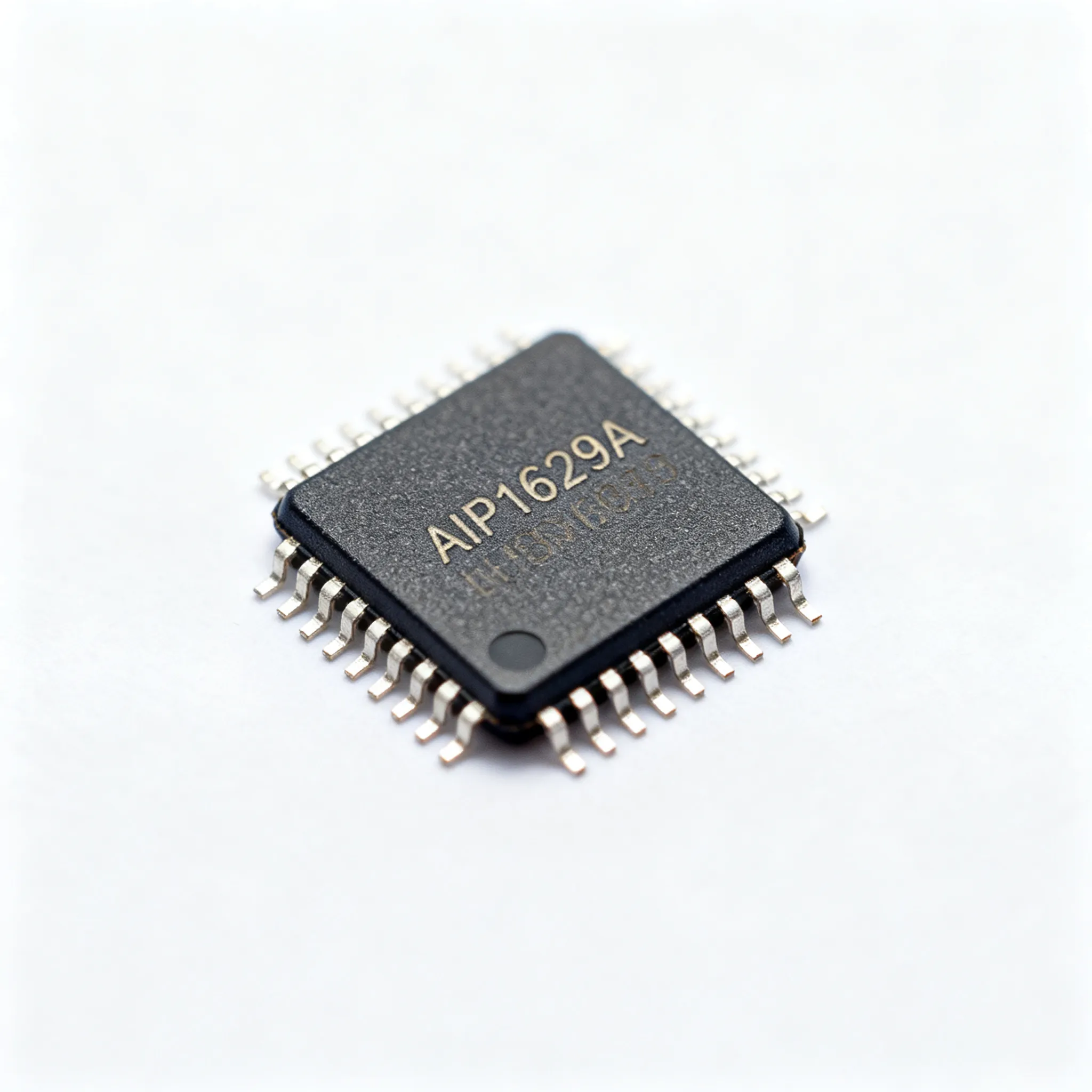
Engineering teams that have relied on the AIP1629A for multi-digit display panels and backlit indicators are noticing a measurable shift in the procurement landscape. The device—a 3‑wire serial LED driver from I‑CORE—is not a headline‑grabbing AI accelerator, but its supply chain is being reshaped by the same forces tightening mature‑node mixed‑signal lines. IC‑Online’s Q3 2026 market report confirms that while standard memory pricing remains flat, display drivers and small‑outline interface ICs are experiencing selective tightness with lead times moving from 8–10 weeks toward 12–16 weeks. That trend alone is enough to blow a hole in a production schedule if buffer stock is not in place.
What makes the AIP1629A particularly sensitive is its position in the product stack. The chip is fabricated on a mature CMOS process, likely 180 nm or 110 nm, and shares fab capacity with dozens of other catalog mixed‑signal parts. SupplyICs’ Q2 2026 outlook underscores that chiplet disaggregation is pulling advanced‑node capacity, but it is also compressing eight‑inch wafer availability because foundries are reluctant to add new mature‑node lines. Simultaneously, the passive components—bypass capacitors, current‑limiting resistors, and connectors—that sit around the driver are under their own pricing pressure, as Ichome’s MLCC and Power IC overview vividly illustrates. When a commodity MLCC jumps 5–10% and a niche LED driver stretches by four weeks, the total landed cost of a display subsystem can surprise an unprepared buyer.
Below, Table 1 maps the key drivers that are currently shaping AIP1629A availability and pricing. Every driver is extracted from the referenced market intelligence and is directly relevant to the procurement of a mature‑node serial LED driver.
| Driver | Mechanism | Procurement Impact |
|---|---|---|
| Mature-node capacity compression | Foundries prioritize 300 mm / advanced nodes; 200 mm lines see limited CapEx. LED driver wafers compete with PMICs, EEPROMs, and touch controllers. | Lead times for AIP1629A extend to 12–16 weeks; allocation risk increases for small‑volume buyers. |
| Passive component price inflation | High‑dielectric MLCCs and thick‑film resistors are in sustained demand, driven by EV and IoT manufacturing. Ichome’s data shows 5–10% upward pressure on commodity passives. | Total BOM cost for a display module rises even if the driver IC price stays flat; buyers must negotiate multisource passives. |
| Distributor inventory caution | After the 2021–2023 glut, authorized distributors are running leaner buffer stocks. IC‑Online’s Q3 report notes that standard DRAM pricing is stable, but mixed‑signal ICs are not seeing inventory replenishment at the same rate. | Spot‑buy availability is unpredictable; reliance on scheduled orders and long‑term agreements becomes essential. |
| Industrial IoT and automotive cluster demand | Next‑gen smart meters, white goods panels, and automotive instrument clusters continue to adopt serial LED drivers for cost‑effective HMI. Utmel’s transceiver shortage outlook highlights similar demand pull for niche active components. | Increased demand for the AIP1629A and its derivatives tightens the supply‑demand balance, especially in Q3–Q4. |
| Geopolitical and trade policy shifts | Ongoing export restrictions and tariff adjustments create friction in the semiconductor supply chain, particularly for parts manufactured in China or Taiwan. PwC’s global semiconductor outlook flags diversified sourcing as a critical risk‑mitigation lever. | Buyers may need to qualify alternative sources or maintain safety stock in bonded warehouses; lead‑time variability increases. |
Key Takeaway: The AIP1629A is not in a full‑blown shortage, but the compounding effect of mature‑node constraints, passive pricing, and lean distributor inventory means that the “just‑in‑time” approach that worked in 2024 is now a gamble. Procurement teams should treat the driver as a scheduled‑line item with a 16‑week planning horizon.
Decoding the AIP1629A: 3‑Wire Serial Interface and Key Specifications
Before diving into alternatives or sourcing tactics, it is worth grounding the conversation in what the AIP1629A actually delivers. The device is a constant‑current LED driver with a 3‑wire serial interface—typically a clock line (SCLK), a data line (DIN), and a latch/strobe signal (STB). This minimal pin count allows a single microcontroller to control multiple cascaded drivers, making it a popular choice for multi‑digit seven‑segment displays, LED bar graphs, and simple indicator panels. The official AIP1629A datasheet provides full electrical characteristics, timing diagrams, and application schematics. Designers familiar with the AIP1628 pinout will recognize the same interface philosophy, though the AIP1629A offers a different segment/ digit mapping and drive current capability.
Table 2 compares the AIP1629A with its close sibling, the AIP1628, to highlight the practical differences that matter during a redesign or second‑source qualification.
| Parameter | AIP1629A | AIP1628 | Unit / Notes |
|---|---|---|---|
| Serial interface | 3‑wire (CLK, DIN, STB) | 3‑wire (CLK, DIN, STB) | Clock, data, latch — pin‑compatible footprint |
| Max. display digits | 16 digits × 8 segments (or 14 × 13 matrix) | 16 digits × 8 segments (or 16 × 8 matrix) | Different mapping; check datasheet for exact configuration |
| Segment drive current | Adjustable via external resistor, typically 20–40 mA per segment | Adjustable, similar range | mA; both offer constant‑current control |
| Supply voltage | 4.5–5.5 V | 4.5–5.5 V | V; logic supply compatible with 5 V MCUs |
| Package | SOP‑28 or SSOP‑28 | SOP‑28 or SSOP‑28 | Mechanically identical for many foot‑prints |
| Key differentiator | Optimized for 14‑segment/matrix applications with additional control bits | Optimized for standard 7‑segment displays | Software‑configurable scan limits |
| Typical lead time Q3 2026 | 12–16 weeks | 10–14 weeks | Based on IC‑Online Q3 data; subject to allocation |
Tip: When migrating from the AIP1628 to the AIP1629A, pay close attention to the command‑word register and the segment mapping. The physical package is often identical, but a firmware update is required to handle the scan‑limit and display‑memory differences. Testing with a representative batch of both drivers is essential before committing to an alternative.
Alternative LED Drivers: When AIP1629A Isn’t the Only Option
The AIP1629A occupies a sweet spot between cost and functionality, but supply chain realities may force a design team to consider alternatives. The adjacent table evaluates four candidate parts—two from the I‑CORE family and two from other vendors—using current market intelligence from IC‑Online’s Q3 2026 report and Ichome’s MLCC & Power IC overview. The transceiver shortage outlook reinforces a pattern: niche active components with a single dominant source are seeing extended delivery windows, so a multi‑source strategy is prudent.
| Comparison Metric | AIP1629A (Reference) | AIP1628 (Pin‑compatible) | TM1650 (Titan Micro) | MAX7219 (Analog Devices) |
|---|---|---|---|---|
| Interface | 3‑wire serial | 3‑wire serial | 2‑wire I²C‑like | 4‑wire SPI |
| Drive capability | Up to 16 digits/8 seg | Up to 16 digits/8 seg | 4 digits × 8 segments | 8 digits × 8 segments |
| Supply voltage | 5 V | 5 V | 3.3–5 V | 4.0–5.5 V |
| Package | SOP‑28 / SSOP‑28 | SOP‑28 / SSOP‑28 | SOP‑16 / DIP‑16 | DIP‑24 / SOIC‑24 |
| Lead time signal (Q3 2026) | 12–16 weeks, selective tightness | 10–14 weeks, slightly better availability | 8–12 weeks, widely sourced | 14–18 weeks, high demand from industrial displays |
| Cost per unit (relative) | $$ | $$ | $ | $$$ |
| Authorized distribution | I‑CORE authorized partners; limited global footprint | Same as AIP1629A | Titan Micro authorized distributors; broad availability | Arrow, Mouser, DigiKey, Avnet |
| Selection criteria & failure boundary | Best for multi‑digit panels with software‑defined scan limits; single‑source risk if not buffered | Drop‑in hardware replacement; verify segment mapping before committing | Simple 2‑wire interface reduces MCU pins; limited to 4 digits, not suitable for larger displays | Industry‑standard, robust support; higher cost and larger footprint; requires SPI bus |
The table makes clear that no single part is a universal replacement. The AIP1628 is the lowest‑risk hardware alternative, but it still relies on the same I‑CORE supply chain. The TM1650 is a tempting low‑cost option for simple 4‑digit displays, but it cannot scale to the 16‑digit panels that the AIP1629A handles. The MAX7219 is a bullet‑proof choice with excellent global availability, but the cost differential and PCB re‑layout may be prohibitive for high‑volume cost‑sensitive designs. Before locking in a second source, verify the bill of materials for the entire display subsystem—including the passives and connectors—so that the alternative driver does not introduce a new bottleneck elsewhere.
Sourcing AIP1629A: Authorized Channels and Resilience Tactics
Procurement teams that treat the AIP1629A as a commodity are the ones most likely to be caught by allocation. The device is not a multi‑source jellybean part; I‑CORE is the sole manufacturer, and its authorized distribution network is narrower than that of a Texas Instruments or Microchip. PwC’s Global Semiconductor Outlook 2026 stresses that diversified sourcing is a non‑negotiable element of supply chain resilience, and the Analog & Mixed Signal IP trends report notes that companies that invest in innovation, flexibility, and partnerships will be best positioned to succeed. In practice, that means building a relationship with an authorized I‑CORE distributor well before the production ramp, not when the MRP system flags a shortage.
Table 3 outlines actionable mitigation steps that procurement and engineering can take together. Each action is paired with a timing recommendation and a realistic trade‑off, because no single tactic eliminates risk entirely.
| Action | When to use | Trade‑off |
|---|---|---|
| Schedule rolling 12‑month PO with an authorized distributor | Immediately, if forecast is stable | Locks capital; may need to negotiate cancellation terms if demand softens |
| Qualify a pin‑compatible alternative (AIP1628) and pre‑approve firmware patch | During design phase or next ECO window | Requires engineering time and test coverage; still tied to same manufacturer |
| Maintain 8–10 weeks of safety stock in an approved warehouse | When lead times exceed 12 weeks | Carrying cost and risk of obsolescence; must be paired with an EOL monitoring plan |
| Engage a hybrid distributor (e.g., IC‑Online) for mixed‑BOM and flexible MOQ | When prototype or small‑batch volumes are needed quickly | Mixed‑source parts require incoming inspection; traceability may be less direct than a single authorized channel |
| Monitor lead‑time signals via market intelligence platforms | Ongoing, monthly rhythm | Information overload; requires dedicated supply‑chain analyst time to filter noise |
Note: The gray market is particularly dangerous for a part like the AIP1629A. Because it is a cost‑optimized driver, the incentive to counterfeit or remark lower‑grade devices is high. Always require a certificate of conformance and full traceability documentation from the seller. Working with an authorized channel—or a trusted hybrid distributor that verifies provenance—is the only reliable way to avoid field failures that can cost far more than the unit price savings.
Beyond the table, procurement teams should implement a few concrete practices:
- Cross‑reference I‑CORE’s official distributor list against the names offered by brokers. I‑CORE’s regional sales office can provide an updated list; do not rely on a web search alone.
- Negotiate VMI (Vendor Managed Inventory) agreements with authorized distribution. A VMI hub close to the manufacturing site can compress the effective lead time to a few days, provided the distributor commits to holding buffer stock.
- Include the AIP1629A in the quarterly SIOP (Sales, Inventory, and Operations Planning) review, even if it is a low‑dollar item. The goal is to make sure that the purchasing team does not treat it as an afterthought when the BOM is being reviewed.
- Use the Ichome market overview and IC‑Online Q3 report as early warning signals. A sudden jump in the lead‑time trend for “LED driver” or “mixed‑signal consumer” categories should trigger a check on the AIP1629A status.
AIP1629A Sourcing Scenarios: Engineering and Procurement Q&A
The following questions capture the real‑world conversations that senior engineers and procurement leads are having today. The answers are grounded in the market intelligence referenced throughout this article and reflect the practical constraints of a 2026 supply chain.
Q: What are the typical lead times for AIP1629A in Q3 2026, and how do they compare to earlier this year?
Lead times have stretched from 8–12 weeks to 12–16 weeks for many small‑outline serial LED drivers, including the AIP1629A. This drift is driven by mature‑node capacity constraints and cautious distributor inventory strategies, as documented in IC‑Online’s Q3 2026 market report. Earlier in 2026, some buyers reported 10‑week deliveries, but the trend is clearly upward. If your design window is tight, plan for 16 weeks and add a two‑week buffer for incoming inspection.
Q: How can I verify an authorized distributor for I‑CORE AIP1629A?
The most reliable method is to cross‑reference I‑CORE’s official website or contact their regional sales office directly. Authorized distributors will provide traceability documentation, factory‑sealed packaging, and direct technical support. PwC’s outlook emphasizes that working with vetted partners reduces counterfeit risk, and for a single‑source part like the AIP1629A, that vetting is critical. Avoid any seller that cannot produce a recent I‑CORE authorization letter.
Q: What is the pin‑compatible alternative if AIP1629A is out of stock?
The AIP1628 is pin‑compatible and mechanically interchangeable for most SOP‑28 footprints. However, the segment mapping and command‑word register differ in subtle ways, so a firmware modification is required. If the design can tolerate a 2‑wire interface, the TM1650 from Titan Micro offers a lower‑cost alternative, but it is limited to four digits. The sourcing comparison table in the Alternative LED Drivers section outlines these trade‑offs in detail. Always validate the alternative on a representative batch of production boards before cutting over.
Q: Does the AIP1629A carry any obsolescence risk?
As of mid‑2026, I‑CORE has not issued an end‑of‑life notice for the AIP1629A. That said, the mixed‑signal IP market trends indicate that older process nodes may face gradual fab rationalization as foundries shift capacity to higher‑margin nodes. While the risk is low for the next 3–5 years, any design that expects a production lifetime beyond that horizon should either secure a last‑time‑buy agreement or qualify a pin‑compatible successor. Authorized buffer stock is a pragmatic insurance policy against a sudden EOL announcement.
Q: What is the pricing trend for AIP1629A and similar LED drivers in 2026?
Pricing has remained relatively stable, with a slight upward bias of 2–5% year‑on‑year, driven by increased demand from industrial IoT and automotive cluster applications. The MLCC and Power IC market overview cautions that short‑term price advantages should not be prioritized over assured supply. For the AIP1629A, the bigger risk is not a price spike but a lack of availability when a production line is waiting. Locking in a contract with an authorized distributor, even at a modest premium, often proves cheaper than a line stop.
In summary, the AIP1629A remains a workhorse serial LED driver for cost‑conscious display designs, but the 2026 supply chain demands a proactive posture. Mixing the driver with other line items on a single purchase order can be inefficient when MOQs differ. For buyers needing to consolidate a mixed BOM—perhaps combining the AIP1629A with microcontrollers, passives, and connectors—IC‑Online offers flexible MOQ options and the ability to source multiple part numbers from a single point of contact, reducing administrative overhead and shipping complexity.
References & Further Reading
- IC‑Online Market Report Q3 2026: Semiconductor Lead Time, Pricing, and Supply Chain Risk Analysis for OEM Buyers
- SupplyICs Q2 2026 Semiconductor Lead Time & Pricing Outlook
- Ichome MLCC and Power IC Market Overview Pricing and Lead Time Trends
- Utmel Transceivers Shortage Outlook 2026: Supply, Lead Times, and Sourcing Options
- AIP1629A Datasheet – I‑CORE (Scribd)
- AIP1628 IC Pinout: 3‑Wire Serial LED Driver – Accio
- PwC Global Semiconductor Industry Outlook 2026
- Top 7 Trends in the Analog and Mixed Signal IP Market – Verified Market Reports