APBA3010SURKQBDC-GX Supply Risk Assessment: What to Ask Before You Buy
Assess APBA3010SURKQBDC-GX sourcing risks before you buy. RFQ questions on traceability, date codes, testing, alternatives, and supply continuity for...
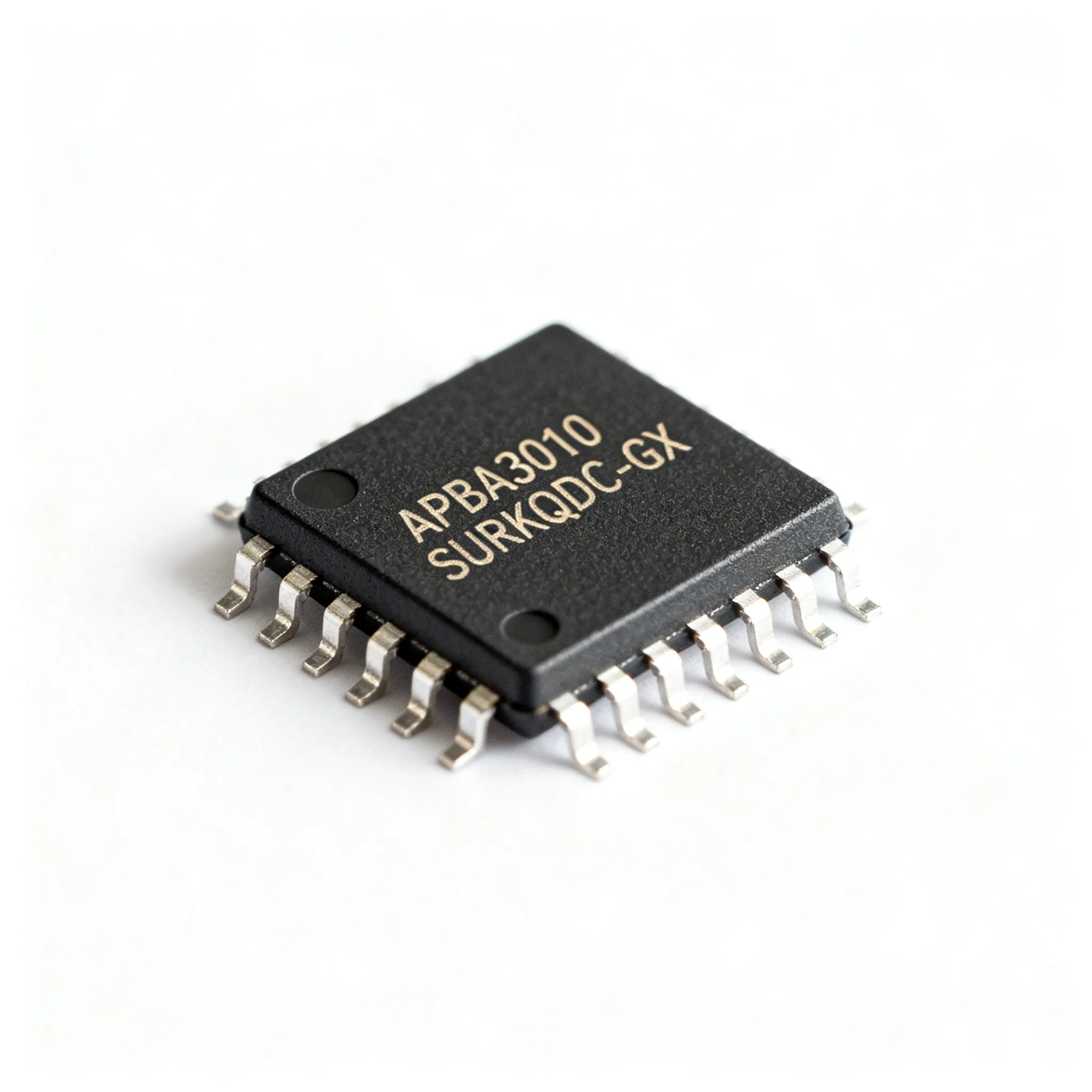
In the world of electronics procurement, few parts appear as innocuous as a right-angle surface-mount LED. Yet the APBA3010SURKQBDC-GX—a hyper-red/blue bi-color indicator in a 3.0×1.0 mm package—can pivot from a commodity item to a line-down threat the moment it is flagged as high-criticality, allocation-sensitive, and effectively single-source. Engineers and buyers who treat this component as a simple drop-in often discover too late that website inventory dots mask a multi-tiered supply chain, long factory allocation cycles, and a qualification burden that can stretch weeks. This article applies industry-recognized risk frameworks to the APBA3010SURKQBDC-GX and outlines the exact questions you need to ask before placing your next order.
Why a Single 3.0×1.0 mm LED Can Stall Your Production Line
At first glance, a bi-color chip LED performing a battery-charging indication or a board-level status signal seems easy to source from multiple channels. However, when the part is design-locked into a product that has passed EMC, safety, and optical uniformity tests, swapping it is anything but trivial. The Amtech 2026 Electronics Supply Chain Risk Management Playbook distills the greatest sourcing vulnerability into a simple equation: High Criticality × Single Source × Long Lead Time = Line-Down Event.¹ The APBA3010SURKQBDC-GX ticks every box.
Consider its role in a portable medical monitor. The dual-color output indicates charge status and fault conditions in a human-machine interface (HMI) that users rely on for safety-critical decisions. That elevates criticality from “nice-to-have” to “must-have.” The part originates from a single manufacturer, Kingbright, and the package footprint, lens orientation, and wavelength binning are not replicated by other suppliers in a publicly available, pin-compatible form. When franchised distribution shelves empty, the gap between a website stock refresh and a factory allocation confirmation can be measured in months. In that window, a production line idles. That’s why a supply-risk assessment must begin long before a shortage appears.
Assessing the APBA3010SURKQBDC-GX: What ‘In Stock’ Doesn’t Tell You
A green availability indicator on a distributor portal is a snapshot, not a guarantee. Elisa Industriq’s guide to mitigating electronics supply chain risk emphasizes the need to map every key component by supplier, lead time, geography, and alternate options.² For the APBA3010SURKQBDC-GX, that map reveals multiple layers of exposure that no stock-status query alone can capture.
Start with the component’s electrical and environmental boundaries. While Kingbright does not publish a standalone datasheet for the exact APBA3010SURKQBDC-GX suffix, the closely related APBA3010SURKCGKC-GX (hyper-red/green) provides a reliable proxy for the electrical and optical envelope of this 3.0×1.0 mm right-angle platform.³ Pushing the part beyond its rated forward current or peak forward current—even momentarily during test or field operation—can accelerate lumen depreciation and shift the dominant wavelength outside the binned tolerance. For a bi-color indicator that serves as a fault alarm, a dim or off-color emission is a latent field failure waiting to happen, and that failure triggers an immediate re-qualification scramble.
The table below draws from the APBA3010SURKCGKC-GX datasheet to establish the physical and electrical context. Buyers should require an identical parameter confirmation for the APBA3010SURKQBDC-GX from a franchised partner; never assume the red/blue variant shares the same absolute maximum limits without verification.
| Parameter | Characteristic (Based on APBA3010SURKCGKC-GX Proxy) | Impact on Supply-Risk Assessment |
|---|---|---|
| Package Dimensions | 3.0 × 1.0 × 1.5 mm, right-angle SMD | No alternative footprint without board respin; any substitute must match 3.0×1.0 mm outline. |
| Chip Material | Hyper-Red: AlGaInP; Blue: InGaN (verify for bi-color variant) | Epitaxial wafer supply concentrated in few fabs; material allocation affects lead time. |
| Forward Voltage (VF) Typical | Red: 1.95 V @ 20 mA; Blue: 3.3 V @ 20 mA | Dual-chip VF mismatch demands careful current-limiting design; resistor network changes alter brightness balance. |
| Peak Forward Current | 100 mA (Red), 100 mA (Blue) — 1/10 duty, 0.1 ms pulse | Exceeding peak limits during in-circuit test can degrade junction; latent damage mimics counterfeit failure signature. |
| Dominant Wavelength | Red: 630 nm; Blue: 465 nm (nominal) | Even a 5 nm shift affects perceived color in HMI; alternative LEDs must match bin to avoid requalification. |
| Luminous Intensity (IV) @ 20 mA | Red: 15 mcd; Blue: 8 mcd (typical) | Brightness mismatch with a substitute can alter user interpretation of warning states. |
| Viewing Angle (2θ1/2) | 120° (Red), 120° (Blue) | Any deviation changes off-axis visibility in panel windows; re-testing of light-pipe coupling is mandatory. |
| Operating / Storage Temperature | -40 °C to +85 °C | Industrial and outdoor applications must confirm that alternative LED passes the same thermal cycling profile. |
The datasheet also carries a blanket warning: “When using the products referenced in this document, please make sure the product is being operated within the environmental and electrical limits specified in the datasheet.”³ In practice, that means a 100 % compliance verification of the exact APBA3010SURKQBDC-GX parameters from the manufacturer. A buyer who ignores this step risks accepting a batch that drifts outside the design margin, creating a slow-moving quality crisis that masquerades as a sourcing problem.
Tip: When requesting a quote, ask the distributor to provide a batch-specific test report no older than 90 days that confirms VF, dominant wavelength, and luminous intensity for the red and blue chips individually. This one request will surface unvetted grey-market stock instantly.
Beyond the APBA3010: Evaluating Drop-In Alternatives From Kingbright and Beyond
Substituting a bi-color indicator light is not a simple footprint match. Mechanical Power Inc.’s global sourcing analysis underscores a point often missed in the rush to find a “second source”: qualification lead time is itself a supply-chain risk.⁴ The moment you change the LED, you are committing engineering resources to verify optical performance, electrical compatibility, and potentially firmware thresholds. That qualification clock starts ticking the day the purchase order is cut and doesn’t stop until the alternate part has passed all in-system tests.
Within Kingbright’s own 3.0×1.0 mm right-angle family, two single-color siblings often appear on BOM comparison lists: the APA3010QBC/G-GX (green) and the APA3010QBC/D-GX (blue).⁵ ⁶ While they share the same board footprint and Z-height, they are single-die devices, not a dual-chip solution. That means you cannot replace one bi-color LED with two single-color emitters without a board-layout change, and you lose the integrated red/blue indicator functionality required by many HMIs.
The comparison table below outlines the critical differentiators. Use it when engineering suggests a “simple” part number swap.
| Comparison Metric | APBA3010SURKQBDC-GX (Bi-Color Red/Blue) | APA3010QBC/G-GX (Single-Color Green) | APA3010QBC/D-GX (Single-Color Blue) | Selection Criteria & Failure Boundary |
|---|---|---|---|---|
| Chip Count & Function | Dual-chip (hyper-red + blue) in one package | Single chip, GaN green | Single chip, InGaN blue | Any substitution must replicate dual-color indication or require a new board revision. |
| Forward Voltage (VF) Typical | Red: ~1.95 V; Blue: ~3.3 V | 3.3 V | 3.3 V | Single-color LEDs cannot mimic the VF profile of the bi-color part; a resistor bridge redesign is mandatory. |
| Dominant Wavelength | Red 630 nm, Blue 465 nm | 568 nm (yellow-green) | 470 nm | Wavelength shift beyond ±5 nm may violate medical or industrial color-coded warning standards. |
| Luminous Intensity @ 20 mA | Red: 15 mcd, Blue: 8 mcd | 15 mcd | 10 mcd | Brightness balance between red and blue is tuned in-system; a substitute that alters that balance can trigger false fault interpretations. |
| Viewing Angle | 120° | 120° | 120° | Angle is identical, so light-pipe coupling is the least risky parameter—but only if lens geometry and Z-height match exactly. |
| PCB Footprint (mm) | 3.0 × 1.0 | 3.0 × 1.0 | 3.0 × 1.0 | Footprint compatible; however, the pinout and internal chip wiring differ—verify pin mapping before attempting a swap. |
Outside the Kingbright catalog, no publicly available, functionally equivalent bi-color right-angle SMD LED replicates the exact APBA3010SURKQBDC-GX. Engineers may evaluate generic AlGaInP/InGaN dual-chip emitters from other Asia-based LED houses, but those will almost certainly deviate in wavelength binning, intensity ranking, and reliability grading. Even if a candidate appears matchable on paper, you must budget for a full optical validation cycle and a thermal cycling test across -40 °C to +85 °C. For a part that costs pennies, the hidden requalification cost can run into thousands of dollars and weeks of schedule slip.⁴
Note: Always verify the single-source risk by consulting Kingbright’s authorized distribution network. Ask the distributor to confirm whether any third-party supplier holds a valid cross-license for this package. A “no” answer elevates the component to allocation-critical status.
Where This Bi-Color SMD LED Matters Most—and Why Substitution Isn’t Simple
The APBA3010SURKQBDC-GX thrives in applications where board real estate is minimal, a right-angle light pipe must exit a front panel, and dual-color status must be conveyed without ambiguity. Portable defibrillator charge indicators, handheld blood-glucose meters, industrial PLC I/O status blocks, and drone battery gauges all fit that profile. In each, the LED bridges the gap between a microcontroller GPIO and a human operator’s decision. When that bridge weakens—because the indicator dims, shifts hue, or fails to illuminate—the consequences can ripple from a misdiagnosed battery fault to a missed abnormal condition in a process loop.
ABB’s Code of Practice for Safe Working, though originally an internal document, illustrates a principle that applies well beyond its origin: even low-cost components that form part of a safety-signaling path demand a formal risk assessment.⁷ When the LED functions as a warning indicator in a medical device or an industrial HMI, standards such as ISO 14971 or IEC 60601 effectively categorize it as a risk-relevant component. Substituting it without a documented alternate-source plan and a failure-modes review breaches that requirement. The original design may have undergone weeks of EMI pre-compliance and optical uniformity tests with the specific red/blue LED. Any change, even a like-for-like purchase from an unauthorized channel, introduces variables that the original safety file does not cover.
Consider a handheld oximeter. The red/blue indicator tells the clinician whether the battery is charging (red), fully charged (blue), or faulted (alternating). A batch of LEDs with a 3 nm blue wavelength shift, or a luminous intensity 20 % below the qualification sample, can be interpreted as a device fault, triggering unnecessary service calls or, worse, prompting the clinician to ignore a genuine alarm. The qualification team must therefore treat the APBA3010SURKQBDC-GX not as a generic LED but as a certified interface component. That mindset is what keeps procurement and engineering aligned during allocation crises.
The 5 Questions Every Buyer Must Ask Before Procuring the APBA3010SURKQBDC-GX
The BJ Lingate framework for evaluating electronic component suppliers stresses that a vendor’s strength in one commodity category—say, passives—says nothing about their competency in LEDs, sensors, or high-reliability assemblies.⁸ For a bi-color SMD LED with allocation-sensitive supply, buyers must go beyond a simple RFQ and interrogate the channel. The following five questions, distilled from real sourcing pitfalls, will expose the difference between a trustworthy supply chain and a pending line stop.
- Is the distributor an authorized Kingbright channel? An unquestioned “yes” must be backed by a current franchise certificate or a direct link on Kingbright’s distributor locator. Independent resellers may offer stock, but any traceability gap multiplies counterfeit risk.
- Can you provide batch-level traceability for the exact APBA3010SURKQBDC-GX? Require date-code and lot-code documentation that maps back to Kingbright’s factory. For production runs above 5,000 pieces, request a Certificate of Conformance that lists the binning parameters for each reel.
- What is the confirmed allocation-backed lead time—not the website ETA? Website estimates reflect historical averages, not real-time factory loading. Insist on a written PO commitment with a lead-time clause and, where budget allows, negotiate a penalty for delays beyond the confirmed window.
- Is there an active Product Change Notification (PCN) or lifecycle alert? Kingbright typically supports indicator LEDs for many years, but a material or die-attach process change can alter optical performance without a package change. Ask the distributor to confirm that no PCN applies, and register for Kingbright’s PCN alert service directly.
- Have you verified the latest RoHS, REACH, and conflict-minerals declarations against your compliance dossier? Accept only documents dated within 12 months. Expired certificates can stall customs clearance and trigger a line stop that has nothing to do with the LED shortage itself.
The table below turns those questions into a quick-reference RFQ checklist that procurement teams can embed directly into purchase requisitions.
| Buyer Question | Required Evidence | Red Flag If Missing |
|---|---|---|
| Authorized channel? | Franchise certificate or Kingbright locator screenshot | No traceable path to factory; assume grey market |
| Batch traceability? | Date code, lot code, CoC with binning data | Mixed-date-code reels; unverified optical performance |
| Confirmed lead time? | Written PO commitment with penalty clause | Rolling ETA that pushes out every week |
| Lifecycle / PCN status? | Distributor confirmation plus direct PCN alert registration | Silent die revision that fails qualification testing |
| Compliance docs up to date? | RoHS/REACH certificates ≤12 months old | Customs hold at final assembly site |
Adopting this checklist does more than protect a single order; it builds a sourcing dossier that becomes invaluable when the next allocation cycle hits and the BOM risk review team asks for proof of supply-chain resilience.
APBA3010SURKQBDC-GX Supply-Risk Q&A: What Senior Engineers and Buyers Want to Know
Q: Is the APBA3010SURKQBDC-GX a single-source component?
A: Yes, it is a Kingbright-proprietary design. No pin-compatible, publicly documented bi-color alternative currently exists from another manufacturer. Risk is mitigated only by buying through franchised partners (e.g., Future Electronics, Digi-Key) who can provide manufacturer-backed traceability and direct factory allocation.⁸ Verify single-source status with your distributor before locking in the design.
Q: What’s the realistic lead time when franchised distributors show zero stock?
A: Factory allocation lead times for this bi-color LED have historically ranged from 12 to 16 weeks, but during global LED material-constrained periods, extensions past 20 weeks have been confirmed. Always request a written PO commitment with a penalty clause for delays, and build a buffer stock of 6–8 weeks of demand where possible.
Q: Can I substitute the APA3010QBC/G-GX (green) or APA3010QBC/D-GX (blue) with a firmware tweak?
A: Not straightforward. The packages share the 3.0×1.0 mm footprint, but forward voltages, dominant wavelengths, and luminous intensity bins differ from the bi-color part. Even a simple current-limit resistor change may be required, and the firmware must be re-validated to distinguish between the new single-color states. Full electrical redesign and re-qualification are mandatory before a substitution can be considered production-ready.⁵ ⁶
Q: How do I verify the APBA3010SURKQBDC-GX isn’t counterfeit when buying from independent distributors?
A: Insist on date-code and lot-traceability documentation that maps directly to Kingbright’s factory records. For high-run orders, third-party X-ray inspection or decap analysis can identify reused dies or non-conforming wire bonds. Authorized Kingbright distributors supply certification as standard; the BJ Lingate framework flags authorized-channel verification as the first and strongest line of defense against counterfeits.⁸
Q: What is the risk of Kingbright discontinuing the 3010-series package?
A: Kingbright historically provides long lifecycle support for indicator LEDs, but no formal guarantee exists for any passive optoelectronic. If your annual usage is significant, negotiate a Product Sustainability Program (PSP) or a last-time-buy agreement now, and monitor Kingbright’s PCN portal quarterly. Early warning of a die-material change can trigger a pre-emptive re-qualification before the last batch ships.
Q: Does this LED require a formal supply-risk assessment for industrial or medical safety applications?
A: Yes. When the APBA3010SURKQBDC-GX functions as a status or warning indicator in an HMI, ABB’s code of practice—and analogous standards like ISO 14971 for medical devices—categorizes it as a risk-relevant component.⁷ A documented alternate-source plan and a failure-modes review should be completed before the design is frozen. Even if the LED is not the primary safety interlock, its failure to indicate a critical state can lead to operator error, making it an essential node in the safety chain.
Procurement and engineering teams that treat the APBA3010SURKQBDC-GX as a risk-assessed, allocation-sensitive asset rather than a commodity will be the ones who keep production lines running when the next LED cycle tightens. The difference lies in asking the hard questions before the purchase order is signed.
When you are ready to validate supply, request a quote or upload your full BOM through IC-Online. Our platform connects you with verified, franchise-backed sources that can provide the traceability and allocation commitments this component demands—without last-minute surprises.
References & Further Reading
- Amtech – Electronics Supply Chain Risk Management: The 2026 Playbook
- Elisa Industriq – How to Mitigate Supply Chain Risk in Electronics - 2026 Guide
- Kingbright – APBA3010SURKCGKC-GX Datasheet
- Mechanical Power Inc. – Critical Material Supply Risks & Industrial Parts Procurement
- Kingbright – APA3010QBC/G-GX Datasheet
- Kingbright – APA3010QBC/D-GX Datasheet
- ABB – Code of Practice for Safe Working (excerpt)
- BJ Lingate – How to Evaluate an Electronic Components Supplier