Are Chinese Microcontrollers Ready to Challenge Global Brands?
You might have heard about Chinese microcontroller technology getting popular. These devices, called MCUs, are competing with big brands like ST MCUs. They are gaining attention for better performance, lower costs, and saving energy.
You might have heard about Chinese microcontroller technology getting popular. These devices, called MCUs, are competing with big brands like ST MCUs. They are gaining attention for better performance, lower costs, and saving energy.
The numbers are surprising. In 2023, Chinese microcontrollers made $5,220 million in revenue. This was 23% of the global market. By 2030, experts think this will grow to $10,482.2 million. The yearly growth rate is expected to be 10.5%. This shows China can make MCUs that meet industry needs. They work for many uses, like 32-bit designs and IoT systems.
Learning about Chinese MCUs can help you see their progress. They might change the global market, especially for cheaper and new industries.
Key Takeaways
-
Chinese microcontrollers (MCUs) are becoming popular because they cost less and work better, making them good for cheaper projects.
-
These MCUs save energy, so they are great for IoT devices and smart tools that need long-lasting batteries.
-
Chinese MCUs work with common communication systems but are not as good as global brands in software and reliability. This can limit their use in advanced projects.
-
More car and factory companies are using Chinese MCUs because they are affordable and save energy.
-
Developers should check how reliable and supported Chinese MCUs are before using them in important projects.
Comparing Key Features of Chinese Microcontrollers
Processing Power and Efficiency
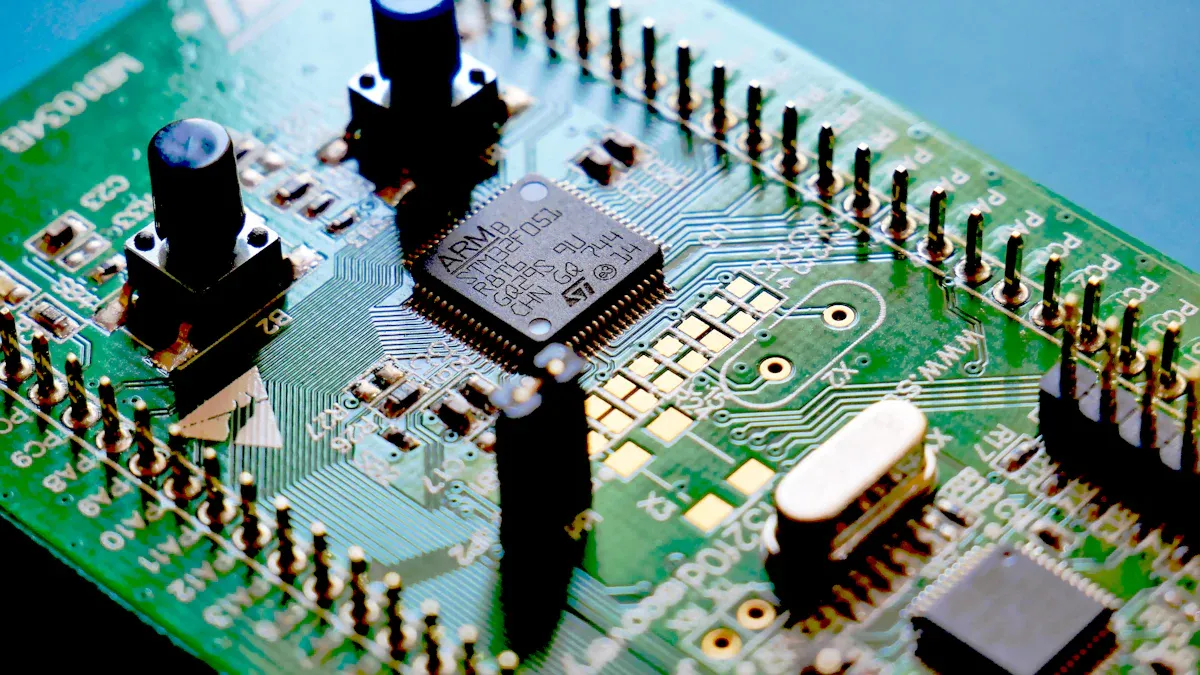
When checking how good a microcontroller is, speed and efficiency matter. Chinese microcontrollers (MCUs) have improved a lot in these areas. Many now work at high speeds, making them faster and better at multitasking. For example, the STM32F407ZGT6 runs at 168 MHz. This speed helps it handle tough jobs like robotics and factory machines.
Chinese MCUs are also great at saving energy while working well. They use smart designs to stay fast without using too much power. This makes them perfect for gadgets like smart home devices and fitness trackers.
Here’s a closer look at the STM32F407ZGT6 features:
|
Feature |
Specification |
|---|---|
|
Microcontroller |
STM32F407ZGT6 |
|
Operating Frequency |
168 MHz |
|
SRAM |
192 KB |
|
FLASH |
1024 KB |
|
16-bit Timers |
12 |
|
32-bit Timers |
2 |
|
DMA Controllers |
2 |
|
SPIs |
3 |
|
IICs |
3 |
|
Serial Ports |
6 |
|
USB Support |
2 (HOST/SLAVE) |
|
12-bit ADCs |
3 |
|
12-bit DACs |
2 |
|
Camera Interface |
1 |
|
General IO Ports |
112 |
This table shows how strong Chinese MCUs are and how they compete with big brands.
Memory and Storage Capabilities
Memory and storage are important for microcontrollers. They decide how much data can be stored and used. Chinese MCUs have good memory setups, with both SRAM and FLASH memory. For example, the STM32F407ZGT6 has 192 KB of SRAM and 1024 KB of FLASH. This helps it handle big data and run hard tasks easily.
Chinese MCUs are built for modern needs. They work well for IoT devices storing sensor data or gadgets doing many tasks. Their big memory at lower prices makes them a good pick for developers.
Power Consumption and Energy Efficiency
Saving energy is very important for microcontrollers, especially in battery devices. Chinese MCUs are made to use less power but still work well. They do this with smart power-saving tricks and low-power modes.
For instance, many Chinese MCUs have features like voltage scaling and sleep modes. These help save energy when full power isn’t needed. This is great for IoT sensors that run on small batteries.
The chart below shows how many features a typical Chinese MCU has:
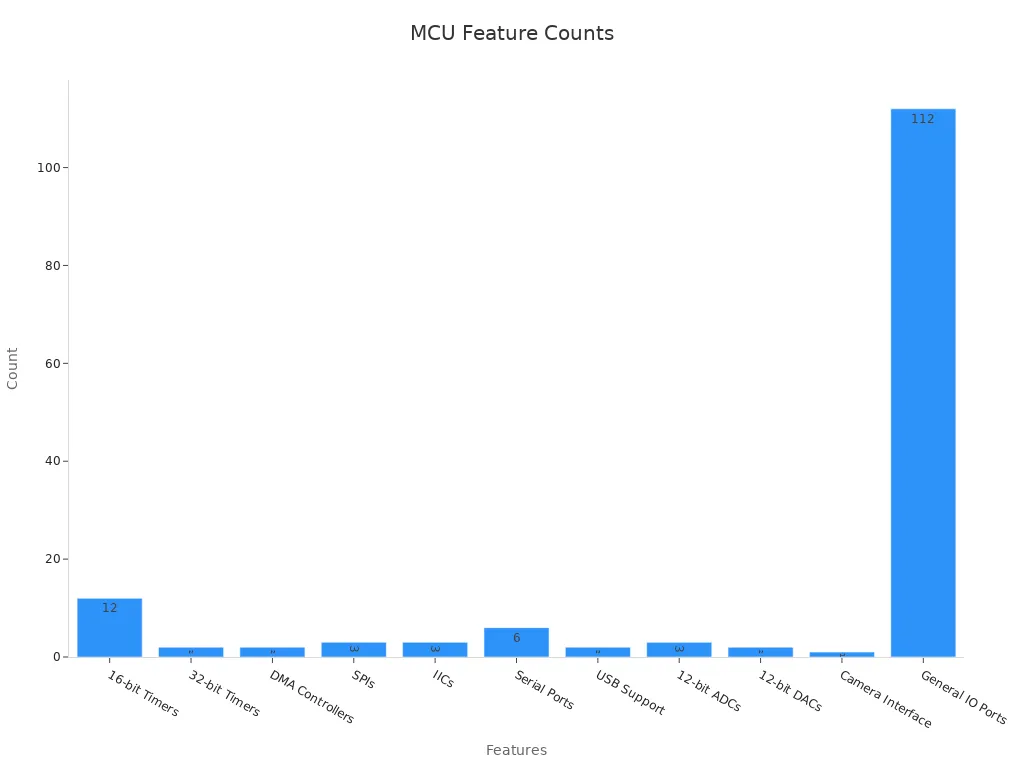
As shown, Chinese MCUs are not just powerful but also energy-saving. This makes them a strong choice in the global market.
Compatibility with Industry Standards
When picking a microcontroller, it must follow industry rules. These rules ensure the device works well with other parts. Chinese microcontrollers have improved here but still have some issues.
Compliance with Communication Protocols
Chinese microcontrollers support popular communication methods like I2C, SPI, UART, and CAN. These are needed to connect devices in many industries. For example, an IoT device can use these MCUs to share data between sensors and the cloud.
Tip: Always read the microcontroller's datasheet to check protocol support for your project.
Adherence to Safety Standards
Safety is very important in fields like cars and healthcare. Some Chinese MCUs meet safety rules like ISO 26262 for car systems. This means they can work in airbags or brake systems. But, top-level projects often prefer global brands for their proven reliability.
Challenges in Software Ecosystem
Hardware compatibility has gotten better, but software is still tricky. Chinese MCUs have fewer tools and libraries than global brands. This makes it harder to use them in advanced systems. For example, debugging tools or RTOS may not always work well.
Global Standards for IoT and AI
Chinese microcontrollers are now following global IoT and AI standards. They support tools like MQTT for IoT and TensorFlow Lite for AI tasks. This makes them useful for smart homes and wearable gadgets.
|
Feature |
Chinese MCUs |
Global Brands |
|---|---|---|
|
Communication Protocols |
I2C, SPI, UART, CAN |
I2C, SPI, UART, CAN |
|
Safety Certifications |
ISO 26262 (some models) |
ISO 26262, IEC 61508 |
|
Software Ecosystem |
Limited tools and libraries |
Extensive tools and libraries |
|
IoT/AI Standards |
MQTT, TensorFlow Lite |
MQTT, TensorFlow Lite |
Final Thoughts
Chinese microcontrollers are improving in meeting industry rules. They have good hardware and are advancing in safety and IoT standards. But, software tools are still a weak point. For budget projects, these MCUs are a smart pick. For high-end tasks, you should consider their limits.
Market Trends for Chinese Brand MCUs
Growth in Automotive and Industrial Sectors
Chinese microcontrollers are becoming popular in cars and factories. The car market in China is expected to grow fast, with a 7% yearly increase from 2025 to 2030. This is because electric cars need microcontrollers for batteries, motors, and safety systems.
In factories, Chinese MCUs are used for robots and machine control. They are cheap and save energy, making them great for factory systems. As more factories use automation, the need for these microcontrollers grows.
The Asia-Pacific region leads in making semiconductors. Big companies in this area are spending money on new tech, helping Chinese MCUs become more common.
Adoption in Consumer Electronics and IoT
Chinese microcontrollers are also popular in gadgets and smart devices. In 2024, they made up 24.9% of the global market. Smart home devices and wearables need IoT microcontrollers, which Chinese brands provide.
These MCUs are used in smart appliances, fitness trackers, and connected gadgets. They can do hard tasks while using little power, perfect for IoT. For example, a smart thermostat can use a Chinese MCU to adjust temperature and connect with other devices.
China and India are investing in electronics, boosting this trend. As more people use smart devices, Chinese MCUs will play a bigger role in IoT.
Impact of Global Supply Chain Dynamics
Global supply chain issues have affected Chinese microcontrollers. Events like the 2021 Texas winter storm slowed production, raising prices by up to 30%. Problems like material shortages, including a 70% drop in neon gas, made things worse.
Factories focused on car chips instead of industrial ones, causing delays and higher costs for factory buyers. Still, Chinese makers adapted by growing their factories and finding new suppliers. This helped them stay strong in the global market.
Regional Market Preferences
Chinese microcontrollers are becoming popular in different areas. But, what people want depends on local industries and needs. Knowing these differences shows where Chinese MCUs succeed and where they face problems.
Asia-Pacific: A Leading Market for Chinese MCUs
Asia-Pacific countries like China, India, and South Korea use many Chinese MCUs. These nations have growing electronics and car industries. Chinese MCUs are found in smart home gadgets, factory machines, and electric cars. They are cheap and save energy, which is great for markets that care about costs.
Tip: For the Asia-Pacific market, focus on IoT and factory systems. These areas need Chinese MCUs the most.
Europe: High Standards Matter
Europe cares about safety and quality. Chinese MCUs are cheap, but they are slower to be used in expensive tools like medical devices or space tech. Still, they are used more in everyday electronics and IoT gadgets where saving money is important.
North America: Small Use in IoT
In North America, Chinese MCUs are used in IoT and smart home gadgets. You’ll find them in things like smart thermostats and fitness trackers. Developers like them because they use less power and cost less. But, worries about security and copying ideas limit their use in sensitive industries.
Emerging Markets: Growing Interest
Countries in Africa and South America are starting to use Chinese MCUs. These areas like them because they are cheap and flexible. You’ll see them in low-cost electronics and simple factory systems. As these regions improve their infrastructure, demand for Chinese MCUs will grow.
|
Region |
Main Uses |
Problems |
|---|---|---|
|
Asia-Pacific |
IoT, factory systems |
Weak software tools |
|
Europe |
Electronics, IoT |
Strict safety rules |
|
North America |
Smart gadgets, wearables |
Security worries |
|
Emerging Markets |
Cheap electronics |
Poor infrastructure |
Chinese MCUs fit well with local needs, but you should think about challenges before using them in your projects.
Strengths of Chinese Microcontrollers
Cost-Effectiveness and Affordability
Price is important when picking a microcontroller. Chinese microcontrollers are cheaper but still powerful. In the 32-bit category, they offer good performance at low prices. For smaller memory needs, embedded memory MCUs are popular. In 2022, these made up 60% of the market. They combine features to lower system costs, making them great for budget projects.
The Asia-Pacific region leads in microcontroller production. Countries like China drive demand for affordable smart devices. By working with top local manufacturers, companies deliver quality MCUs for many industries.
Rapid Innovation and Customization
Chinese MCUs are quick to improve and adapt. This helps them grow fast in the market. Between 2020 and 2023, their prices stayed low, from $0.60 to $0.93. By 2029, the market could reach $38.8 billion, growing 5.5% yearly.
Government policies like "Made in China 2025" boost innovation. Companies invest more in research and file more patents. These efforts help create custom solutions for IoT, cars, and electronics.
Government Support for R&D
The Chinese government supports MCU development with big investments. By 2021, over 1,800 funds were created, worth $1.52 trillion. These funds focus on key areas like microcontrollers.
Research shows government help increases innovation. Companies now focus more on technology and file more patents. This strengthens China's role in the global MCU market.
With government backing and partnerships, companies provide reliable and advanced MCUs for many uses.
Expanding Supplier Base
Chinese microcontrollers (MCUs) now have more suppliers than before. This growth helps them compete better worldwide. Why is this important? More suppliers mean easier access, lower prices, and quicker improvements.
Growth of Domestic Semiconductor Companies
China has spent a lot to grow its semiconductor industry. Companies like GigaDevice, Espressif Systems, and Allwinner Technology are now big names. They make microcontrollers for IoT, cars, and electronics. These companies reduce the need for foreign suppliers and strengthen local production.
Note: GigaDevice’s GD32 series competes with global brands like STMicroelectronics.
Partnerships and Collaborations
Chinese MCU makers team up with local and global suppliers. These partnerships give them access to better technology and materials. For example, some work with SMIC (Semiconductor Manufacturing International Corporation) to make chips in large amounts. This teamwork keeps production steady and efficient.
Diversification of Supply Chains
Chinese MCU makers now use suppliers from different regions. This helps avoid problems if one supplier faces issues. After 2021’s supply chain troubles, this strategy became very important. By spreading out suppliers, they lower risks and keep production reliable.
Tip: When choosing Chinese MCUs, check if the supplier has a strong and varied supply chain. This ensures dependable delivery.
Final Thoughts
More suppliers give Chinese microcontrollers a solid base to grow globally. They are now easier to find, cheaper, and improving faster. As this trend continues, expect even better and more advanced options from Chinese MCU brands.
Weaknesses of Chinese Brand MCUs
Worries About Long-Term Dependability
Reliability is very important when picking an MCU. Chinese MCUs have improved, but some worry about how long they last. For example, chips like the CH340 have caused system failures during tests. Some developers switched to pricier brands after facing crashes from CH340 driver issues. WCH chip drivers also raised doubts about quality, making them less ideal for critical tasks.
These dependability concerns might affect your choice, especially for projects needing steady performance. While Chinese MCUs are cheaper, you should check their history in similar uses before deciding.
Fewer Tools and Software Support
Good tools and software make development easier, but Chinese MCUs often lack these. They have fewer libraries, debugging tools, and development options than global brands. This can slow your work and make adding complex features harder.
For instance, brands like STMicroelectronics offer strong software support. In contrast, Chinese MCUs often depend on third-party tools that may not work well together. This can be tough for new developers. If you pick a Chinese MCU, ensure the tools fit your project’s needs.
Security and Intellectual Property Problems
Security is a big issue with Chinese MCUs. Problems like piracy, data theft, and reverse engineering are common. Weak manufacturing processes can lead to privacy risks for users. China’s large manufacturing industry also makes it hard to stop intellectual property theft.
One example is GigaDevice’s GD32F103, which is often compared to STMicroelectronics’ STM32 series. While no proof of copying exists, their similarities raise legal and ethical concerns. Developers also report performance and support issues when switching to GigaDevice products. These risks make cloned MCUs less reliable for important projects.
If your project needs strong security, think carefully about the risks of Chinese MCUs. Choosing a well-known brand might be safer for sensitive tasks.
Challenges in Competing in High-End Markets
Chinese microcontrollers (MCUs) are improving but face tough competition. High-end markets need advanced tech, strong reliability, and great software support. In these areas, Chinese MCUs often lag behind global brands.
1. Advanced Technology Needs
High-end systems, like medical tools or space tech, need top features. These require MCUs with high power, accuracy, and safety. Chinese MCUs are affordable but can’t match brands like Texas Instruments. For instance, premium MCUs may have AI boosters or real-time processors, which are rare in Chinese models.
Note: For critical tasks, performance is more important than cost.
2. Reliability Expectations
Reliability is crucial for industries like cars or healthcare. These fields need parts that work perfectly for years. Global brands test their products to meet strict standards. Chinese MCUs are getting better but still face doubts about lasting quality. This makes it hard for them to gain trust in safety-focused projects.
3. Limited Tool Support
High-end projects need strong tools, libraries, and help for developers. Global brands offer many resources, making work easier. Chinese MCUs have fewer tools and less guidance. This can slow down projects and make learning harder for engineers.
|
Factor |
Chinese MCUs |
Global Brands |
|---|---|---|
|
Advanced Features |
Few |
Many |
|
Reliability Standards |
Improving |
Strong |
|
Ecosystem Support |
Limited |
Extensive |
Chinese MCUs show promise but must fix these issues to compete in high-end markets. Right now, they are better for cheaper and simpler projects.
Case Studies of Chinese Microcontroller Applications
Success in IoT and Smart Home Devices
Chinese microcontrollers are popular in IoT and smart homes. They use little power and connect devices easily. This makes them great for smart gadgets like thermostats, door locks, and lights. These devices need MCUs to work efficiently and save energy.
Many Chinese MCUs support wireless systems like Zigbee and Z-Wave. These systems help devices talk to each other smoothly. They also have power-saving features to make batteries last longer. This reduces how often batteries need replacing. Below is a table showing their key strengths in IoT:
|
Performance Indicator |
Description |
|---|---|
|
Helps save energy in smart home devices. |
|
|
Support for wireless protocols |
Works with Zigbee, Z-Wave, or Matter for connectivity. |
|
Sufficient I/O for connections |
Connects to many sensors and actuators. |
|
Real-time clock functionality |
Allows scheduled tasks for better device use. |
|
Hardware-level power management |
Extends battery life and lowers maintenance needs. |
These features make Chinese MCUs reliable and affordable for IoT devices.
Adoption in Low-Cost Consumer Electronics
Chinese MCUs are changing low-cost electronics by being cheap and useful. They are used in remote controls, wearables, and small appliances. Manufacturers like them because they are affordable and have good features for budget products.
For example, Chinese MCUs often include built-in memory and tools. This reduces the need for extra parts, making designs simpler and cheaper. They can also be customized for specific uses, ensuring they work well in low-power devices. Because of this, Chinese MCUs are key to making affordable electronics.
Applications in Automotive Body Control
Chinese MCUs are improving in car control systems. They now meet high standards like ISO 26262 ASIL D. For example, SemiDrive's E3 Series MCU is used in airbags and brakes. This shows Chinese brands can compete with global ones.
Chinese MCUs in cars follow safety and cybersecurity rules. Examples include:
-
SemiDrive's E3 Series MCU: Certified for ISO 26262 ASIL D and China's cryptographic standards.
-
Cercis M100: Scores 2.42 on CoreMark and meets ASIL-B and ISO 21434 standards.
These MCUs are also used in car interfaces, helping with smart manufacturing. Their growing use shows they can replace foreign brands in mid-range car systems.
New Ways Chinese Microcontrollers Are Used in AI and Edge Computing
AI and edge computing are changing how devices handle data. Chinese microcontrollers are becoming useful in these advanced areas. Their improving features make them great for many tasks.
In AI, these microcontrollers do jobs like recognizing faces or voices. For example, they are in smart cameras that spot faces or voice assistants that follow commands. These tasks need fast processing and low power use. Chinese microcontrollers do this well and cost less.
Edge computing processes data near where it is made. This makes things faster and works better. Chinese microcontrollers are good for this because they analyze data in real time. For instance, factory sensors can check machines. The microcontrollers process the data quickly to fix problems fast.
You’ll also find them in fitness trackers. These devices check your heart rate and steps without sending data online. This makes them quicker and safer. They are also used in smart farming. Sensors check soil and help water plants the right way.
Chinese microcontrollers are even used in AI robots. Robots in warehouses use them to move and sort items. These examples show they can handle hard tasks while staying cheap.
As AI and edge computing grow, Chinese microcontrollers will power more cool ideas. Their low cost and flexibility make them a great pick for developers.
Future Outlook for Chinese Microcontrollers
Possible Technological Advances
The future of Chinese microcontrollers looks bright. Technology is improving, and demand is growing. Areas like AI, edge computing, and car electronics show great promise. These changes could make Chinese microcontrollers important worldwide.
Chinese companies are gaining from the rise of AI and high-performance microcontrollers. For example, cars now use 24% of the MCU market. Smarter cars need 8, 16, and 32-bit microcontrollers. This shows how much cars rely on MCUs for control systems.
|
Market Value Estimate |
CAGR |
Key Insights |
|---|---|---|
|
>15% |
Growing demand for AI, high-performance MCUs, and edge computing. |
Chinese makers are also ready to grow in consumer electronics and IoT. Supply chain issues and global politics push companies to buy locally. This gives Chinese MCU makers a chance to grow and improve.
Big global companies are also making better microcontrollers. For example, STMicroelectronics and Renesas Electronics have launched advanced MCUs. These have better performance and use less power. Chinese makers can learn from these examples to compete better.
|
Date |
Company |
Development Description |
|---|---|---|
|
May 2023 |
STMicroelectronics |
Released STM32 MPUs with faster cores for IoT and industry. |
|
April 2023 |
Renesas Electronics |
Made first MCU with 22-nm tech, improving speed and power use. |
|
March 2023 |
NXP Semiconductors |
Launched tools to help developers build apps faster. |
These examples show how the market is changing. Chinese companies must focus on similar improvements to stay competitive.
Competing in High-End Markets
Chinese microcontrollers are improving but face challenges in high-end markets. To succeed, they need better technology, reliability, and developer support.
High-end industries like healthcare and aerospace need advanced MCUs. These require high accuracy and safety. Chinese MCUs are cheaper but lack features from brands like Texas Instruments. To compete, Chinese companies must invest in research to create better products.
Reliability is also key. Industries like cars and healthcare need parts that work perfectly for years. Global brands are trusted because they meet these needs. Chinese makers must test their products more to build trust.
Developers also need good tools and support. Global brands offer many resources, but Chinese MCUs often lack these. Improving software tools and offering better help will attract more developers.
|
Factor |
Chinese MCUs |
Global Brands |
|---|---|---|
|
Advanced Features |
Few |
Many |
|
Reliability Standards |
Improving |
Strong |
|
Ecosystem Support |
Limited |
Extensive |
By fixing these issues, Chinese microcontrollers can compete better in high-end markets.
Changing Perceptions and Building Trust
One big challenge for Chinese microcontrollers is trust. Some people worry about quality, security, and copying issues.
You may have heard about problems like system crashes with Chinese MCUs. These issues make people doubt their reliability. To fix this, companies need to share test results and improve quality checks.
Security is another concern. Weak processes and risks of data theft make businesses cautious. Chinese makers must follow global security rules and protect user data. This will help them gain trust.
Politics also affects trust. Trade restrictions and tensions make some companies avoid Chinese suppliers. But these challenges are also chances to prove strength. By working with more partners and improving supply chains, Chinese makers can grow stronger.
Tip: When choosing Chinese MCUs, pick brands with a good history of quality and global standards.
Fixing these trust issues will take time. But as Chinese microcontrollers improve, they can change opinions and gain more users worldwide.
Role of Innovation in Expanding Market Share
Innovation is key to helping Chinese microcontrollers (MCUs) grow. By creating new technologies and unique ideas, Chinese MCU makers attract more users. This helps them compete with big global brands. Let’s see how innovation helps them succeed.
1. Adding Advanced Features
Modern devices need more from microcontrollers. They require things like AI, fast data handling, and wireless connections. Chinese MCU makers are working hard to meet these needs. For example, some chips now include AI tools. These tools help devices do tasks like recognizing faces or understanding voices directly on the chip.
Example: Espressif Systems, a Chinese company, makes MCUs with Wi-Fi and Bluetooth. These features are great for IoT gadgets like smart speakers and thermostats.
By adding these features, Chinese MCUs become a top choice for developers making advanced devices.
2. Customizing for Special Uses
Chinese companies are great at making custom MCUs for different industries. They design chips for specific needs, like cars, factories, or wearable gadgets. This makes it easier to find the perfect MCU for your project.
For example, some Chinese MCUs are made for low-power devices like fitness trackers. Others are built for speed, which is useful in robots or factory machines.
Tip: If you need a special microcontroller, check out Chinese brands. Their custom options can save you time and money.
3. Using New Technologies
Chinese MCU makers quickly adopt new tech like edge computing, AI, and 5G. These technologies make devices work better and faster. For instance, edge computing lets MCUs process data locally, not in the cloud. This speeds things up and improves performance.
In AI, Chinese MCUs are used in smart cameras, voice helpers, and drones. These devices need fast and efficient chips. By using new tech, Chinese companies stay ahead in innovation.
|
Technology |
How It Helps MCUs |
|---|---|
|
Edge Computing |
Speeds up data processing and reduces cloud use. |
|
AI Integration |
Handles tasks like face recognition and voice commands. |
|
5G Connectivity |
Makes IoT devices faster and more reliable. |
4. Faster Product Development
Chinese companies are quick to create new MCUs. They use fast methods to design and produce chips. This helps them keep up with trends and customer needs.
For example, when IoT devices became popular, Chinese makers quickly added wireless features to their MCUs. This helped them gain a big share of the IoT market.
Note: Faster development means you get the latest tech sooner. This is important in fast-changing industries like electronics.
5. Teaming Up with Researchers
Chinese MCU makers often work with universities and research centers. These partnerships help them stay updated on new ideas. Researchers share trends, and companies turn them into real products.
For example, these teams have created energy-saving designs. These are important for devices like medical implants or remote sensors that use small batteries.
Final Thoughts
Innovation drives the success of Chinese microcontrollers. By adding advanced features, offering custom options, and using new tech, they grow their market share. Their quick development and teamwork with researchers keep them competitive. If you want affordable and cutting-edge solutions, Chinese MCUs are a great choice.
Chinese microcontrollers are cheaper and improving fast. They are used more in IoT, gadgets, and car systems. But, problems like dependability and fewer software tools slow their growth.
Key Insight: These MCUs are great for low-cost projects but not for advanced industries.
Fixing these issues can help them grow worldwide. Better quality and trust will make them stronger. For affordable projects, Chinese microcontrollers are a smart option.
FAQ
1. How are Chinese microcontrollers different from global ones?
Chinese microcontrollers are cheaper and improve quickly. They have good features for less money, great for saving costs. But they often lack strong software tools and long-lasting reliability compared to global brands.
2. Can Chinese microcontrollers be used in high-end projects?
Chinese microcontrollers are good for low-cost and medium-level tasks. For high-end uses like medical tools or space tech, global brands are better. They offer more advanced features, better reliability, and stronger support.
3. How can you check if a Chinese microcontroller is reliable?
Look at the company’s history and user feedback. Test the microcontroller in your project before using it fully. Pick models with certifications like ISO 26262 for safety-critical systems.
4. Do Chinese microcontrollers work for IoT and AI tasks?
Yes, many Chinese microcontrollers support IoT and AI tools. They work with MQTT for IoT and TensorFlow Lite for AI. These are used in smart homes, fitness gadgets, and edge computing because they save power and cost less.
5. What should you think about when picking a Chinese microcontroller?
Think about what your project needs. Check its speed, memory, and software tools. Make sure the supplier is trustworthy and the microcontroller meets the rules for your project.