Behrman Oscillator Sparks Creative Evolution in Music
The Behrman Oscillator has changed how you experience music. You now see musicians shape sound in real time, thanks to uniqu
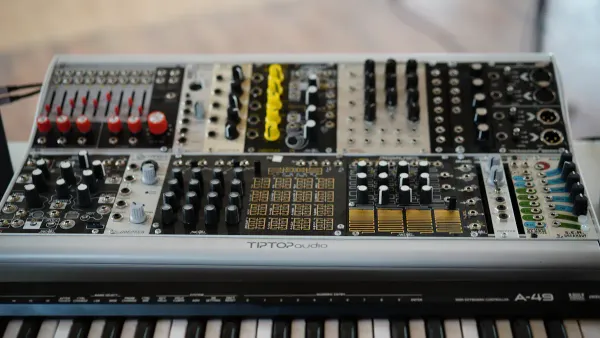
The Behrman Oscillator has changed how you experience music. You now see musicians shape sound in real time, thanks to unique electronic components and integrated circuits.
“With the Behrman Oscillator, you can build new worlds of sound,” says a leading composer.
This device gives you tools to explore fresh sonic possibilities. Its relevance grows as artists push creative boundaries.
Key Takeaways
- The Behrman Oscillator allows musicians to shape sound in real time, enhancing creativity and interaction in performances.
- David Behrman's innovative use of electronic components encourages experimentation, making music creation accessible to everyone.
- Modular synthesizers connected to the Behrman Oscillator enable unique sound exploration, allowing you to create your own musical identity.
- Collaboration is key; the Behrman Oscillator fosters teamwork among artists, blending diverse skills to produce new music.
- Future trends in electronic music will continue to evolve, with oscillator technology playing a significant role in shaping sound and performance.
Electronic Music Evolution
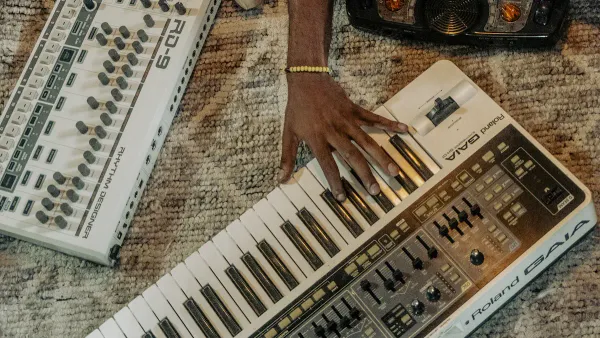
Early Innovations
You can trace the roots of electronic music to a series of important breakthroughs. Early inventors and musicians experimented with new ways to create sound. These milestones shaped the future of electronic music and set the stage for the Behrman Oscillator.
- The introduction of microcomputers in the late 1970s allowed you to explore innovative musical compositions and performances.
- The development of electronic circuits that could interact with live performers changed how you experience electronic music. David Behrman’s work showed how circuits could respond to live music, making performances more dynamic.
- The emergence of synthesizers and other electronic instruments transformed music creation and performance. You gained access to new sounds and possibilities.
Electronic components and integrated circuits became the backbone of these innovations. You saw musicians use these tools to shape electronic music in real time. Each step brought you closer to the creative freedom you enjoy today.
Behrman’s Role
David Behrman helped you see electronic music as a space for experimentation. He did not rely only on commercial devices. Instead, he built his own complex systems of electronic components for the production and control of sounds.
Behrman and Mumma design and build their own complex systems of electronic components for the production and control of sounds for specific works.
You can find examples of Behrman’s creativity in his use of guitar pickups around a grand piano. He explored feedback and resonance, pushing the boundaries of electronic music. He also created homemade instruments for improvised music, inviting non-musicians to join the process.
- Behrman utilized guitar pickups around a grand piano to explore feedback and resonance.
- He created homemade instruments for improvised music, allowing non-musicians to participate.
Behrman learned to build devices that could significantly alter sounds. His self-reliance and creativity inspired you to experiment with electronic music. You now see how integrated circuits and custom-built components open new doors for music creation.
Behrman Oscillator Innovation
Unique Features
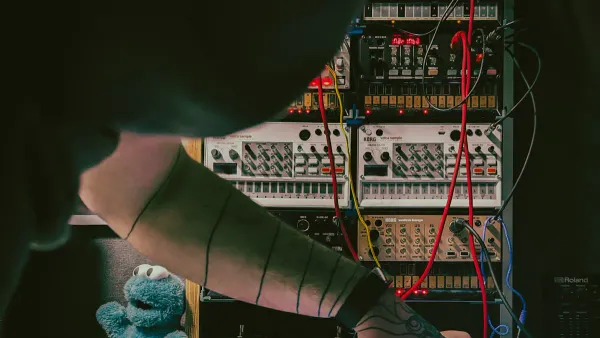
You can discover how the Behrman Oscillator stands out as an innovative musical instrument. Behrman did not just use off-the-shelf devices. He built his own circuits and combined them with analog synthesizers. This approach gave you a new musical instrument that responded to your actions in real time.
Behrman’s homemade synthesizer let you interact with music in ways that were not possible before. You could play a sequence, and the instrument would change its sound based on your input. This made every performance unique. You did not just follow a score—you shaped a unique score with every note you played.
“You become part of the music, not just a performer but a creator,” says one musician who used Behrman’s systems.
The Behrman Oscillator uses modular synthesizer components. You can connect different modules to create new sounds. This flexibility lets you experiment and find your own voice. The oscillator’s design encourages you to explore, making it a powerful score for creativity.
Technical Advances
You can see how Behrman’s technical advances changed live electronic music. He used electronic components and integrated circuits to build circuits that could listen and react to you. These circuits did not just play back sounds. They made decisions based on what you played, merging the roles of instrument, performer, and score.
Here is how Behrman’s approach helped shape live performance:
| Feature | Description |
|---|---|
| Behrman's 'Homemade Synthesizer' | This instrument varied pre-scored sequences based on live input, allowing dynamic interaction. |
| Interactive decision-making | Circuits enabled performers to make real-time choices, blending instrument and performer. |
| Influence of analog synthesizers | The unpredictable nature of hardware made performances more engaging and lively. |
You can use a modular synthesizer to build your own sound world. Each module connects with others, letting you create complex textures. The Behrman Oscillator’s circuits use these modules to produce sounds that feel alive and unpredictable.
Behrman’s innovation made electronic music more exciting. You do not just play notes. You interact with the synthesizer, shaping the music as you go. The oscillator’s design lets you create a powerful score every time you perform.
You can see how the Behrman Oscillator opened new paths for music. It made technology part of the creative process. You now have tools that let you explore new soundscapes and push the boundaries of what music can be.
Impact on Music Creation
Accessibility in Music
You can see how the Behrman Oscillator changed who could make music. Before this innovation, only trained musicians or those with access to expensive equipment could experiment with electronic sound. The oscillator, built from electronic components and integrated circuits, made it possible for more people to join in. You did not need to be an expert to create new sounds with a synthesizer.
At Mills College, you could find a community that welcomed everyone interested in music technology. Students brought their own computers to the Mills Center for Contemporary Music. They connected these computers to synthesizers and the Behrman Oscillator. This setup allowed you to experiment with sound in ways that were not possible before.
- The League of Automatic Music Composers (LAMC) formed at Mills College. You could join others in using the Behrman Oscillator and microcomputers to create music together.
- Students used the Mills Center for Contemporary Music as a place to try new ideas with synthesizers and computers.
- Community events at the Finnish Hall invited you and other audience members to take part in music-making. You could interact with the technology and help shape the performance.
“You do not need to be a professional to make music with these tools. The technology welcomes everyone,” said a participant at one of these events.
You can see how the Behrman Oscillator and its electronic circuits helped lower barriers. You could explore music creation without needing years of training. This approach made music more open and inclusive.
Creative Collaboration
You can experience how the Behrman Oscillator encouraged people to work together. The design of the synthesizer and its circuits made it easy for you to connect with others and share ideas. When you use the oscillator, you can combine your sounds with those from other performers. This process leads to new and unexpected results.
Many artists found that collaboration became easier with this technology. For example:
- Robert Ashley worked with Mimi Johnson on the piece Automatic Writing. She read his involuntary words in French, adding a new layer to the music.
- Paul Demarinis, who studied with Ashley and David Behrman, designed a special switching circuit for the same piece. His technical skills helped shape the final sound.
You can see how these collaborations used both creative ideas and technical knowledge. The Behrman Oscillator, with its modular synthesizer parts, let you and your friends build new instruments together. You could connect different modules, try new circuits, and invent fresh sounds.
When you join a group like the SONIC ensemble or the League of Automatic Music Composers, you become part of a team. Each person brings their own skills, whether in music, electronics, or programming. The oscillator acts as a bridge, letting everyone contribute to the final performance.
“Collaboration is at the heart of this innovation. You learn from others and create something new together,” said a member of the ensemble.
You can see how the Behrman Oscillator and its electronic circuits made music creation a shared experience. You do not just play alone. You join a community that values teamwork and creativity.
Groundbreaking Scores and Performances
Influential Artists
You can see how the Behrman Oscillator has shaped the work of many artists. David Behrman uses this device in compositions such as "Pools Of Phase Locked Loops" and "Unforeseen Events." These pieces show how a score can become interactive when you connect a synthesizer to electronic components and integrated circuits. Joan La Barbara performs Behrman's works, showing how collaboration with technology creates new kinds of score. When you listen to these artists, you hear how the synthesizer and the score work together. You notice how the behrman oscillator lets performers change the score in real time.
- David Behrman uses the behrman oscillator to create interactive scores.
- Joan La Barbara performs with Behrman's technology, blending voice and synthesizer.
- You hear how electronic components and integrated circuits shape each score.
"You do not just follow a score. You help build it with every sound," says a performer who uses the synthesizer in live music.
Genre Transformation
You can explore how the behrman oscillator changes the way you think about music genres. Live performances with this technology show you how a score can become a living part of the show. The Sonic Arts Union, with David Behrman as a key figure, uses electronic components and integrated circuits to reimagine the role of the score in experimental music. You see how the synthesizer lets you interact with the score, making each performance unique.
- Live performances highlight the relationship between performer, synthesizer, and score.
- The Sonic Arts Union uses technology to create groundbreaking scores in experimental music.
- Behrman's piece "Long Throw" uses digital technology and interactive elements, showing how a score can change during a performance.
You notice that the synthesizer and the score work together to transform genres. You see experimental music become more open and less hierarchical. The behrman oscillator helps you create groundbreaking scores that push the boundaries of what music can be.
Future of Innovation in Electronic Music
Trends Ahead
You see electronic music instruments changing quickly. New technologies shape how you create sound and atmosphere. Experts predict that oscillator technology will play a bigger role in electronic music. You notice that electronic components and integrated circuits make these changes possible. You find more musical instruments using advanced oscillators for live performance and studio work.
Here is what experts expect for the future of oscillator technology in electronic music instruments:
| Prediction | Description |
|---|---|
| Growth of LFO integration | Compact analog modeling synths for modern electronic music producers |
| Rising adoption | Digital software LFO plug-ins offering customizable waveform morphing for live performance control |
| Increased demand | Multi-output LFO hardware modules with voltage controlled frequency for modular synth enthusiasts |
| Advances in Bluetooth | Bluetooth-enabled LFO controllers facilitating wireless modulation mapping in music production studios |
| Development of AI | AI-powered LFO algorithms for automated modulation pattern generation in audio processing software |
| Expansion of applications | LFO applications in consumer electronics for haptic feedback and ambient lighting effects integration |
| Emergence of DIY kits | DIY LFO kits with programmable microcontrollers to educate and engage maker communities in sound design |
You see how these trends help you shape the atmosphere in electronic music. You use new musical instruments to create sounds for cinema and live shows. You find that electronic music instruments now offer more control and flexibility. You can build your own devices or use wireless controllers to change your music in real time.
Lasting Influence
You feel the legacy of the Behrman Oscillator in every new electronic music instrument. You see experimental musicians using integrated circuits and electronic components to invent fresh sounds. You notice that Behrman’s legacy inspires you to try new ideas and share them with others. You use musical instruments to create atmosphere in cinema, concerts, and art installations.
You join communities that build DIY kits and program microcontrollers. You learn how electronic music instruments can change the way you perform and compose. You see the Behrman Oscillator’s influence in the push for open, collaborative music-making. You help shape the future of electronic music by exploring new technologies and sharing your discoveries.
Tip: You can start with simple electronic components and integrated circuits. You build your own musical instruments and join the next wave of innovation in electronic music.
You see the Behrman Oscillator continue to inspire creative evolution. Electronic components and integrated circuits help you shape new sounds and ideas. The unique features of this device encourage you to experiment and push boundaries in music.
You can explore new technologies and build your own instruments.
Stay curious and join the next wave of innovation in electronic music.
FAQ
What makes the Behrman Oscillator important in electronic music?
You see the Behrman Oscillator use electronic components and integrated circuits to create new sound possibilities. This device lets you shape music in real time. You discover how composers use it to build interactive scores and explore fresh ideas.
How do electronic components and integrated circuits affect film score composers?
You notice film score composers use electronic circuits to design unique sound textures for cinematic music. These tools help you create atmosphere in film. You find that integrated circuits allow composers to experiment with new electronic sounds.
Can you use the Behrman Oscillator for live performances in film?
You can use the Behrman Oscillator to perform live electronic music for film. This device lets you change sound instantly. You see composers add dynamic layers to cinematic music, making each film performance special.
Why do composers prefer modular synthesizers with integrated circuits?
You find composers choose modular synthesizers with integrated circuits for flexibility. These systems let you connect modules and create electronic soundscapes. You see how composers build custom instruments for music and film projects.
How does electronic innovation inspire new cinematic music?
You discover electronic innovation gives you tools to invent new cinematic music. Integrated circuits and electronic components help composers create soundtracks for film. You see how technology shapes the future of music and film.