BL0942 Supply Risk Assessment: What to Ask Before You Buy
Assess BL0942 sourcing risks before you buy. RFQ questions on traceability, date codes, testing, alternatives, and supply continuity for procurement teams.
Why BL0942 Supply Continuity Deserves a Spot on Your Risk Register
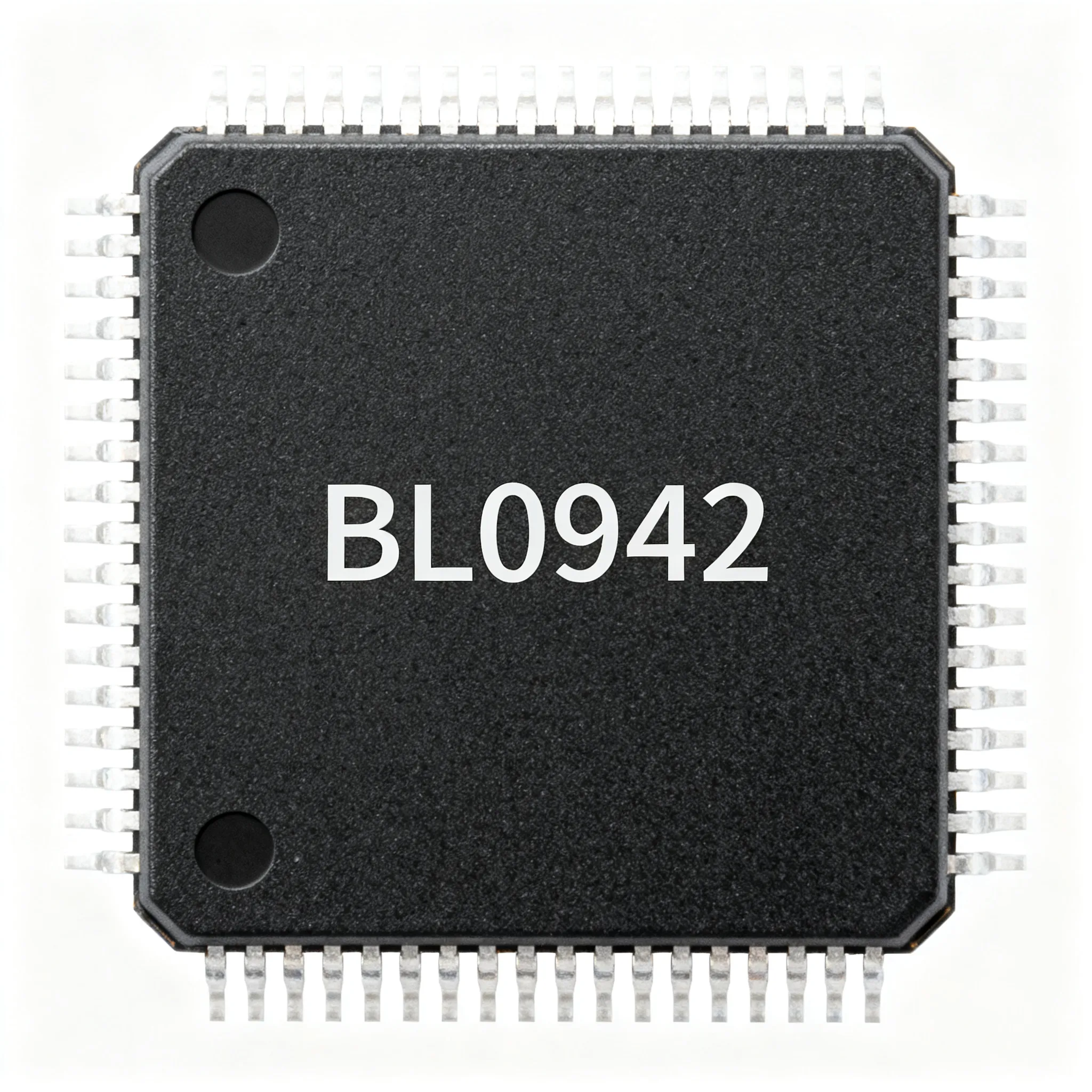
The BL0942 is a calibration-free energy metering IC from Shanghai Belling that has found its way into volume applications like smart sockets, single-phase electricity meters, and power monitoring strips. Its built‑in analog front‑end and DSP engine eliminate the need for complex external calibration routines, trimming production line complexity and accelerating time‑to‑market. But that integration comes with a quiet trade‑off: when a sole‑source device sits at the heart of a metering product, every link in its supply chain becomes a potential single point of failure.
Procurement teams regularly treat components like the BL0942 as “available elsewhere” commodities, yet no licensed second source exists for this exact part. A forward‑looking risk assessment treats the BL0942 not as a catalog item you reorder, but as an allocation‑sensitive semiconductor that demands documented answers from both your internal teams and your supply partners. The goal of this article is to give electronics engineers and procurement buyers a structured set of questions and evaluation criteria – grounded in datasheet facts and supply‑chain risk frameworks – so you can move from reactive panic buying to measured, RFQ‑backed sourcing decisions.
We open with a technical primer on the IC itself, then move through a comparative look at alternative metering front‑ends, a five‑point resilience checklist, and a detailed Q&A. Throughout, we lean on principles from supplier risk assessment guides (EximAgent, Mechanical Power Inc.) and procurement risk management practices (Precoro) to help you frame an RFQ that reveals true supply health.
Inside the BL0942: A Calibration-Free Metering Front-End with SPI/UART
At a system level, the BL0942 digitizes voltage and current waveforms using a pair of high‑resolution ΔΣ ADCs, then computes active power, RMS current, RMS voltage, and cumulative energy in real time. Its 4000:1 dynamic range lets a single design cover both low standby currents and full‑load conditions, and the calibration‑free architecture means the IC stores gain and offset coefficients internally. You simply read processed energy pulses or register values over SPI or UART – no external precision divider networks or production‑line trimming required.
Because the part is exclusively manufactured by Shanghai Belling, design teams are effectively locking themselves into one supplier’s process, test flow, and packaging logistics. That makes it essential to know exactly what you are specifying. The table below consolidates key parameters from the official LCSC datasheet, PartGenie, and Datasheet4u listings.
| Parameter | Specification | Unit / Notes |
|---|---|---|
| Part number | BL0942 | Shanghai Belling |
| Metering architecture | Dual ΔΣ ADC + fixed‑function DSP, calibration‑free | No external calibration required |
| Dynamic range | 4000:1 | Active power, 4000:1 typical |
| Measured parameters | Active power, RMS voltage, RMS current, cumulative energy | Pulse output & register readout |
| Supply voltage | 3.0 V – 3.6 V | Single supply |
| Interface | SPI (4‑wire) and UART, pin‑selectable | Check pinout in datasheet |
| Temperature range | -40 °C to +85 °C | Industrial grade |
| Package | TSSOP‑14 | Surface mount |
| Moisture Sensitivity Level | MSL 3 | Per J‑STD‑020; bake before reflow if floor life exceeded |
| RoHS status | RoHS compliant (per PartGenie & JLCPCB) | Verify with current datasheet revision |
Key takeaway: The BL0942 is a tightly defined building block. While the calibration‑free nature slashes factory test time, it also means the IC’s internal coefficient storage is inseparable from the supplier’s firmware. There is no industry‑standard register map that would let you swap in an alternative without significant firmware rework – a point we’ll expand in the comparison section.
Evaluating Alternatives to the BL0942: More Than a Datasheet Cross
One of the most costly mistakes a procurement team can make is to treat an energy metering IC as a generic resistor network. A quick search returns several candidates that look similar on paper: the HLW8110, HLW8012, CS5463, and ADE7953 all target single‑phase metering. However, a “compatible” part number is only the starting line. Qualification lead time itself represents a hidden supply‑chain risk: if your production line must stop while you qualify a replacement, the financial damage dwarfs any per‑unit cost saving (Mechanical Power Inc.).
Before you ever place an order for an alternative, run the same supplier risk assessment you would for a new sole‑source component. As the EximAgent checklist advises: record the product specification, expected volume, delivery window, and the name of the internal owner accountable for the project. Ask how long your business could operate without the original BL0942 supply – because that duration now defines the upper boundary of your qualification window. If the alternative requires new PCB layout, firmware library integration, and safety‑agency re‑certification, the timeline may extend far beyond a simple datasheet comparison.
The table below places the BL0942 alongside four other metering ICs that engineers often evaluate. All data should be verified against the latest manufacturer datasheets before any commitment.
| Comparison Metric | BL0942 (Shanghai Belling) | HLW8110 (Hiliwi) | CS5463 (Cirrus Logic) | ADE7953 (Analog Devices) |
|---|---|---|---|---|
| Calibration requirement | Calibration‑free (internal coeff.) | External calibration needed; pulse‑output and register‑based adjustment | Requires gain/offset calibration via SPI; on‑chip temp sensor helps | Calibration‑free energy accumulation; user‑accessible registers for fine‑tuning |
| Interface | SPI / UART | UART, pulse output | SPI | SPI, I²C/SPI selectable |
| Supply voltage | 3.0 – 3.6 V | 3.0 – 3.6 V (typical) | 3.0 – 3.6 V | 3.0 – 3.6 V |
| Accuracy class (typical) | Class 1 / 0.5 capable depending on external components | Class 1 typical | 0.1% accuracy over 1000:1 dynamic range (class 0.2 capable) | 0.1% error over 3000:1 (class 0.2 capable) |
| Package | TSSOP‑14 | SOP‑8 / SOP‑16 | SSOP‑24 | LFCSP‑28 |
| Firmware & register compatibility | Proprietary Belling register map | Different register set; pulse‑to‑energy conversion logic required | Fully different command set; energy computation off‑chip or via SPI reads | Unique ADI register map; waveform buffer available for advanced analysis |
Notice that none of the alternatives are pin‑to‑pin compatible, and all but the ADE7953 expect the designer to handle calibration or gain adjustment in firmware. If your product relies on the BL0942’s calibration‑free behavior to skip production‑line test stations, moving to a device that requires per‑unit calibration can increase manufacturing cost and cycle time – a trade‑off that must appear in any risk‑impact analysis. Treat every candidate as a new design‑in: verify pinout, package footprint, SPI/UART command set, and energy‑accumulation logic against your own firmware architecture.
Traceability also becomes a critical control when sourcing alternative parts through independent distributors. The Lightlabs supplier risk assessment framework emphasizes that checks such as heavy‑metal contamination or batch‑level lot tracking should be managed at the supplier‑material level, not just at finished‑product release. For an energy metering IC, that means requesting a certificate of conformance, verifying date codes against manufacturer shipping records, and visually inspecting reel packaging before acceptance.
Five Questions to Gauge Your BL0942 Supply Resilience
A structured questionnaire, asked both inside your organization and of every distributor you engage, turns abstract anxiety into actionable data. The following five questions draw directly from the procurement risk management frameworks we cited and are designed to expose the blind spots that cause the longest production stoppages.
| Question | Why It Matters | What to Require / Verify |
|---|---|---|
| 1. What is our documented demand profile, expected volume, and delivery window? | Without a quantified requirement, distributors cannot reserve allocation, and internal planning cannot size buffer stock (EximAgent). | Record SKU, specification, annual volume, monthly burn rate, and lead‑time tolerance. Share this with authorized distribution partners under NDA to secure forecast‑backed pricing. |
| 2. How long can our production operate without BL0942 inventory? | This “runway” number sets the maximum qualification time for any alternative and defines the trigger for emergency buffer releases (EximAgent). | Model worst‑case scenario: zero incoming shipments for that duration. Confirm that safety stock, line‑down insurance, and engineering rework capacity are aligned. |
| 3. Who inside our organization is accountable for monitoring BL0942 supply signals? | Diffuse responsibility leads to late reaction. A single owner tracks allocation changes, factory capacity hints, and distributor stock movements. | Assign an individual (or small team) to receive weekly supply‑chain reports, attend supplier review meetings, and update the risk register. |
| 4. Have we qualified a second source, and what is the switch‑over lead time? | Qualification lead time is itself a supply‑chain risk (Mechanical Power Inc.). If you haven’t proven a functioning board with an alternative IC, you are unprotected. | Scope a parallel qualification project. Define the engineering effort, firmware change list, PCB revision work, and certification re‑test effort. Ask the alternative supplier for a sample‑backed commitment to future wafer capacity. |
| 5. How are we measuring and reporting the effectiveness of our supply risk controls? | Risk management is effective only if you track whether controls are actually working (Precoro). Without metrics, leadership cannot adjust thresholds or budgets before the next disruption. | Define KPIs: days of inventory on hand vs. burn rate, number of RFQs outstanding vs. quotes received, lead‑time compliance rate, and qualification progress milestone dates. |
Use the five questions as a living document, not a one‑time audit. Integrate them into your quarterly supplier business reviews and new project kick‑off templates. When you submit a request‑for‑quote (RFQ) through a platform like IC-Online, attach a clear demand profile and explicitly ask for allocation‑backed lead time commitments. Distributors that can answer confidently are the ones most likely to protect your line in a tight market.
BL0942 Sourcing Q&A: Answers for Engineers and Procurement Teams
Below are the questions our readers most often raise when they first encounter allocation pressure on the BL0942. Each answer blends datasheet facts with supply‑chain best practices.
- Q: Is the BL0942 a sole-source component from Shanghai Belling?
A: Yes. The BL0942 is manufactured exclusively by Shanghai Belling, and there are no licensed second sources. Any supply interruption at the wafer‑fabrication or assembly‑test level directly impacts global availability. Procurement plans should always assume sole‑source risk and build buffer stock and qualification roadmaps accordingly. - Q: What lead times and minimum order quantities are typical for the BL0942?
A: Lead times and MOQs vary by distributor, order volume, and market conditions. Platforms such as JLCPCB and LCSC often show real‑time stock and factory lead times, but these snapshots change quickly. Always confirm allocation‑backed lead time with your authorized distributor, negotiate a minimum‑buffer quantity, and revisit the forecast monthly. - Q: Can the HLW8110 or HLW8012 serve as a direct drop‑in replacement for the BL0942?
A: No, they are not pin‑for‑pin drop‑ins. The HLW8110 and HLW8012 provide pulse‑output energy measurement and require external calibration. Their register maps, pulse‑to‑energy scaling factors, and package footprints differ from the BL0942. Any migration will demand hardware re‑spin and firmware re‑architecture. Evaluate the full qualification timeline, including safety‑agency re‑certification, before treating them as a backup. - Q: How do we guard against counterfeit BL0942 ICs?
A: Source only through authorized distribution channels or manufacturers’ approved network partners. Request date‑code traceability and inspect incoming reel packaging for signs of tampering. Implement an incoming inspection routine that includes visual (marking consistency, package integrity) and electrical checks (ID register reads, current consumption at nominal voltage). The Lightlabs supplier risk model emphasizes traceability at the supplier‑material level – apply that principle by tracking lot numbers from receipt through production assembly. - Q: What special handling does the BL0942 TSSOP-14 package require due to MSL3?
A: The device is classified as MSL 3 according to J‑STD‑020. It must be stored in a moisture‑barrier bag with a desiccant and humidity indicator card. Once the bag is opened, the floor life is typically 168 hours at ≤30 °C / 60 % RH. If that time is exceeded, the parts must be baked per the recommended profile before reflow soldering. Ensure your contract manufacturer logs the bag‑open timestamp and uses dry‑pack storage between builds.
References & Further Reading
- BL0942 Datasheet, Alternatives & Specs – PartGenie
- BL0942 Datasheet – LCSC Electronics
- BL0942 Datasheet – Datasheet4U
- BL0942 Technical Summary – JLCPCB
- Critical Material Supply Risks & Industrial Parts Procurement – Mechanical Power Inc.
- Supplier Risk Assessment: Checklist & Guide – EximAgent Blog
- Top 5 Procurement Risks: Key Threats and Practical Responses – Precoro
- Supplier Risk Assessment for Food and Supplement Brands – Lightlabs (traceability principles apply to electronics)
Conclusion: The BL0942 delivers genuine design convenience, but its single‑source nature demands that every buyer and engineer treat it as a risk‑managed component from the start. By interrogating your own demand profile, measuring the true cost of qualification lead time, and using the five‑question checklist to drive every RFQ conversation, you move from hoping supply holds to knowing you have a plan when it tightens. Plug these questions into your next supplier review, share documented forecasts with authorized distribution partners, and keep the balance between calibration‑free simplicity and supply‑chain resilience firmly in your control.
Ready to secure allocation for your next build? Upload your full BOM and request a quote through IC-Online – flexible MOQs, mixed‑BOM handling, and a single point of contact for hard‑to‑find parts.