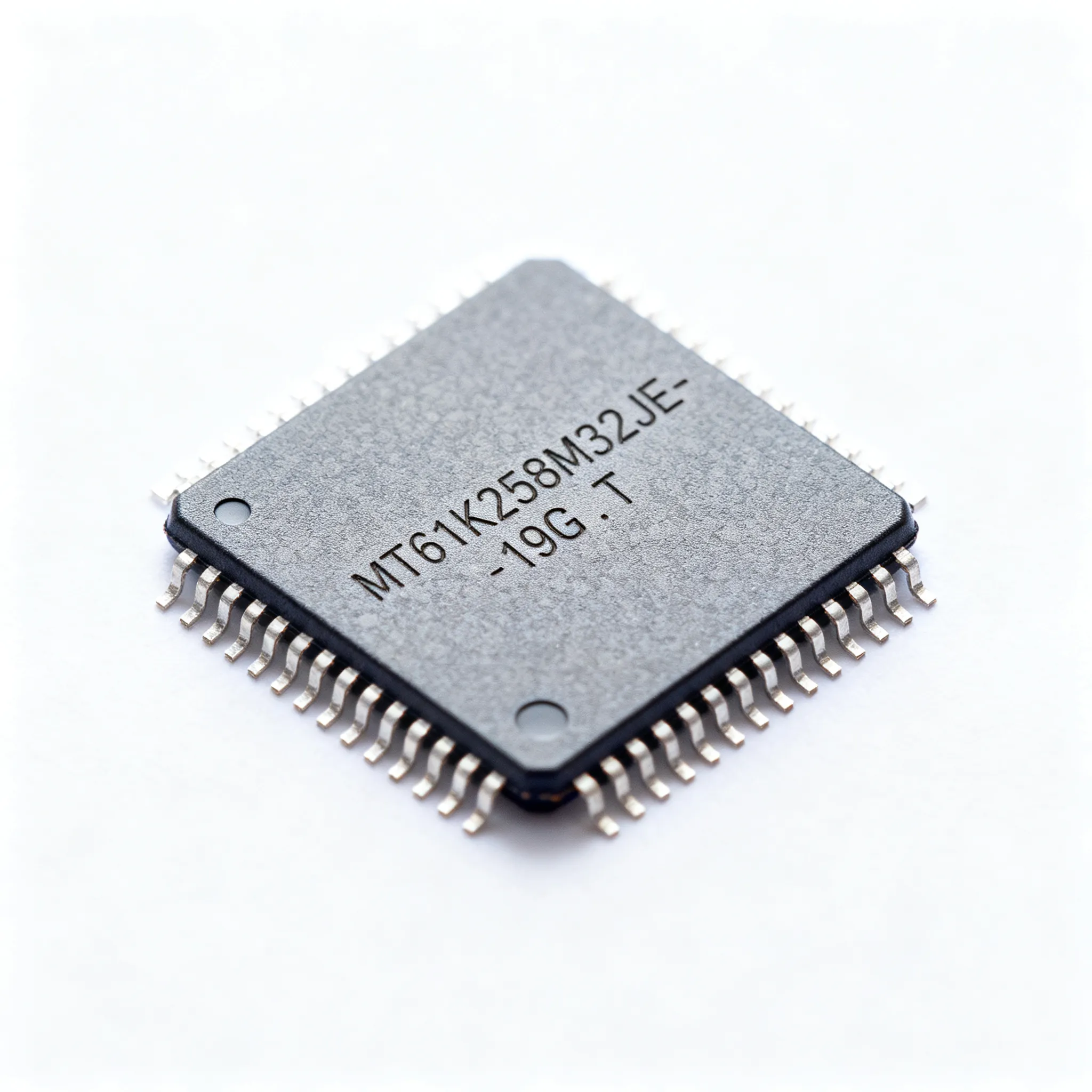
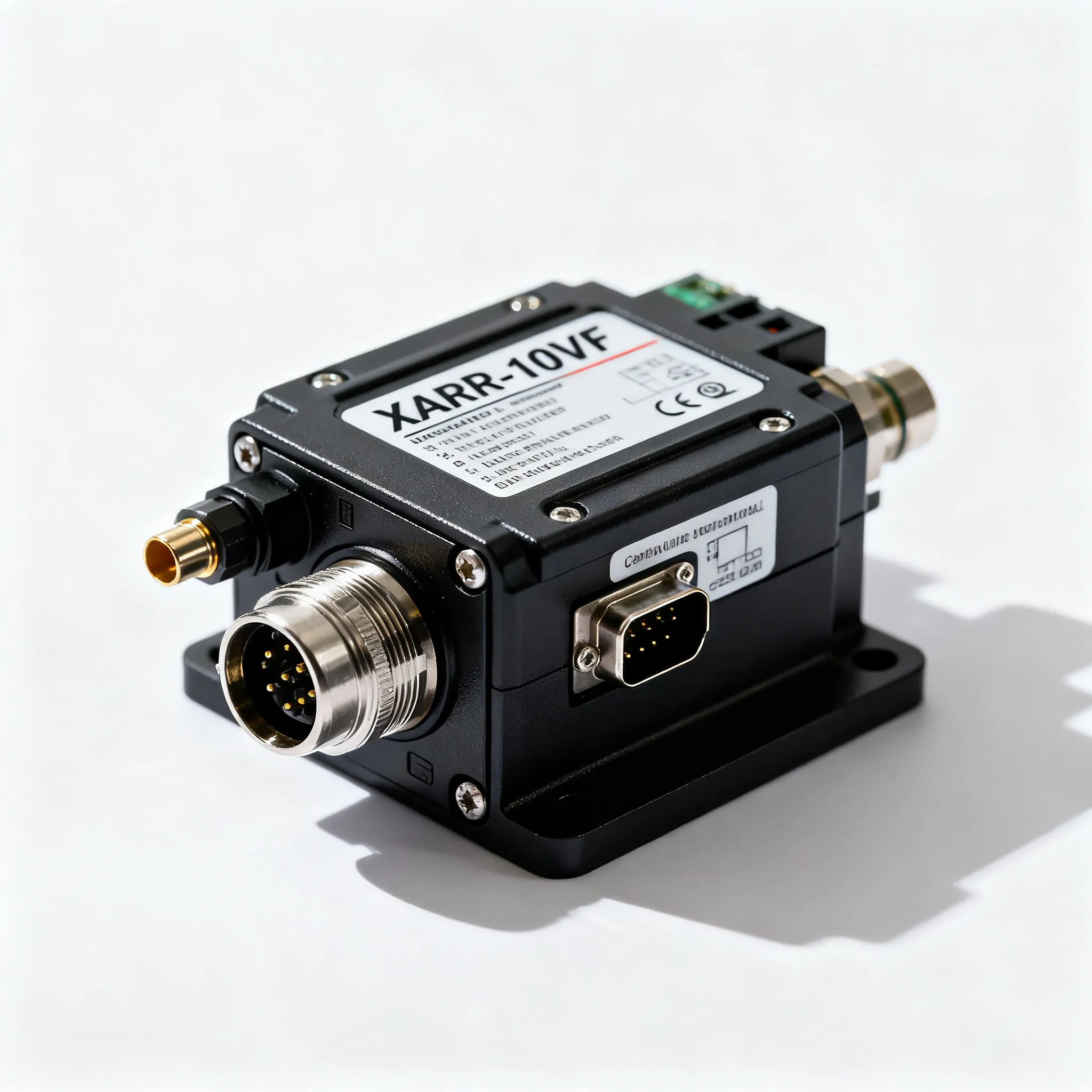
Counterfeit IC Risk Mitigation for Procurement Teams: A Guide to Authenticity, Inspection, and Traceability
Procurement checklist: authenticity, traceability, and quality documentation to request with your component RFQ.
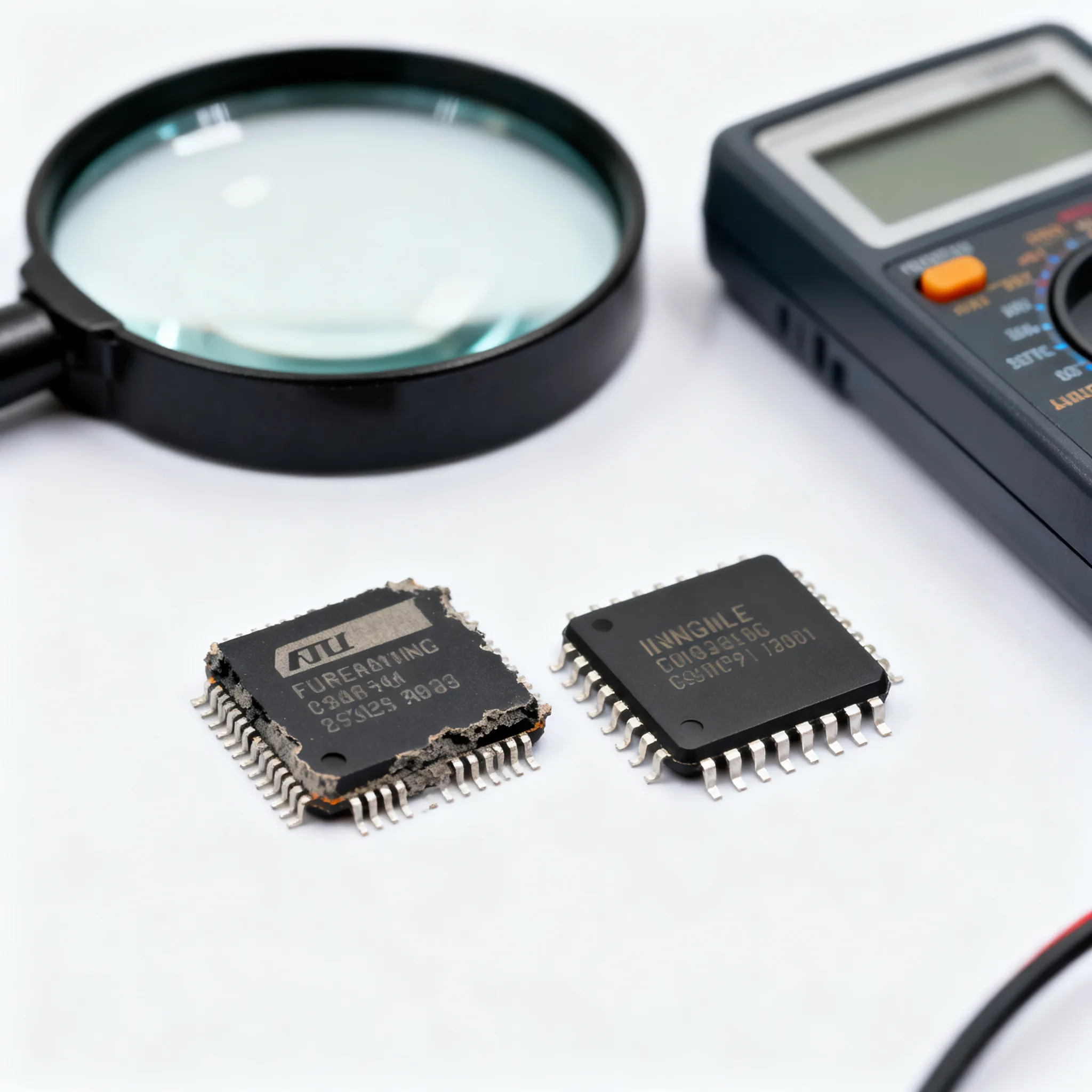
Why Counterfeit Chips Still Haunt Even Diligent Procurement Teams
You might assume that tighter supply chain oversight and blockchain-tracked logistics have squeezed counterfeit semiconductors out of the market. The reality is more sobering. Counterfeit integrated circuits continue to surface in avionics, medical devices, industrial controls, and defense systems—often passing through multiple intermediaries before landing on a production board. Ongoing coverage by EE Times documents how component allocation squeezes and sudden demand spikes push buyers toward unfamiliar sources, where counterfeiters operate with increasing sophistication.
The financial exposure is rarely limited to the invoice price of a bad reel. When a re-marked MCU fails during a field validation test, the cost cascades through rework, line downtime, delayed shipments, and—in regulated industries—mandatory failure reporting. A single counterfeit in a safety-critical path can trigger a product recall that erases months of margin. Insurance carriers and end customers are also sharpening their scrutiny: procurement teams that cannot demonstrate a documented authenticity trail face denied claims and lost contracts.
Several converging drivers have intensified the risk over the past three years. Allocation-sensitive components create urgency; when a franchised distributor cannot confirm supply within a production window, procurement managers face pressure to consider independent brokers with thinner documentation. Component obsolescence—especially for long-lifecycle industrial equipment—forces teams to locate dwindling inventories of parts no longer in active production. Meanwhile, counterfeiters have moved well beyond crude sand-and-re-mark operations. Today's fakes include factory rejects re-packaged as new, used ICs pulled from scrapped boards and re-balled, and functionally dead parts with plausible-looking laser-etched markings.
| Key Driver | Mechanism | Procurement Impact |
|---|---|---|
| Allocation-sensitive supply | Franchised channels cannot confirm availability within required production windows | Buyers are pushed toward non-franchised sources with variable documentation standards |
| Component obsolescence acceleration | Manufacturers issue EOL notices with shrinking last-time-buy windows; legacy designs depend on discontinued MPNs | Procurement must source from aftermarket inventories where traceability erodes with each transfer |
| Gray market sophistication | Counterfeiters deploy advanced re-marking, X‑ray–plausible overmolding, and forged certificates of conformance | Visual-only incoming inspection is no longer sufficient for medium- and high-risk parts |
| Geopolitical supply chain fragmentation | Trade restrictions and export controls reroute component flows through unfamiliar logistics nodes | Chain-of-custody documentation becomes harder to verify end-to-end |
| Pressure to reduce procurement cycle time | Engineering teams shorten sourcing windows to accelerate time-to-market | Due diligence steps (third-party testing, pedigree verification) are compressed or skipped |
| Recycling of e-waste components | Used ICs harvested from discarded equipment are cleaned, re-balled, and sold as new | Parts may pass basic electrical tests while carrying latent damage that shortens field life |
Tip: The Semiconductor Industry Association (SIA) regularly publishes guidance on supply chain integrity. Monitoring their reports helps procurement teams anticipate which component categories face elevated counterfeiting pressure before those parts show up on a shortage list. Pairing this intelligence with internal risk-tier classifications turns reactive firefighting into a manageable vetting workflow.
The safety stakes are not hypothetical. Counterfeit capacitors and semiconductors have been implicated in aviation incident investigations, and medical device regulators in multiple jurisdictions now expect documented incoming inspection procedures as part of quality system audits. For procurement professionals, the question is no longer whether counterfeit parts exist in the channel—it is whether your current inspection and documentation regime would catch them before they reach a soldering iron.
The Testing Ladder: Visual, X‑Ray, and Destructive Techniques Compared
Counterfeit detection is not a single-pass gate. Effective screening stacks multiple methods, each catching anomalies that the previous layer might miss. Understanding what each technique reveals—and what it cannot—lets procurement teams allocate testing budgets proportionate to the risk a given component carries. The hierarchy below moves from low-cost, high-throughput methods to expensive but definitive techniques reserved for safety-critical or single-source parts.
External Visual Inspection (EVI) is the first line of defense. Under magnification, inspectors check for body dimensions that deviate from the manufacturer's datasheet, inconsistent surface texture, signs of sanding or blacktopping, and marking quality—font mismatches, uneven laser etching, or pin-one indicator errors. Marking permanency tests using solvent wipes (per MIL-STD-883 or internal procedures) expose re-marked parts where the original marking was removed and replaced. EVI costs pennies per part and requires minimal equipment, but a skilled counterfeiter can defeat it with careful re-finishing.
X‑Ray Imaging peers inside the package without damaging it. The resulting image reveals the internal lead-frame geometry, die size and placement, wire-bond count and routing, and the presence of unexpected structures. A genuine IC has a predictable internal layout consistent with the manufacturer's process. A counterfeit may show a smaller die than the authentic part, a different lead-frame alloy, missing bond wires, or evidence of die harvesting. X‑ray inspection costs more than EVI—equipment, operator training, and per-part cycle time all add up—but it catches an entirely different class of fraud.
Electrical Curve Tracing compares the current-voltage signatures of a suspect part against a known-good "golden unit" across all pin pairs. Re-marked parts with different internal silicon, used parts with degraded junctions, and blank die stuffed into recycled packages produce signatures that deviate from the golden reference. This method often catches counterfeits that look correct externally and show plausible X‑ray images.
Decapsulation and Die Inspection is the definitive step. The package is chemically or mechanically opened, and the bare die is examined under a microscope. Inspectors verify manufacturer logos, part numbers etched into the die, die revision codes, and process geometry. Destructive physical analysis (DPA) is expensive and renders the part unusable, but it resolves any ambiguity left by non‑destructive methods. For high-reliability applications, a sacrificial sample from each suspect lot should be decapsulated and cross-referenced against manufacturer die records.
| Inspection Method | Detection Capability | Approximate Cost per Part (Order-of-Magnitude) | Turnaround Time | Best Applied When… |
|---|---|---|---|---|
| External Visual + Marking Permanency | Surface anomalies, re-marking evidence, dimensional non-conformance | < $1 | Minutes to hours (batch) | First-pass screening for all incoming lots; sufficient for low-risk, franchised-source parts |
| X‑Ray Imaging | Internal lead-frame, die size, wire-bond configuration, overmolding anomalies | $5–$25 | Hours to 1 day | Medium-risk parts; broker-sourced components; when external inspection is clean but source documentation is thin |
| Electrical Curve Tracing | Pin-to-pin I‑V mismatches, degraded junctions, wrong silicon | $2–$15 | Hours to 1 day (depends on pin count) | Suspect re-marks; parts going into assemblies with limited rework access; golden-unit comparison available |
| Decapsulation + Die Inspection | Die markings, process geometry, manufacturer logo, revision mismatch | $50–$300+ | 2–5 days | Safety-critical, high-reliability, or single-chance builds; qualifying a new non-franchised source |
| XRF (X‑Ray Fluorescence) | Material composition anomalies in leads and plating | $10–$30 | Hours | RoHS compliance verification; detecting non-conforming lead-frame alloys |
| Functional ATE (Automated Test Equipment) | Parametric and functional deviations from datasheet | $15–$100+ | Hours to days (test program development) | High-volume production qualification; when electrical specs are tightly constrained |
The table above makes a strategic trade-off visible: no single method catches everything, and stacking all techniques on every shipment is economically irrational. Procurement teams that classify incoming parts by risk tier—considering source trustworthiness, application criticality, and component scarcity—can match each lot to an appropriate screening bundle. A franchised distributor shipment of a commodity op-amp may warrant EVI only. A broker-sourced FPGA destined for a Class III medical device justifies the full ladder through decapsulation.
Key Takeaway: The testing ladder is most effective when procurement specifies the required inspection methods before placing the order. Suppliers who know you will decapsulate a sample are less likely to ship counterfeits in the first place. Make inspection requirements part of your standard RFQ terms.
Why IPC‑A‑610 and Traceability Standards Are Procurement Shields, Not Paperwork
Procurement teams sometimes view industry standards as quality department territory—documents that matter for production but not for sourcing decisions. That perspective creates a liability gap. Standards like IPC‑A‑610 (Acceptability of Electronic Assemblies) and SAE AS5553 (Counterfeit Electronic Parts; Avoidance, Detection, Mitigation, and Disposition) are procurement tools as much as manufacturing frameworks. They define objective, verifiable criteria that move authenticity assessment from subjective judgment to documented evidence.
IPC‑A‑610 establishes visual acceptance criteria for electronic assemblies, including the condition of components prior to and after soldering. When incoming inspection rejects a lot based on IPC‑A‑610 criteria—for example, leads with evidence of re-tinning, package surface irregularities inconsistent with the manufacturer's documented finish, or marking anomalies—the finding is not an opinion. It is a pass/fail determination against a published industry standard. That documented rejection, tied to a specific supplier and lot code, creates a defensible record that procurement can use to return non-conforming material, withhold payment, and trigger supplier corrective action.
SAE AS5553 goes further upstream. It provides a framework for avoidance, detection, and disposition of counterfeit parts throughout the procurement lifecycle. The standard addresses supplier qualification, purchasing processes, inspection protocols, and reporting obligations when counterfeits are discovered. For procurement teams, AS5553 translates into concrete practices: requiring authorized distribution when possible, qualifying independent brokers against documented risk criteria, maintaining a suspect parts quarantine process, and reporting confirmed counterfeits to organizations like ERAI to protect the broader supply chain.
The legal and contractual leverage these standards provide is substantial. When a supplier ships non-conforming parts and your team has performed incoming inspection against IPC‑A‑610 criteria with documented results, liability shifts demonstrably upstream. Without the standard, you are left arguing about whether a part "looked okay" when it arrived. With it, you have an objective record that the supplier delivered material outside the acceptance criteria they agreed to in the purchase contract.
Note: Many franchised distributors now include AS5553 compliance statements in their quality documentation. Request these proactively. If a supplier cannot or will not provide a traceability statement aligned with AS5553, that gap should be weighed in your sourcing risk assessment alongside price and delivery.
Traceability requirements also extend to documentation. IDEA‑STD‑1010 (IDEA) defines the documentation standard for inspecting and verifying electronic components, including the minimum data elements for a component pedigree record. A complete pedigree links each transfer of custody from the original component manufacturer through any intermediaries to your receiving dock. Gaps in that chain are risk indicators; a broker who cannot account for a part's journey between two dates may be unwittingly—or knowingly—handling counterfeits.
For procurement managers building or refining a counterfeit mitigation program, the sequence is straightforward: adopt IPC‑A‑610 visual criteria as the baseline for incoming inspection, structure supplier qualification around AS5553 requirements, require IDEA‑STD‑1010–compliant documentation for any non-franchised source, and maintain a digital trail that connects each lot to its inspection results and disposition. What looks like paperwork in calm periods becomes competitive armor when a suspect part surfaces and your customer demands proof of due diligence.
Locking Down Your Supply: Practical Steps for Procurement Teams
Building a counterfeit-resilient procurement function does not require a six-figure capital investment or a dedicated forensic lab. It requires systematic processes, calibrated risk thresholds, and a willingness to qualify—or disqualify—suppliers based on documented evidence rather than relationship inertia. The following steps are actionable for teams managing mixed BOMs across franchised and non-franchised sources.
Step 1: Classify Every Part by Risk Tier Before Sourcing Begins. Risk is a function of three variables: application criticality (what happens if this part fails in the field), source trustworthiness (franchised distributor vs. independent broker vs. unknown entity), and component scarcity (is this MPN allocation-sensitive or obsolete). High-criticality parts sourced from non-franchised channels with limited availability demand the most rigorous screening. Low-criticality parts from franchised distributors may need only EVI. Document the risk tier for each line item in the BOM; do not leave it to individual buyer discretion.
Step 2: Pre-qualify Suppliers Against a Written Standard. Before issuing an RFQ to a new source, require evidence of quality management system certification (ISO 9001 at minimum), a counterfeit avoidance policy aligned with AS5553, and references from buyers who have used that supplier for similar component categories. For independent brokers, ask whether they maintain an in‑house inspection lab, which standards they follow for incoming inspection, and how they handle suspect parts. A broker that resists providing this information should not receive your business.
Step 3: Make Third-Party Testing a Contractual Requirement for Non‑Franchised Buys. When parts must come through a broker—because franchised channels cannot confirm allocation or the part is discontinued—require third-party testing as a condition of acceptance. Specify the methods: at minimum X‑ray and electrical curve tracing on a sample basis, with decapsulation reserved for high-risk or safety-critical MPNs. Testing can be performed by independent labs or, for high-volume procurement, at your own receiving facility if equipment is available. The cost of testing is nearly always lower than the cost of a single field failure in a regulated industry.
Step 4: Implement a Sealed-Bag Chain-of-Custody Program. Counterfeits often enter the supply chain between the original component manufacturer and your dock—sometimes through partial reel swaps or opportunistic adulteration at intermediary warehouses. Require that parts ship in sealed, tamper-evident packaging with lot-level documentation from the manufacturer. When re-packaging is unavoidable (e.g., for small-quantity orders), demand a re-packaging certificate that documents the original manufacturer packaging, the date of re-pack, and the responsible party. Break the seal only at incoming inspection, under camera if the risk tier justifies it.
Step 5: Build a Digital Part Pedigree Repository. For each lot received, store the following in a retrievable digital record: supplier name and certification status, date/batch codes, photographs from incoming inspection (including marking close-ups), inspection results (method, date, operator, pass/fail), and disposition. When a field failure investigation traces back to a specific lot three years after production, this pedigree is your first line of defense—and often the difference between a contained supplier quality notice and an open-ended liability exposure.
| Mitigation Action | When to Use | Trade-off / Limitation |
|---|---|---|
| Risk-tier classification before sourcing | All BOMs; especially mixed-franchised/broker buys | Requires upfront engineering/quality collaboration; adds time to sourcing cycle |
| Supplier pre-qualification questionnaire | Any new non-franchised source; periodically for existing brokers | Suppliers may provide polished but incomplete responses; verify claims with references |
| Third-party testing clause in PO terms | Broker-sourced parts, safety-critical MPNs, obsolete components | Per-part testing cost; turnaround time may conflict with urgent production needs |
| Tamper-evident packaging requirement | All shipments; non-negotiable for high-value or high-risk lots | Adds logistics complexity for small-volume orders; may limit broker flexibility |
| Digital pedigree repository | All production lots; prioritize high-reliability and regulated-industry builds | Requires disciplined data entry and storage infrastructure; often neglected until an audit triggers it |
| Suspect parts quarantine process | When any inspection method flags an anomaly | Delays production; requires secure storage and documented disposition workflow |
None of these steps requires exotic technology. The common thread is documentation discipline—capturing evidence at each node of the procurement chain so that authenticity can be verified, not assumed. Teams that build these habits during stable periods find that when the next allocation squeeze hits and unfamiliar suppliers become unavoidable, the process is already in place to separate legitimate parts from counterfeits before they reach the production floor.
Real Questions Procurement and Engineering Teams Ask About IC Authenticity
Q: What is the most cost‑effective screening for medium‑volume purchases when you cannot afford full destructive testing?
Start with high‑resolution optical inspection and marking permanency tests on a statistically meaningful sample. These two steps catch the majority of re‑marked and refinished counterfeits at very low per‑part cost. Add X‑ray imaging to verify internal lead‑frame consistency and die placement—anomalies here cannot be concealed by surface refinishing. Finally, electrical curve tracing on a sample against a known-good golden unit catches many re‑marked parts where the die inside does not match the package marking, even when the part is not obviously degraded. This three-layer bundle—EVI + marking permanency, X‑ray, and curve tracing—provides strong coverage without the cost and part destruction of decapsulation.
Q: How do we handle components that are only available through non‑franchised brokers?
Require a certificate of conformance plus detailed photographs of date and batch codes for the specific lot being offered—not stock images. Insist on third‑party testing at your expense or theirs; at minimum, X‑ray the entire sample and decapsulate a sacrificial unit from each date code. Build an ongoing relationship with one or two brokers who maintain an in‑house inspection lab and follow IDEA‑STD‑1010 documentation standards. A broker who invests in inspection capability and transparent documentation has an economic incentive to maintain supply chain integrity. Rotating through unfamiliar brokers purely on price multiplies counterfeit risk without a commensurate cost saving when rework and liability are factored in.
Q: Can X‑ray alone detect a cleverly re‑marked or overmolded counterfeit IC?
X‑ray reveals internal die size, lead‑frame geometry, wire‑bond count and configuration, and anomalies like inconsistent die attach material or unexpected voiding. A counterfeit where the die is substantially smaller than the authentic part, or where the lead‑frame material differs from the manufacturer's known alloy, will be caught. However, a re‑marked part that uses the same die family—for example, a lower‑speed grade re‑marked as a higher‑speed grade—may look identical under X‑ray. Likewise, an overmolded part built around a functional but used die can appear plausible. When risk is high, pair X‑ray with electrical curve tracing (to catch performance mismatches) or decapsulation (to verify die markings directly). X‑ray is a powerful filter but not a silver bullet.
Q: When is destructive analysis (decapsulation) worth the cost?
Decapsulation is justified whenever a counterfeit escaping detection could cause a failure that outweighs the testing cost many times over. This includes safety‑critical applications (avionics, implantable medical devices, automotive braking systems), high‑reliability builds where field repair is impossible or catastrophic (satellite systems, subsea equipment), and one‑chance production runs where a bad lot would scrap an entire build with no time for re‑procurement. It is also warranted when qualifying a new non‑franchised source before committing to a production order—one decapsulation on a sample lot can validate or disqualify a supplier before dollars are spent on full volume. Budget decapsulation as an insurance premium, not a variable cost to be minimized.
Q: How does IPC‑A‑610 help procurement teams avoid counterfeit liability?
IPC‑A‑610 defines objective visual acceptance criteria for electronic assemblies, including the condition of components before and after soldering. When incoming inspection evaluates parts against these published criteria—checking for body damage, lead condition, marking legibility, and finish quality—and documents the results per lot, procurement creates a defensible record of due diligence. If a part later proves counterfeit or non‑conforming, the documented inspection trail demonstrates that the supplier shipped material outside the acceptance standard, not that the buyer failed to inspect it. This shifts liability upstream to the supplier and supports warranty claims, returns, and—when necessary—legal recourse. Without a standard to anchor the inspection, disputes devolve into subjective arguments over whether a part "should have been caught."
References & Further Reading
- EE Times — Electronics Engineering News and Supply Chain Analysis
- IPC Standards — IPC‑A‑610 Acceptability of Electronic Assemblies
- SAE AS5553 — Counterfeit Electronic Parts; Avoidance, Detection, Mitigation, and Disposition
- ERAI — Counterfeit Electronics Reporting and Supply Chain Intelligence
- IDEA — IDEA‑STD‑1010 Acceptability of Electronic Components
- Semiconductor Industry Association — Supply Chain Integrity Guidance
- JEDEC — Solid State Technology Association Standards
- IC-Online — Electronic Component Sourcing and RFQ Platform
Sourcing with Confidence Starts with Your Next RFQ
Counterfeit risk mitigation is not a one-time audit or a software purchase. It is a procurement discipline built on documented processes, calibrated risk tiers, and a testing ladder matched to application criticality. Every incoming lot is an opportunity to collect evidence that protects your production line, your product liability exposure, and your customer relationships. The standards, inspection methods, and documentation practices described here are all implementable with existing quality and procurement resources—what changes is the rigor with which they are applied and the expectation that suppliers will meet them or be disqualified.
When your BOM includes allocation-sensitive or discontinued parts and franchised channels cannot confirm supply, do not default to the lowest‑price broker and hope the parts are genuine. Upload your BOM via IC-Online to reach qualified suppliers who understand authenticity requirements. Specify your inspection expectations in the RFQ, request traceability documentation, and confirm allocation-backed availability before committing. A disciplined RFQ process—grounded in the standards and screening methods covered in this guide—is your strongest defense against counterfeit semiconductors reaching your production floor.