CS8575S Supply Risk Assessment: What to Ask Before You Buy
Assess CS8575S sourcing risks before you buy. RFQ questions on traceability, date codes, testing, alternatives, and supply continuity for procurement teams.
When a Single IC Triggers a Line-Down: CS8575S in Today’s Risk Landscape
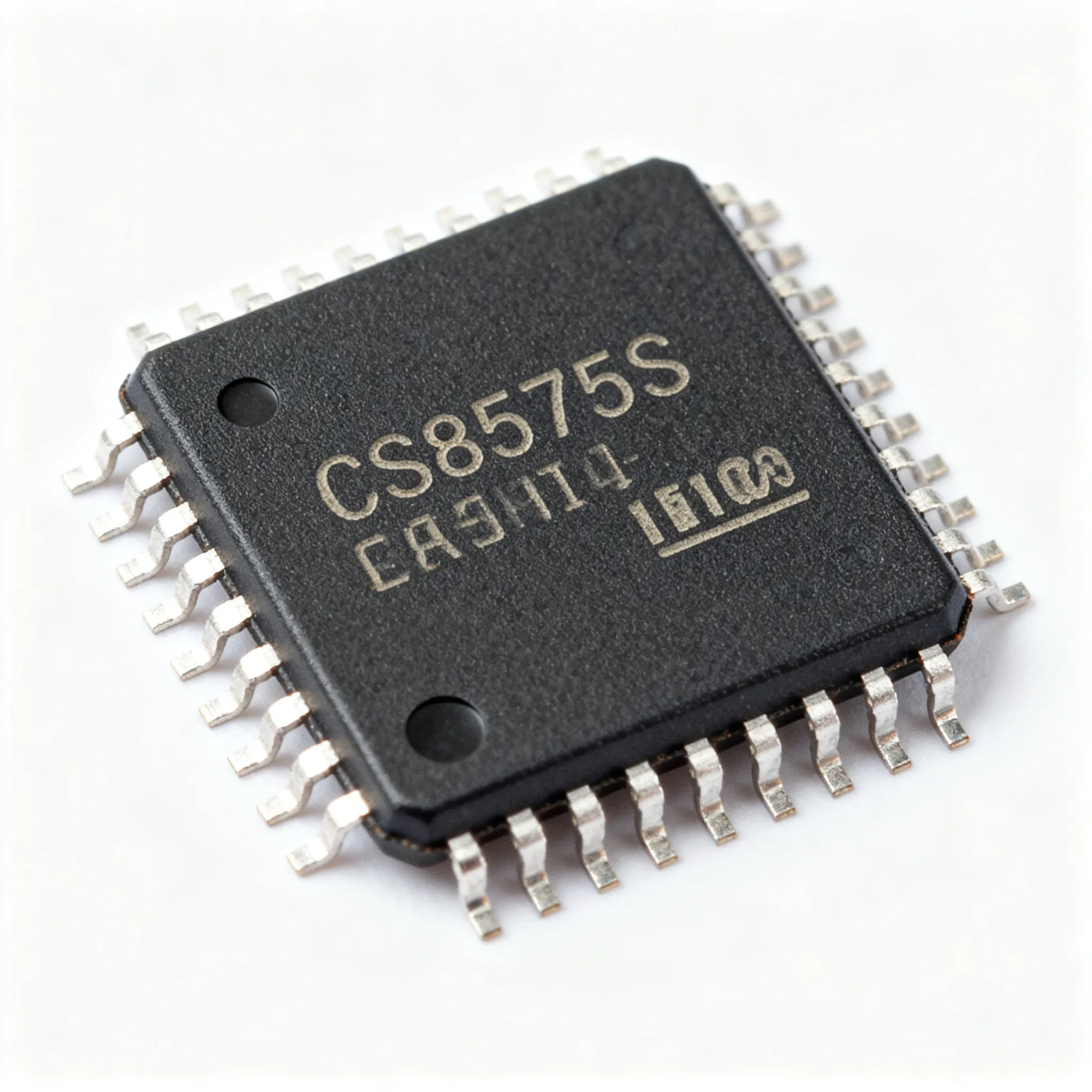
Engineers don’t lose sleep over a capacitor. But an audio amplifier IC that disappears from the shelf with zero notice? That’s a production manager’s nightmare. The CS8575S sits inside a surprising number of portable audio devices, intercom panels, and multimedia docks — yet its supply chain behaves more like a custom ASIC than a commodity part. When a CS8575S goes missing, the line stops, and rework costs spiral while procurement scrambles to sort authorized stock from empty promises.
Recent product-safety events show how quickly overlooked component risks turn into full-scale field failures. The U.S. Consumer Product Safety Commission publishes dozens of recalls every month, many rooted in electronic subsystems that passed bench evaluation but arrived from unvetted supply channels (CPSC recalls). The official CPSC Recall Handbook maps how a single batch of semiconductors — misrepresented as new, wrongly stored, or counterfeited — can trigger a recall that wipes out months of margin. That planning framework isn’t hypothetical; it’s the reason procurement teams are rewriting RFQ rules for niche mixed-signal parts like the CS8575S.
Supply-chain risk isn’t just a factory problem. Manufacturing disruptions ripple outward: “delays in production, equipment malfunctions, and labor shortages can have a domino effect on product availability” (Ivalua SCRM). A specialty audio IC that depends on a single fab — likely the case with the CS8575S — magnifies that domino effect because there’s no generic alternative line to absorb demand. Meanwhile, UL Solutions warns that speed-to-market pressure often pushes teams to bypass the very supplier audits that catch date-code mismatches and re-marked parts. When the component in question is a CS8575S, a disciplined pre-purchase assessment isn’t bureaucracy; it’s the cheapest insurance against a line-down.
What the CS8575S Datasheet Does (and Doesn’t) Reveal About Supply Health
Download the CS8575S datasheet from any aggregator (datasheet versions) and you’ll find the standard electrical narrative: a high-efficiency stereo Class‑D amplifier with click-and-pop suppression, thermal shutdown, and I²C control registers. The table below summarizes the typical performance envelope that a design engineer relies on — but note what’s missing. Those pinout diagrams, gain curves, and THD+N sweeps won’t tell you whether the reel sitting in a broker’s warehouse is original or whether the part has been quietly moved to “last-time-buy” status.
| Parameter | Typical Value (Based on Available Datasheets) | Design Impact | Supply-Risk Blind Spot |
|---|---|---|---|
| Supply Voltage (VDD) | 2.5 V – 5.5 V | Direct battery operation; low dropout overhead | Package variant may require different LDO margin; confirm MSL level for reflow |
| Output Power per Channel (RL = 4 Ω, THD+N <1%) | Up to 2.8 W | Thermal pad layout critical | Date-code window: older lots may show solderability drift |
| THD+N at 1 kHz, 1 W | <0.1% | Audio fidelity target | Non‑authorized lots may deviate due to process shift; request A‑weighted test report |
| I²C Control Interface | 100 kHz / 400 kHz compatible | Register map enables mute, gain, diagnostics | Firmware assumes a specific register mask; verify silicon revision matches BOM version |
| Package | QFN‑20 (4×4 mm) | Compact footprint; central exposed pad | Look for lead‑finish discrepancy (matte tin vs. NiPdAu) that hints at unauthorized re‑ball/re‑plate |
The U.S. Customs and Border Protection’s Supply Chain Risk Assessment Guide offers a useful analogy: just as customs officers map a shipment’s provenance through cargo flows and documentation trails, a CS8575S buyer must map the component’s journey from wafer fab to reel. A datasheet can’t reveal that journey. Instead, treat the datasheet as the design anchor while building a parallel risk map that questions single-source dependency, EOL rumors, lot‑code integrity, and any deviation from the standard QFN‑20 packaging and marking format.
Key takeaway: The biggest supply‑health gaps hide in the space between the “absolute maximum ratings” table and the “ordering information” footnote. Date‑code inconsistencies, unexplained reel‑label formatting changes, and missing MSL‑level annotations are the equivalent of a shipping manifest with a scratched‑out consignee — they’re not proof of fraud, but they demand a hard stop until the supplier explains.
Authorized Stock vs. Independent Broker: Testing CS8575S Supply Paths
Not all CS8575S inventory is equal, even when the vendor’s website displays “25,000 in stock.” The procurement stack splits into three broad paths, each carrying a different weight of risk and a different burden of proof. Understanding those differences — and building an RFQ that forces disclosure — is the only way to avoid the “priced‑too‑good‑to‑be‑true” trap.
The comparison below draws on a structured OEM components sourcing checklist and a methodical supplier evaluation framework. Both emphasize that the lowest quoted price should never dominate the decision when supply stability and quality performance carry greater operational importance.
| Supply Path | Typical CS8575S Availability Model | Risk Profile | Documentation Confidence | Price Stability Signal |
|---|---|---|---|---|
| Authorized Franchise Distributor | Allocation‑backed; schedule‑driven replenishment | Lowest counterfeiting risk; strongest factory‑source traceability | Full conformity cert, MSL label, ECCN classification provided as standard | Stable, but subject to manufacturer allocation windows |
| Catalog / Independent Hybrid (e.g., Jotrin CS8575S listing) | Aggregated stock drawn from multiple regional channels | Moderate; supplier audit claims help, but lot provenance may be mixed | Varies — ask for recent inspection reports and a written lot‑origin declaration | Competitive, but spikes quickly when authorized channels dry up |
| Independent Broker (non‑audited) | Spot‑market inventory, often excess or reclaimed | Highest risk of date‑code manipulation, re‑marking, or moisture damage | Frequently limited to a commercial invoice; rarely provides full‑traceability certs | Volatile; unusually low price often signals reclaimed “pulls” or recycled devices |
What makes the CS8575S especially sensitive is its niche audio role. The IC doesn’t have the volumes that guarantee multiple parallel fab lines, so broker stock is often the accumulated leftovers of a previous allocation squeeze. When you see a broker offering a thousand pieces at a discount, the right question isn’t “Why so cheap?” but “Can you provide high‑resolution date‑code photos and a certificate of conformance that matches the manufacturer’s lot‑number format?” That question often separates genuine excess from dressed‑up salvage, and it’s the core of a strong RFQ built on the RFQ best practices that procurement teams are now adopting: demand specificity, demand compliance evidence, and never let vague availability figures stand in for verifiable traceability.
The CS8575S RFQ: Questions That Expose Lead-Time Traps and Fake Stock
A vague RFQ invites a vague — and risky — response. If you simply ask “Lead time for 1k pcs?” the supplier can answer “8 weeks” and you have no insight into whether that lead time is allocation‑backed, based on factory promise, or an aspirational number intended to win the order. The CS8575S requires a tighter set of questions that force the supplier to show their homework. Use the list below, derived from the CloudEagle RFQ compliance lens and the specs‑compliance‑and‑supplier‑questions checklist, to build your next CS8575S request for quotation.
- State the exact manufacturer part number and date‑code window. “We need CS8575S with date codes not older than 24 months, and no mixed‑date reels without prior written approval.” This immediately filters out aging inventory that may have been stored without proper MSL control.
- Require an allocation‑backed lead time confirmation. Ask, “Is this lead time confirmed by a manufacturer allocation or a franchised distributor’s system‑generated promise date?” A hand‑typed “available in 6 weeks” is not a commitment; demand the screen‑shot or system reference.
- Demand full‑traceability documents in the quotation. Request at least a Certificate of Conformance (CoC) that references Cirrus Logic’s lot‑number format, a moisture‑sensitivity‑level (MSL) handling attestation, and a statement that the parts are new, unused, and never re‑marked. The CPB’s supply‑chain risk‑assessment logic applies here: documentation trail quality reflects supplier discipline.
- Ask for a pre‑shipment inspection report. “Provide a recent inspection report (IDE or equivalent lab), with photos of the reel label, inner vacuum‑pack label, and a close‑up of pin‑1 orientation for at least 5 random samples from the offered lot.” The presence of a third‑party test within the last 90 days is a strong indicator of quality‑first behavior.
- Instruct the supplier to explicitly confirm the component’s ECCN / HTS status. The CS8575S is generally classified EAR99, but inconsistent declarations at customs can cause delays that turn what appeared to be in‑stock inventory into a 2‑week holdup.
- Ban “pulls” and recycled devices unless separately negotiated. The RFQ must contain a clause: “Components shall be new, factory‑sealed, and not reclaimed from used assemblies. Any deviation requires prior approval and a separate, controlled inventory stream.”
- Include a stop‑gap penalty structure for late delivery. While no one wants to litigate, stating that a lead‑time miss beyond 2 weeks automatically triggers free expedited re‑sourcing from an authorized alternative signals that you understand the supply‑chain risk‑assessment reality and will not absorb the broker’s forecasting error.
Consolidate the supporting documents you require into a checklist. The table below maps what to request and what the absence of each document signals.
| Required RFQ Document | What It Validates | Red Flag if Missing |
|---|---|---|
| Manufacturer Certificate of Conformance (CoC) | Authenticity, lot integrity, factory origin | Likely gray market; traceability gap |
| Authorized Distributor Statement (or franchise certificate) | Direct pipeline to manufacturer | Risk of unknown intermediaries |
| Moisture Sensitivity Level (MSL) Storage & Handling Confirmation | Proper vacuum‑seal and dry‑pack integrity | Possible solderability / “popcorn” defects |
| Date / Batch Code List with Quantity per Lot | Age and homogeneity of stock | Hidden old‑date‑code mix |
| Third‑Party Test Report (<90 days old) | Visual, X‑ray, or functional compliance | Supplier hasn’t invested in independent verification |
| Written Statement: “New, Factory‑Sealed, No Re‑Marking” | Legal commitment to component status | Ambiguity that could mean “pulls” |
When a supplier pushes back on more than one of these documents, treat it as a risk signal that far outweighs a price advantage. The CS8575S is small enough to hide in a tray, but its failure in the field is anything but invisible.
CS8575S Buyers’ FAQ: Counterfeits, EOL Signals, and When to Walk Away
Q: How can I spot a counterfeit CS8575S before it reaches assembly?
Verify date‑code logic, package markings, and pin‑1 orientation against the latest original CS8575S datasheet. Counterfeiters often reuse one valid date code across multiple lots; ask for high‑resolution photos of the actual reel label and inner vacuum‑pack label in the supplier’s possession, not a stock image. Require a certificate of conformance that references Cirrus Logic’s current lot‑number format, and cross‑check the supplier’s audit claims — Jotrin notes it implements supplier audits, but always request the specific audit report relevant to your offered batch.
Q: What are the standard lead times for CS8575S from authorized channels, and what deviation is a red flag?
Authorized lead times typically span 8–16 weeks for niche audio ICs in this class. Any quoted lead time beyond 22 weeks — without a public allocation notice from Cirrus Logic — often signals capacity throttling or unreported demand surges. Confirm with at least two franchised distributors, and treat a single‑source “trust me” promise as insufficient. The CBP’s risk‑assessment approach reinforces that cross‑verification is your cheapest defense.
Q: Is there a pin‑compatible alternative to the CS8575S if supply tightens?
No true drop‑in exists from another vendor, and labeling any alternative as “compatibility must be verified case by case” violates good engineering practice. Parts like the CS8575 (similar function, different package) or audio amplifier ICs from TI and Maxim can be evaluated with board rework, but always verify package, pinout, and firmware register maps. A detailed functional candidate list belongs in your risk register, not on an RFQ as a guaranteed substitute.
Q: What supply‑chain documentation should I require in the CS8575S RFQ to reduce recall risk?
Demand full‑traceability certificates, an authorized‑distributor statement, date/batch codes broken down by quantity, MSL handling confirmation, and a written commitment that components are new and never re‑marked. Use the RFQ to explicitly forbid recycled or “pulls” unless a controlled, segregated inventory is negotiated. This aligns with UL Solutions’ recall‑risk mitigation principle: document‑level discipline blocks the most common insertion points for suspect components.
Q: How can I tell if the CS8575S is approaching end‑of‑life when the manufacturer hasn’t issued a PCN?
Monitor for sudden reductions in available packaged quantities across multiple authorized channels, lead times that stretch beyond 22 weeks without a raw‑material rationale, and an absence of new datasheet revisions for 12–18 months. Stay connected with your manufacturer representative; early‑warning conversations often happen weeks before a formal PCN is posted. Supplement this with regular RFQ sweeps — if authorized distributors suddenly can’t quote within their normal windows, consider it a signal to initiate a last‑time‑buy analysis.
References & Further Reading
- CPSC Recalls — Consumer Product Safety Commission
- CPSC Recall Handbook (PDF)
- Supply Chain Risk Management (SCRM): Complete Guide 2026 — Ivalua
- Heading Off Recall Risk — UL Solutions
- CS8575S Datasheet Search — Datasheet4U
- Supply Chain Risk Assessment Guide — U.S. Customs and Border Protection
- CS8575S at Jotrin Electronics
- Electronic OEM Components Sourcing Checklist — IndufactHub
- How to Evaluate an Electronic Components Supplier — BJLingate
- Essential Questions to Include in an RFQ — CloudEagle
- Supply Chain Risk Assessment Datasheet — Check Point
Turn assessment into action. Whether you’re vetting a single reel of CS8575S or qualifying a complete audio BOM, upload your requirements to IC-Online and receive allocation‑sensitive quotes with the traceability documentation your production line depends on. No guesswork. No hidden date codes. Just the data you need to buy with confidence.