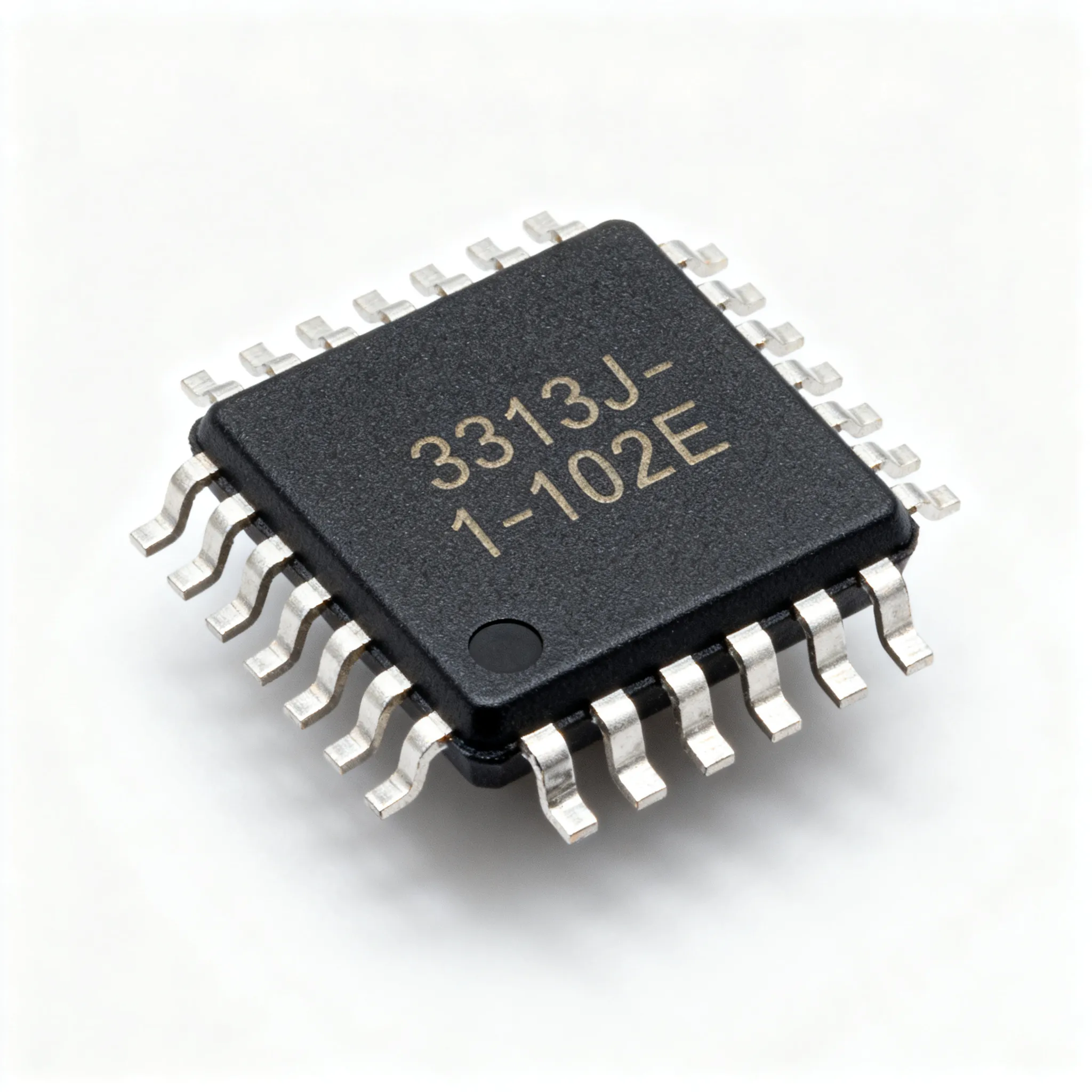
Drive BOM cost reduction and PPV control with BOM upload and structured RFQ packaging for OEM and EMS buyers
BOM and RFQ best practices for electronic component procurement. Upload your BOM or request a quote for mixed lines and flexible MOQ.
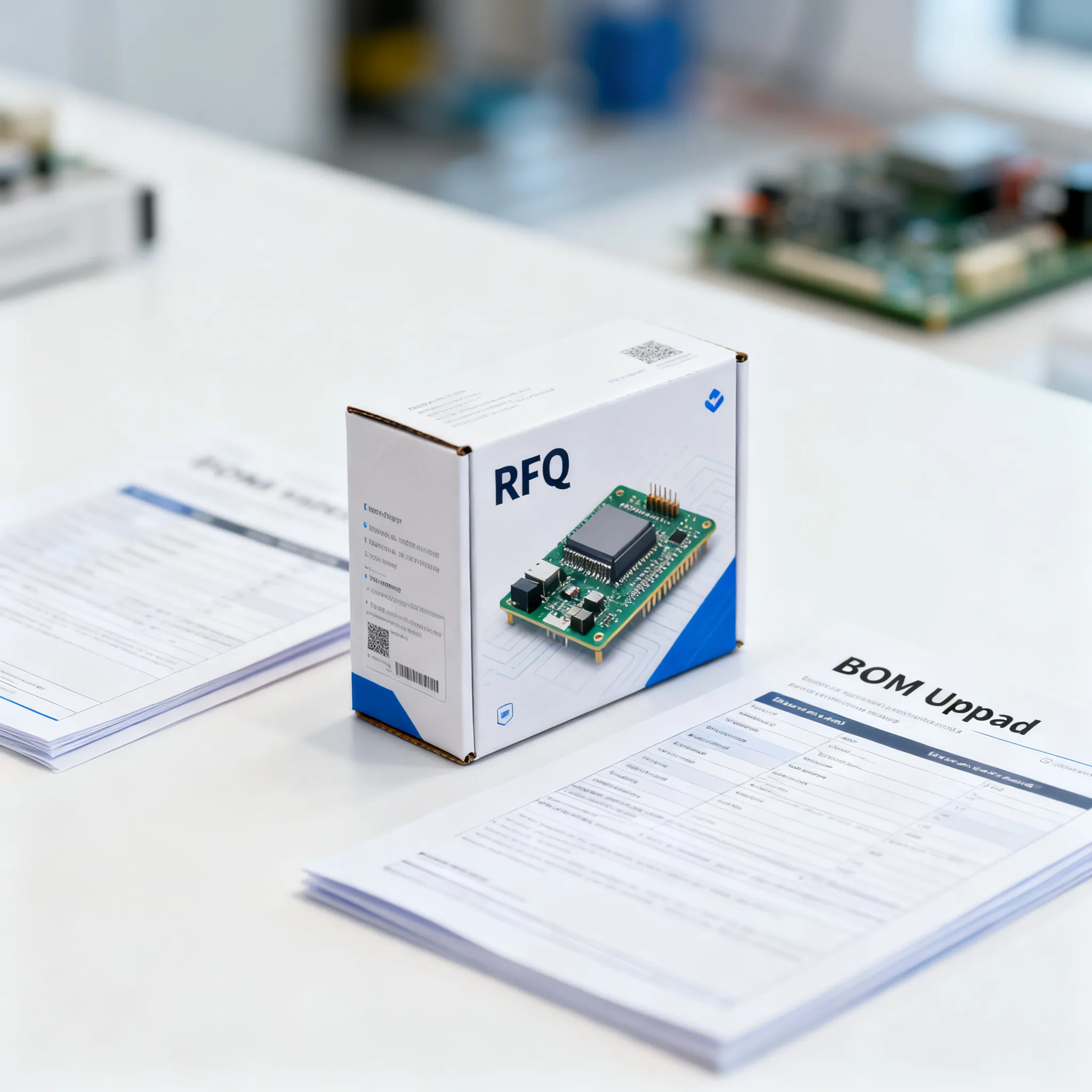
Why OEM and EMS Buyers Are Rethinking BOM Cost Control in 2025
Procurement teams today are navigating a triple squeeze that erodes margins faster than conventional spreadsheet-based sourcing can catch. First, yields are not static. Every manufacturing process discards some material to scrap, defects, or process losses, and when scrap rates are invisible inside a bill of materials, the BOM systematically underestimates real demand. A component that needs 100 good pieces may actually require 105 units when yield loss is not baked in. Without explicit yield-adjusted quantities in the RFQ, buyers face recurring shortages and phantom cost savings that blow up purchase price variance (PPV).
Second, reactive spot-buying has become a budget destroyer. When part-level lifecycle visibility is missing, engineering-approved parts quietly move to end-of-life or allocation without procurement noticing. The scramble that follows forces teams onto the open market, where poor sourcing decisions driven by EOL parts and limited visibility can inflate BOM costs by 15–25%. That premium hits PPV as a direct, unbudgeted overrun. Third, weak revision control adds a quieter but equally dangerous tax: drawing revisions that don't propagate to the MRP system lead to overstock, rework, and field defects. Accurate BOMs directly reduce assembly errors, while sloppy revision control drives costly re-order cycles and excess inventory.
These three forces—yield-blind costing, lifecycle-blind buying, and revision-drift—are why OEM and EMS buyers are moving away from ad-hoc quoting and toward digital BOM uploads paired with structured RFQ packaging. When every RFQ event begins with a cleansed, enriched, and yield-adjusted BOM, PPV becomes measurable line by line and controllable quarter by quarter.
| Driver | Mechanism | Procurement Impact |
|---|---|---|
| Unaccounted scrap and yield loss | BOM quantities ignore process scrap; material planning falls short | PPV balloons when shortages force expedited buys at premium prices |
| Lifecycle-blind sourcing | No PCN/EOL alerts; parts go NRND without procurement flagging | Spot buys on EOL parts carry 15–25% cost premium and compliance risk |
| Weak BOM revision control | Manufacturing uses outdated revisions; unapproved substitutes enter production | Rework, overstock, and quality escapes raise total acquisition cost |
| Single-attachment RFQs without context | Suppliers receive a bare part list with no alternates or target pricing | Suppliers price in ambiguity; competitive tension disappears |
| Volatile allocation windows | Capacity-constrained lines shift allocation month to month without warning | Buyers miss narrow booking windows; PPV spikes on broker market buys |
How BOM Upload and Structured RFQ Packaging Turn Spreadsheets into PPV Control Levers
A static BOM attached to a PDF email is a price-taker’s document. The supplier sees lines of part numbers and guesses at quantity fidelity, lifecycle posture, and whether alternates are permissible. In contrast, uploading that same BOM into a data-rich platform and wrapping it inside a structured RFQ transforms the conversation. Each line is enriched with lifecycle status, compliance flags, approved alternates, and a target cost grounded in recent market intelligence. The buyer stops asking “what will this cost?” and starts communicating “here is the value we expect, and here is the data to justify it.”
Purchase price variance—the gap between a standard cost and actual invoice price—becomes actionable when every line in the BOM carries its own standard. A practical BOM must hold the standard item cost so that PPV is visible at the component level, not hidden in a rolled-up total. When a structured RFQ is issued with that standard, suppliers must quote against a known baseline. Over successive cycles, the baseline tightens, and PPV variance bands shrink.
Platforms designed for component intelligence take this further. SiliconExpert BOM Manager surfaces 300+ data points per part—cross-reference information, PCN history, parametric attributes, and compliance status—so that every RFQ line is accompanied by the technical narrative a buyer needs to challenge a supplier’s price walk. Structured RFQ packaging adds yield-adjusted quantities, second-source candidates, and explicit terms for lot date codes and test reports. Together, these data layers prevent suppliers from quoting on obsolete or over-specified parts and create the competitive tension that drives cost discipline.
Tip: Before uploading, clean the BOM by deduplicating internal part numbers, flagging single-source items for alternates evaluation, and confirming manufacturer part numbers against recent datasheets. The first RFQ cycle will uncover data gaps—tolerances, dielectric types, derating requirements—that must be filled before you can run a truly structured quote event.
| Data Field | Purpose in Structured RFQ | PPV Control Lever |
|---|---|---|
| Full manufacturer MPN + manufacturer name | Eliminates ambiguity; prevents substitute pricing on obscure house numbers | Prevents price-shielding through vague cross references |
| Lifecycle status (active, NRND, EOL) | Triggers last-time-buy planning and alternate qualification before shortages | Avoids 15–25% spot-buy premiums on end-of-life parts |
| Approved alternates (1–2 per line) | Enables competitive bidding on like-for-like parts without requalification delay | Directly reduces unit cost by adding second-source tension |
| Yield-adjusted quantity (scrap factor) | Reflects real demand, not theoretical; eliminates mid-cycle shortages | Prevents off-contract spot buys that spike PPV |
| Target price / standard cost | Sets a baseline for negotiation; suppliers quote against a known reference | Converts PPV from an after-the-fact metric to a front-end control tool |
| Compliance flags (RoHS, REACH, conflict minerals) | Ensures suppliers commit to regulatory status upfront | Reduces non-compliance scrap and associated rework costs |
| Derating and environmental requirements | Prevents over-specification; suppliers can propose optimized alternatives within safe limits | Opens 3–8% savings through controlled specification adjustment |
Comparing BOM Cost Reduction Strategies: From Spec Relaxation to Supplier-Led Innovation
Structured RFQs work best when the underlying cost-reduction strategy is deliberately chosen for the BOM’s risk profile. No single approach fits every line item; a mixed-signal board with precision analog stages needs a different playbook than a digital control card built on broadly available MCUs. Four strategies consistently deliver measurable BOM cost reduction when wrapped inside a disciplined RFQ process.
Engineering specification reviews are the fastest, highest-confidence path for mature designs. Reviewing tolerances, voltage ratings, temperature ranges, and package requirements against actual circuit conditions often identifies parts that were originally specified with excessive margin. Controlled specification adjustments can unlock 3–8% savings without affecting reliability. The key is to validate derating against real operating points—ambient temperature inside the enclosure, load transients, and lifetime hours—before relaxing any parameter.
Cross-referenced alternates and part consolidation attack cost from the supply side. By adding pin-compatible or functionally equivalent alternates to the BOM and including them in the RFQ, buyers force head-to-head price competition. Consolidating BOM lines around multiple passive values into a smaller set of higher-volume buys also drives volume discounts. Cross-referencing and consolidation are proven levers for fast cost reduction, especially when lifecycle risks make the primary MPN allocation-sensitive.
Supplier-led innovation moves the conversation from price negotiation to value co-creation. When structured BOM data is shared transparently with fabricators and EMS partners, they can propose material substitutions, panelization changes, or test simplifications that lower their own cost while preserving output quality. Collaborative approaches often uncover savings that neither side would catch alone. This method works best in high-trust relationships where the buyer commits to sharing accurate demand forecasts.
Market-intelligence-driven negotiation reprices existing relationships without disruptive supplier changes. Using spot pricing data, competitive alternates, and form-fit-function equivalents as negotiation anchors, procurement can reset long-term agreement terms with incumbent suppliers. Leading procurement services use market intelligence and competitive alternatives to drive price reductions while keeping approved vendor lists intact. The structured RFQ provides the documentation that justifies the repricing internally and externally.
| Strategic Option | Effect on BOM Cost | Notes & Risk Boundaries |
|---|---|---|
| Spec relaxation (controlled derating review) | 3–8% reduction without reliability impact | Requires engineering sign-off per line; validate actual operating conditions; not suitable for safety-critical ratings |
| Alternate sourcing & part consolidation | 5–20% reduction via competitive tension and volume aggregation | Verify package, pinout, and firmware compatibility; confirm single-source risk via manufacturer documentation; avoid unverified drop-in claims |
| Supplier-led innovation (co-design, material swap) | Variable; often uncovers cost avoidance in addition to direct savings | Best with EMS or fabricators who have deep process knowledge; requires data-sharing agreements and longer lead time to validate |
| Negotiation with market intelligence anchors | 2–10% reduction on existing agreements | Maintains supplier relationship; must be backed by verifiable spot checks and FFF equivalents; avoid bluffing that damages long-term trust |
A Buyer’s Playbook for Running Structured RFQs That Actually Lower BOM Spend
Discipline in RFQ execution separates teams that report BOM cost from those that drive it. The following playbook turns quarterly quoting events into repeatable cost-reduction cycles that tighten PPV with each iteration.
- Pre-cleanse and segment the BOM. Remove duplicate lines, merge alternate MPNs into a single parent with approved substitutes, and classify every line into one of three buckets: standard (multi-source, stable), allocation-sensitive (constrained supply, long lead times), and custom (proprietary, single-source). Segmentation determines negotiation posture and acceptable PPV guardrails.
- Set yield-adjusted quantities. Work with manufacturing engineering to attach a realistic scrap factor per assembly and per component category. Feed those quantities—not the theoretical BOM count—into the RFQ. This prevents the mid-cycle shortfall that turns a planned PPV of zero into a double-digit overrun on expedited buys.
- Attach a target price to each line. Build the target from a blend of last paid, three-month moving average of spot checks, and contract pricing from comparable volumes. Suppliers must see that you have done your homework. A structured RFQ without target costs invites price anchoring on the supplier’s side.
- Validate every spec relaxation claim. Before sending a relaxed rating to a supplier, confirm that the new value holds against actual voltage, current, temperature, load profile, and derating rules. Any reduction must reflect real operating conditions, not spreadsheet assumptions. Gut-feel margin trimming creates field failures that dwarf any component cost savings.
- Mandate structured response fields. Require suppliers to return quoted price, lead time (allocation-backed), manufacturer, date code window, country of origin, and compliance status for every line. For alternates, request unit price, availability, and any qualification dependencies. This makes it impossible for suppliers to embed risk premiums in opaque line items.
- Track PPV per line over successive RFQs. Compare the quoted cost from each cycle to the landed cost from the previous period. Identify lines where PPV drifts outside a ±3% band and investigate root causes—supplier consolidation, allocation shifts, or EOL creep. Treat PPV tracking as a governance activity, not a post-mortem.
- Embed formal cost-reduction programs into the RFQ cadence. A structured program that reviews engineering options, supplier alternatives, and negotiation levers on a quarterly clock ensures that cost reduction is not a one-off exercise. Dedicated BOM cost reduction programs create the accountability loop that keeps PPV improvement alive across design refreshes and market cycles.
| Action | When to Use | Trade-off |
|---|---|---|
| Yield-adjusted RFQ quantities | Every structured RFQ cycle; begin at NPI gate | Initial effort to collect scrap rates per assembly; prevents much larger spot-buy cost when ignored |
| BoM lifecycle enrichment before quoting | Quarterly refresh; immediate for any PCN received | Requires integration with a component database; avoids EOL surprise and the 15–25% spot premium |
| Target cost anchoring in RFQ | Every repeat RFQ after baseline is established | Can strain supplier relationships if targets are unrealistic; must be data-backed and negotiable |
| Monthly PPV re-baseline in volatile markets | Automotive, industrial ICs with extended lead times; any allocation-sensitive category | Increases transactional workload; must be paired with auto-scraping price feeds to avoid manual lag |
| Supplier co-innovation workshops | Long-term relationships with EMS or custom part fabricators | Demands openness with cost structures; savings may take 2–3 cycles to realize |
BOM Cost and PPV Control: Questions Procurement Teams Ask Most
Q: What is purchase price variance (PPV) in electronics procurement, and why should buyers track it alongside BOM cost?
PPV measures the difference between a standard or target cost and the actual price paid for a component. Unlike a simple BOM cost rollup, PPV exposes line-item inflation due to spot buys, allocation premiums, or contract drift. When a BOM’s total landed cost looks flat but PPV shows a 20% spike on three high-runner ICs, margin is bleeding at a granular level. Tracking PPV over quarterly cycles reveals which part categories are eroding profit and where structured RFQs can lock in better pricing before overruns compound.
Q: How does a structured RFQ with uploaded BOM data differ from a typical email attachment, and what tangible impact does it have on PPV?
A conventional RFQ often arrives as a PDF with minimal context—no lifecycle flags, no alternates, no target costs—leading suppliers to price in risk. A structured RFQ, built from an enriched BOM upload, includes lifecycle status, approved alternates, yield-adjusted quantities, and a target price per line. This reduces back-and-forth, triggers competitive tension on like-for-like terms, and makes supplier pricing behavior transparent. Repeat quoting cycles using structured RFQs regularly improve PPV by 5–12% simply by removing the ambiguity buffers that suppliers embed when data is thin.
Q: What level of BOM detail is necessary to unlock meaningful cost reduction—just part numbers, or also lifecycle status and alternates?
Part numbers alone leave too much ambiguity. To drive real savings, the BOM in the RFQ should carry full manufacturer part numbers, lifecycle status, compliance flags, current/voltage/tolerance requirements, and at least one approved alternate where applicable. Without lifecycle data, a supplier may quote on a part that shifts to NRND six weeks later, forcing an expensive redesign. Without alternates, you surrender negotiation leverage. Enriched line items enable targeted negotiation and protect against quoting on obsolete or over-specified parts.
Q: Can BOM upload tools flag EOL and allocation risks early enough to prevent last-minute spot buys that blow PPV?
Yes, when integrated with real-time intelligence feeds. Platforms like SiliconExpert BOM Manager issue PCN-based lifecycle alerts months before last-time-buy dates, allowing buyers to qualify alternates and negotiate long-term agreements proactively. Catching an EOL notice at the BOM upload stage—rather than during a production shortage—avoids the 15–25% cost premium that panic spot buys typically carry. The key is to make lifecycle review a mandatory step before the RFQ is released to suppliers.
Q: How often should EMS partners refresh their BOM baseline to maintain PPV control in volatile markets?
For standard components in a stable market, a quarterly re-baseline and structured RFQ cycle is common. In high-volatility scenarios—such as automotive or industrial chips with extended lead times—a monthly or even fortnightly refresh, combined with automated price-scraping and dynamic target costing, keeps PPV from drifting out of control between formal sourcing events. The cadence should match the lead-time volatility of the slowest-moving allocation-sensitive component on the BOM. If you don’t know the allocation posture of your top 20 highest-spend lines every month, your PPV baseline is already stale.
Take action: Stop emailing static BOM attachments and start uploading your bill of materials into a structured RFQ platform that enriches every line with lifecycle intelligence, approved alternates, and yield-adjusted demand. At IC-Online, you can upload mixed BOMs with flexible MOQs, specify target pricing, and launch RFQs that turn PPV from a rear-view metric into a front-line procurement lever. Confirm current availability and allocation-backed lead times directly with qualified suppliers—without guesswork or inflated premiums.
References & Further Reading
- BOM Cost Analysis: Formula, Example & Cost Rollup – OpenBOM
- BOM Cost in 2025 [Calculations + How To Reduce It] – AGS Devices
- BOM and Revision Control Systems | Complete Guide – ComplianceQuest
- BOM Manager – SiliconExpert
- A Practical Guide to BOMs for Electronic Hardware – Cofactr
- How to Optimize BOM to Reduce Cost in Manufacturing – 7setronic
- BOM Cost Reduction – SVT Supply Chain Solutions
- How to Reduce Electronics BOM Cost Without Increasing Supply or Quality Risk – SILKBRIDGE
- BOM Cost Reduction Program – CPlus Electronics
- IC-Online – BOM Upload & Structured RFQ