DV75C-040.0M Obsolescence Risk Checklist: Lifecycle Verification Steps for Buyers and Engineers
DV75C-040.0M lifecycle and obsolescence risk checklist. What to verify before redesign or last-time-buy — without assuming drop-in replacements.
DV75C-040.0M Obsolescence Risk Checklist: Lifecycle Verification Steps for Buyers and Engineers
Why the DV75C-040.0M TCXO Could Be Your Next Production Bottleneck
You’ve probably seen the headlines: a record 621,909 electronic components were discontinued or declared obsolete in 2025—roughly one-third more than in 2023—according to lifecycle intelligence firm Z2Data, as reported by Dasenic’s obsolescence analysis. Even more alarming: 52% of those parts (323,286 components) were categorized as high-risk for long-lifecycle products. For a precision timing device like the DV75C-040.0M—a 40 MHz TCXO from Connor‑Winfield—an unexpected end-of-life notice can cascade into expensive redesigns, production line stoppages, and even regulatory problems. The FDA’s medical device recall database is a sobering reminder that a single obsolete component can trigger a field correction if the replacement part does not meet the original performance envelope.
Whether you’re an engineer qualifying a new BOM or a procurement buyer managing long-term supply, the DV75C-040.0M sits at the intersection of mature technology and mission-critical applications. TCXOs of this class are used in base stations, industrial automation, test equipment, and avionics—products that stay in service for a decade or more. The obsolescence mitigation practices recommended by long-life OEMs stress that lifecycle checks should be built into the initial design validation phase, not after a PCN hits your inbox. In short, you need a structured verification checklist, not just a passive glance at a distributor’s “Active” flag.
Below we walk through the core specs, compare the best methods for confirming lifecycle status, and provide a 5‑step checklist that buyers and engineers can apply immediately to the DV75C-040.0M. No guesswork, no invented stock claims—only actionable steps grounded in manufacturer documentation and industry best practices.
DV75C-040.0M at a Glance: Key Specs That Signal Lifecycle Position
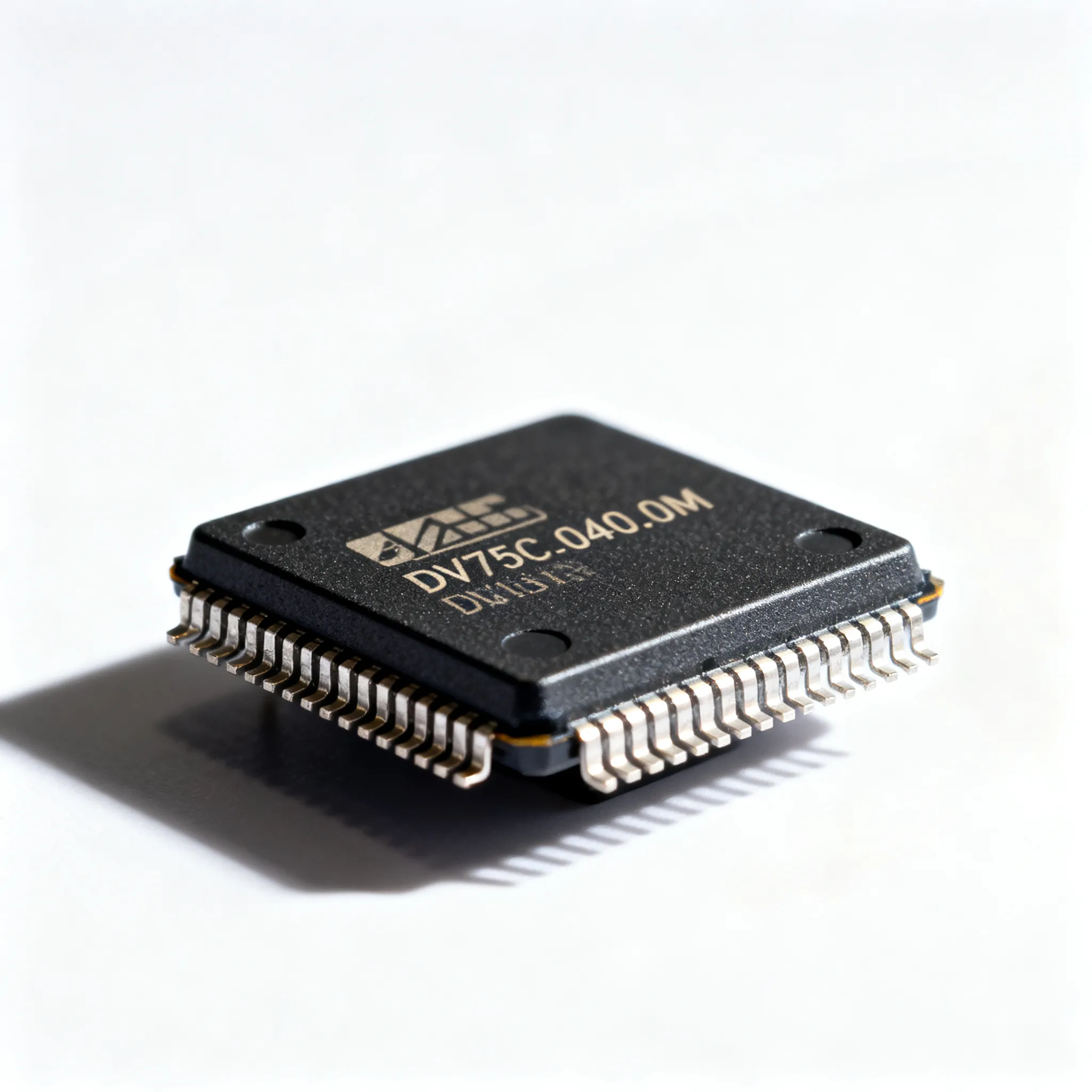
Before probing lifecycle data, you need to understand what the DV75C-040.0M actually is and how its parameters indicate maturity. The part is a temperature-compensated crystal oscillator (TCXO) delivering 40.0000 MHz with LVCMOS output, supplied by 3.3 V. The datasheet, available from Utmel and JLCPCB, reveals a stability of ±280 ppb over the full industrial temperature range of -40°C to +85°C—a performance level that has been stable and widely available for years. The package is a standard 5.0×7.0 mm SMD (4‑pad), a footprint that many alternative TCXOs also use. This maturity is a double‑edged sword: it means the part is well‑proven, but also that the manufacturer may be evaluating its long‑term viability in favor of newer, smaller packages.
What should you look for when assessing lifecycle from the datasheet? Check the last revision date and any footnotes that say “not recommended for new designs” (NRND). The DV75C-040.0M datasheet does not currently carry an NRND stamp, but that could change. A part with a long production history and a stable datasheet is likely still in the mature phase of the lifecycle, but that doesn’t eliminate the risk of a sudden EOL announcement. We’ll show you how to cross‑verify.
| Parameter | Value / Description | Unit / Notes |
|---|---|---|
| Frequency | 40.0000 | MHz |
| Output Type | LVCMOS | Single‑ended |
| Supply Voltage (VDD) | 3.3 | V ±5% |
| Frequency Stability | ±280 | ppb (peak‑to‑peak) |
| Operating Temperature Range | -40 to +85 | °C |
| Package | 5.0 × 7.0 × 1.8 mm, 4‑pad SMD | SMD7050‑4P |
| Current Consumption (Typical) | 6 | mA (15 pF load) |
| Rise/Fall Time | 5 max | ns (10%–90%) |
| Aging (First Year) | ±1 | ppm |
| Phase Noise (10 kHz offset) | −140 typical | dBc/Hz (approximate; verify with latest datasheet) |
| Moisture Sensitivity Level (MSL) | 1 | Unlimited floor life |
Tip: When you download the datasheet from an authorized source like DigiKey or Octopart, note the document revision date and compare it with the manufacturer’s website. A datasheet that hasn’t been updated in several years is typical for a mature TCXO, but it also means the manufacturer may not be actively investing in the platform. That’s a signal to start tracking PCN history.
Lifecycle Verification Methods: Distributor Data vs. Manufacturer Alerts vs. PCN Databases
Engineers and buyers often rely on a single source—usually a distributor’s part status flag—to decide if the DV75C-040.0M is safe to use. That’s a gamble. We’ve seen cases where an “Active” label persists for weeks after a manufacturer issues an EOL notice, and other times a “Not Recommended for New Design” tag appears on a distributor site without a formal PCN. To make an informed decision, you need to triangulate at least three independent verification paths. The table below compares the most reliable methods.
| Method | What It Reveals About DV75C-040.0M | Alerting & PCN Coverage | Limitations | Best For |
|---|---|---|---|---|
| Distributor Portals (e.g., DigiKey, Octopart, Chips Find) | Active/Obsolete status, on‑hand quantity (if available), pricing, and basic datasheet links. | Typically no direct PCN feed; status updates may lag behind manufacturer announcements. | Status flags can be inconsistent across platforms; do not provide the reason for a change or the last‑time‑buy window. | Quick sanity check and price comparison; always cross‑reference with manufacturer. |
| Manufacturer PCN / EOL Page (Connor‑Winfield official site) | Authoritative lifecycle status, formal PCN documents, last‑time‑buy dates, and recommended replacement parts. | Direct alert subscription (if offered) and the most current EOL list. | Not all manufacturers publish a continuously updated PCN log; some require a registered account. | Final authority on lifecycle; mandatory for regulated industries. |
| Lifecycle Management Platforms (e.g., Luminovo) | Aggregated lifecycle data from multiple PCN feeds, risk scores, and multi‑source alerts. | Automated monitoring across many manufacturers; can flag changes before they appear on distributor sites. | Coverage depends on the platform’s data partnerships; may not include every niche component. | High‑volume BOMs and long‑lifecycle products that need proactive risk management. |
Our recommendation: start with the manufacturer’s official PCN page, then cross‑check distributor status on at least two platforms. If the DV75C-040.0M is critical to your production, consider subscribing to a lifecycle management service that can alert you to changes before they trickle down to distributor catalogs. According to Luminovo’s obsolescence management guide, the most damaging EOL surprises happen when teams rely solely on distributor inventory signals. Verify, don’t assume.
A Practical 5‑Step Checklist for Verifying DV75C-040.0M Obsolescence Risk
Now that you have the context and the comparison, here is a concrete workflow you can execute today. Every step is designed to close a specific gap that often leads to last‑minute panic buys or costly redesigns. The table below summarises the checklist; we then expand each step with the “why” and the “how.”
| Step | Action | Tools / Sources | Responsible Party | Expected Outcome |
|---|---|---|---|---|
| 1 | Check Connor‑Winfield’s official PCN/EOL list | Manufacturer website, direct inquiry | Component Engineer | Confirm current lifecycle status, any pending PCN |
| 2 | Cross‑reference lifecycle status on distributor portals | DigiKey, Mouser, Octopart, Chips Find | Procurement / Buyer | Identify discrepancies in active/obsolete flags |
| 3 | Scrutinize the datasheet for revision date and NRND notes | Latest datasheet from Connor‑Winfield or authorized disti | Design Engineer | Detect maturity signals (no revision in years, potential NRND) |
| 4 | Assess BOM exposure and implement protection agreements | Internal BOM, contract manufacturer, obsolescence mitigation practices | Procurement & Engineering | BOM‑lock and PCN requirements in place for long‑lifecycle builds |
| 5 | Identify pin‑compatible alternatives and evaluate second‑source readiness | Octopart cross‑reference, manufacturer parametric search | Component Engineer | Shortlist of candidates that match package, frequency, stability, and temp range |
Step 1: Manufacturer PCN Check
Go straight to the source. Visit Connor‑Winfield’s website and look for a “Product Change Notifications” or “EOL” section. If nothing is publicly listed, send a direct inquiry to their technical support or your franchised distributor. Ask specifically: “Is the DV75C-040.0M scheduled for phase‑out or under an NRND advisory?” In regulated industries, document this communication for audit trails.
Step 2: Distributor Cross‑Reference
Open the product pages for DV75C-040.0M on at least two distribution platforms, such as DigiKey and Octopart. Look for the lifecycle status field. As of early 2026, multiple distributors show the part as “Active,” but a single “Obsolete” marker on one platform should trigger an immediate investigation. Additionally, check the part’s availability pattern: if stock is declining and no new shipments are scheduled, treat the supply as allocation‑sensitive and verify with the distributor.
Step 3: Datasheet Forensics
Download the latest datasheet from an authorized source. Examine the document control section: the revision date and version number. A datasheet last revised in 2019, for example, is not automatically a red flag for a mature TCXO, but it does mean the manufacturer hasn’t updated parameters or footnotes. Look for any small‑print statements like “Not recommended for new designs” or “Contact factory for availability.” If you find such notes, stop new design‑ins immediately and proceed to Step 4.
Step 4: BOM Exposure and Protection Agreements
Map every product that uses the DV75C-040.0M. Determine the annual usage and the projected lifespan of the end product. As recommended by the LCD module replacement guide, establishing BOM‑lock controls and clear PCN requirements before mass production starts is cheaper than an emergency redesign. Negotiate a BOM‑lock agreement with your contract manufacturer that specifies minimum notification periods for any component change. If the TCXO is sole‑sourced, arrange a last‑time‑buy clause in your contract.
Step 5: Second‑Source Qualification
Even if the DV75C-040.0M is still active, you need a verified alternative. Several TCXOs in the 5.0×7.0 mm SMD package with LVCMOS output and 3.3 V supply exist. Evaluate candidates such as the TXC 7W series, SiTime SiT5356, or Abracon ASDDV series, but you must verify pinout, frequency stability (±280 ppb or better), temperature range, and phase noise performance in your specific circuit. Never assume a drop‑in replacement; always perform a full functional validation. Use the parametric search on Octopart to find similar parts and request samples for bench testing. For high‑reliability applications, confirm that the alternative TCXO meets the same aging and phase noise requirements.
FAQs from Engineers and Buyers Sourcing the DV75C-040.0M
Q: Is the DV75C-040.0M currently active, and how reliable are distributor lifecycle indicators?
As of early 2026, multiple authorized distributors show the DV75C-040.0M as Active. However, distributor statuses can lag behind manufacturer announcements. A “Not Recommended for New Design” or “EOL” notice may first appear on Connor‑Winfield’s official PCN page. Always verify with the manufacturer before finalizing a design‑in or large procurement.
Q: What should I do if I receive a product change notification (PCN) for this oscillator?
Assess the change type first. If the PCN details a minor dimension or specification tweak, evaluate the impact on your circuit’s timing margin and signal integrity. If it is an EOL announcement, immediately initiate BOM‑lock negotiations with your supplier, secure last‑time‑buy quantities, and activate your second‑source qualification plan. Do not wait for the last‑time‑buy date to approach; lead times may stretch unpredictably.
Q: Are there direct pin‑compatible alternatives to the DV75C-040.0M if it goes obsolete?
Several TCXOs in the 5.0×7.0 mm SMD package with LVCMOS output and 3.3 V supply exist. Key candidates must match the 40 MHz frequency, stability of ±280 ppb or better, and the -40°C to +85°C industrial temperature range. During evaluation, pay close attention to phase noise, start‑up time, and output drive strength. Always validate the candidate in your system—never rely on a datasheet comparison alone. Verify single‑source risk in manufacturer documentation.
Q: How can I verify the authenticity of DV75C-040.0M parts sourced from non‑franchised distributors?
Ask for date codes, lot traceability, and packaging details, and compare them against Connor‑Winfield’s authorized distribution list. Use third‑party testing (e.g., decapsulation, X‑ray, or electrical testing) if you suspect counterfeits. Counterfeit TCXOs can exhibit frequency drift, poor stability, and premature aging, leading to field failures in communication or timing‑critical systems. The safest path is to source only through franchised distributors or directly from the manufacturer.
Q: What lead time should I expect for volume orders of the DV75C-040.0M?
Lead times vary depending on factory loading and global supply. Confirm allocation‑backed delivery schedules with your franchised distributor before design freeze. For high‑volume production, negotiate buffer stock or blanket orders to guard against schedule slippage. Do not rely on generic lead‑time estimates; always request a committed delivery date in writing.
References & Further Reading
- Component Obsolescence: Lifecycle & EOL Management Guide | Luminovo
- Obsolete Components in 2026: EOL Notices & Shortage Data | Dasenic (citing Z2Data record)
- LCD Module Discontinued? OEM Replacement Guide (obsolescence mitigation practices)
- Medical Device Recalls, Corrections and Removals | FDA
- DV75C-040.0M Datasheet PDF | Utmel
- DV75C-040.0M Specifications | JLCPCB
- DV75C-040.0M at DigiKey
- DV75C-040.0M on Octopart
- DV75C-040.0M at Chips Find
Keeping your production line safe from an unexpected DV75C-040.0M obsolescence event requires a disciplined verification routine, not a one‑time check. By combining the manufacturer’s official PCN page, distributor cross‑checks, and a structured BOM‑lock strategy, you can eliminate the guesswork that catches so many teams off guard. The five‑step checklist above gives you a repeatable, auditable process that works for any mature TCXO in your design.
Ready to secure your supply? Request a quote for the DV75C-040.0M or upload your full bill of materials on IC-Online for mixed‑BOM sourcing and flexible MOQs. Our team will help you confirm allocation, verify lead times, and identify alternative parts—all without the risk of fabricated stock claims.