

EVM2NSX80B23 lifecycle and obsolescence risk checklist for engineering and procurement teams
EVM2NSX80B23 lifecycle and obsolescence risk checklist. What to verify before redesign or last-time-buy — without assuming drop-in replacements.
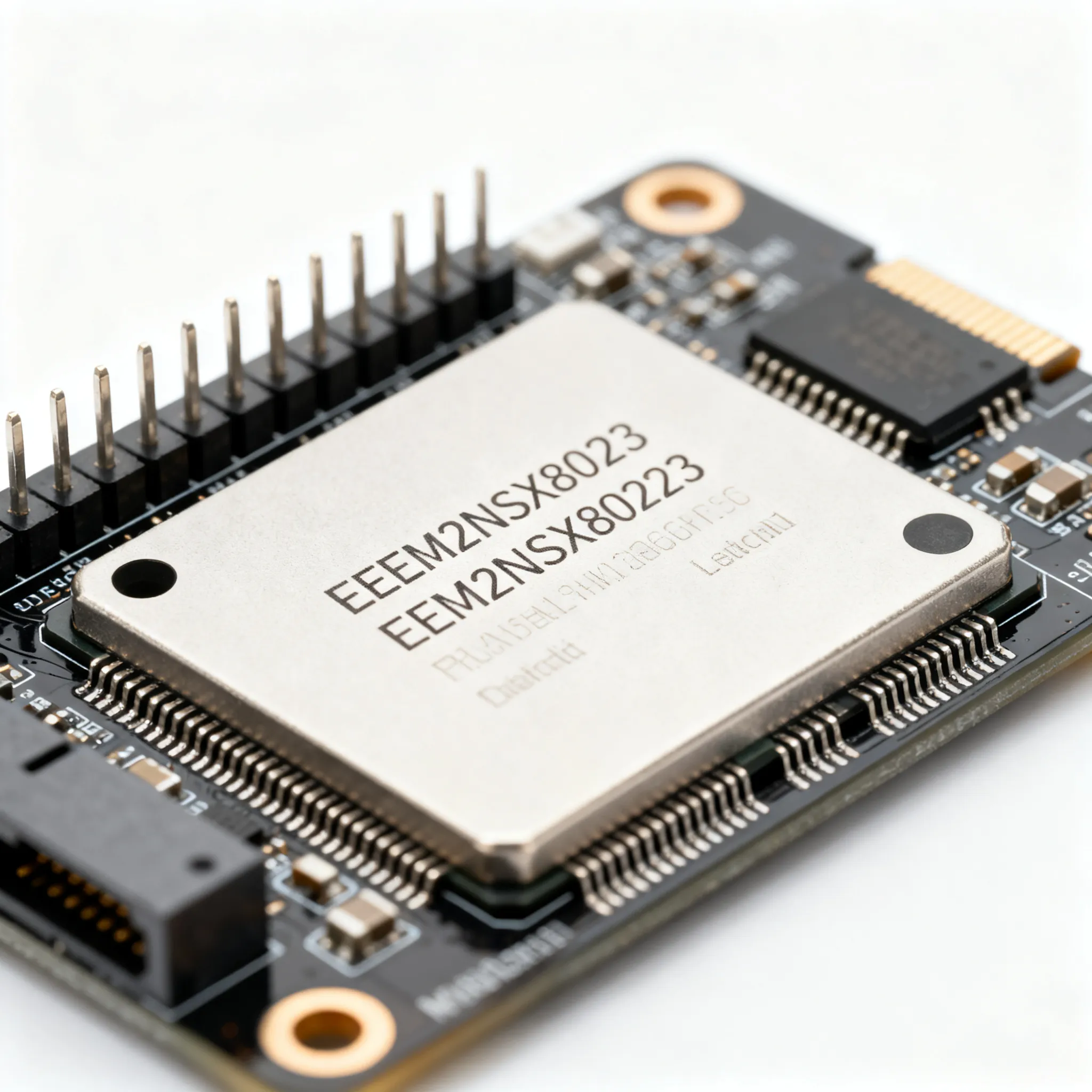
Why a Tiny Trimmer Potentiometer Can Shut Down Your Production Line
When a BOM line as innocuous as a 2 mm square SMD trimmer like the EVM2NSX80B23 suddenly shifts from “available” to “end-of-life,” production planners, component engineers, and procurement buyers face an invisible tripwire. Trimmer potentiometers are often treated as low-cost, high-availability passives—until a single PCN changes everything.
As one engineering manager who relies on up-to-date lifecycle data put it: “If it weren’t for SiliconExpert’s tools, we would still be living in the stone age.” (SiliconExpert). That sentiment captures the true cost of stale component intelligence: a tiny adjustment part can halt a long-life industrial product, a medical instrument, or a calibrated sensor interface if its lifecycle status blindsides the team.
Every electronic component follows a predictable six-stage lifecycle—introduction, growth, maturity, decline, phase-out, and obsolescence (Luminovo lifecycle guide). The EVM2NSX80B23 is no exception. While a 2 mm SMD trimmer may feel like a “commodity,” its design-in footprint, side-adjust orientation, and resistance value are often tightly coupled to an existing PCB layout and calibration routine. Re-qualifying a substitute after a surprise EOL notice injects schedule risk, added validation cost, and potential supply gaps that no buying team wants to navigate under pressure.
The following checklist framework equips engineering and procurement teams to manage obsolescence risk for the EVM2NSX80B23 proactively—before a last-minute scramble. It draws on industry-leading practices from SiliconExpert, Luminovo, Utmel, and the EN IEC 62402:2019 obsolescence management standard, all mapped directly to this specific trimmer part number.
Decoding the EVM2NSX80B23 Lifecycle Curve: From Introduction to Phase-Out
Understanding where the EVM2NSX80B23 sits on the lifecycle curve is the first step in risk mitigation. Panasonic’s EVM2N series of 2 mm open-frame/side-adjust trimmers has been in production for many years, and depending on the specific resistance value and packaging variant, the part may already be in the maturity or early decline stage. The exact position is never assumed—it must be verified via manufacturer PCNs and real-time lifecycle management tools (SiliconExpert).
The six-stage lifecycle defined by Luminovo (Luminovo) maps directly to commodity passives as follows:
| Lifecycle Stage | Typical Supplier Notice | Inventory & Lead Time | Risk Level for EVM2NSX80B23 |
|---|---|---|---|
| Introduction | New product announcement, limited distribution | Low initial stock; lead time may be extended as production ramps | Medium (unproven long-term availability) |
| Growth | Broadening authorized distributor network | Increasing stock, stable lead times | Low to Medium |
| Maturity | No change notices; stable pricing | High availability, predictable lead times | Low—but watch for creeping decline indicators |
| Decline | Spotted reduction in SKU variants; some values NRND | Inventory pocketing begins; lead times may extend | Elevated; start alternates evaluation |
| Phase-Out | PCN/PDN issued; last-time-buy window opens | Limited availability; authorized stock depleting | High; immediate LTB required |
| Obsolescence | No further manufacturing; support limited to NOS inventory | Only aftermarket or surplus channels | Critical; redesign or approved substitute mandatory |
Tip: The EVM2NSX80B23 might exhibit a long maturity phase due to its wide use in industrial and instrumentation markets, but the window from decline to phase-out can close faster than many teams expect. As the IC Online EOL guide explains, proactive monitoring of the lifecycle curve is essential even for passives—the difference between a controlled last-time-buy and a full production stop is often only a few weeks.
Key Drivers of Obsolescence Risk for Commodity Trimmers
While semiconductor obsolescence grabs headlines, SMD trimmers like the EVM2NSX80B23 are quietly exposed to several forces that accelerate their progression toward EOL. The table below captures the most critical drivers that engineering and procurement should factor into their risk registers.
| Driver | Mechanism | Procurement Impact |
|---|---|---|
| Shrinking demand for manual trim | Digital calibration via MCU DACs and digipots replacing manual trimmers | Manufacturers reduce trimmer variant portfolio; the specific resistance and orientation of EVM2NSX80B23 may be rationalized out of production |
| Manufacturer consolidation | Mergers and fab closures in passive component suppliers | Single-source dependency intensifies; no second-source factory for the exact 2 mm side-adjust footprint |
| Material compliance updates | RoHS recasts or REACH substance restrictions forcing termination or housing changes | Legacy part numbers may be discontinued without a direct replacement; new version might have dimensional differences |
| Automotive & industrial certification shifts | Tier‑1 customers push for AEC‑Q200 or extended temperature ratings | Standard commercial-trump parts lose priority in capacity allocation; non-automotive variants like EVM2NSX80B23 face earlier phase-out |
| Inventory rationalization by distributors | Franchised distributors prune slow-moving SKUs to improve working capital | Buffer stock at authorized channels evaporates; procurement must shift to allocation-sensitive sourcing |
| Geopolitical and trade restrictions | Export controls or tariffs on passive components from specific regions | Lead time uncertainty increases; buyers must confirm allocation-backed lead time with supplier |
Each driver can shorten the runway between maturity and phase-out. Treating the EVM2NSX80B23 as a “set-and-forget” BOM line is no longer sufficient. Component engineers should embed these drivers into the periodic review cycle defined by EN IEC 62402:2019 (obsolescence management standard).
Alternative SMD Trimmers and Through-Hole Substitutes: When EVM2NSX80B23 Isn’t Viable
When the EVM2NSX80B23 advances to decline or phase-out, the immediate next step is evaluating form-fit-function (FFF) candidates. Because a 2 mm side-adjust SMD trimmer is often designed into a tightly packed PCB, any substitute must match not only the electrical parameters but also the mechanical package, adjustment orientation, and even torsional life. The following comparison places the primary part alongside two SMD alternatives and one through-hole option that may serve as a redesign path.
| Comparison Metric | EVM2NSX80B23 (Panasonic EVM2N) | Bourns 3214W (4 mm SMD) | Murata PVG3A (3 mm SMD) | Selection Criteria & Failure Boundary |
|---|---|---|---|---|
| Package footprint | 2.1 × 2.7 mm, side-adjust | 4.5 × 4.5 mm, top-adjust | 3.1 × 3.6 mm, top-adjust | Maintain board layout; a larger footprint may require a PCB re-spin. Verify clearance for adjustment tool access. |
| Resistance range | 10 Ω to 1 MΩ (datasheet-dependent; confirm exact resistance code) | 10 Ω to 2 MΩ | 100 Ω to 1 MΩ | Resistance value must match calibration range. Off-the-shelf nearest standard value may need qualification. |
| Power rating (70 °C) | 0.15 W | 0.25 W | 0.1 W | Power derating curve must accommodate actual operating temperature; a lower rating in a hot enclosure can cause drift. |
| Rotational life | 20 cycles (typical for EVM2N open-frame) | 200 cycles | 50 cycles | High cycle counts in production calibration or field adjustment demand a higher endurance part. |
| Typical lifecycle status | Mature/Decline (verify via PCN) | Active, widely multi-sourced | Active for selected values; some EOL notices possible | Use SiliconExpert or Luminovo to pull real-time lifecycle data for the specific resistance value and package code. |
| Availability & sourcing | Allocation-sensitive; confirm current availability via RFQ | Broad authorized distribution, low single-source risk | Strong Japanese supply chain; confirm allocation-backed lead time | Multi-source tools help, but final verification requires datasheet cross-checking per Mouser’s resource guide (Mouser purchasing resource). |
Important: None of the listed alternatives should be assumed to be a “drop-in” replacement without verification. Footprint, pinout, adjustment axis, and even the rotor material can affect long-term stability. A formal FFF qualification process—including a small pre-production run and thermal cycling—remains the safest path, exactly as advocated in the Utmel proactive playbook.
Through-hole substitutes such as the Bourns 3296W series (multi-turn) may be considered if the product can accept a through-hole layout change, but that introduces a major redesign and may not be practical for space-constrained designs. Multi-sourcing tools like SiliconExpert (manage obsolescence risk) can surface additional candidates across distributors worldwide, but their lifecycle data must be paired with physical validation.
A 5-Step Obsolescence Risk Checklist for EVM2NSX80B23 and Similar Commodity Passives
The following checklist translates the lifecycle framework and market drivers into an actionable, auditable process that integrates seamlessly with engineering change orders and procurement planning. Each step is cross-referenced to the authoritative sources that underpin it.
- Verify current lifecycle status via PCN/PDN and independent tools. Log into the manufacturer’s portal to retrieve any product change or discontinuation notices for EVM2NSX80B23. Cross-check with a dedicated obsolescence management platform such as SiliconExpert or Luminovo, which aggregate PCNs and provide a real-time lifecycle stage alongside multi-source inventory and environmental compliance data. Stale data leads to false confidence; schedule this check at least quarterly for long-life programs.
- Map authorized inventory depth and allocation sensitivity. Do not assume stock at one distributor reflects global availability. Use distributor APIs or an aggregator to view the number of franchised sources and their current stock posture. Treat supply as allocation-sensitive; confirm with distributor that stock is genuine, traceable, and not from unauthorized open market channels.
- Plan and execute a Last-Time-Buy (LTB) with scientific storage standards. If the lifecycle review places the part in decline or phase-out, calculate the total required units based on the product’s remaining forecast plus an agreed safety buffer. Follow the storage recommendations from the Utmel proactive playbook (LTB and storage): keep trimmers in moisture-barrier packaging, maintain temperature between 5–35 °C, and control relative humidity. For large LTB volumes, add periodic solderability testing per J-STD-002 to ensure long-term usability.
- Pre-qualify at least two form-fit-function alternates. Using the comparison table above and tools like SiliconExpert’s cross-reference engine, select candidate parts that match footprint, electrical range, and mechanical life. Order samples early, run board-fit trials, and validate performance over temperature. Document the qualification results in a clear swap-in procedure so that engineering and procurement are aligned well before the cut-over date.
- Embed a continuous monitoring loop aligned with EN IEC 62402:2019. Integrate the EVM2NSX80B23 into an obsolescence risk register that assigns a severity score based on single-source status, remaining life, and product impact. The EN IEC 62402 framework (EN IEC 62402:2019) provides a structured process for reassessment. Set automated alerts for any change in manufacturer status, and review the register during each design review and procurement audit.
To make the timeline tangible for procurement planning, the following mitigation table connects each key action to the appropriate lifecycle phase and the trade-offs involved.
| Mitigation Action | When to Use | Trade-off / Consideration |
|---|---|---|
| Lifecycle monitoring with automated alerts | Immediately, for any active BOM using EVM2NSX80B23 | Requires tool subscription; pays back by preventing unforeseen stoppages |
| Multi-source inventory check and non-cancellable orders | When part is in maturity but demand is projected long-term | Non-cancellable orders lock in price but can tie up working capital if product forecast drops |
| Last-Time-Buy execution | As soon as PCN confirms phase-out or when decline stage is detected by risk register | Requires upfront investment; storage conditions and testing add cost but preserve production continuity |
| Alternate part qualification & board validation | During decline stage, before LTB window closes | Engineering hours and potential PCB respin if footprint differs; early qualification prevents panic buys |
| Redesign with digital replacement | When lifetime demand cannot be met by LTB or alternates | High NRE cost and software rework; viable if product is high-value and long-life (medical, aerospace) |
This checklist and timeline arm cross-functional teams with a concrete, enforceable plan that removes guesswork and keeps the EVM2NSX80B23 from becoming a production line blocker.
EVM2NSX80B23 Obsolescence and Sourcing: Questions Engineering and Procurement Ask
Q: How can I reliably check the current lifecycle status of the EVM2NSX80B23?
A: Start with the official Panasonic PCN/PDN notices for the EVM2N series. Then augment that with an obsolescence management tool such as SiliconExpert or Luminovo, which pulls real-time lifecycle stage, multi-source inventory depth, and environmental compliance data. These platforms will flag if the specific resistance code of your EVM2NSX80B23 is moving toward NRND or EOL. Do not rely solely on a single distributor’s website status.
Q: Is there a true evaluation candidate (verify before adopting) for the EVM2NSX80B23 if it goes obsolete?
A: No trimmer should be accepted as “drop-in” without validation. The Bourns 3214W and Murata PVG3A SMD trimmers, along with other Panasonic EVM series variants, may meet the electrical requirements, but their footprint, adjustment axis, rotational life, and sealed-versus-open-frame construction differ. A formal form-fit-function qualification, including fit-check on an actual PCB and electrical testing over temperature, is essential. The IC Online EOL guide emphasizes that pre-qualifying alternates while the primary part is still active is the most cost-effective strategy.
Q: What is the recommended storage condition for Last-Time-Buy units of these trimmers?
A: Store LTB inventory in moisture-barrier packaging with a desiccant pack and humidity indicator card. Maintain temperature between 5 °C and 35 °C, and keep relative humidity below 60% (preferably under 25% for long-term storage). For multi-year LTB buffer, schedule solderability testing at regular intervals (e.g., every 24 months) per J-STD-002 to verify that terminations remain wettable. These practices align with the guidance in the Utmel proactive playbook on scientific LTB storage.
Q: How does EN IEC 62402 apply to a simple passive component like a trimmer?
A: EN IEC 62402:2019 provides a process framework for obsolescence management that is technology-agnostic—it covers every line item in a BOM. For the EVM2NSX80B23, the standard guides you to assess obsolescence risk based on factors such as sole-source dependence, remaining manufacturing lifespan, and the consequence of a supply gap. Even a commodity passive can be recorded in the risk register with a severity score, triggering predefined actions when its lifecycle stage changes. This structured approach prevents the “it’s just a passive” blind spot that has tripped up many maintenance-intensive industries.
Q: Should we stock EVM2NSX80B23 inventory now, or wait for a PCN?
A: If your product has a production life exceeding 5 years and the EVM2NSX80B23 is already in the mature stage, conducting a risk assessment now—including a last-time-buy analysis—is prudent. Waiting for the official discontinuation notice places you in a reactive position where remaining stock at authorized channels is limited and prices can rise sharply. A proactive stance, guided by the checklist in this article, converts a potential crisis into a controlled, budgeted transition.
Who Is Affected by EVM2NSX80B23 Obsolescence Risk
While any design that uses the EVM2NSX80B23 is technically exposed, the severity of impact varies dramatically by industry sector and product lifecycle strategy. The following table segments the affected stakeholders, enabling procurement teams to prioritize mitigation efforts according to business impact.
| Segment / Stakeholder | Effect of Unexpected EOL | Notes |
|---|---|---|
| Industrial automation OEMs (PLC I/O, sensor transmitters) | Production line stoppage; requalification of a trimmer may require agency recertification (UL, ATEX) | Products typically have 10–15 year life; LTB and FFF alternates are critical |
| Medical device manufacturers | Regulatory re-submission if component change triggers a design review; patient safety risk if calibration drifts | Extremely high cost of redesign; proactive risk register compliance with EN IEC 62402 is often mandated by quality systems |
| Test & measurement instrument builders | Calibration standard deviation; field serviceability declines if substitute part alters adjustment behavior | Pre-qualifying an alternate with identical rotational feel and stability is especially important |
| EMS providers and contract manufacturers | Line-down situation when BOM part becomes unavailable mid-run; cost of rework and customer dissatisfaction | Must coordinate with end-customer engineering team on alternative acceptance |
| Buyers and procurement managers | Scrambling for open-market stock; increased counterfeit risk and inflated pricing | Use authorized channels and require full traceability documentation; avoid non-franchised surplus without testing |
The common thread across all segments is that reactive sourcing after a phase-out notice turns a manageable risk into an expensive emergency. Embedding the EVM2NSX80B23 into a formal obsolescence management system elevates the discussion from tactical purchasing to product lifecycle management.
References & Further Reading
- SiliconExpert – Manage Obsolescence Risk: Proactive identification of lifecycle status, multi-source inventory, and compliance data for components including trimmers like the EVM2NSX80B23.
- Luminovo – Component Obsolescence: Lifecycle & EOL Management Guide: Detailed six-stage lifecycle definitions and risk management practices.
- IC Online – End-of-Life Integrated Circuits: What OEM Buyers and Component Engineers Need to Know: Lifecycle curve principles and multidisciplinary EOL management strategies applicable to passives.
- Utmel – The Proactive Playbook for EOL Component Sourcing: LTB execution with scientific storage, pre-qualification of alternates, and risk register creation.
- EN IEC 62402:2019 – Obsolescence Management Standard: Process framework for assessing, monitoring, and resolving obsolescence risk across the full BOM.
- Mouser – Getting Ahead of Component Obsolescence: Importance of datasheet verification, lead time intelligence, and automation tools for informed sourcing.
Related Articles
 Blog
BlogExcess Inventory: How Component Engineers Can Turn Surplus into Supply Chain Resilience
Practical guide for buyers and engineers: Excess Inventory: How Component Engineers Can Turn Surplus into Supply Chain Resilience. Sourcing, risk, and selection notes.
 Blog
BlogHow VSC Works in Modern Cars and Why It Matters
What is VSC on a car? VSC (Vehicle Stability Control) is an electronic system that brakes individual wheels and cuts engine power to maintain traction. The VSC light indicates active intervention or a fault.
 Blog
BlogUnderstanding CR2025 Equivalent Batteries and Their Industry Uses
A CR2025 equivalent includes DL2025, ECR2025, and L2025. These 3V lithium coin cells are interchangeable, matching in voltage, chemistry, and size.
 Blog
BlogMBR30150CT Supply Risk Assessment: What to Ask Before You Buy
Assess MBR30150CT sourcing risks before you buy. RFQ questions on traceability, date codes, testing, alternatives, and supply continuity for procurement teams.
 Blog
BlogUnderstanding How Graphics Cards Work in Ordinary Electronics
A definition graphics card explains how this hardware turns data into images for your screen. It's crucial for video calls, streaming, and light gaming on daily devices.
 Blog
BlogSell Excess Electronic Components: Turn OEM Inventory into Revenue
Practical guide for buyers and engineers: Sell Excess Electronic Components: Turn OEM Inventory into Revenue. Sourcing, risk, and selection notes.