Flexible MOQ and Mixed BOM Sourcing for NPI: Upload Your BOM for an RFQ
BOM and RFQ best practices for electronic component procurement. Upload your BOM or request a quote for mixed lines and flexible MOQ.
Why Minimum Order Quantities Break NPI Budgets—and How Flexible MOQ Changes the Game
Every engineer who has taken a design from breadboard to first production run knows the moment: you need 75 pieces of a specialty analog front-end IC, but the distributor's line card shows a minimum order quantity of 2,500 units. The math is brutal. At $4.80 per chip, that's $12,000 tied up in a single line item—for a build that may only need 50 evaluation units. Multiply that scenario across a 120-line bill of materials and the working capital drag can stall an NPI before the first solder paste hits the stencil.
This is the structural friction that standard MOQs impose on new product introduction. Semiconductor manufacturers and large franchised distributors optimize their logistics for production-volume orders. Their packaging lines, reel configurations, and pick-and-place workflows assume thousands of placements, not dozens. When an NPI buyer requests small quantities, the system often cannot absorb the break-bulk cost without a punitive premium—or simply returns "no quote."
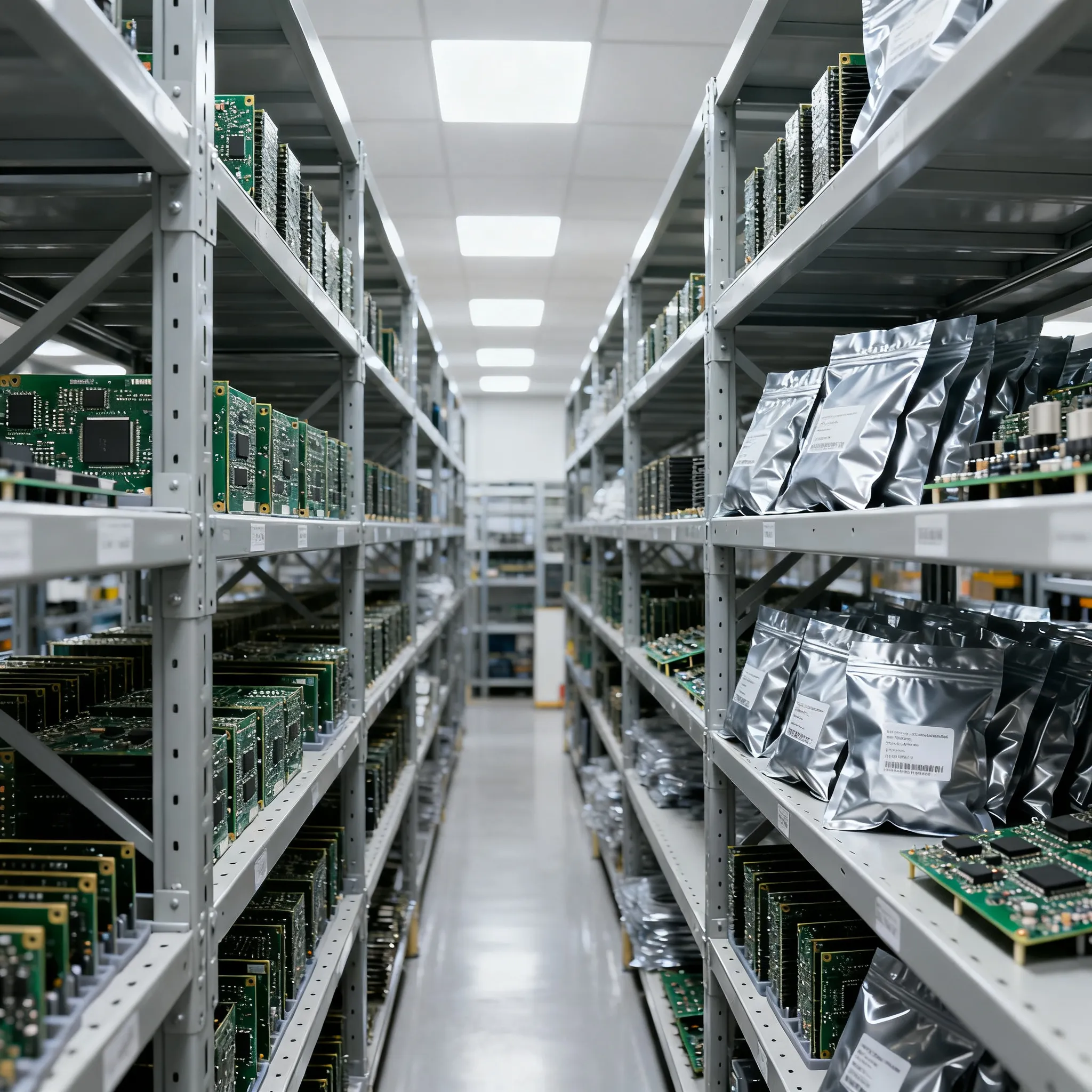
Flexible MOQ reframes the problem. Rather than forcing every line item to meet the original manufacturer's minimum, a flexible sourcing partner aggregates demand across multiple clients, absorbs the small-quantity premium on their own balance sheet, and delivers the exact quantities your build requires. In practice, this can mean protocols as low as 50–200 units for initial validation runs, backed by modular tooling that avoids the NRE penalty of dedicated production fixturing. Yuanhui's flexible MOQ protocol for lighting startups, for instance, uses mix-model assembly to iterate product variants while maintaining AQL 0.40 inspection standards—a model that translates directly to electronics NPI when the sourcing partner understands both PCB assembly and component-level procurement.
The Alibaba supplier guide reinforces a central tension buyers must navigate: direct manufacturer channels enforce MOQs but guarantee authenticity and full datasheet compliance. The challenge for NPI teams is capturing that authenticity guarantee without swallowing the inventory risk that full-MOQ purchasing imposes. Flexible MOQ sourcing, when executed through a partner with direct manufacturer relationships, splits the difference: the partner shoulders the MOQ commitment and breaks bulk for NPI clients, preserving traceability without the balance-sheet hit.
The cash-flow arithmetic is straightforward. An NPI build of 100 units with a BOM containing 15 constrained line items at standard MOQs can easily require $40,000–$80,000 in component inventory, of which perhaps $8,000 worth actually ends up on assembled boards. The rest sits on a shelf, aging, consuming working capital that could fund the next design iteration. Flexible MOQ eliminates that shelf inventory. The per-unit component cost rises—expect 20–40% above volume pricing—but the total cash outlay drops by 60–70% because you buy only what you consume. For a startup or an internal innovation team operating on stage-gate funding, that difference determines whether the project reaches its next milestone.
What Actually Happens When You Upload a Mixed BOM for an RFQ
Uploading a multi-category BOM to a flexible sourcing platform triggers a workflow that differs materially from the traditional one-part-number-one-PO model. Your BOM likely spans semiconductor ICs, passive components, connectors, electromechanical parts, and possibly custom mechanicals or cable assemblies. Each category carries its own supply-chain dynamics, MOQ norms, and lead-time behavior. A capable flexible sourcing partner ingests this heterogeneous list and returns a consolidated quote that normalizes the MOQ imbalance across part types.
The process typically unfolds in four stages. First, the partner parses the BOM into procurement categories: franchised semiconductors, open-market discretes, standard passives (where they likely hold bulk inventory), and custom or semi-custom items requiring direct manufacturer engagement. Second, they cross-reference each line against their authorized channel database to flag single-source risks, constrained allocations, and any parts approaching obsolescence. Third, they calculate a blended price that applies their own bulk-buy economics to passives and connectors while absorbing break-bulk fees on low-volume ICs. Fourth, they return a line-by-line quote with volumes, unit prices, and any suggested alternates for parts that cannot be sourced within the requested window.
Housenice's custom purchasing model illustrates how this works for orders that include custom mechanicals alongside standard electronic components. A client provides design drawings, technical specifications, and performance requirements; the sourcing partner adapts standardized production procedures to small-batch orders and multi-category mixed procurement. For an electronics NPI, the equivalent would be submitting a BOM that includes a custom milled enclosure alongside standard 0402 resistors and an STM32-class MCU—and receiving a single quote with consistent terms across all three categories.
Tip: The quality of the RFQ response depends heavily on the completeness of what you upload. A BOM with only manufacturer part numbers but no descriptions, no indicated alternates, and no volume-flexibility notes will generate a longer turnaround and more back-and-forth clarification. A well-prepared BOM—covered in detail in Section 4—can return a consolidated quote within 48–72 hours from a responsive partner.
The table below captures the typical MOQ landscape across common BOM categories and how flexible consolidation changes the procurement equation:
| Part Category | Typical Manufacturer MOQ | Flexible MOQ Range | Procurement Mechanism | Buyer Verification Step |
|---|---|---|---|---|
| Semiconductors (MCUs, analog ICs, ASICs) | 2,500–10,000 units/reel | 50–250 units | Partner aggregates demand; breaks factory-sealed reels | Request reel traceability to authorized channel; verify date code |
| Chip resistors / MLCCs (0402–1206) | 5,000–50,000 units/reel | 100–1,000 units | Partner holds bulk inventory; picks exact counts | Confirm brand and tolerance match BOM spec |
| Connectors and electromechanical | 100–1,000 units | 10–100 units | Break-bulk from distributor stock or partner inventory | Verify packaging condition; ESD-sensitive parts require sealed packaging |
| Custom PCBAs (bare boards + assembly) | 5–25 panels | 1–5 panels | Partner absorbs panel utilization inefficiency | Request first-article inspection report within 90 days |
| Custom mechanicals (enclosures, brackets) | 50–200 units (CNC) or 500+ (molding) | 10–50 units (CNC path) | Modular tooling; mix-model production cells | Confirm material cert and dimensional tolerance report |
| Power modules / DC-DC converters | 250–1,000 units | 25–100 units | Partner consolidates across NPI clients; breaks bulk | Verify output ripple and thermal performance against datasheet |
| Crystals and oscillators | 1,000–3,000 units | 50–200 units | Partner inventory or authorized distributor break-bulk | Confirm frequency tolerance and load capacitance match design |
| Cable assemblies / wire harnesses | 100–500 units | 10–50 units | Partner's in-house or contracted assembly cell | Request continuity and hipot test reports |
The consolidated quote bundles all of these under a single commercial framework. Instead of managing eight separate supplier relationships with eight different MOQ floors, the buyer receives one invoice, one shipment (or a coordinated multi-origin delivery schedule), and one point of accountability for quality and authenticity. The per-unit premium on low-volume items is explicit—the RFQ should itemize any break-bulk surcharges so engineering and finance can evaluate trade-offs line by line. The Alibaba guide notes that direct manufacturer channels enable custom configurations and faster NPI support, but those benefits only materialize when the sourcing partner has pre-existing relationships deep enough to request small-batch exceptions without triggering NRE charges.
Direct EMS vs. Trading Companies: Who Really Delivers Flexible MOQ for Mixed BOMs?
Not all flexible sourcing partners are built the same way. The distinction between a Direct EMS provider that owns SMT lines, inspection equipment, and production cells, versus a trading company that holds no manufacturing assets, fundamentally shapes what "flexible MOQ" means in practice. Understanding this difference is essential for NPI buyers who need more than just parts in a box—they need a partner who can absorb manufacturing complexity when volumes are too low for a contract manufacturer to take seriously.
The comparison framework below draws on the attributes mapped by Kynix's analysis of Direct EMS versus trading company sourcing models, adapted for the NPI mixed-BOM context:
| Evaluation Criterion | Direct EMS Provider | Trading Company / Broker | Selection Guidance for NPI Buyers |
|---|---|---|---|
| Manufacturing asset ownership | Owns SMT lines, reflow ovens, AOI/X-ray inspection, and test fixtures | Owns zero manufacturing equipment; acts as intermediary | If your NPI requires PCBA-level feedback (DFM, solder profile adjustments), choose Direct EMS. If you only need kitted components, either model can work. |
| Component sourcing scope | Narrow and deep—specialized in electronics and PCB-level commodities | Broad and shallow—may sell unrelated goods across industries | For a mixed BOM with custom metalwork, a trading company may have broader reach. For a pure electronics BOM, EMS specialization yields better traceability. |
| MOQ flexibility mechanism | Absorbs low-volume penalty through production-line utilization management; can run multiple NPI jobs on shared setups | Aggregates orders from multiple clients; negotiates break-bulk with third-party distributors | EMS flexibility is structurally embedded; trading company flexibility depends on distributor goodwill. Verify which model applies before committing. |
| NPI engineering support | Offers DFM feedback, solder stencil recommendations, and test-point access review as part of quoting | Limited to component-level alternates; no manufacturing-engineering input | If your design is pre-production and may need layout or BOM adjustments, EMS-embedded feedback shortens iteration cycles. |
| Setup cost transparency | Explicit NRE and setup line items, clearly broken out in the quote | May bundle or obscure setup costs within per-unit pricing | Demand a line-item breakdown of all non-recurring charges. If the partner cannot provide one, treat the quote as opaque. |
| Authenticity and traceability | Components sourced through authorized franchise channels; traceability documents available on request | Variable; depends on the trading company's supplier network integrity | Require manufacturer Certificate of Conformance for all semiconductor line items. Verify single-source risk via manufacturer and distributor documentation. |
| Mixed BOM consolidation capability | Strong for electronics + PCBA; may subcontract mechanicals, adding coordination overhead | Can bundle electronics, mechanicals, and packaging under one PO—but with less technical oversight per category | For a BOM that is 80%+ electronics, EMS consolidation is cleaner. For a BOM split 50/50 between electronics and custom mechanicals, evaluate both models side by side. |
| Typical NPI batch size accommodation | 10–500 assembled units; component-level MOQ as low as 50 pieces | Varies widely; can go lower than EMS on components alone, but cannot assemble | If you need assembled and tested boards, EMS is the default path. Components-only NPI can go either route. |
The table reveals a practical truth: Direct EMS providers bring manufacturing-domain expertise that trading companies cannot replicate, but their component catalogs are narrower. A trading company can cast a wider net for hard-to-find or multi-industry parts, but the buyer assumes greater responsibility for quality verification. For most electronics NPI scenarios—where the BOM is predominantly semiconductors, passives, connectors, and PCBAs—the Direct EMS model aligns better with the need for both flexible MOQ and engineering-rigorous delivery.
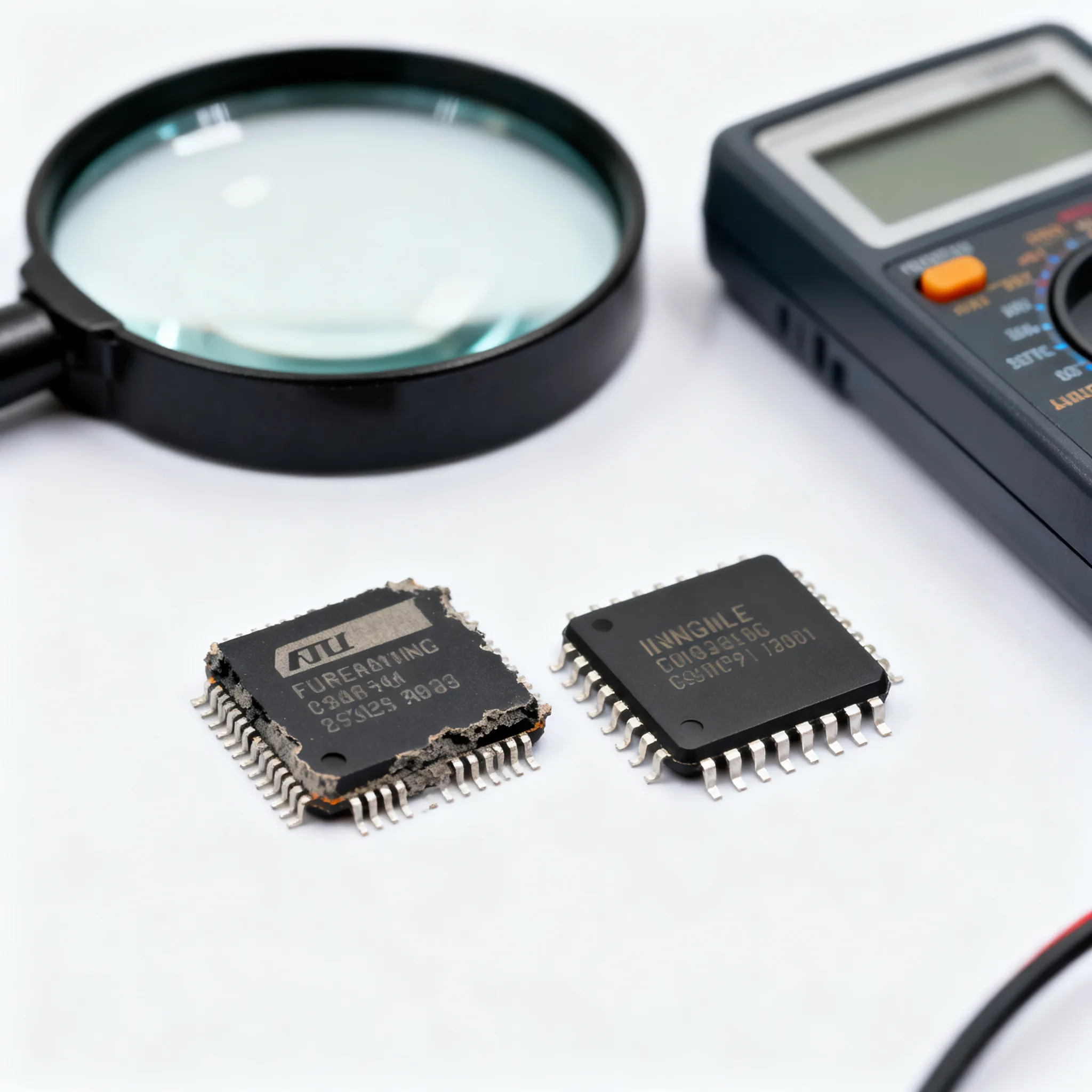
Due diligence remains non-negotiable regardless of the path chosen. The Alibaba supplier guide advises deeper quality-system and export-control scrutiny when engaging direct manufacturer channels, particularly for OEM-authorized factories in China, Taiwan, and Southeast Asia. For NPI buyers, this means requesting documented evidence of ISO 9001 certification, authorized distributor agreements for the specific semiconductor brands on your BOM, and a clear policy on how the partner handles counterfeit detection for open-market parts. A partner that hesitates to share any of these documents should raise procurement red flags.
How to Prepare Your BOM to Get a Fast, Accurate, and Flexible Quote
A well-structured BOM accelerates the RFQ cycle from weeks to days. Conversely, an incomplete or ambiguous BOM triggers clarification loops that erode the schedule advantage that flexible MOQ sourcing is supposed to deliver. The following guidance is drawn from observed best practices across dozens of NPI procurement cycles, grounded in the documentation requirements that flexible sourcing partners consistently request.
The table below maps the actions an NPI buyer should take before uploading a BOM, when each action matters most, and the trade-off involved:
| Action | When to Apply | Trade-off / Consideration |
|---|---|---|
| Include full manufacturer MPN with package suffix | Always—before first upload | Adds 15–30 minutes to BOM prep; prevents wrong-package quoting that costs days in rework |
| Add ≥1 verified alternate MPN per constrained line | When primary MPN has known allocation risk or long procurement history | Engineering must evaluate pinout and firmware compatibility; never assume drop-in equivalence without verification |
| Specify volume flexibility window (e.g., "50–150 units acceptable") | For NPI builds where exact qty is uncertain or may scale after validation | Wider windows may reduce per-unit premium because partner can optimize against their own inventory positions |
| Flag line items that can accept functional near-equivalents | For generic passives, standard logic ICs, and commodity connectors | Broadens the partner's sourcing options and may lower cost; requires clear boundary specs (tolerance, temp range, package) |
| Attach datasheets or performance spec summaries for custom and semi-custom parts | When BOM includes mechanicals, cable assemblies, or non-standard magnetics | Housenice's model requires design drawings and performance specs; same principle applies for any custom-line RFQ |
| Mark high-risk lines (allocation, single-source, long procurement history) | Before upload; update as supply conditions change | Allows partner to prioritize alternate sourcing or suggest substitute evaluation candidates early |
| Request explicit authenticity documentation requirements in the RFQ notes | For any BOM containing semiconductors above commodity grade | Buyers should require Certificate of Conformance, authorized channel traceability, and date codes within 24 months; specify these upfront |
Beyond the table, several structural practices consistently produce faster, more accurate quotes:
- Organize the BOM by procurement category, not by schematic reference. Group all semiconductors together, then passives, then connectors, then mechanicals. This lets the sourcing partner route each block to the appropriate internal team or supplier network without re-parsing the entire list.
- Include your target assembly date, not just "ASAP." A specific date—even a provisional one—allows the partner to triage line items by lead-time criticality. Parts that would normally ship in 12 weeks may be candidate for accelerated sourcing if the partner knows the assembly window.
- Note which parts you already hold in inventory. If you have 200 pieces of a specific MLCC or resistor array left over from a previous build, tell the partner. This avoids duplicate purchasing and may reduce the per-unit premium on the remaining lines by increasing the overall order's attractiveness.
- Specify any regulatory or certification constraints per line item. If a particular DC-DC converter must carry UL recognition or a connector must meet a specific ingress-protection rating, state it explicitly. Flexible sourcing partners cannot guess compliance requirements from an MPN alone.
- Request a line-by-line premium breakdown in the RFQ response. This transparency lets engineering decide which parts are worth redesigning around higher-MOQ, lower-premium alternatives versus absorbing the flexible-MOQ surcharge on specialty parts where substitution carries unacceptable validation cost.
Key Takeaway: The BOM upload is not a passive data dump. It is a procurement instrument. The more precisely you specify acceptable boundaries—volume flexibility, alternate eligibility, authenticity requirements—the more accurately the RFQ response will reflect your actual NPI needs rather than a generic small-order penalty structure. Complete technical documentation is the foundation of effective supplier engagement; without it, even the most flexible partner cannot optimize your quote.
NPI Sourcing with Flexible MOQ: Questions Engineers and Buyers Ask
The following questions reflect the real concerns that surface when NPI teams move from theory to execution on mixed-BOM flexible sourcing. Each answer draws on the frameworks established in the preceding sections.
Q: Can I realistically mix parts with wildly different MOQs—like 10 MOSFETs and 5,000 chip resistors—in one RFQ?
Yes, and this is precisely the scenario that flexible sourcing services are structured to handle. A capable partner aggregates disparate MOQ profiles by applying different procurement mechanisms to different BOM categories within a single commercial wrapper. For the 10 MOSFETs—where the manufacturer MOQ may be 3,000 units—the partner either breaks bulk from their own inventory (if they stock that part number) or aggregates your order with other NPI clients to meet the minimum, absorbing the residual inventory risk. For the 5,000 chip resistors, they simply pull from their bulk passive inventory, where their own buying power already secures favorable pricing. The key to making this work is a BOM that clearly identifies which lines require exact manufacturer part numbers and which can accept functional equivalents from the partner's preferred passive suppliers. Flagging this distinction at upload time avoids the most common source of RFQ delay: back-and-forth clarification on substitution eligibility.
Q: What's the real per-unit cost penalty for using flexible MOQ compared to a full production order?
Expect a 20–40% premium for components ordered below the manufacturer's standard MOQ, driven by handling, break-bulk labor, and the partner's inventory carrying cost for residual stock. On a $2.50 MCU ordered at 100 pieces instead of the 2,500-unit reel quantity, that translates to roughly $3.00–$3.50 per unit—an additional $50–$100 on the line item. For NPI, this premium is almost always the economically rational choice. The alternative—buying 2,500 units to get the $2.50 price—locks up $6,250 in inventory, of which $6,000 worth sits idle. The carrying cost, obsolescence risk, and working-capital opportunity cost of that idle inventory typically far exceed the flexible-MOQ premium. The RFQ response should itemize any premiums by line so engineering can evaluate whether redesigning certain non-critical parts around higher-MOQ, lower-premium alternatives is worth the validation effort.
Q: How do I vet a flexible MOQ supplier's quality if they're not the original manufacturer?
Demand documented evidence of three things. First, a defined incoming inspection standard—Yuanhui's flexible MOQ protocol, for example, explicitly cites AQL 0.40 as its quality benchmark. The same rigor should apply for electronics components. Ask what AQL level the partner applies to semiconductor incoming inspection and request a sample inspection report. Second, component traceability to authorized channels. A credible partner can produce manufacturer Certificates of Conformance for franchised parts and documented chain-of-custody for any open-market items. Third, transparency about their supplier network. A partner unwilling to name the authorized distributors they buy from—or one that treats its supply chain as a trade secret—should not be trusted with your NPI BOM. These documentation requests are not unusual; established flexible sourcing partners provide them as standard attachments to the RFQ response.
Q: What if my BOM contains an obsolete IC or a part on allocation—can the RFQ still help?
Yes, and uploading the BOM early is the single most effective risk-mitigation move you can make. A robust flexible sourcing partner will flag constrained, allocated, or end-of-life line items directly in the RFQ response. For allocated parts, they may have access to inventory held for their aggregated customer base that is not visible on distributor web portals. For obsolete ICs, they can suggest evaluation candidates—families such as GD32 or APM32 where appropriate, or functionally equivalent parts from alternate manufacturers—with the critical caveat that you must verify package compatibility, pinout mapping, and firmware implications before accepting any substitution. No sourcing partner should claim a "compatibility must be verified (package, pinout, firmware)" replacement; the engineering validation burden always remains with your team. The value the partner adds is surfacing candidates and procuring samples quickly so your validation cycle can begin without the lead-time penalty of hunting for parts yourself. Confirm allocation-backed lead time and obsolescence status with the supplier through the RFQ process.
Q: Is it smarter to send the whole BOM to one flexible partner or split it among component specialists?
For NPI speed and procurement overhead reduction, a single partner with proven mixed-BOM capability is the stronger default. Consolidated sourcing gives you one point of accountability, one invoice, one logistics stream, and—critically—one engineering-support contact when a part number discrepancy or substitution question arises mid-build. The coordination cost of managing three or four specialist suppliers during a compressed NPI schedule often outweighs any per-line cost savings from specialist pricing. The exception is when your BOM contains a category that your primary partner demonstrably cannot handle well—for example, a Direct EMS partner that excels at electronics but has no mechanical sourcing capability. In that case, splitting between the EMS and a dedicated mechanical sourcing partner may be necessary, but treat this as a conscious exception, not the default. For high-volume production, the calculus shifts: splitting the BOM to optimize cost per category becomes viable once volumes justify the procurement management overhead. During NPI, consolidated sourcing with a partner that offers both EMS-origin parts and broad component access typically wins on time-to-sample, which is the metric that matters most.
References & Further Reading
- How to Choose Electronic Component Suppliers: A Practical 2026 Guide — Alibaba Electronics
- How Does a Flexible MOQ Policy Support Startups in the Lighting Industry? — Yuanhui Lighting
- Custom Manufacturing & Low MOQ Sourcing — Housenice Purchasing Service
- What Is an MOQ? Understanding Minimum Order Quantities in Electronics — Kynix
- IC-Online: Mixed BOM Sourcing and Flexible MOQ RFQ Platform
- Browse Electronic Component Categories — IC-Online
Ready to test flexible MOQ for your next NPI build? Upload your mixed BOM for a consolidated RFQ through IC-Online. Our platform connects your multi-category bill of materials—semiconductors, passives, connectors, and custom mechanicals—to sourcing partners who understand that new product introduction cannot wait for production-volume MOQs. Receive a line-by-line quote with itemized premiums, suggested alternates for constrained parts, and documented traceability to authorized channels. No minimum volume commitment required; your BOM defines the order, not a distributor's reel quantity.