FVE-300-10OHM Lifecycle & Obsolescence Risk Checklist: What to Verify Before Procurement
FVE-300-10OHM lifecycle and obsolescence risk checklist. What to verify before redesign or last-time-buy — without assuming drop-in replacements.
FVE-300-10OHM Lifecycle & Obsolescence Risk Checklist: What to Verify Before Procurement
High-power wirewound resistors like the FVE-300-10OHM sit inside motor drives, dynamic braking systems, power supplies, and industrial test equipment — places where a single passive component can hold a line down for weeks. When a Vishay FVE-300‑10Ω part stops showing up in authorised distribution, the ripple reaches far beyond the purchase order. Commodity passives rarely receive the same lifecycle scrutiny as microcontrollers or FPGAs, yet they vanish for reasons that have nothing to do with end demand: a raw‑material supply shock, a ceramic substrate problem, or a manufacturer quietly retiring an entire product family. The Luminovo obsolescence guide stresses that a living risk register must reflect changes in supplier status, market demand, and compliance mandates. For a 300‑W resistor that may be single‑sourced on your Bill of Materials, there is no such thing as too much radar.
The same discipline the Defence Logistics Agency applies to DMSMS — “impending loss of manufacturers or suppliers” — applies to power resistors. Spartronics illustrates how DMSMS thinking protects long‑life products by treating every active BOM line as a potential future shortage. When you buy an FVE-300-10OHM, you aren’t just buying a 10‑Ω wirewound block; you are buying a commitment that someone will still make it in five to ten years. Without a checklist, that commitment is purely wishful.
Why a 10 Ohm Power Resistor Like the FVE-300 Deserves Its Own Obsolescence Radar
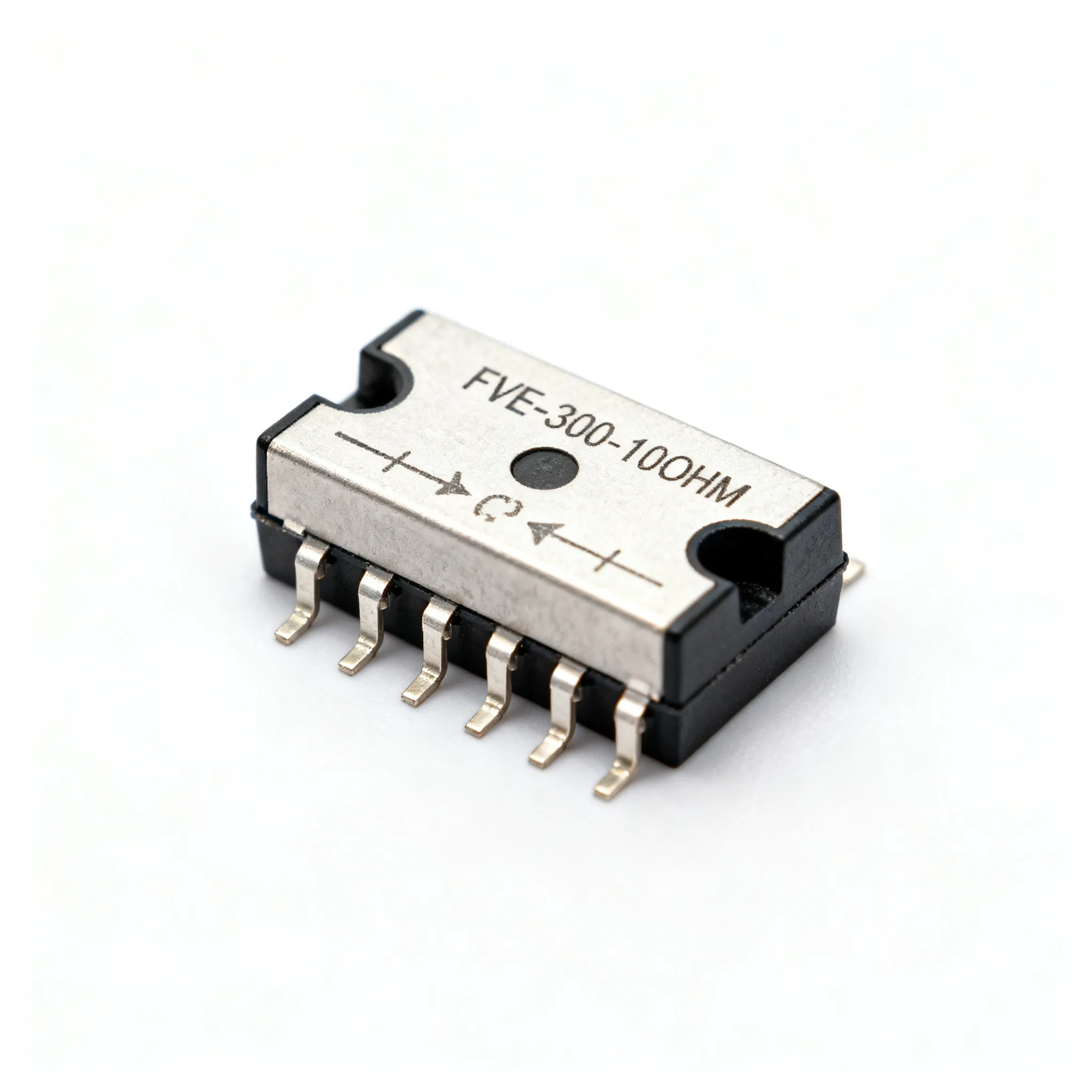
The FVE-300-10OHM is a chassis‑mount wirewound resistor rated at 300 W continuous power (at +25°C, derated for higher case temperatures). It is found in applications where the alternative is a heavyweight ceramic rod that has already been mechanically integrated into a cabinet. Replacing it is never as simple as dropping in another part number — even when a competitor’s datasheet headline numbers match. Mounting centres, insulation voltage, overload withstand, and thermal impedance to the heatsink all must align. That’s why a proactive lifecycle view is critical well before the part reaches end‑of‑life (EOL).
Power resistors sometimes leave the market faster than signal‑level components. A manufacturer may adapt its wirewound production to automotive‑qualified families, discontinue legacy non‑AEC‑Q lines, and offer no direct successor. Alternatively, a plating material such as cadmium or a specific high‑temperature coating falls under a REACH candidate‑list restriction, forcing an immediate run‑out. Neither event shows up on a typical stock‑check website; both represent real obsolescence triggers that demand an early‑warning system. Forge Reliability’s case of a compressor control cabinet where procurement alone could not restore a validated control function after a processor card failure is a sobering reminder: the part you can buy on the open market may not be enough. Engineering validation must accompany every substitution, and that takes time — time you only have if you start monitoring lifecycle signals early.
Decoding the FVE-300-10OHM Lifecycle: From Active to Obsolete—What Each Stage Means for Your BOM
Every component, including a 300‑W wirewound resistor, moves through predictable stages. The IC‑Online EOL semiconductor sourcing guide spells out this curve for semiconductors, but the same discipline applies to power passives: understanding each stage allows procurement teams to act before the open market is the sole option. What differs for the FVE-300-10OHM is that the transition from “Active” to “Not Recommended for New Designs” can be triggered by a raw‑material decision rather than by silicon lithography migration, and the window between NRND and last‑time‑buy may be compressed.
| Lifecycle Stage | Typical Meaning for FVE‑300‑10OHM | Procurement & Engineering Action |
|---|---|---|
| Introduction | New series release; limited stocking, few authorised distributors. | Request qualification data; assess whether the part will be available for the product’s full life. |
| Active (Current Production) | Full availability from Vishay and authorised channels; standard lead times. | Confirm allocation‑backed lead time; begin second‑source feasibility review; update risk register annually. |
| Not Recommended for New Designs (NRND) | Manufacturer indicates the series is mature; no new design‑ins accepted. | Initiate alternate qualification (physical samples, thermal test, derating analysis); project last‑time‑buy (LTB) probability. |
| Last‑Time Buy (LTB) Announced | Final order window open; after closure no further production. | Calculate lifecycle‑demand forecast; place a single buy covering remaining product support; lock safety stock. |
| Discontinued / Obsolete | No longer manufactured; remaining stock is in independent distribution or surplus. | Switch to qualified alternative; or manage open‑market sourcing with full test/authentication; redesign if needed. |
Passives can skip steps. A consolidated product family announcement might retire the entire FVE‑300 range without a formal NRND stage. IC‑Online’s EOL ICs article reminds engineers that even well‑known parts can disappear faster than expected. Therefore, treat any lengthening of authorised distributor restock intervals or a shift in the manufacturer’s web status as a trigger to revalidate the lifecycle directly with Vishay.
Three Ways to Replace the FVE-300-10OHM—Form‑Fit‑Function Alternatives and Their Pitfalls
When the FVE-300-10OHM shows signs of lifecycle uncertainty, engineering and procurement typically consider three paths. None is a complete drop‑in without verification, and every choice carries schedule and validation cost. SiliconExpert’s research shows that independent component databases yield more reliable lifecycle forecasts than manufacturer data alone, so applying a multi‑source lens to passives is just as essential as for semiconductors. The Utmel proactive playbook underscores the value of structured decision matrices and pre‑qualified Form‑Fit‑Function alternatives — a discipline that applies squarely to a chassis‑mount resistor with tight thermal constraints.
| Replacement Path | Typical Candidate Families / Approach | Key Verification Points | Risk / Trade‑off |
|---|---|---|---|
| 1. Alternate OEM Power Resistor (Form‑Fit‑Function) | Ohmite HS‑series, TE HSA‑series, ARCOL HS‑series chassis‑mount wirewound resistors rated ≥300 W, 10 Ω. (Evaluate each; verify with supplier.) |
Mounting footprint (centre‑hole spacing), insulator voltage, overload rating (5‑s or continuous), thermal derating curve, TCR, RoHS/REACH material compliance. | Fastest path if mechanically identical; still requires thermal validation under worst‑case duty cycle. Verify single‑source risk of the alternative manufacturer. |
| 2. Board‑Level Workaround (Multiple Lower‑Power Parts) | Two 5 Ω, 150 W resistors in series; or parallel/series combinations using 20–50 W cement‑case or metal‑clad resistors on a custom PCB or existing power board. | Creepage/clearance, cooling airflow, equal current sharing in parallel stacks, inductance change if replacing a non‑inductive winding. | Adds PCB area, needs re‑rating and safety‑agency re‑approval; higher assembly cost. Engineering time may exceed the cost of redesign. |
| 3. Modular Redesign (Different Mounting Style) | Move to a flat‑pack or bolt‑down thick‑film power module (e.g., a planar resistor on a liquid‑cooled plate). | Thermal impedance to heatsink, mechanical integration, possible electrical isolation requirements, EMC signature. | Long‑term solution for future designs; expensive requalification. Only viable if product redesign is already planned. |
Like Luminovo notes, certain “fruit‑fly” components zip through lifecycle stages fast; power resistors may not be as transient as DRAMs, but they can still be impacted by sudden raw‑material decisions. An alternative that looks good on a comparison table may itself be near NRND if the manufacturer’s high‑power line is under review. Always ask for a written lifecycle statement from the alternative manufacturer before locking the design.
Pre‑Purchase Verification Checklist: 5 Steps to Avoid Buying a Ghost Part
Before you cut a purchase order for the FVE-300-10OHM, five verification steps can mean the difference between a supported 10‑year product and an emergency redesign. These steps mirror the approach championed by Forge Reliability: procurement alone cannot restore a validated control function, but rigorous pre‑purchase questioning keeps the BOM from slipping into the ghost‑part zone where only surplus lot scrap is available.
- Confirm lifecycle status directly with the manufacturer or authorised distributor. Do not rely on a web‑store flag that may be stale. Request a written PCN lifecycle statement for the exact SKU. Cross‑check with an independent database like SiliconExpert — a single “Active” badge on a distributor site is insufficient.
- Map inventory depth and last‑time‑buy options across multiple authorised channels. Even if the part is active, ask Vishay and at least two authorised distributors for the current allocated lead time and whether an LTB window has been announced or is being considered. Demand a “minimum buy” quote if an LTB appears imminent.
- Verify RoHS/REACH compliance and scan for looming material bans. Check REACH candidate‑list additions for materials common in power resistors (e.g., beryllium oxide in some constructions, although the FVE‑300 typically uses a ceramic core without BeO). Even if the FVE-300-10OHM is exempt, a restriction on a plating metal or an encapsulant can force an unannounced EOL. Revisit the risk register quarterly, as Luminovo recommends.
- Probe DMSMS databases if the end equipment is long‑life defence or industrial. NASA MSFC‑STD‑3620 flags high‑power resistors with an increased obsolescence risk; the same reasoning applies to heavy industrial drives. Search government‑industry data portals for any flagged risks associated with the FVE‑300 family or equivalent wirewound types.
- Pre‑validate an engineering alternative. Before the component becomes critical, complete a qualification report for at least one substitute, following the Ultra Librarian guidance on anticipating obsolescence. This report should include thermal imaging under load, overload tests, and a signed supplier statement that the substitute is not slated for EOL over the product’s intended service life.
Structuring these steps into a quarterly gate review makes the process repeatable. The table below frames each verification action against the risk of skipping it, giving both engineering and procurement a common language to prioritise.
| Verification Step | Action | Rationale / Risk if Skipped |
|---|---|---|
| 1. Lifecycle Confirmation | Obtain written OEM PCN statement; validate with independent database. | Website status may be months out of date. Skipping risks ordering a soon‑to‑be discontinued part with no buffer. |
| 2. Inventory & LTB Check | Survey ≥2 authorised distributors; request allocation‑backed lead time and LTB outlook. | Single‑source reliance masks thinning supply. Late LTB discovery restricts safety‑stock build and forces higher open‑market pricing. |
| 3. Regulatory Scan | Review REACH candidate list and RoHS exemption updates for power resistor materials. | A material ban can trigger a sudden EOL without PCN lead time. Early notice allows buffer orders or redesign. |
| 4. DMSMS Database Probe | Search agency databases for flagged high‑power wirewound types. | Defence and industrial systems often share supply‑chain risk profiles. Ignoring DMSMS alerts forfeits collaborative mitigation. |
| 5. Pre‑qualified Alternative | Complete thermal and overload qualification on at least one candidate substitute. | Without it, an emergency redesign after EOL can carry 20‑40 weeks of engineering and re‑approval, well beyond the LTB window. |
FVE-300-10OHM Sourcing FAQ: Questions Senior Engineers and Procurement Leads Ask Before Signing Off
- Q: How can I confirm the lifecycle status of the FVE-300-10OHM today?
- Request a written lifecycle statement from Vishay or an authorised distributor; do not rely on a single web‑store icon. Cross‑reference with an independent component database such as SiliconExpert, and note if the part has been moved to a “mature” or “not for new designs” category. One flag on a site is not enough — demand official PCN documentation.
- Q: What is the typical last‑time‑buy window for the Vishay FVE series?
- Power resistor series from Vishay historically carry last‑time‑buy windows in the 6‑ to 12‑month range, but high‑power wirewound families can see shorter windows if raw‑material allocation changes. Sign up for direct OEM EOL notifications and PCNs, and confirm the specific LTB window for FVE-300-10OHM in writing when NRND status appears.
- Q: What early indicators suggest the FVE-300-10OHM is heading toward obsolescence?
- Look for rising minimum order quantities, lead times that stretch beyond typical allocations, thinning authorised distributor inventory breadth, and a slide from Active to NRND classification on Vishay’s own parts portal. Promotion of newer series (such as the FV family) often signals consolidation ahead.
- Q: Can I use a 12‑ohm or 8‑ohm resistor of the same power rating as a direct substitute?
- Only after an engineering review. A 20% resistance shift in a current‑sensing or dynamic braking circuit alters scaling factors and dissipation, potentially compromising safety margins. Match tolerance, TCR, and thermal derating exactly; a simple ohmic swap without re‑validation is not acceptable for a chassis‑mounted power resistor.
- Q: What documentation do I need to justify a form‑fit‑function deviation for a FVE-300-10OHM replacement?
- Prepare an engineering qualification report that includes a comparative datasheet table (resistance, TCR, power derating curve, overload rating, insulation voltage), thermal test data under expected load, and a written supplier statement confirming that the substitute part is not planned for EOL within your product’s lifecycle. This documentation package supports internal change control and external audit requirements.
- Q: Are there any upcoming regulatory changes that might cause an unexpected EOL for the FVE-300-10OHM?
- Monitor REACH candidate‑list additions and RoHS exemption expiry timelines for materials used in power resistors, including coatings, plating, and lead‑free solder terminations. Even if the FVE-300-10OHM does not contain beryllium oxide, a ban on a widely used encapsulant or plating metal can shrink the entire wirewound supply base. Revisit the risk register regularly, as Luminovo advises.
Managing an obsolescence checklist for a single resistor part number might feel heavyweight, but for products that ship for ten years or more, skipping these verifications invites expensive surprises. Treat each data point you collect — lifecycle status, authorised distribution depth, REACH exposure, and a pre‑qualified alternative — as an insurance policy that moves the BOM from reactive firefighting to planned sustainment.
References & Further Reading
- Component Obsolescence: Lifecycle & EOL Management Guide – Luminovo
- Sourcing End-of-Life and Obsolete Semiconductors: A Practical Guide – IC‑Online
- How Component Lifecycle Management Protects Long‑Life Electronic Products – Spartronics
- Equipment Obsolescence Management: A Practical Guide – Forge Reliability
- Manage Obsolescence Risk – SiliconExpert
- End-of-Life Integrated Circuits: What OEM Buyers Need to Know – IC‑Online
- The Proactive Playbook for EOL Component Sourcing – Utmel
- MSFC‑STD‑3620 – NASA Marshall Standard for Parts Risk Assessment
- RFQ or BOM upload on IC-Online.