How Car Sound Capacitors Deliver Consistent Power for Superior Audio
A car sound capacitor gives your audio system a steady flow of power. When your amplifier needs extra energy, the capacitor
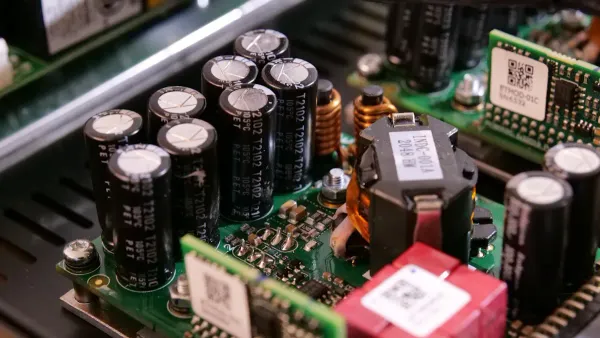
A car sound capacitor gives your audio system a steady flow of power. When your amplifier needs extra energy, the capacitor releases stored power and stops voltage drops. This keeps your audio clear, even when the bass hits hard. You hear less distortion and more detail. Many drivers notice an enhanced listening experience and stronger bass. If you want better sound quality in your car, a capacitor can help you get there.
Key Takeaways
- Car sound capacitors provide a steady power supply, enhancing audio clarity and reducing distortion during loud music.
- Choose the right capacitor size based on your amplifier's power; use 1 Farad for every 1000 watts RMS for optimal performance.
- Proper installation is crucial; mount the capacitor close to the amplifier and use the correct wire size to avoid issues.
- Capacitors help protect your amplifier from power fluctuations, ensuring longer life and better sound quality.
- Regularly check your wiring and grounding to prevent voltage drops and maintain a clear audio experience.
Car Sound Capacitor Basics
What Is a Car Sound Capacitor
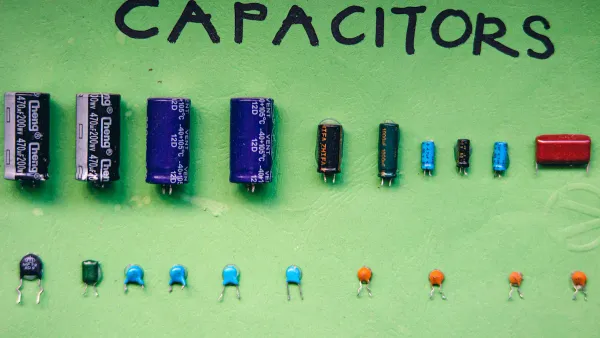
A car sound capacitor helps your car’s audio system work better. You use it to store electrical energy and release it when your audio system needs more power. This device sits between your car’s battery and the amplifier. When your music hits a deep bass note, the car sound capacitor gives a quick burst of energy. This keeps your audio clear and strong.
You can find different types of car sound capacitors. Each type works best for certain audio setups. Here is a table to help you see the main types:
| Type of Capacitor | Description | Best For |
|---|---|---|
| Electrolytic Capacitors | Common, affordable, good storage, slower discharge | Budget to mid-tier systems |
| Carbon or Hybrid Capacitors | Fast charge/discharge, combines different materials | High-powered systems |
| Digital Display Capacitors | Shows voltage in real time, easy to monitor | Users who want system feedback |
A car sound capacitor also helps prevent voltage drops. This means your audio system gets steady power, even when you play music loudly.
How It Works
The car sound capacitor stores energy from your car’s electrical system. When your audio system needs extra power, the capacitor releases energy quickly. This helps your amplifier keep up with the demands of your music. You avoid distortion and keep your audio sounding clean.
- The capacitance value tells you how much energy the car sound capacitor can store.
- Higher values give more support and help keep voltage steady.
- Most experts suggest using 1 Farad of capacitance for every 1000 watts RMS of audio power.
- Using a larger car sound capacitor can help even more, especially if you have a powerful audio system.
You should also think about where you install your car sound capacitor. High humidity or extreme temperatures can affect how well it works. Try to keep the humidity between 10% and 90% for the best results.
Tip: Look for car sound capacitors that meet standards like AEC-Q200 or IATF 16949. These standards show the capacitor is reliable for car audio use.
Why Voltage Drops Hurt Audio
Distortion and Noise
Voltage drops can ruin your listening experience. When your car’s electrical system cannot keep up, your audio system suffers. You may hear buzzing, crackling, or weak sound. These problems happen because your amplifier does not get enough power. The result is distortion and noise instead of clear music.
You want a non-distorted audio experience every time you drive. Voltage drops make this difficult. Your amplifier needs steady power to deliver crisp and clean audio. If the voltage drops, the amplifier cannot work at its best. You might notice the bass sounds weak or the music loses detail. This can make your favorite songs less enjoyable.
Some common causes of voltage drops in car audio systems include:
- Using a poor grounding location, which increases resistance and leads to voltage drops.
- Using undersized ground wire, which adds resistance and can cause your amplifier to shut down.
- Extending the ground wire too long, which increases resistance and makes voltage drops more likely.
Tip: Check your wiring and grounding to help prevent distortion and noise in your audio system.
Power Fluctuations
Power fluctuations can affect your audio quality. When your system does not get enough power, the sound becomes uneven. You may notice the volume drops or the music sounds flat. This happens because the amplifier cannot draw the power it needs.
Voltage drops reduce the available power to amplifiers. This can lower sound quality and make your audio system less powerful. Insufficient voltage means your amplifier cannot reach its maximum output. Your music may not sound as loud or as clear as you expect.
Proper wiring and understanding voltage ratings help you keep your audio system running smoothly. You want to enjoy every detail in your music. Stable power ensures your audio system delivers the best performance.
Car Audio Capacitors Benefits
Consistent Power
Car audio capacitors act like a reservoir for your car’s electrical system. You charge them during quiet moments in your music. When your amplifier needs more energy, the capacitor releases stored power right away. This process keeps the voltage steady and helps your system deliver a consistent power supply.
- You avoid sudden drops in voltage during loud music peaks.
- The battery does not have to work as hard during heavy bass hits.
- Your entire electrical system runs more smoothly.
Car audio capacitors help stabilize voltage and reduce strain on your battery. You get better performance from your audio system and other car electronics. When you use a capacitor, you notice fewer dimming headlights and less flickering dashboard lights during music playback.
Tip: A stable voltage means your music sounds clear and powerful, even at high volumes.
Enhanced Bass
You want deep, punchy bass in your car. Car audio capacitors help you achieve this by acting as a fast-responding energy source. When your amplifier demands more power than your car’s electrical system can provide, the capacitor steps in.
- The capacitor stabilizes voltage and reduces dips during heavy bass hits.
- It provides extra current when your amplifier needs it most.
- You hear stronger, cleaner bass without distortion.
Car audio capacitors prevent distortion and protect your amplifier from power shortages. This means your bass stays tight and your music keeps its impact. In multi-amplifier setups, capacitors also help keep all components running smoothly. You enjoy better sound quality and a more dynamic listening experience.
Note: Some users report that adding a capacitor improves the dynamic range of their audio system. This means you hear both quiet and loud parts of your music more clearly.
Amplifier Protection
Your amplifier needs steady power to work well. Car audio capacitors act as a buffer between your car’s electrical system and the amplifier. They store energy and release it quickly during high-demand moments, such as heavy bass notes.
- The capacitor helps prevent under-voltage and power surges that can damage your amplifier.
- It stabilizes voltage and provides extra current when needed.
- Your amplifier stays protected and lasts longer.
Car audio capacitors also help reduce distortion and noise. By keeping voltage steady, they allow your amplifier to perform at its best. You get clearer sound quality and fewer problems with your audio system.
Tip: In systems with multiple amplifiers or high wattage, you may need a capacitor bank to provide enough energy storage for all components.
Choosing the Right Capacitor Size
The size of your car audio capacitor matters. Larger capacitors can decrease impedance, which helps deliver clearer sound. Use the table below to find the recommended capacitor size for your amplifier’s RMS power:
| Amplifier RMS Power | Recommended Capacitor Size |
|---|---|
| 250 Watts | 0.25 Farads |
| 500 Watts | 0.5 Farads |
| 750 Watts | 0.75 Farads |
| 1000 Watts | 1 Farad |
| 1500 Watts | 1.5 Farads |
| 2000 Watts | 2 Farads |
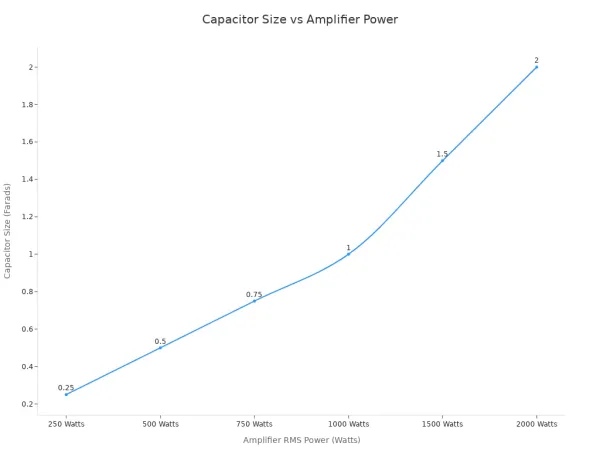
When you match the right capacitor size to your system, you help maintain stable voltage and improve overall sound quality.
Upgrading Your Car Audio System

Choosing the Right Capacitor
Selecting the best capacitor for your car audio system helps you get the most out of your music. You want to match the capacitor to your amplifier’s power and your vehicle’s needs. Use this table to guide your choice:
| Criteria | Description |
|---|---|
| Amplifier Power (RMS) | Use one farad of capacitance for every 1000 watts of RMS power as a general guideline. |
| Vehicle's Electrical System | Check your battery and alternator. A weak system may need a larger capacitor. |
| Operating Voltage | Make sure the capacitor’s voltage rating matches your car’s system, usually 12V. |
| Build Quality and Materials | Choose strong materials for better performance and longer life. |
| Temperature Rating | Pick capacitors that work well in hot or cold weather. |
| Warranty | A good warranty shows the manufacturer stands by their product. |
| Personal Listening Preferences | If you love heavy bass, consider a larger capacitor for power spikes. |
A car audio system with higher wattage needs a bigger capacitor. Larger capacitors store more energy and prevent voltage drops during loud music. This keeps your sound clear and powerful.
Tip: For a high-quality audio system, invest in a capacitor with strong build quality and a solid warranty.
Installation Tips
Proper installation makes your car audio system work better and last longer. Follow these steps for the best results:
- Mount the capacitor close to your amplifier. This reduces resistance and improves efficiency.
- Use the same gauge wire for the capacitor as you use for the amplifier’s power and ground lines.
- Disconnect your car’s negative battery terminal before starting.
- Secure the capacitor so it does not move while driving.
- Connect the ground terminal to the same point as your amplifier’s ground.
- Link the positive terminal to the same power source as your amplifier.
- Charge the capacitor slowly with a resistor before final connection to avoid sparks.
Note: Skipping the charging step or using the wrong wire size can damage your car audio system.
Common Myths
Many people believe you need exactly 1 Farad of capacitance for every 1000 watts of power in your car audio system. This is not accurate. Real calculations show you would need much more capacitance to supply that much power for even one second. The 1 Farad rule is only a rough guideline.
Some also think adding a capacitor is a simple plug-and-play upgrade. In reality, mistakes like poor grounding, wrong wire size, or skipping the charging step can cause problems. Always follow best practices to keep your car audio system safe and sounding great.
Car sound capacitors help you maintain steady voltage and keep your music clear. You get stronger bass and less distortion, especially with powerful amplifiers. Unlike upgraded batteries or line drivers, capacitors directly target voltage stability and energy supply. If you want to improve sound quality, consider these tips:
- Choose a capacitor with enough capacity for your system.
- Mount it close to your amplifier.
- Consult a car audio expert for best results.
A well-installed capacitor can make your listening experience more reliable and enjoyable.
FAQ
Do you need a car sound capacitor for every audio system?
You do not need a capacitor for every system. If your amplifier causes lights to dim or sound to distort, a capacitor helps. Smaller systems may not need one.
Can a capacitor fix all audio problems?
A capacitor helps with voltage drops and power spikes. It does not fix poor wiring, bad speakers, or weak batteries. You should check your whole system for issues.
How do you know if your capacitor is working?
You can check the voltage display if your capacitor has one. Your music sounds clearer, and your lights stop flickering. If you notice no change, check your installation.
Is it hard to install a car sound capacitor?
You can install a capacitor with basic tools. Follow the instructions and use the right wire size. Mount it close to your amplifier for best results.
What happens if you use the wrong capacitor size?
If you use a small capacitor, you may still get voltage drops. A large capacitor works better for powerful systems. Use the recommended size for your amplifier’s wattage.